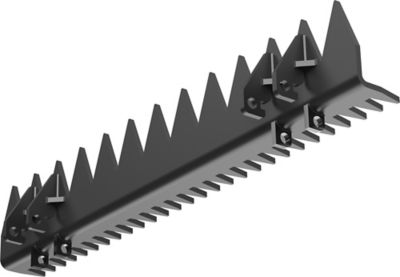
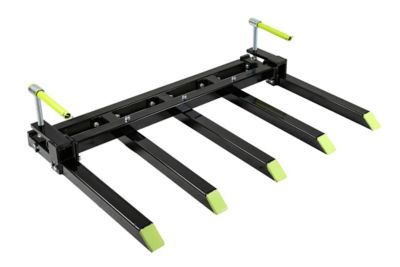
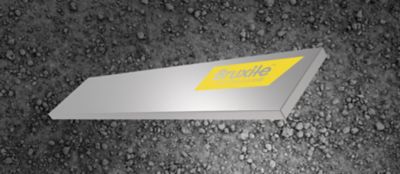
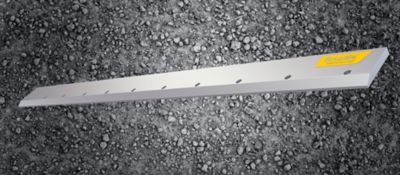
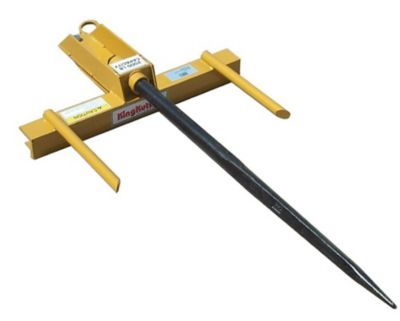
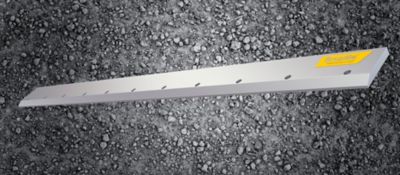
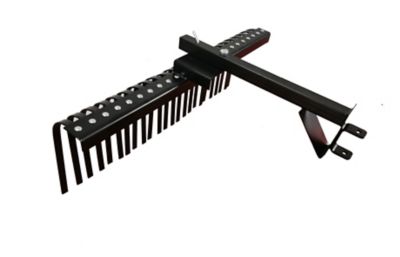
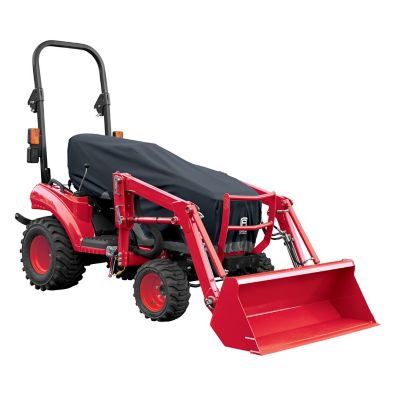
Tractor bucket attachments give a front-end loader more ways to handle work around a farm, acreage, barnyard, or jobsite. Depending on the design, they add lifting points, fork tines, gripping jaws, or digging teeth to a bucket that would otherwise mainly scoop and carry loose material. That extra function comes in handy when a pile of fence posts needs moving across the property, cut limbs need gathering along a fence line, or packed soil needs loosening before a small grading project. Bucket-mounted attachments fasten to the existing bucket, while replacement loader attachments take the bucket’s place on the loader arms or attachment carrier. The distinction matters: a clamp-on fork and a dedicated pallet fork frame may handle similar chores, but their mounting requirements, weight, visibility, and load position differ. Clamp-on pallet forks extend beyond the bucket edge to support suitable palletized loads or long materials, with spacing and load support depending on the design. Brush forks help gather branches and loose debris, often letting some dirt fall between the tines rather than carrying it along. Bucket grapple attachments add a movable jaw that holds irregular material against the bucket, making them useful for brush and similar loads that do not sit neatly in a scoop. Tooth bars add teeth along the cutting edge to help the bucket enter firm ground and break into compacted material. Specialized replacement attachments serve other purposes: rock buckets sift loose soil through spaced bars while retaining larger stones, and narrow stump buckets concentrate digging action into a smaller area. Neither style turns a tractor loader into an excavator, and the machine’s operating limits still apply. For livestock owners, grounds crews, small-acreage owners, and folks keeping up family land, the best match starts with the work that comes up repeatedly. Moving a pallet of supplies calls for different support than carrying a tangled armful of branches, even when both jobs begin beside the same barn.
Fit involves more than the tractor’s horsepower or the width of its front bucket. Tractor bucket attachments may depend on bucket width, cutting-edge thickness, sidewall shape, mounting-hole locations, or clearance behind the bucket lip. A bolt-on cutting edge can change how a clamp seats, and reinforcement along the bucket floor can affect whether a mounting bracket lies flat. Clamp-on designs generally attach without replacing the bucket, but the bucket itself must be suitable for the forces those clamps apply. Bolt-on designs need the specified hole pattern and hardware, while weld-on components call for a suitable bucket structure and installation that follows the attachment and loader manufacturers’ requirements. Replacement attachments must match the loader’s attachment interface; a skid steer-style quick-attach carrier, a manufacturer-specific carrier, and a pin-on arrangement are not automatically interchangeable. Pin diameter, spacing, locking engagement, and operating clearance all play a part. Hydraulic grapple functions bring another set of requirements, including compatible hydraulic connections, proper hose routing, and a suitable control circuit, often a third-function circuit. Hoses need enough room for the loader’s full range of motion without stretching, pinching, or dragging against sharp edges. Weight is just as important as mounting style. The attachment’s own weight counts against the loader’s lifting ability, and placing a load farther forward changes leverage. Clamp-on forks can move the load well beyond the bucket’s original working edge, so an attachment’s stated capacity does not mean the tractor can lift that same amount in every position. Loader ratings, load center, lifting height, tractor configuration, and required ballast all belong in the picture. A stout-looking bucket lip is not proof that it can accept any lifting attachment. For suitable chain-handling applications,
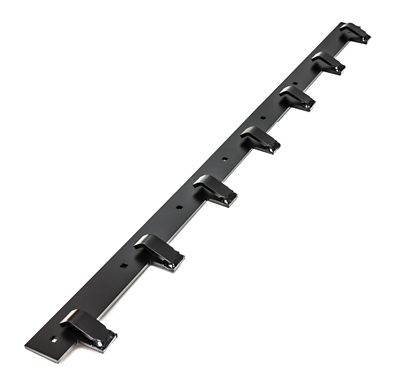
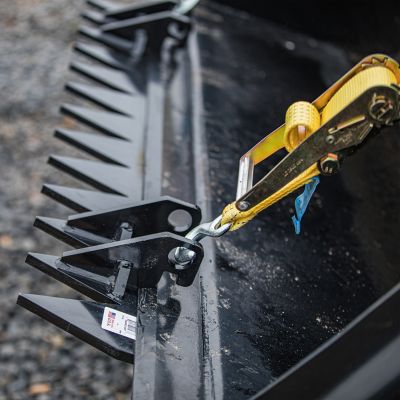
tractor bucket hooks provide attachment points when their rating, installation, and the bucket structure match the intended task. Hooks, chains, connectors, and the loader each have their own limits, and the lowest applicable limit governs the setup. Keeping loads low during travel and keeping people clear of raised attachments remain important regardless of the connection style.
Materials and construction help explain how a tractor bucket attachment stands up to repeated work. Steel is common because these attachments face abrasion, bending forces, and contact with rough material. Depending on the design, reinforced mounting plates, gussets, formed channels, and replaceable wear components help manage those demands. Hardened teeth or cutting surfaces can offer wear resistance where the attachment meets soil, while smooth pin movement and properly supported pivot points matter on a grapple jaw. Thickness alone does not tell the whole story; steel grade, weld construction, geometry, and the way force transfers into the bucket all affect service life. Painted or powder-coated surfaces help limit corrosion, though contact with rocks, soil, and chains can wear through a finish at working edges. Routine care keeps those areas easier to inspect. Removing packed dirt and tangled vegetation exposes loose fasteners, bent tines, cracked welds, and other damage that might otherwise stay hidden. Clamps and mounting hardware need checks at the intervals specified by the manufacturer, particularly where repeated loading can loosen a connection. Grease fittings, hinge pins, and hydraulic couplers need the care called for in the attachment manual, and worn teeth or edges should be replaced before surrounding parts take unnecessary wear. Hydraulic pressure must be relieved before servicing connections, and suspected leaks should never be checked with bare hands. Attachments are safest to inspect or service when lowered onto firm support, with the tractor shut down and the manufacturer’s precautions followed. Storage also deserves a little thought: a level spot with stable supports helps keep forks, teeth, and mounting plates from becoming trip hazards or tipping unexpectedly. For everyday handling, tine length, fork spacing, jaw opening, and sightlines can matter as much as the attachment’s overall size. Long tines may support an awkward load but also need more turning room near gates and buildings. A wide brush attachment may gather more material in one pass yet prove cumbersome in a narrow lane. Matching those details to the property and the tractor helps make loader work more manageable, whether the job is clearing a brush pile, relocating building supplies, or cleaning up a work area.