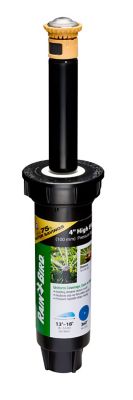
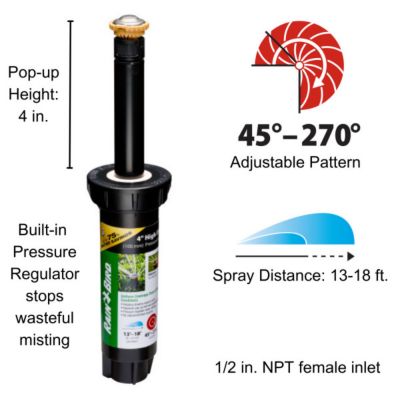
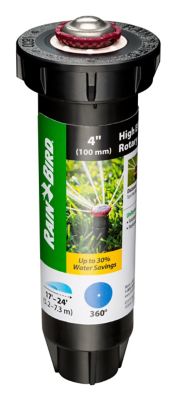
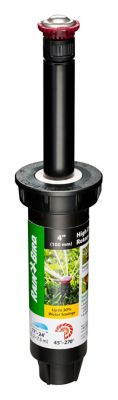
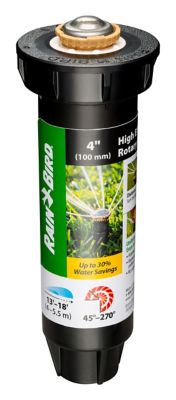
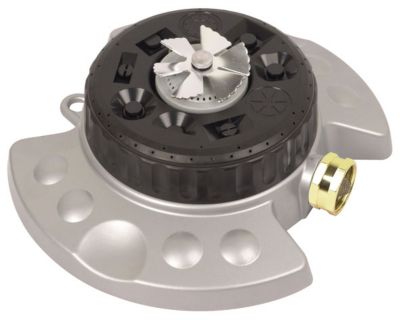
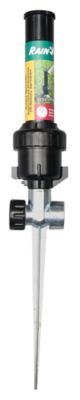
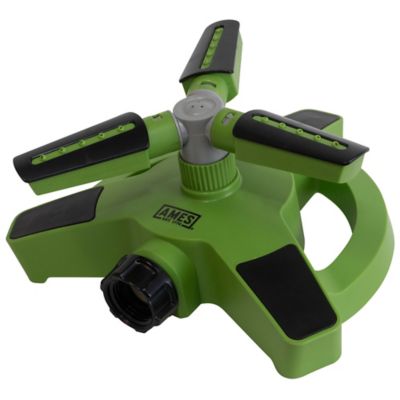
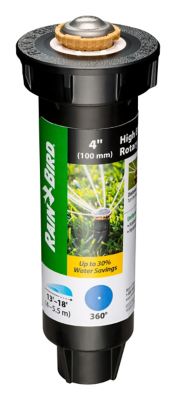
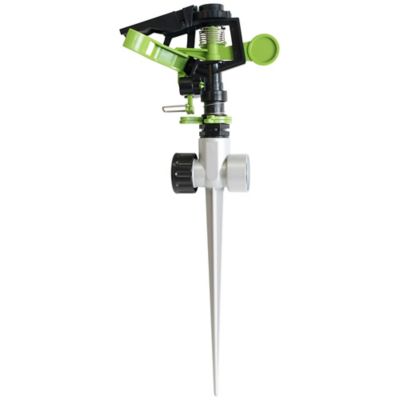
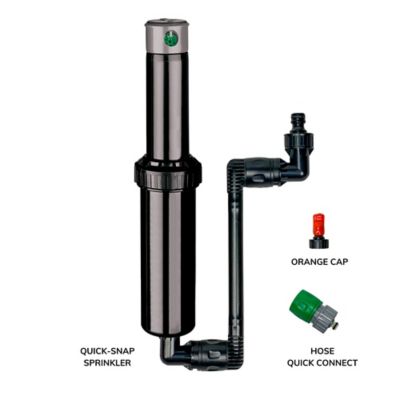
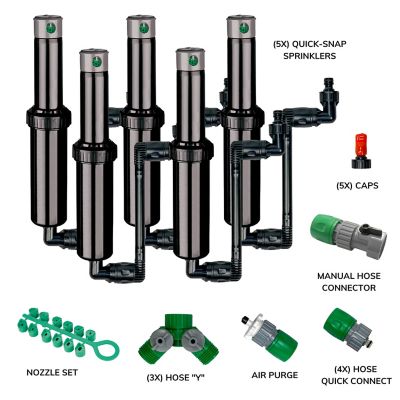
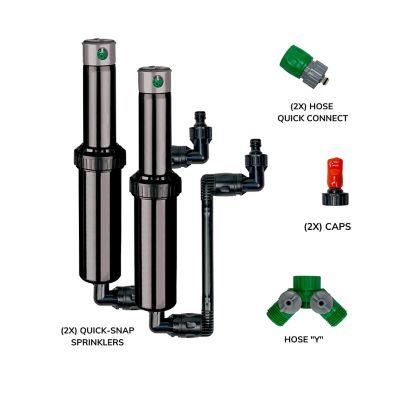
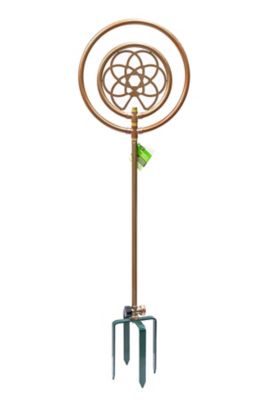
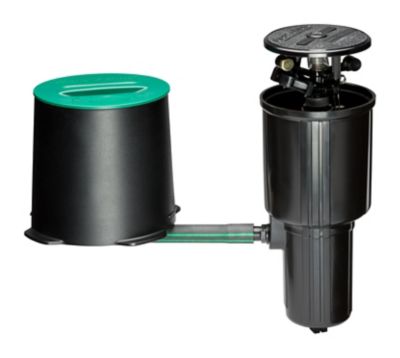
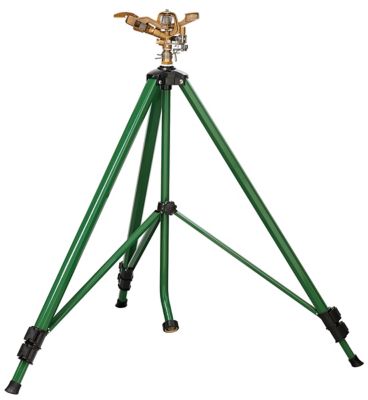
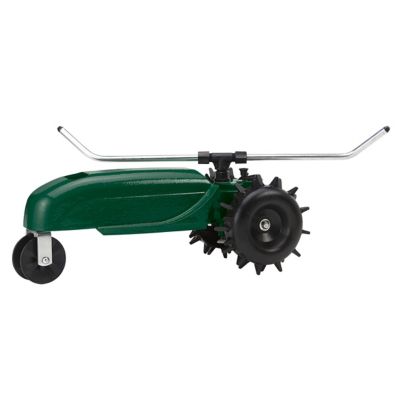
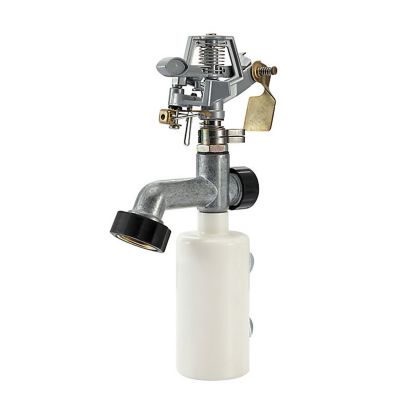
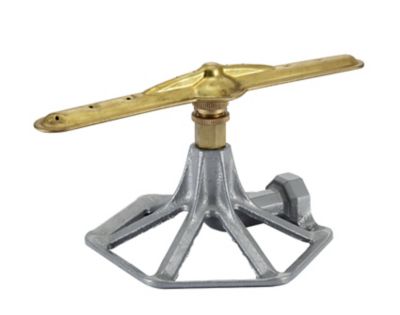
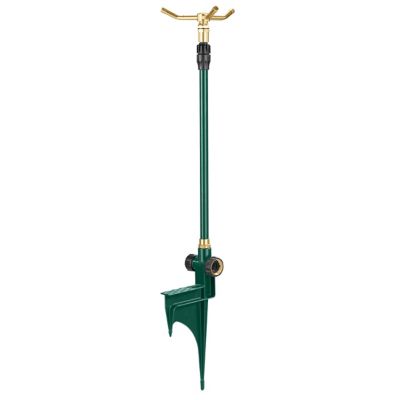
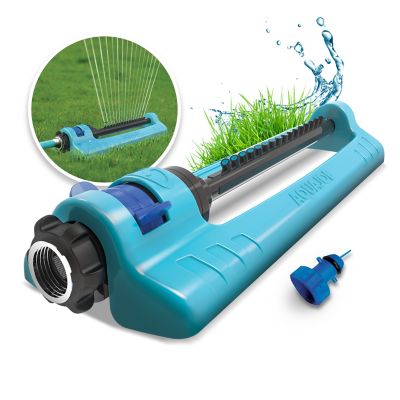
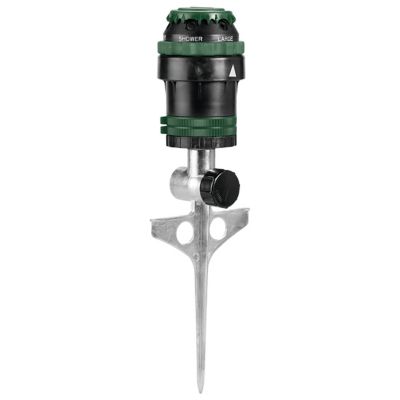
Rotor sprinklers spread water across lawns and other planted areas with a rotating stream rather than a stationary fan of spray. In a gear-driven rotor, flowing water turns a small turbine that powers internal gears, moving the nozzle steadily through its watering pattern. Depending on the design, that pattern may cover an adjustable section of a circle or a full circle. This longer-reaching action makes lawn rotor sprinklers a practical fit for broad front yards, open ground around a farmhouse, and grassy stretches beside a driveway or outbuilding. Many lawn rotors throw water roughly 20 to 50 feet, while larger designs can reach farther; the actual distance depends on the nozzle, operating pressure, and sprinkler specifications. A pop-up rotor sits down in its housing between watering cycles and rises under water pressure, keeping the head out of the way of ordinary lawn activity when properly installed. Above-ground versions may sit on a spike or another base and connect to a garden hose, making them handy where an underground irrigation system is not part of the setup. Property owners, grounds crews, and folks tending larger yards often look to rotors for coverage that would take several shorter-reaching spray heads to match. Rotors generally apply water more slowly than conventional fixed spray heads, giving the soil more time to take it in. That does not mean every rotor saves water automatically: nozzle choice, placement, and run time still matter. An open rectangular lawn, for example, calls for a different arrangement than a narrow strip between a fence and a gravel lane. Rotors work best where their reach matches the space, with watering arcs that keep the stream on grass instead of sweeping across siding, walkways, or passing vehicles.
Fit involves more than matching the size of an old sprinkler head. Underground rotor sprinklers have inlet sizes, connection types, body dimensions, and pop-up heights that need to suit the piping and planting area. A taller pop-up can help the stream clear longer grass, while the body still needs enough room below ground for proper placement. Hose-connected rotors need fittings that match the hose and base; garden hose threads and pipe threads are not interchangeable simply because their stated sizes sound alike. Water pressure and flow are separate considerations, too. Pressure, measured in pounds per square inch, helps determine how the rotor operates and how far its stream travels. Flow, commonly measured in gallons per minute, determines how much water the supply must deliver while the sprinklers are running. A pressure reading with every outlet closed does not tell the whole story, since pressure can drop once several heads operate together. There is no single minimum pressure that suits every rotor, so the operating range and nozzle performance chart matter more than a blanket rule. Too little pressure can shorten the throw and leave uneven coverage; excessive pressure can create mist that does little good for the root zone. Spacing also matters. Head-to-head coverage means one sprinkler’s stream reaches the next sprinkler, allowing overlapping patterns to even out distribution rather than leaving dry patches between circles. The arc adjustment controls the portion of the circle being watered, while radius adjustment changes the throw within the limits of the design. Those are separate settings, and cutting the radius back sharply may affect the watering pattern. Nozzle flow should also suit the arc and other heads in the same irrigation zone. A quarter-circle head and a full-circle head do not necessarily need the same nozzle to deliver a similar amount of water across their respective areas. Rotors and fixed spray heads generally belong on separate zones because their application rates differ.
Materials and service access make a difference in how a rotor handles everyday yard conditions. Molded plastic housings resist corrosion, while some designs include stainless steel risers or other metal components for added protection against abrasion. Seals help keep grit from working into moving parts, and internal screens catch debris before it reaches the nozzle. None of those features makes a sprinkler immune to mower contact, a truck tire, or soil packed tightly around the riser. On a working property, placement clear of wheel tracks and gates can matter just as much as the material itself. A head beside a gravel drive faces different wear than one in the middle of an open lawn, especially where loose stone and dust collect around the cap. Straight placement, a body set to the specified grade, and enough clearance for the riser to retract help keep the installation tidy and functional. Care usually centers on checking the spray pattern, clearing obstructions, and cleaning the screen or nozzle according to the manufacturer’s directions after shutting off the water supply. A stream that suddenly falls short may point to debris or a pressure problem rather than a need for a longer-reaching head. Water pooling around a rotor can indicate a connection leak, a damaged seal, or drainage from a low point in the system. Where elevation changes cause water to drain through the lowest head after shutoff, a compatible check-valve feature can help limit that drainage; it does not correct runoff caused by excessive watering. On sloped or slow-absorbing ground, shorter watering cycles separated by soak time can help keep water where it belongs. Catch cups placed around the lawn can reveal uneven distribution that is hard to spot by watching the streams alone. For spaces that need different pattern adjustments,
Adjustable Sprinklers offer another way to match coverage to the layout. The goal is a watering setup that reaches the grass evenly, fits the water supply, and leaves room for the mowing, chores, and everyday traffic that come with caring for a property.