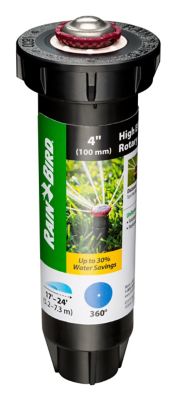
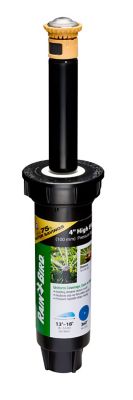
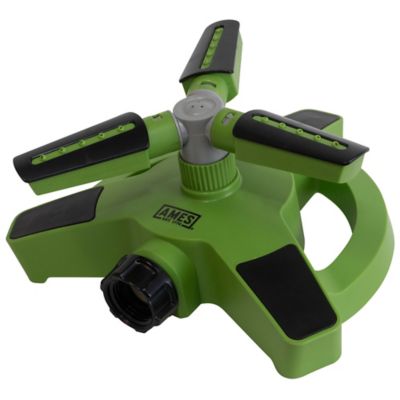
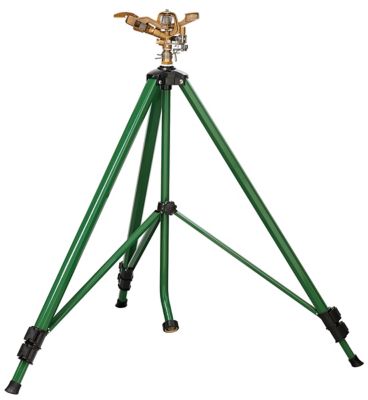
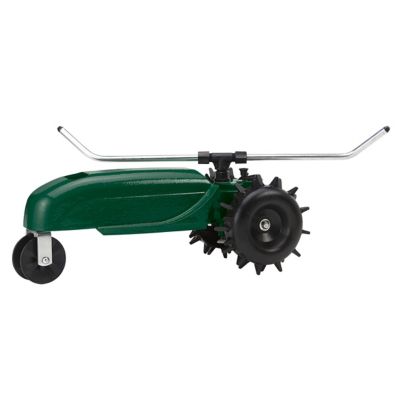
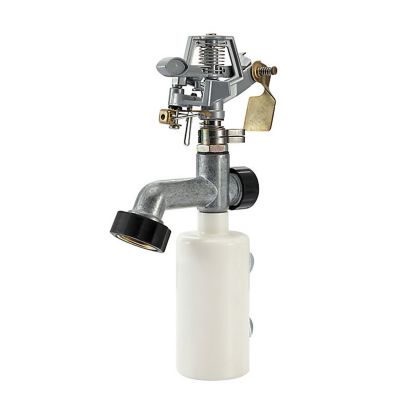
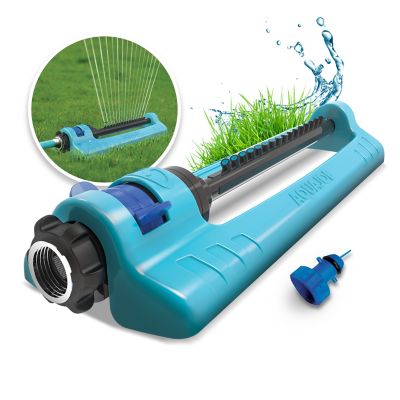
360-degree sprinklers distribute water in a full circle around the sprinkler head, making them a practical fit for open lawns, garden plots and other planting areas with room on every side. Many designs rely on water pressure to turn rotating arms or drive an impact head, while others spray outward through fixed openings to create a circular pattern. That full-circle reach works well when the sprinkler sits near the middle of the area being watered, rather than along a driveway or right beside the house. For a broad patch of grass behind the barn or a vegetable plot beyond the back porch, a hose-connected sprinkler can bring water where it is needed without a permanent irrigation layout. The right match depends on more than the size of the yard, though. Spray distance, water flow, placement and the shape of the planting area all affect coverage. A circular pattern will not fill every corner of a square plot from one position, and a wide-reaching spray can send water past a narrow bed. Published coverage figures also depend on the operating conditions specified by the manufacturer; they are not a promise that every outdoor faucet will produce the same reach. Coverage diameter means the distance across the entire watered circle, while radius describes the distance from the sprinkler to its outer edge. Keeping that distinction in mind makes it easier to compare a sprinkler’s reach with the space between a fence, a garden row and the edge of the lawn. Full rotation alone does not guarantee even watering, either. Nozzle design, pressure and overlapping coverage all play a part in how much water lands near the head and farther away. For homeowners, gardeners and folks tending smaller acreage, 360-degree sprinklers offer a straightforward way to handle routine watering while leaving room to move the setup as planting layouts and watering needs change.
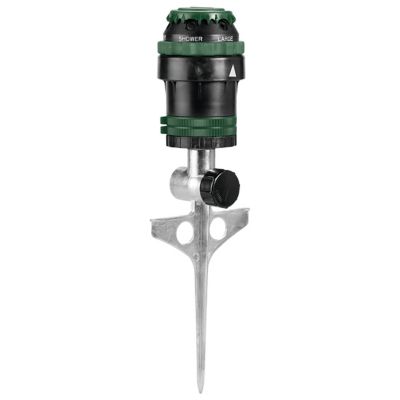
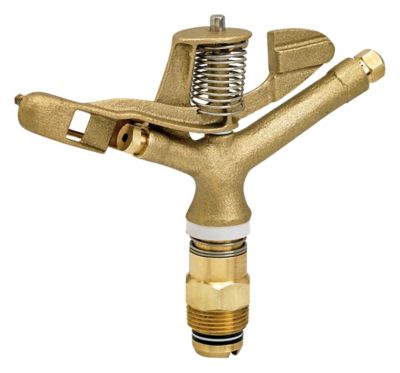
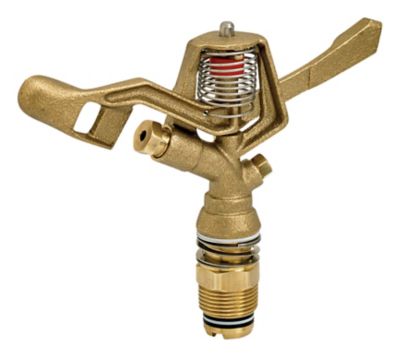
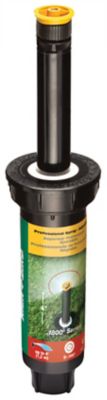
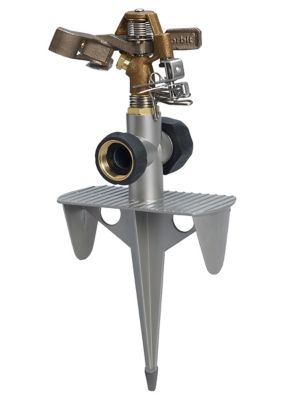
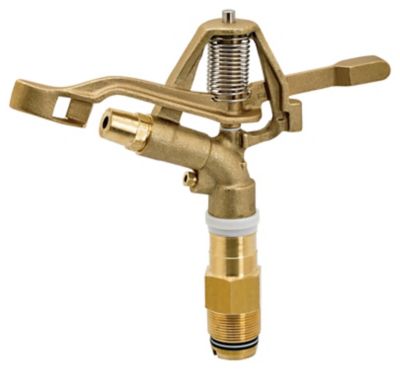
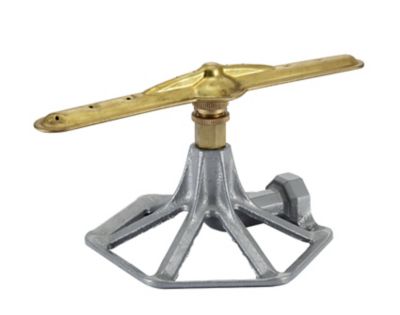
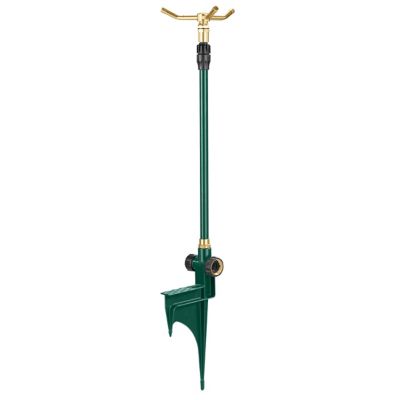
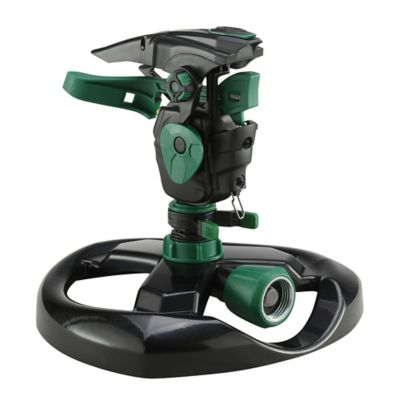
The construction of a full-circle sprinkler affects how it sits, how it handles repeated moves and how comfortably it fits into everyday chores. Plastic bodies are generally light enough to carry from the front lawn to a garden bed, while metal components can add weight and stand up to frequent handling. Brass, zinc, aluminum and different plastics each have their own care needs, so material names alone do not tell the whole story about service life. Solid hose connections, a steady base and accessible moving parts matter just as much when a sprinkler gets pulled out regularly. A weighted sled-style base rests on the ground without needing to be pushed into the soil, making it handy for repositioning across established grass. A spike base anchors the head in workable soil, though very loose ground may not hold it as firmly. Wheeled bases make moving between watering spots easier, and elevated stands can lift the spray above low-growing plants that might otherwise block it. Taller setups need stable footing, especially where a stretched hose could tug at the base. Around leafy vegetable rows, extra height may improve clearance, but spraying from above is not the best choice for every crop or planting arrangement. Root-zone watering can be a better match where keeping foliage dry matters. Rotating-arm sprinklers commonly send several streams outward as the arms turn, while impact sprinklers advance with a familiar rhythmic tapping sound. Either style may offer full-circle operation, and some designs also allow a partial-circle setting. That flexibility can help where a lawn meets a gravel lane or a garden backs up to a fence. For spaces that need more control over the watering pattern,
Adjustable Sprinklers provide another way to compare spray settings and coverage options. Adjustments vary by design and may change the arc, stream breakup or throw distance rather than every part of the pattern. A useful match gives the planting area enough reach without making the porch steps, feed storage area or neighboring walkway part of the watering zone.
Hose fit and the water supply deserve a close look, particularly when the watering spot sits a good distance from the faucet. Many portable lawn sprinklers connect to a standard garden hose, but inlet size and thread type still need to match the hose or fittings in the setup. An intact hose washer helps seal the connection without excessive tightening, which is especially important with plastic threads. Pressure powers the motion in many rotating and impact designs, so these mechanisms generally do not need batteries or an electrical connection. Timed operation is a separate feature, usually supplied by a compatible hose timer or irrigation controller rather than by the rotating head itself. There is no single pressure range that suits every 360-degree sprinkler. The manufacturer’s operating requirements are the better reference, along with the flow the faucet can deliver. Long hose runs, narrow hoses, elevation changes and other open outlets can reduce performance at the sprinkler, leaving a broad lawn with a smaller watered circle than expected. Some bases include a pass-through connection for another hose and sprinkler, but linking several together divides the available supply and can shorten their reach. For a yard with several separate watering spots, moving one sprinkler between sections may suit the water source better than running several at once. Soil also affects how well the setup works: compacted ground may shed water before it soaks in, while a freshly seeded patch benefits from a spray that does not wash seed into little piles. A few straight-sided catch containers placed around the watering area can reveal differences in distribution and show how much water has actually landed. Routine care is generally simple, with attention to clear nozzle openings, clean inlet screens where fitted and free-moving arms or heads. Grit in the water can interfere with rotation, and mineral buildup may gradually change the spray. Disconnecting the supply before cleaning, following the maker’s care directions and draining the sprinkler before storage help protect its working parts. A setup that is easy to place, connect and maintain makes regular watering less of a chore, whether the job is a modest lawn, a kitchen garden or a larger patch of ground near the house.