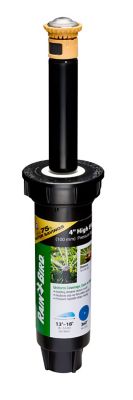
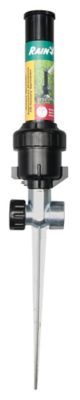
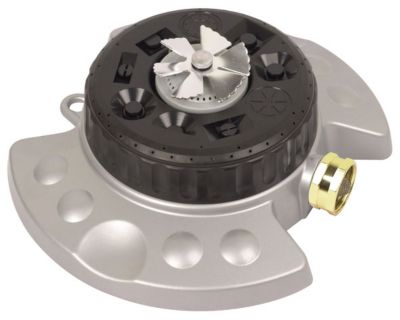
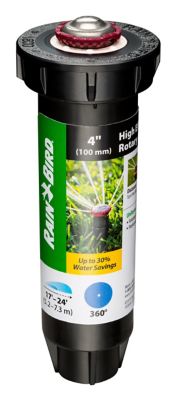
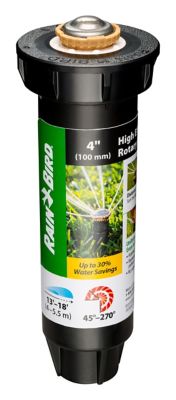
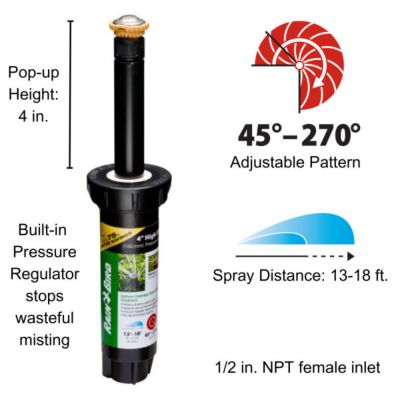
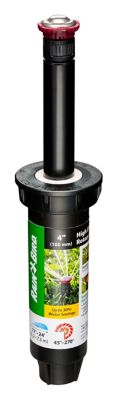
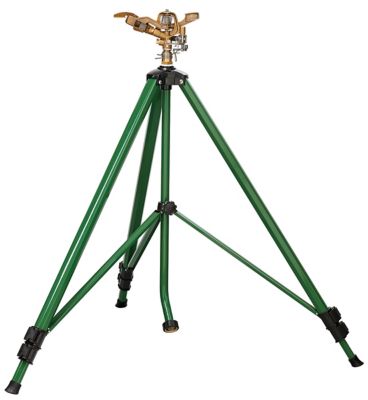
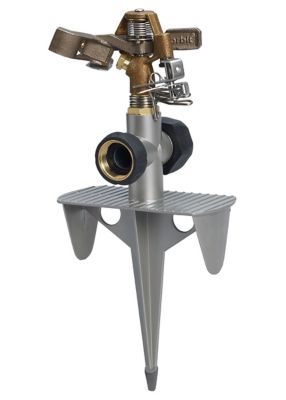
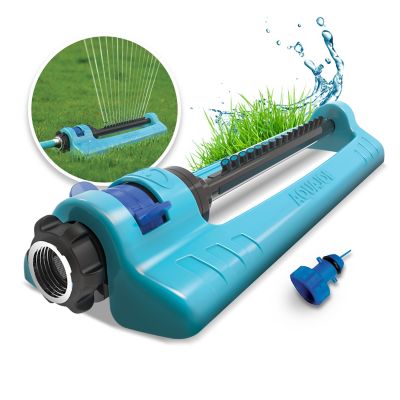
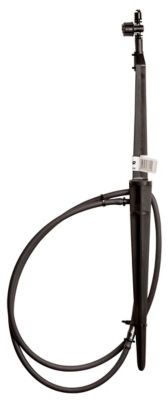
Irrigation rotors bring steady, rotating streams of water to medium-to-large stretches of turf, from the front lawn beside a farmhouse to the open grass around a workshop or outbuilding. Unlike fixed spray heads, which spread water across an entire pattern at once, a rotor turns its stream through a set arc, covering the ground a section at a time. Many gear-driven irrigation rotors have a watering radius of roughly 15 to more than 50 feet, depending on the nozzle, operating pressure, and head design. That reach makes them a practical fit for broad lawn areas where several short-range spray heads would otherwise be needed. In a typical pop-up rotor, incoming water pressure lifts the riser above the housing and turns a small internal turbine. A gear assembly transfers that movement to the nozzle housing, sweeping the stream back and forth or around a full circle, depending on the design and setting. Adjustable arcs let a head water a portion of a circle along a driveway or fence, while full-circle coverage suits open areas farther from buildings and property lines. Adjustment ranges vary, with some heads offering arcs from about 40 degrees to 360 degrees. Once the watering cycle ends and pressure drops, a spring retracts the riser into its housing. A properly installed pop-up head sits near ground level between cycles, keeping the lawn clear for everyday foot traffic and mowing. For homeowners, groundskeepers, and folks tending larger rural yards, these sprinkler heads offer broad coverage without leaving a sprinkler and hose stretched across the grass. Their intended job is turf irrigation, though suitability for other plantings depends on spacing, foliage height, and watering needs. Narrow garden rows, small flower beds, and closely spaced shrubs often call for a different watering method. Rotors make the most sense where their rotating streams have room to travel and nearby heads can work together to cover the lawn evenly.
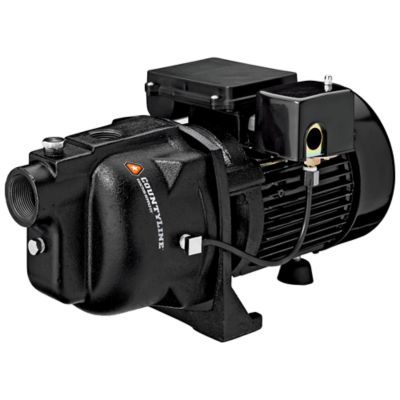
A good fit starts with the space being watered and the irrigation system already serving it. Throw distance alone does not tell the whole story: the head needs enough pressure at its inlet and enough water flow to operate within its specified range. Too little pressure can shorten the stream and leave dry bands between heads; excessive pressure can create mist that drifts away before reaching the grass. Nozzle size affects both reach and flow, so two heads with similar housings may place very different demands on a watering zone. Head-to-head coverage, where each rotor’s stream reaches the neighboring head, is a common design approach that helps account for the lighter application near the outer edge of a sprinkler’s reach. Around a broad side yard, that overlap matters more than simply choosing the longest throw. Wind exposure, changes in elevation, and obstacles such as tree trunks also affect how evenly water reaches the soil. A rotor beside a gravel lane needs an arc that keeps most of its stream on the grass rather than soaking passing vehicles or washing water toward a ditch. A head serving the middle of an open lawn has different coverage needs, even when it shares the same supply line. Connection size and thread type must match the piping or fitting, and the body needs enough clearance below ground for proper placement. Pop-up height matters, too: a short riser can struggle to clear thick turf, while a taller riser may suit areas with higher grass near the head. Matching precipitation rates across a zone helps prevent one section from getting too much water while another stays dry. Rotors and fixed spray heads generally apply water at different rates, so placing them on separate zones is often the better fit. On properties with a dedicated pumped water supply,
Irrigation System Pumps are another part of that system match. Pump selection depends on the total flow and pressure needed, including elevation changes and friction losses through pipes, fittings, and valves—not just the distance printed for a sprinkler head.
Materials and construction make a difference when irrigation rotors spend their working life surrounded by soil, moisture, and grass clippings. Molded plastic housings are common, while some designs include stainless steel riser sleeves for added resistance to wear. Seals help keep grit from entering around the moving riser, and nozzle screens catch particles that could interfere with the stream. Those features support everyday operation, but they do not replace suitable filtration when water carries sand or sediment. A lawn supplied from a pond or well may need closer attention to filtration than one connected to a cleaner water source. Internal check valves are useful on sloping ground because they can limit water draining through the lowest head after the zone shuts off, helping reduce puddles at the bottom of a hill. Their holding capacity varies, so the elevation difference still matters. Easy access to arc and radius adjustments can simplify small corrections as turf fills in or the edge of a planting bed changes. Radius reduction has limits, however, and turning down a long-range head is not always a substitute for selecting a nozzle and rotor suited to a smaller space. Routine care is mostly about keeping the moving parts clear and noticing changes before they leave a brown strip across the lawn. Grass growing over a cap, a tilted housing, or a partially blocked nozzle can interrupt coverage even when the underground piping is sound. Periodic checks during a watering cycle reveal heads that fail to rise, streams striking a fence post, or water bubbling around a seal. Keeping mower wheels and vehicle tires off exposed heads helps prevent impact damage, while correct installation depth reduces interference with lawn work. During cooler weather, watering needs may ease as growth slows and rainfall changes. Where freezing temperatures occur, irrigation piping and rotor bodies need winterization appropriate to the system and local conditions; a retracted head can still hold water below ground. With the right reach, connection, nozzle, and care, irrigation rotors help keep larger grassy spaces evenly watered without sending water where it does little good.