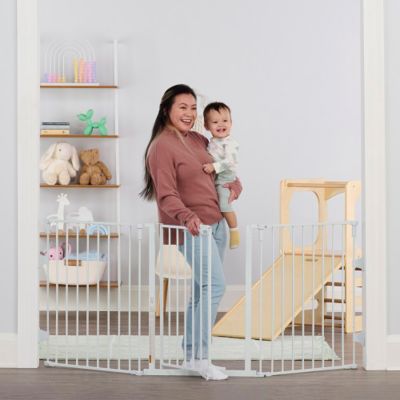
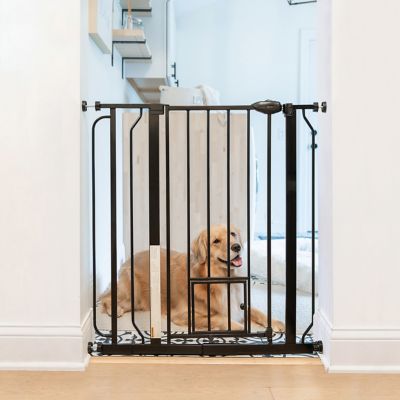
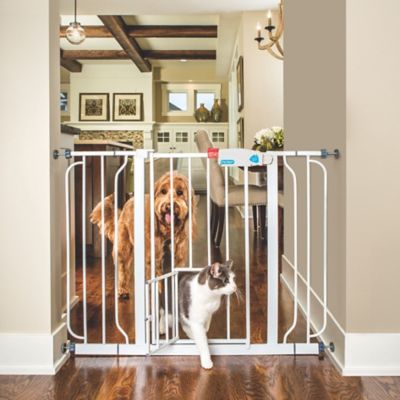
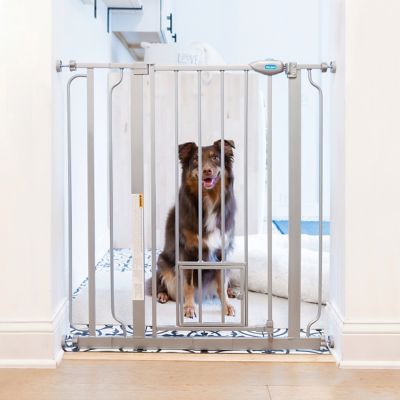
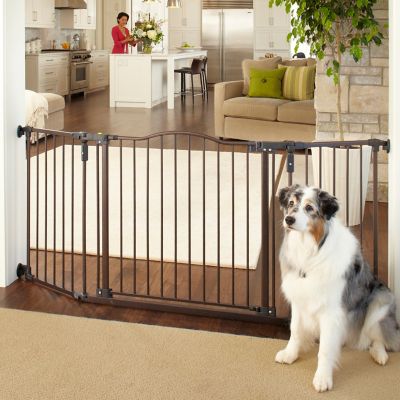
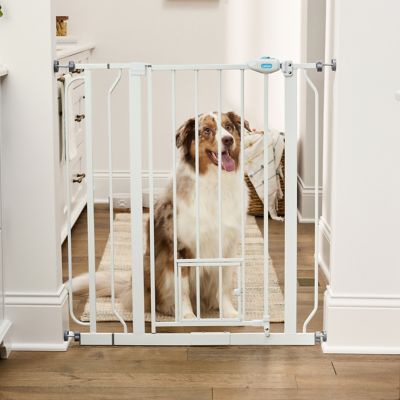
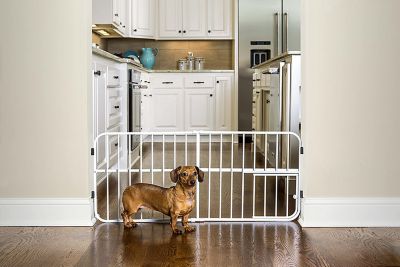
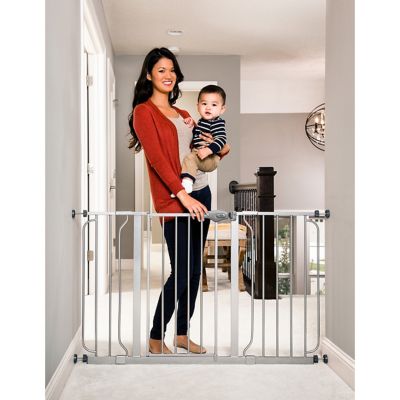
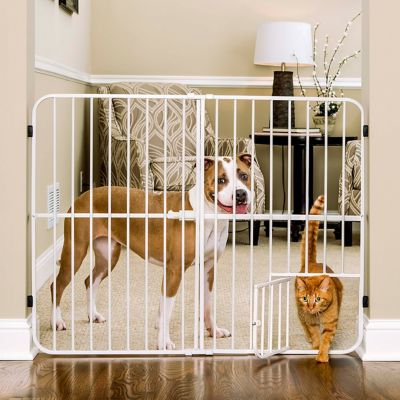
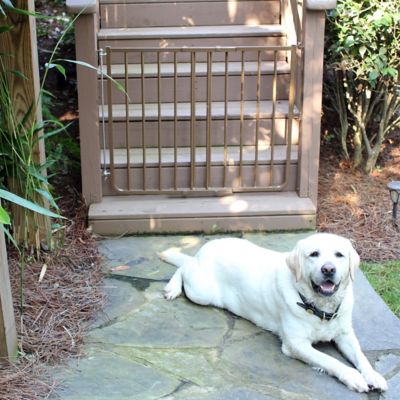
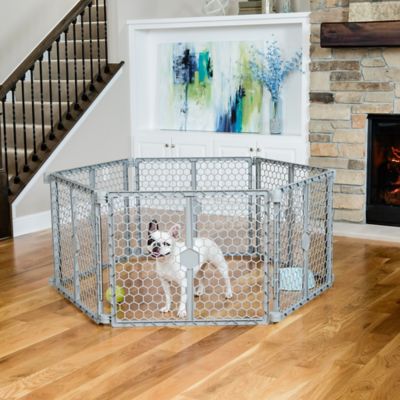
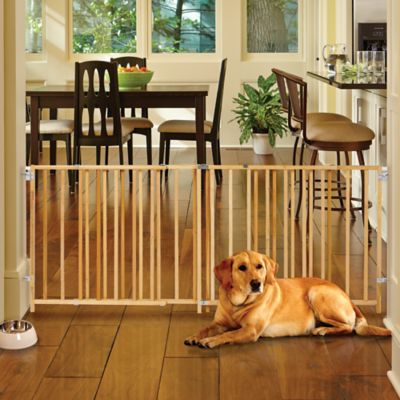
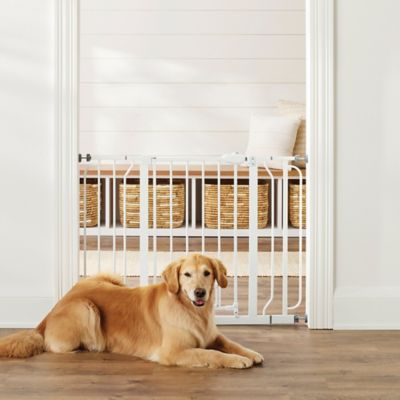
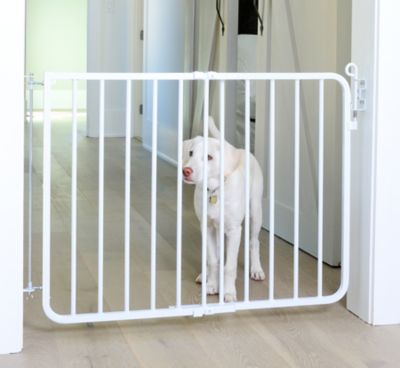
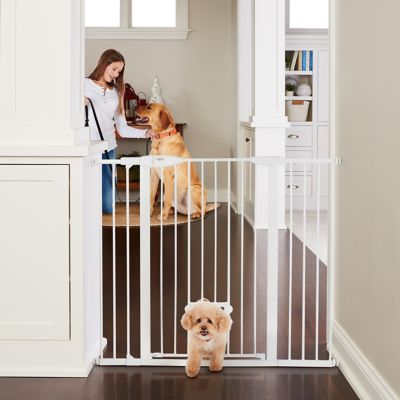
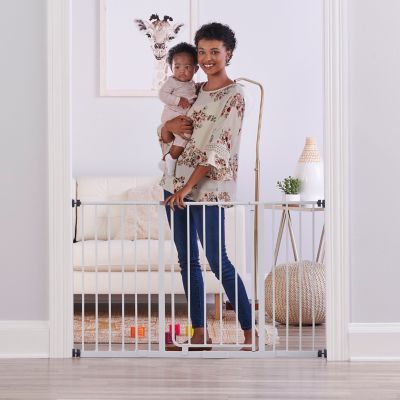
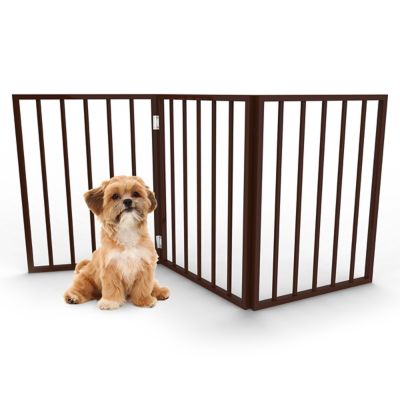
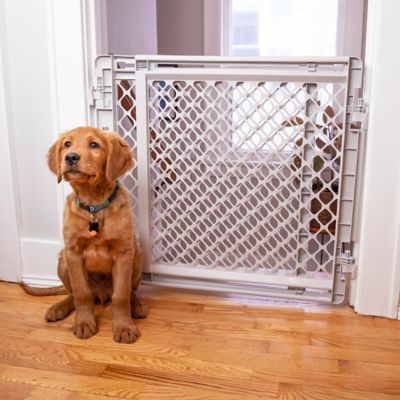
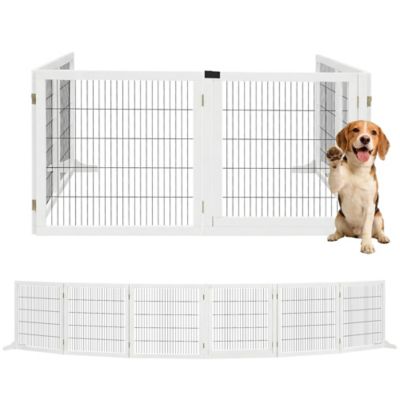
Pet gates are barriers that help keep dogs, cats, and other household pets within a designated area or out of rooms where they don’t belong. Common styles include pressure-mounted gates for doorways, hardware-mounted gates that attach to a solid surface, and freestanding gates that stand without attaching to a wall. Around a busy house, a gate can give a puppy room to settle without access to the whole place, keep a curious nose away from kitchen prep, or separate pets while food bowls are down. It can also create a quieter corner for an older dog that needs a break from a younger animal’s roughhousing. The right setup depends on the opening, the pet’s size and behavior, and how often people pass through. Walk-through pet gates have a swinging door, so family members can move between rooms without taking down the barrier. That’s handy when carrying a laundry basket or heading in with an armful of groceries. Latch placement, door width, and the direction of the swing all affect everyday convenience. Some gates have an automatic closing feature, though the door still needs a check to make sure it has latched behind each person. Step-over styles create a lower boundary, but they also put an obstacle in the walking path and may not suit anyone with limited balance or mobility. A low gate may be enough for a calm little dog, while a taller barrier may better suit a larger pet. Height alone doesn’t determine containment, though. A determined jumper or climber can challenge a gate that easily contains another animal of the same size. Open bars let pets see household activity, which can help some animals settle nearby, while others rest more comfortably away from a busy hallway. Gates work best as part of a routine that includes supervision, exercise, and a comfortable place to lie down.
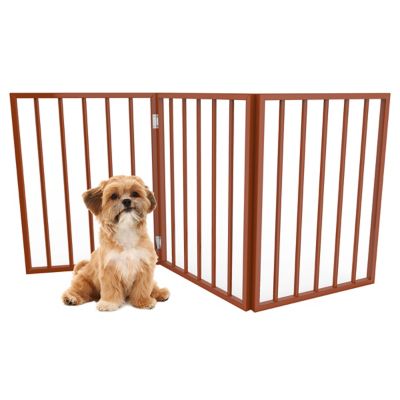
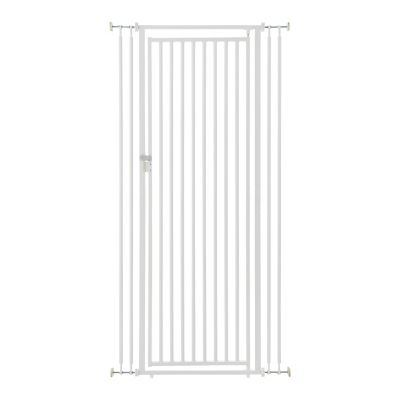
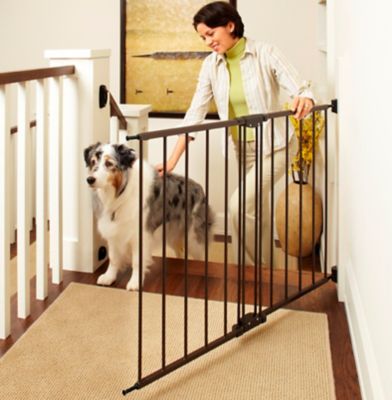
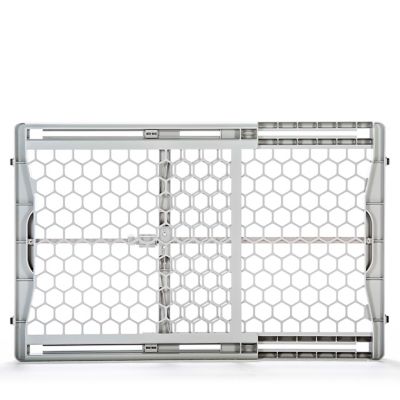
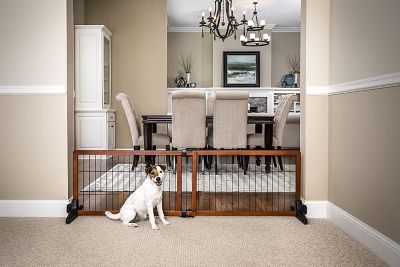
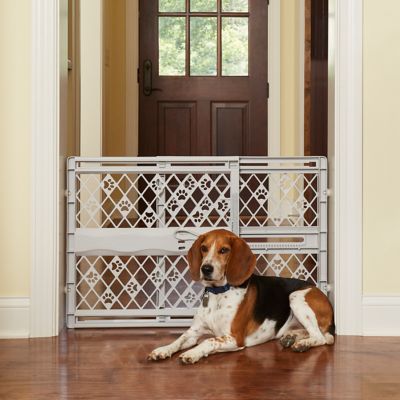
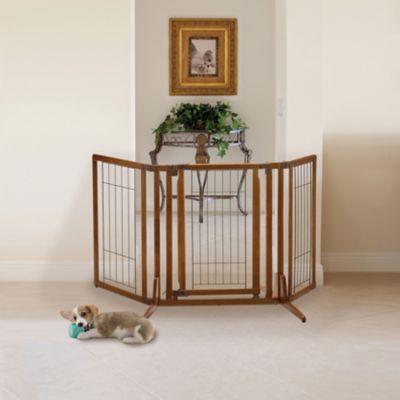
Fit and mounting style make a big difference in how a pet gate functions. Pressure-mounted pet gates hold tension against the sides of an opening, making them a practical option for many interior doorways and hallways. Some designs require wall cups secured with hardware, so mounting requirements matter even when a gate is described as pressure-mounted. These gates often have a bottom crossbar that stays in place when the door opens, creating a threshold people need to step over. Hardware-mounted pet gates attach with screws to suitable walls, doorway framing, or properly fitted mounting supports. They can make sense where a more fixed barrier is needed, but the mounting surface must be sound enough to support the installation. At the top of stairs, the gate must be specifically approved for that location and installed according to the manufacturer’s directions; pressure-mounted and freestanding gates do not belong there. A top-of-stairs design should also avoid a floor-level trip bar and prevent the door from swinging out over the steps. Freestanding pet gates rest on their own feet or folding panels and are generally better suited to calm animals that won’t push, jump against, or knock over the barrier. Their footprint matters as much as their listed width, especially beside furniture or along a narrow passage. Extra-wide pet gates and compatible extension panels can span larger openings between living spaces, provided the finished setup stays within the stated dimensions. Width measurements should account for baseboards, trim, and any difference between the opening near the floor and higher up. Angled walls and stair posts may call for approved mounting accessories rather than an improvised attachment. Bar spacing also deserves attention: a small puppy’s head or body may fit through an opening that contains a larger dog. A pass-through opening for a smaller animal needs the same scrutiny, since it may also admit the pet meant to stay behind the gate. Homes with young children need a barrier rated for the intended child-safety application; a pet gate is not automatically a child safety gate.
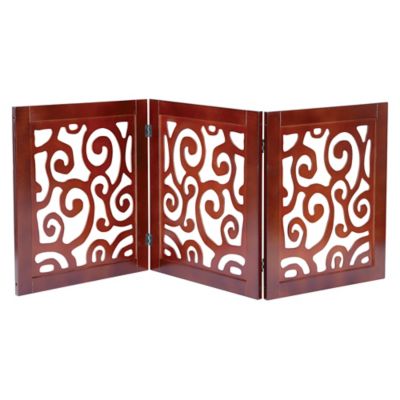
Materials influence a gate’s weight, appearance, cleaning needs, and ability to stand up to everyday contact. Steel pet gates tend to have a substantial feel, while aluminum designs can be lighter to handle. Wood gates bring a familiar look alongside cabinets, trim, and other household furnishings, though chewing and scratches can leave visible marks. Plastic designs vary in rigidity, and fabric or mesh barriers need particular attention around pets that scratch, chew, or lean against an opening. For a strong dog that regularly tests boundaries, material alone is not enough; the frame, latch, mounting method, and installation all need to suit the animal and location. Smooth edges, intact finishes, and openings that won’t catch a collar help support everyday safety. Indoor and outdoor ratings are worth keeping separate, since an indoor gate isn’t necessarily intended for a porch, deck, or yard entrance. Gates usually control passage through an opening, while
Pet Fences can help define a broader boundary or enclosure, depending on their design. For household gates, routine care often means wiping away hair, nose prints, and food splashes with a cleaning method approved for the material. Wood should not be left soaking wet, and moving parts need attention if they begin to bind or fail to latch. Regular checks can catch loose mounting screws, shifting tension points, cracked panels, or damage from chewing before the barrier stops working as intended. A growing puppy may eventually need a different gate height or configuration, and a senior dog may benefit from a wider, unobstructed walking route through the home. Whether the goal is keeping a beagle out of the pantry or giving a recovering pet a quiet room under veterinary guidance, a well-fitting pet gate creates a clear household boundary without shutting the animal away from daily life.