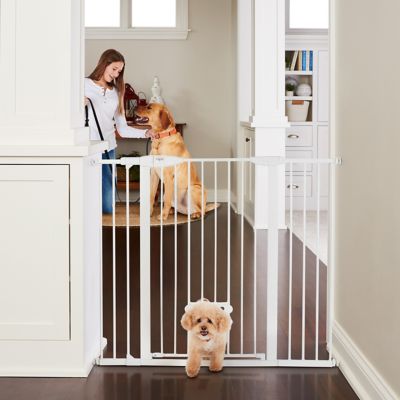
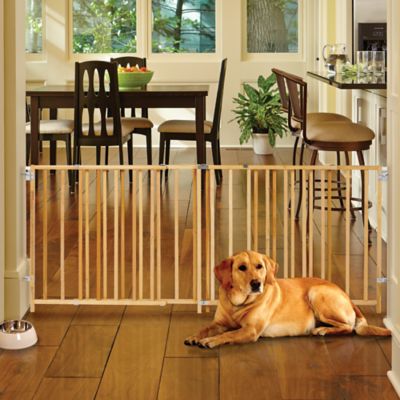
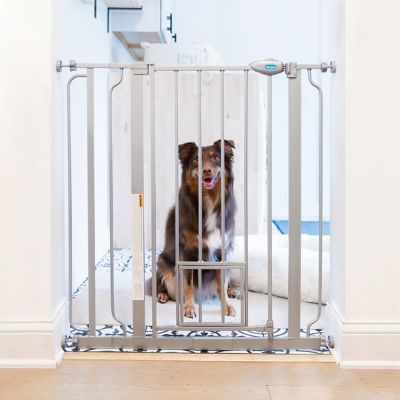
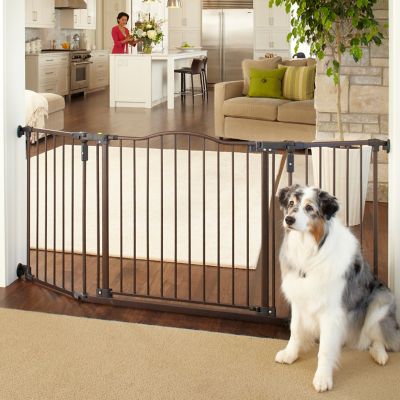
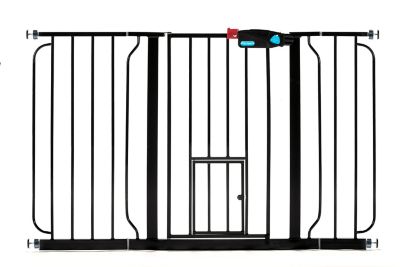
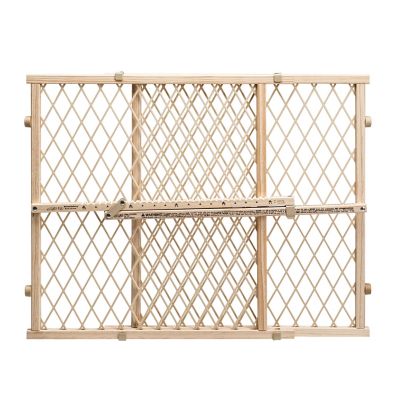
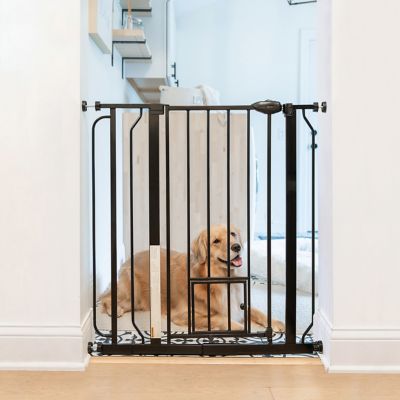
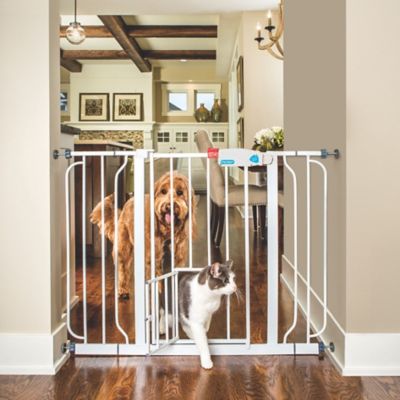
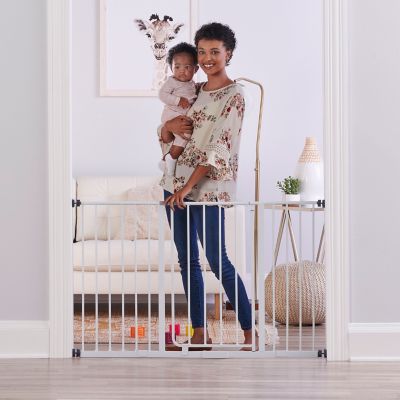
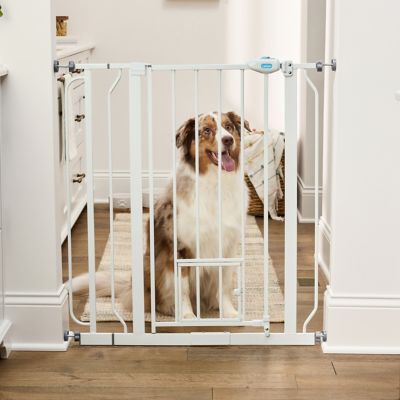
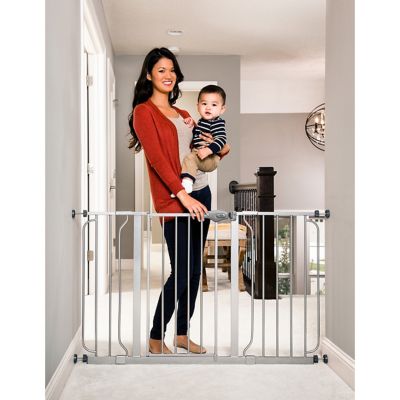
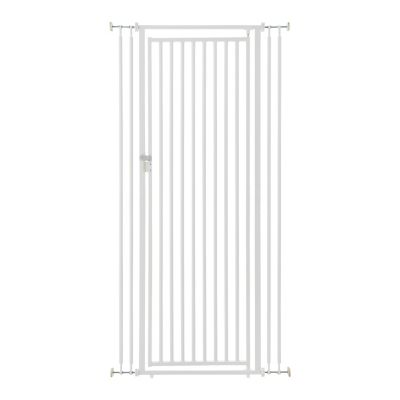
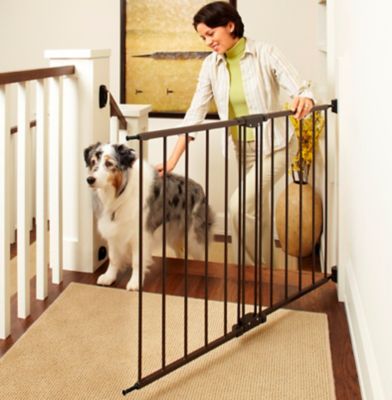
Pet gates for hallways help create a safe, comfortable home for dogs, puppies, cats and other small pets without closing off the whole house. A hallway gate can keep a curious pup out of a room with cleaning supplies, protect a resting pet from busy foot traffic, or give a new dog a quieter place to settle in. It can also help keep pets away from muddy boots, dropped food, laundry piles and doors that open to the outdoors. During the cooler months, when pets and people may spend more time indoors, a well-placed gate can make daily routines easier. Use one near a back entry to keep a dog from rushing the door, or place one across a hallway when family, friends or delivery traffic has your pet worked up. A hallway is often a high-traffic area, so look for a design that lets people pass through easily while still providing a dependable barrier. Walk-through gates with a swinging door are handy because you do not have to step over them, especially when carrying a laundry basket, feed bowl or a sleeping child. An auto-close feature can help prevent the gate from being left open by accident, while a manual lock or double-action latch adds another layer of security for pets that are good at nudging their way through.
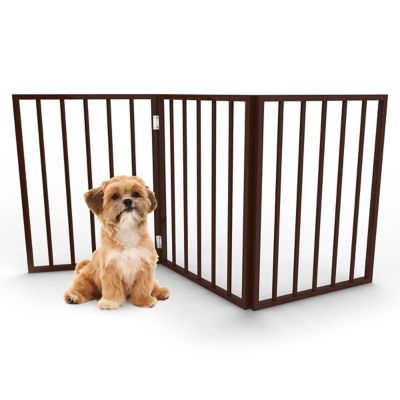
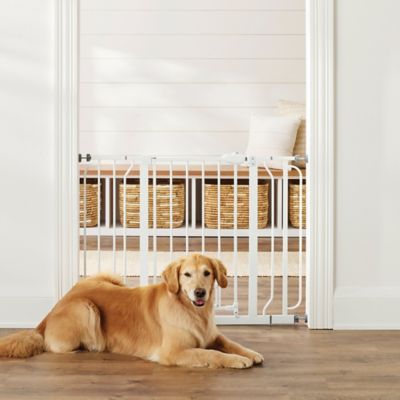
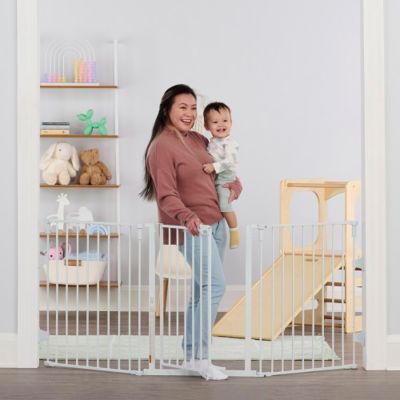
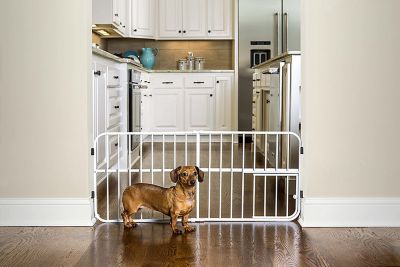
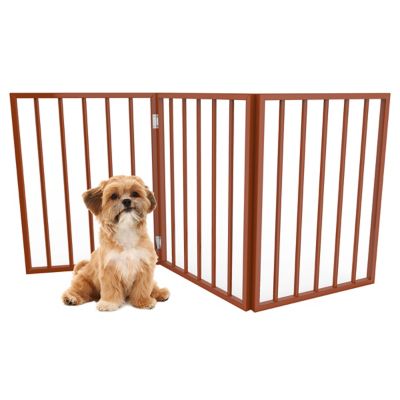
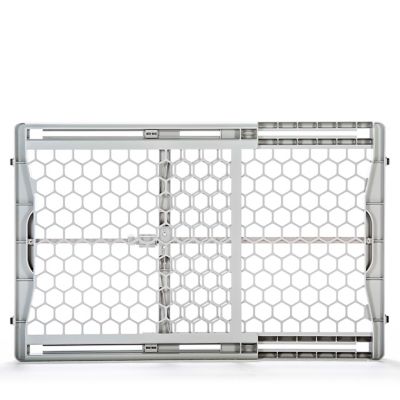
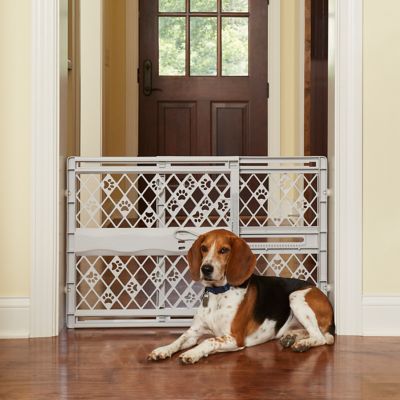
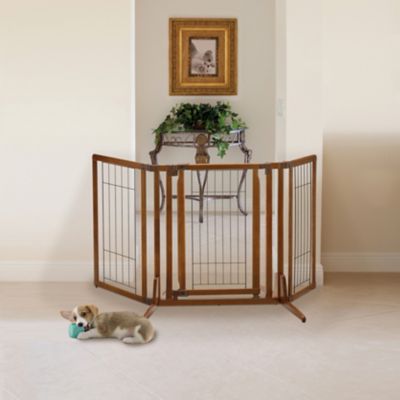
Before choosing a pet gate for a hallway, measure the opening carefully from wall to wall at the height where the gate will sit. Take the measurement in more than one spot if the walls, trim or flooring are uneven, and account for baseboards or molding that may keep a gate from sitting flush. A pressure-mounted gate uses tension against the walls and generally does not require drilling, making it a practical choice for rentals, finished rooms and openings where you want a simpler installation. These gates are convenient for many everyday hallway uses, but they should be installed firmly and checked often for shifting, especially in a home with a strong, determined dog. Hardware-mounted gates attach to the wall and may offer a more permanent setup when extra stability matters. Retractable mesh gates are another space-saving option, particularly for narrow hallways or areas where a bulky frame would get in the way. The mesh rolls away when the opening needs to be clear and creates a lower-profile look between uses. Freestanding foldable gates can be moved from room to room and are useful for calmer pets, temporary arrangements or households that need flexible coverage. They may not be the right choice for a large dog that leans, jumps or pushes against barriers. For hallways with unusual widths, wide openings or angled walls, check the listed adjustment range and installation style before ordering. A gate that is too narrow will not cover the opening, while one stretched to its limit may not feel as steady as a properly fitted option.
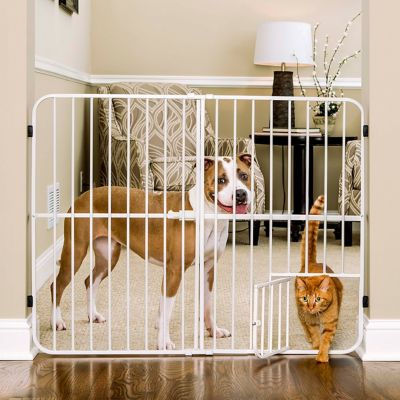
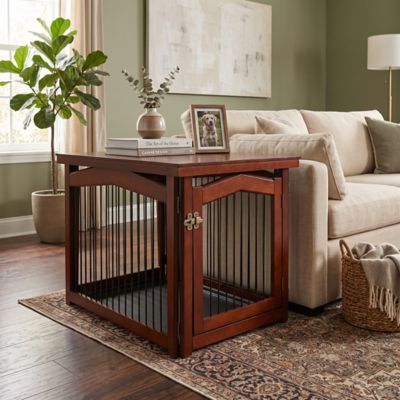
The pet’s size, age, behavior and ability to climb should guide the gate height and construction. A low gate may work for a quiet older dog, while an active jumper may need an extra-tall design measuring 36 inches or more. Puppies can squeeze through surprisingly small spaces, and small dogs may get their heads or paws caught in wide openings, so inspect the spacing between bars, slats or mesh and choose a barrier suited to the pet’s body size. Cats may climb some gates or slip through gaps that stop a dog, so a cat-friendly setup may call for a taller design, closer spacing or a style that does not provide easy footholds. Watch how your pet behaves around the gate during the first few days. Some animals settle down quickly after learning the boundary, while others may paw, chew or test the latch whenever they hear someone in the next room. Keep the gate clear of furniture that could help a pet climb over it, and check the frame, hinges, latch and wall contact points regularly. A gate can also make a thoughtful gift for someone welcoming a new puppy, adopting a rescue pet or preparing a home for an older animal that needs more controlled movement. It pairs well with other practical pet-care essentials and can be especially useful for new pet owners learning how to manage open floor plans, busy entryways and separate spaces. If the hallway leads to a staircase, choose a setup made for that particular location and review
Pet Gates for Stairways for additional options. With the right width, height, spacing and latch, a hallway gate can blend into the home while giving pets room to relax and giving the people who care for them a little more peace of mind.