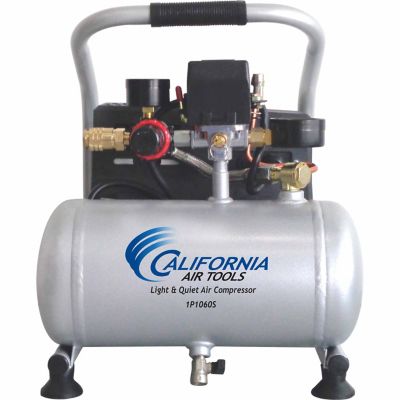
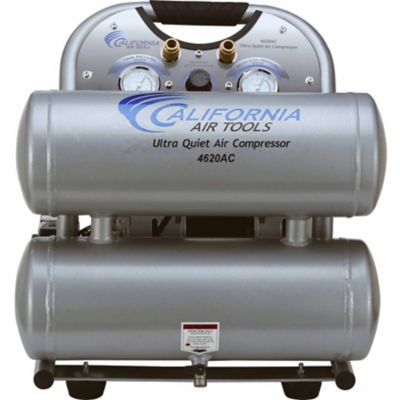
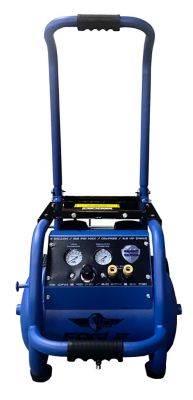
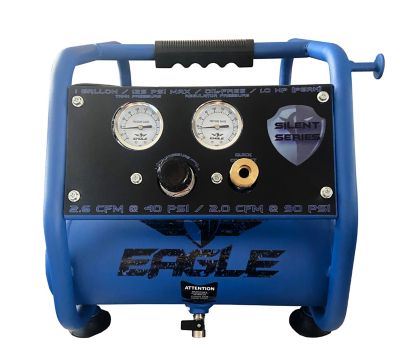
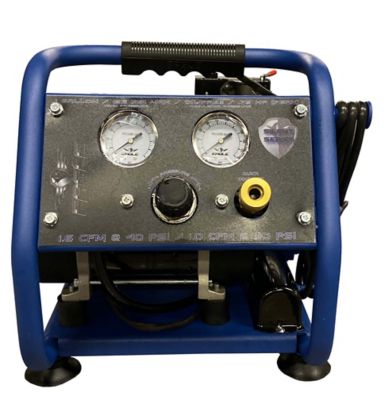
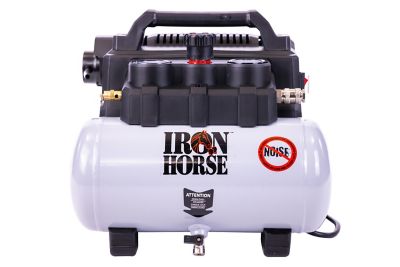
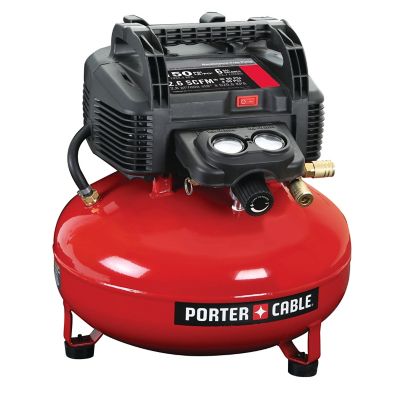
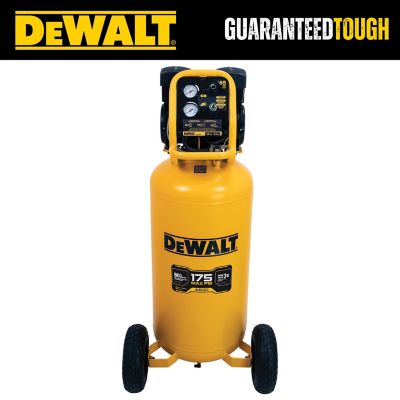
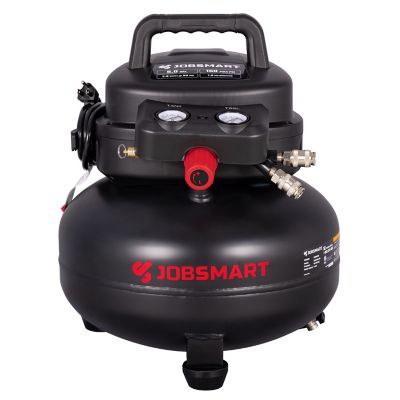
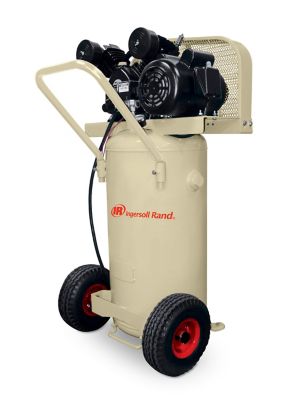
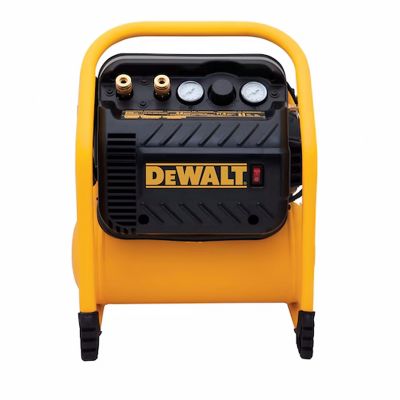
Hotdog air compressors are compact, portable electric compressors named for their single horizontal tank, which has a long, rounded shape similar to a hotdog. Their narrow footprint makes them handy in a garage, shed, workshop, or truck bed, especially when floor space is tight and equipment needs to be moved from one project to the next. Most models in this category are built for light-duty household work, small repairs, and occasional inflation rather than nonstop commercial use. A hotdog compressor can supply air for inflating car and bicycle tires, trailer tires, balls, pool toys, air mattresses, and other inflatables, while also powering select pneumatic tools such as brad nailers, finish nailers, narrow crown staplers, and some airbrushes. The tank stores a reserve of compressed air, allowing the motor to cycle on and off instead of running every second the tool is in use. For trim work, craft projects, touch-ups, and quick maintenance around the property, that compact tank can be a real time-saver. Many light-duty units use an oil-free pump, which means there is no pump oil to check or replace and less chance of an oily mess in a busy workspace. They are often a practical choice for homeowners, DIYers, crafters, hobby farmers, and anyone who wants an air supply close at hand without dedicating room to a large vertical compressor. A small compressor also makes a useful gift for a new homeowner, a college student setting up a first workshop, a family member who maintains bicycles and outdoor gear, or a handy person who enjoys building, repairing, and improving things around the house. During the warmer seasons, it can stay ready for inflating sports equipment, checking up tires before a road trip, or cleaning up small projects; as cooler weather settles in, it can help with indoor trim work, craft projects, and routine garage maintenance.
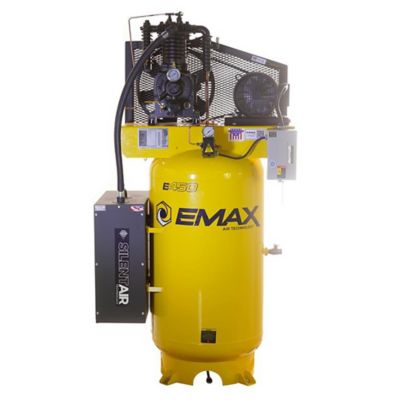
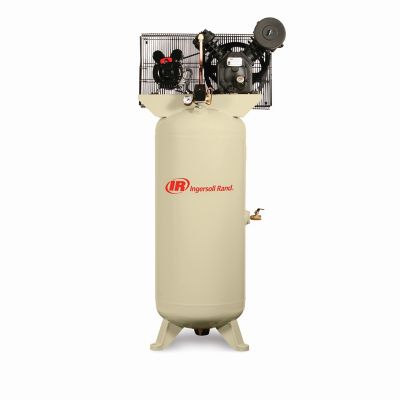
When choosing among hotdog air compressors, start with the job rather than the tank appearance alone. Tank size is commonly listed in gallons, with smaller units offering easier carrying and storage and somewhat larger compact tanks providing a longer reserve for repeated fastening or inflation. A tank in the small light-duty range is generally well suited to brad nailing, stapling, tire inflation, and similar tasks, while a larger tank may reduce how often the motor cycles during a project. Pay attention to maximum pressure, usually listed in pounds per square inch, or PSI, but remember that maximum PSI is not the same as usable airflow. Cubic feet per minute, or CFM, tells you how much air the compressor can deliver at a stated pressure and is especially important when matching the compressor to a pneumatic tool. Compare the compressor’s CFM at the tool’s required PSI with the tool’s air demand, allowing some extra capacity when possible. A compressor that works well for a brad nailer may not keep up with a spray gun, impact wrench, grinder, or other high-demand tool. Horsepower can offer a general sense of motor size, but tank capacity, delivered CFM, duty cycle, and the manufacturer’s intended use provide a more useful picture of performance. Portability matters, too. Look for a sturdy handle, balanced weight, rubber feet, an accessible drain valve, and a power cord long enough for your setup. A compact unit may weigh roughly 18 to 30 pounds, though exact weight varies, so consider whether you will carry it up steps, across a gravel drive, or between a barn and a workshop. Noise is another important consideration, particularly when working indoors, near a house, or around animals. All compressors make operating noise, but some are designed to run more quietly than others. Check the listed sound rating when available, place the unit on a stable surface, and use hearing protection when needed. An extension cord can affect motor performance, so follow the manufacturer’s guidance and use a properly rated cord only when recommended. For larger tools, extended run times, sandblasting, automotive work, or frequent professional use, a
Professional Air Compressors option may be a better fit.
Safe operation and simple care help a hotdog air compressor provide dependable service for years. Before connecting a tool, check that the hose, fittings, couplers, and pressure regulator are rated for the intended pressure and that all connections are secure. Use the regulator to set the pressure required by the tool or inflatable rather than automatically using the compressor’s maximum setting. Keep the intake vents clear of sawdust, straw, grass, and other debris, and operate the compressor on a dry, level surface with enough room around it for ventilation. Never use an electric compressor in rain or standing water, and avoid placing it where moisture can collect near the motor or electrical connections. Drain the tank according to the owner’s manual, especially after use in humid conditions, because condensed water can collect inside the tank and contribute to corrosion. Unplug the unit before cleaning, moving, inspecting, or servicing it, and let the motor cool if it has been running for a long stretch. When inflating tires, use a suitable gauge and check the vehicle, trailer, bicycle, or equipment manufacturer’s recommended pressure; overinflation can damage the item and create a safety hazard. For pneumatic nailers and staplers, follow the tool’s instructions, keep hands clear of the fastening area, and wear eye protection. Store the compressor in a clean, dry place with the hose loosely coiled and accessories kept together, so it is ready when a flat tire, loose trim board, or weekend project comes up. A hotdog compressor is not intended to replace every type of air system, but its compact shape, straightforward operation, and useful mix of portability and stored air make it a dependable choice for many everyday jobs around the home, shop, farm, and garage.