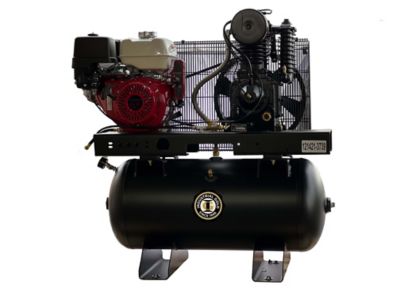
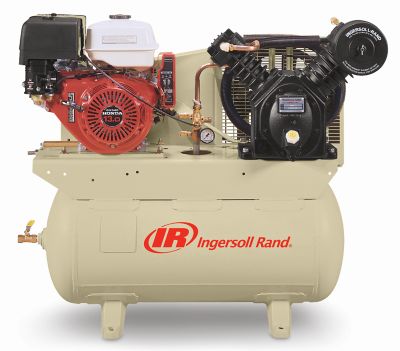
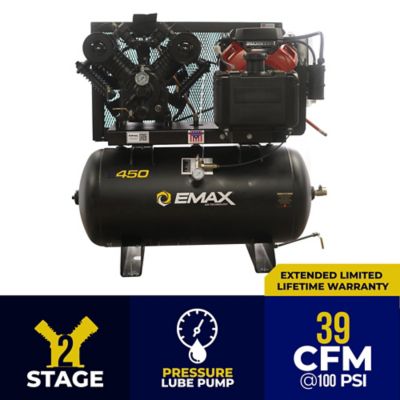
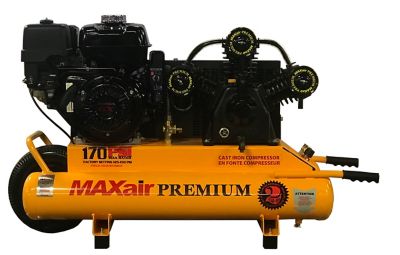
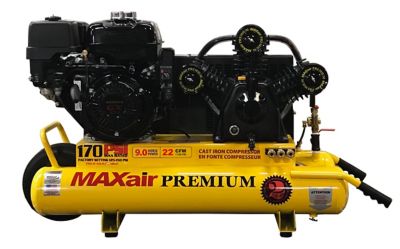
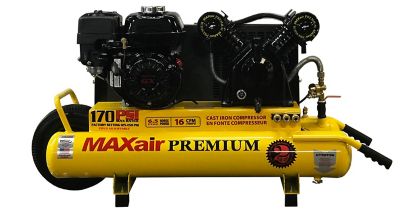
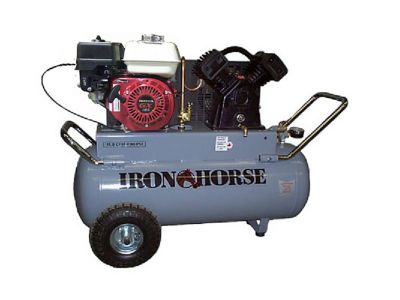
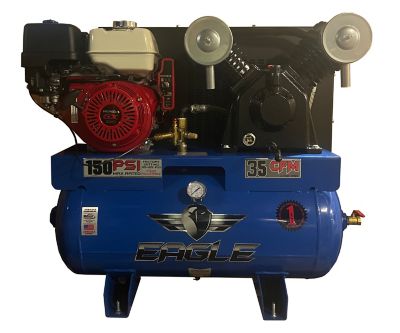
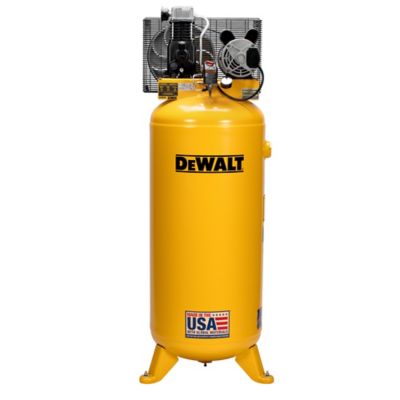
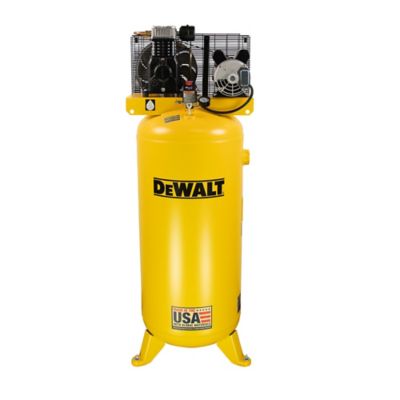
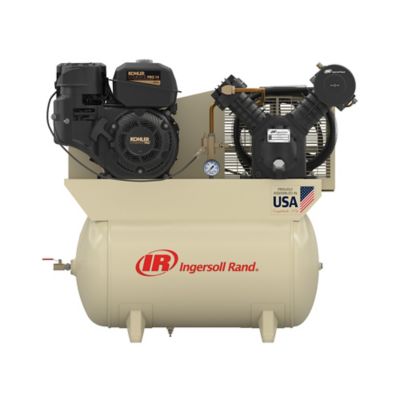
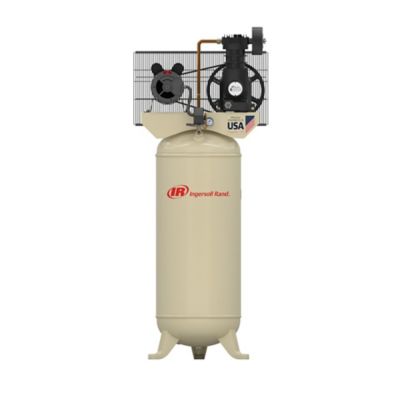
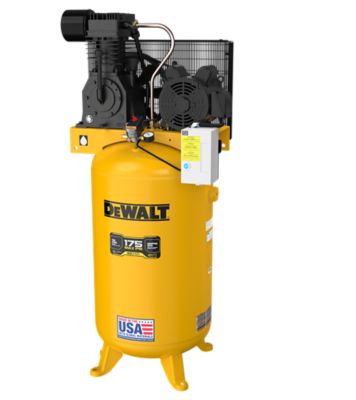
Gas engine-powered air compressors provide compressed air for farm work, mobile repairs and jobsites where an electrical outlet is out of reach. A gasoline engine drives a pump that fills an air tank, supplying pneumatic tools and inflation equipment without plugging the compressor into utility power. That setup makes sense for a service truck parked beside a tractor in the field, a fencing crew working along a pasture or a contractor running nailers away from a finished building. The right match depends on the work, not just the size of the engine. Air delivery, commonly listed in cubic feet per minute or standard cubic feet per minute at a stated pressure, shows how much air the compressor can supply. Comparing ratings at the same pressure and under comparable test conditions helps distinguish equipment suited to occasional bursts from equipment intended for tools that keep drawing air. An impact wrench breaking loose wheel fasteners has a different demand pattern than a sander running steadily across a panel. Nailers generally need short bursts, while grinders, sanders and spray equipment can call for a steadier supply. The combined demand matters when more than one tool runs at once. Tank capacity adds another piece to the picture: a larger tank stores more air and can help support brief periods of higher demand, but it cannot make up for a pump that delivers less air than the tools consume. Maximum pressure is only part of the story, too. Tools need their specified operating pressure and enough airflow at the connection, with pressure losses through hoses and fittings taken into account. A regulator helps set outlet pressure within the equipment’s limits rather than sending full tank pressure to every attachment. For ranch hands, equipment mechanics, builders and property owners, these details help define whether a compressor fits routine tire inflation, fastening work or a more demanding field-service setup.
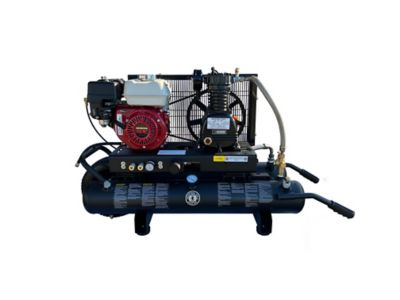
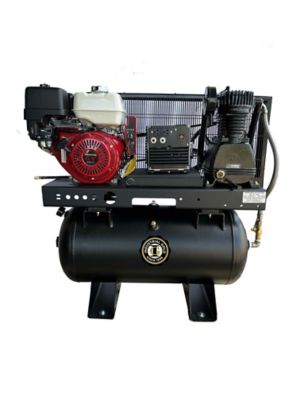
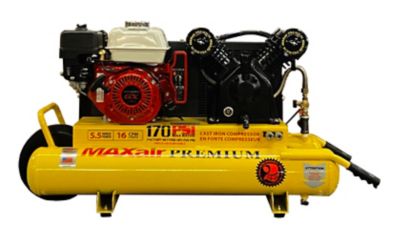
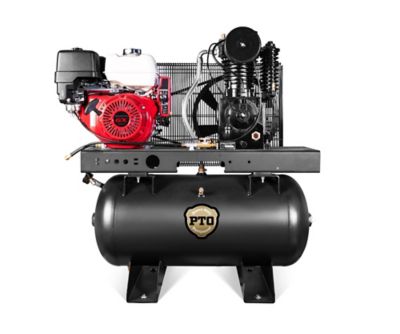
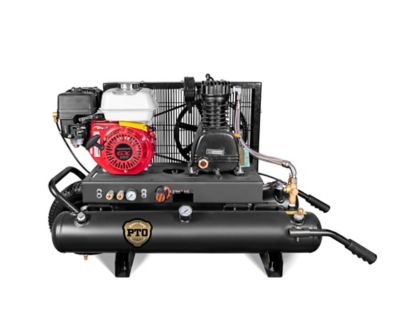
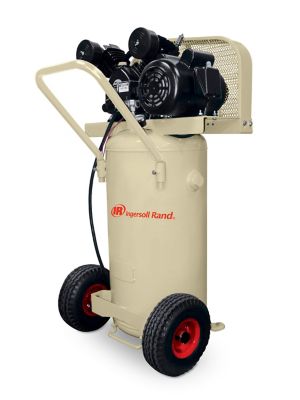
Frame design, tank layout and total weight shape how a gas-powered air compressor fits into the workday. Compact carry-frame layouts can suit crews that move between smaller tasks, while wheelbarrow-style frames combine handles and wheels for repositioning around a jobsite. Even a wheeled compressor can take considerable effort to move over gravel, ruts or soft ground, so tire size, balance and loaded weight deserve attention. Truck-mount configurations serve a different purpose, keeping an air supply with the service vehicle rather than requiring repeated unloading.
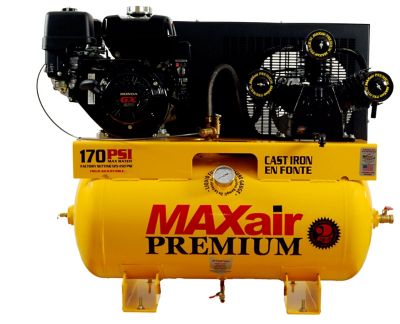
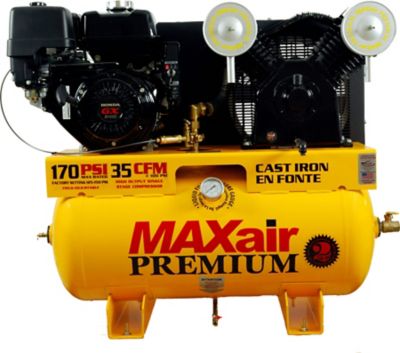
Horizontal Air Compressors have tanks positioned on their sides, but the engine, pump and frame still determine overall height and clearance. Bed space, mounting requirements, access to controls and clearance for maintenance all affect the fit. Secure installation and transport should follow the equipment and vehicle manufacturers’ directions; a frame handle is not automatically a lifting or tie-down point. Construction details matter alongside the footprint. Steel tanks and frames are common, while pump designs may incorporate cast-iron cylinders, aluminum components or a combination of materials. Belt-drive systems add belts and pulleys to the maintenance picture, while direct-drive arrangements connect the engine and pump differently. Neither layout alone tells the whole story about service life or performance. Pump speed, operating limits, access to service parts and regular upkeep all play a role. Oil-lubricated pumps need the specified lubricant and scheduled oil checks, and the engine has its own service requirements. Easily reached drains, readable gauges and accessible fill points can make those routine chores less of a hassle. For equipment that rides along on ranch calls or moves from barn to outbuilding, practical details such as protected controls, sturdy handles and a well-supported frame can matter just as much as the number on the tank. A compressor that fits the truck but leaves no room to reach the drain or service the engine can turn a simple chore into a struggle.
The rest of the air system helps determine what reaches the tool at the far end of the hose. Hose diameter and length, coupler size, regulator capacity and fittings can restrict airflow, especially when a tool draws air continuously. A long run across a work area needs enough capacity to limit pressure loss, rather than relying on extra regulator pressure to cover a mismatch. Hoses and attachments also need pressure ratings appropriate for the system. Moisture control matters because compressing air produces water that can collect in the tank and travel downstream. Draining the tank according to its instructions helps manage that buildup, while suitable filters and separators help protect tools or support tasks with stricter moisture requirements. Painting and finishing may need additional air treatment beyond what general fastening or inflation work requires. Pump duty cycle and recovery time also deserve attention for repeated jobs: a compressor that handles a few wheel fasteners may not keep pace with an air-hungry tool running without much pause. Keeping cooling passages clear, inspecting hoses and fittings, and addressing leaks helps the equipment do its job without needless air loss. Gasoline engines also require outdoor operation, well away from doors, windows and vents, because exhaust contains carbon monoxide. An open garage door does not make indoor operation safe. For work inside a building, the compressor belongs outdoors in a suitable location, with an appropriately sized hose carrying air to the work area. Stable placement, proper ventilation and hearing protection remain important wherever the job takes place. On a working farm or service route, the appeal is straightforward: compressed air can travel with the crew instead of tying every repair to the shop. Matching airflow, tank capacity, transport needs and maintenance access to the tools on hand creates a setup that makes sense for tightening fasteners, running nailers, handling inflation tasks and keeping equipment repairs moving.