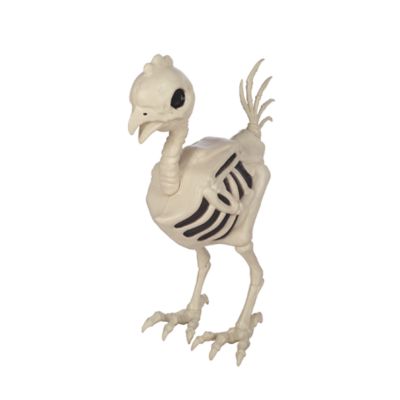
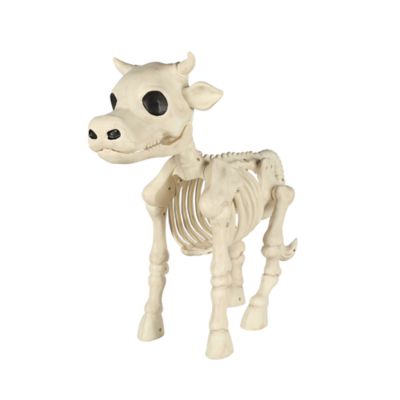
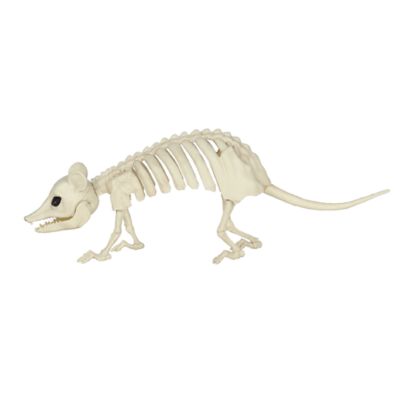
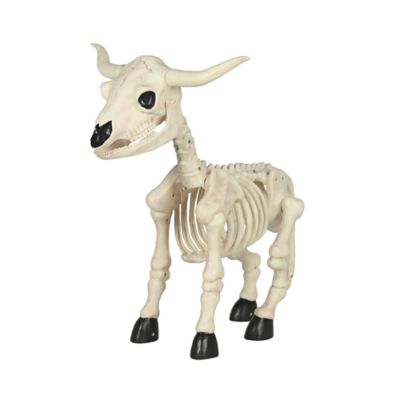
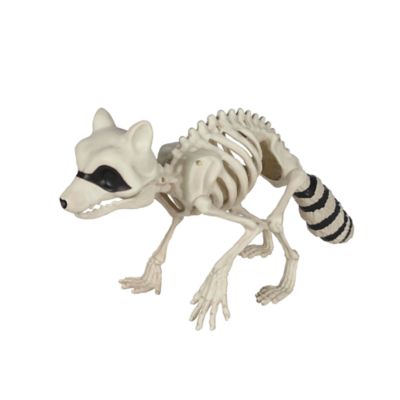
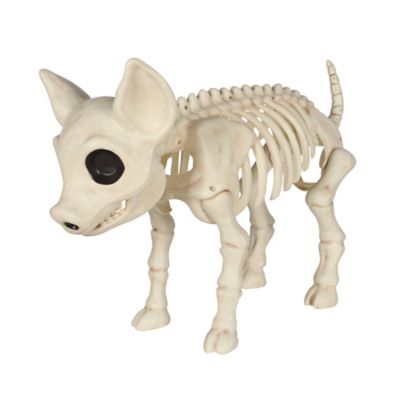
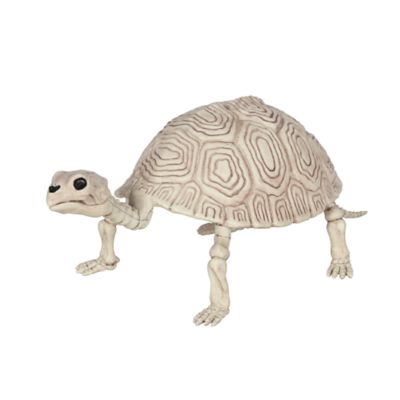
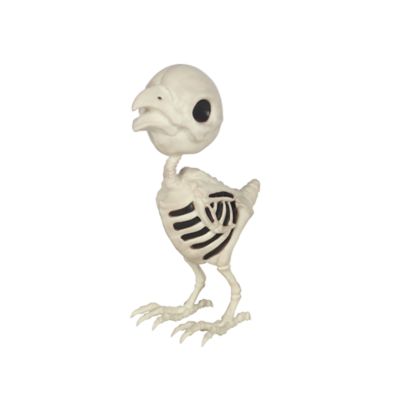
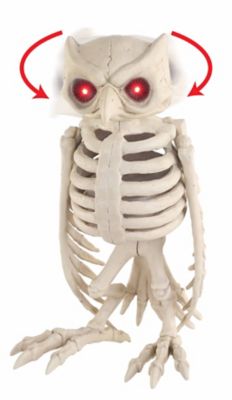
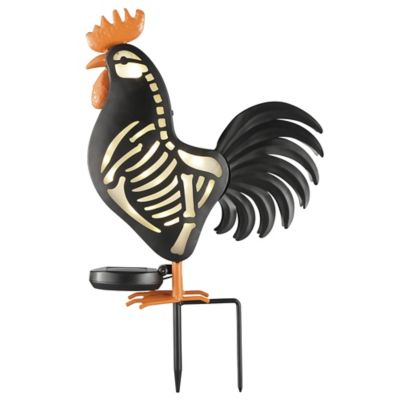
Halloween animal skeletons are display props that give familiar pets, farm animals and wildlife a bony look for Halloween. Dogs, cats, birds, reptiles and barnyard shapes lend themselves to everything from a playful porch scene to a spooky farmyard setup. Their appeal comes from recognizable outlines: a curled tail, a long muzzle, a crouched back or a pair of wings can tell the story before anyone gets close enough to see the ribs. These figures are usually stylized rather than anatomical models, so features such as ears, exaggerated teeth and oversized eye sockets are part of the Halloween character. Bone-colored surfaces and darker shading around the joints can help those details stand out against grass, porch boards or a dark entryway. A skeleton dog beside an empty feed pan suggests a faithful farm companion with a spooky twist, while a small gathering of skeletal cats can give a porch corner a mischievous feel. Farm animal shapes fit naturally with fence rails, straw bales and outbuilding backdrops, provided the placement suits the product’s intended setting. Birds and smaller creatures bring detail to shelves, tables and sheltered entry areas without demanding much floor space. Larger animal forms create a stronger focal point across a yard or beside a wide entrance. The mood can stay lighthearted for trick-or-treat visitors or lean toward a haunted barnyard for a Halloween party. For households with younger children, familiar animal shapes can make a skeletal scene feel more playful than frightening. Animal lovers may also enjoy choosing a figure that calls to mind a favorite pet or a familiar sight around the farm. The strongest displays do not need every animal to match perfectly; a shared finish, a clear focal point and enough space around each shape help the scene feel connected. Whether the setting is a farmhouse porch, a suburban walkway or an indoor party table, these props bring an animal-centered twist to the familiar Halloween skeleton theme.
Materials, construction and proportions all affect how Halloween skeleton animals fit into a display. Molded plastic is common because it can capture ribs, vertebrae and facial details without the weight of a solid figure. Hollow sections can make a larger piece easier to carry, while thicker parts and well-supported connections matter where legs, tails and necks extend away from the body. Fixed-position figures offer a set silhouette; articulated versions allow changes in posture, within the limits of their joints. A head that turns or a leg that bends can add personality, but movable parts need gentle handling rather than force. For a porch or tabletop, overall height is only part of the fit. The full footprint, including a stretched tail, spread wings or an extended muzzle, determines whether the figure sits comfortably without crowding a doorway. A compact animal can disappear against a broad lawn yet stand out clearly on a raised surface. Likewise, a tall figure may look right beside a gate but overwhelm a narrow hallway. Outdoor placement depends on the product’s labeling, not simply on whether the body is plastic. Rain, direct sunlight and wind can affect finishes, joints and any attached components, so an indoor-only piece belongs inside even when the forecast looks clear. Sheltered locations reduce exposure but do not turn an indoor prop into an outdoor one. Broad feet, balanced poses and appropriate securing points are worth considering for open areas where a lightweight figure could tip. Placement also matters around steps, gates and walkways; visitors should have a clear route without catching a shoe on a tail or support. Animal forms pair naturally with
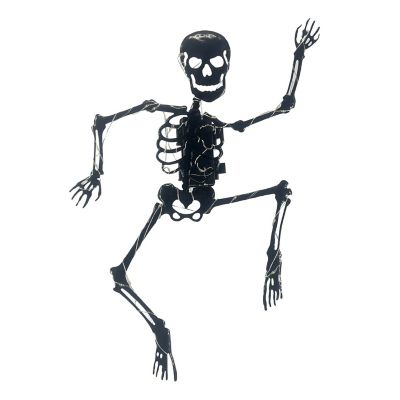
Plastic Skeletons when a display calls for both creatures and classic human-shaped figures. Keeping their scale and placement in mind helps the scene read clearly from the road, the driveway or the front steps.
Halloween animal skeletons suit households that enjoy setting a scene, party hosts building a themed gathering and animal enthusiasts who like a little barnyard humor with their Halloween. They can also make a thoughtful seasonal gift when the recipient’s space, favorite animals and preferred level of spookiness are part of the choice. A smaller figure may suit someone with a mantel or apartment entry, while a larger form makes more sense for a person who enjoys arranging a roomy porch or yard. The intended audience matters as much as the setting. A friendly-looking pose near a treat bowl creates a different impression from a crouched animal tucked into shadows, even when both share the same skeletal theme. Lighting changes that impression, too: steady light makes the animal’s outline easy to recognize, while light from the side draws attention to ribs and joints. Any lighting or electrical components need to suit their location, with cords kept away from foot traffic. These props belong out of reach of pets that might chew loose parts, and they should not be treated as animal toys or climbing pieces. Keeping figures away from open flames and heat sources is especially important near candles, fire pits or heaters. Care between displays helps preserve the finish and keeps moving parts working smoothly. Manufacturer care directions take priority, with a soft cloth and gentle cleaning generally preferable to rough scrubbing or strong solvents. Dirt caught between ribs or around joints is easier to address before packing, and every part should be fully dry before storage. Supporting long legs, horns, wings and tails helps prevent pressure on narrow connections. Removable sections can stay together with their matching hardware so the next setup does not begin with a missing-piece hunt. With sensible placement, careful handling and protected storage, a Halloween animal skeleton can become a familiar part of the household’s Halloween scene, whether its place is by the porch steps or in a spooky little farmyard gathering.