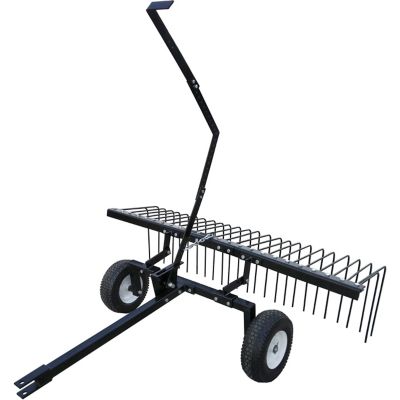
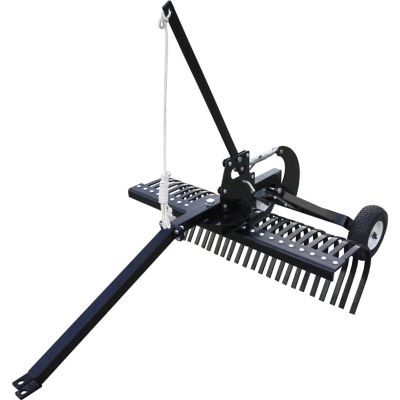
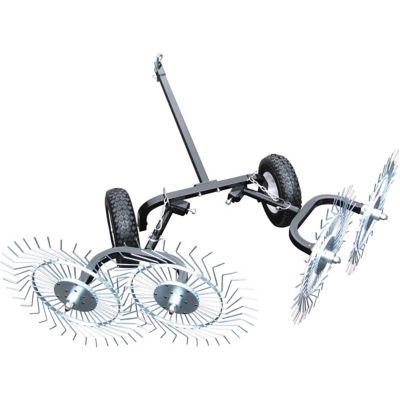
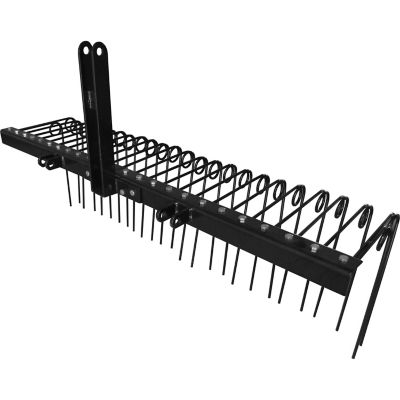
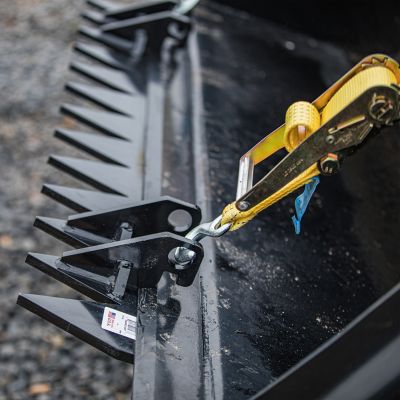
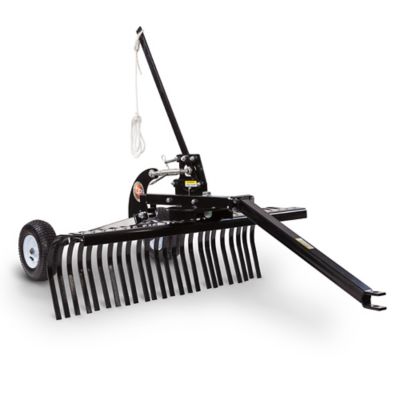
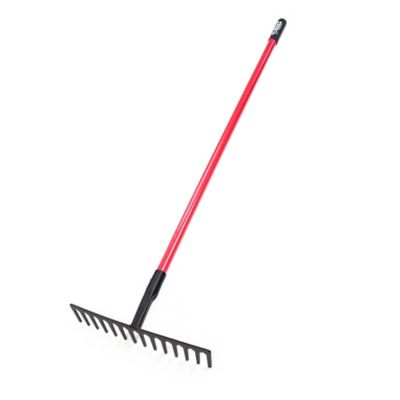
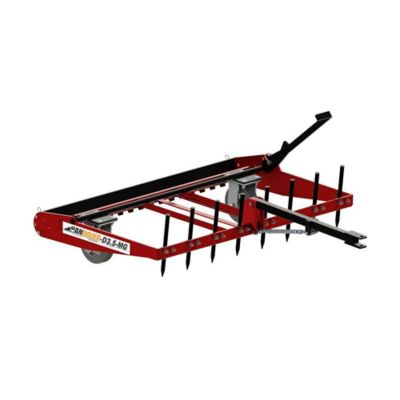
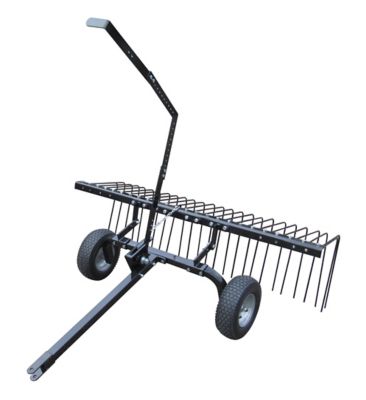
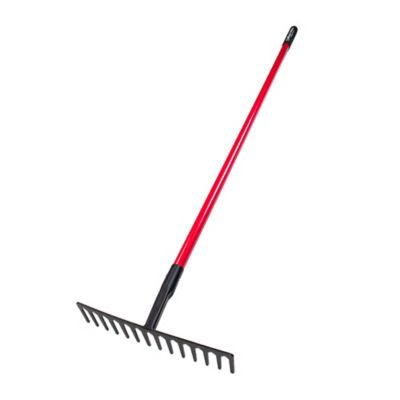
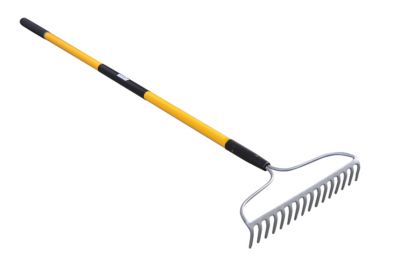
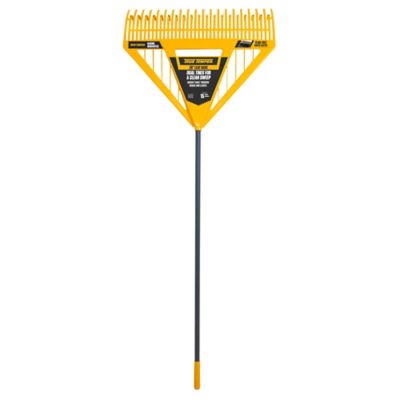
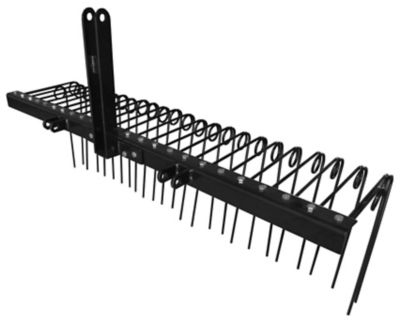
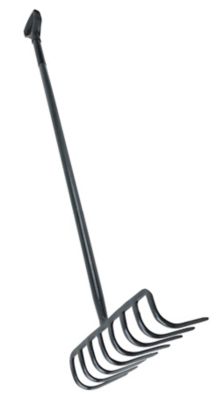
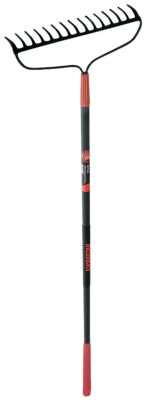
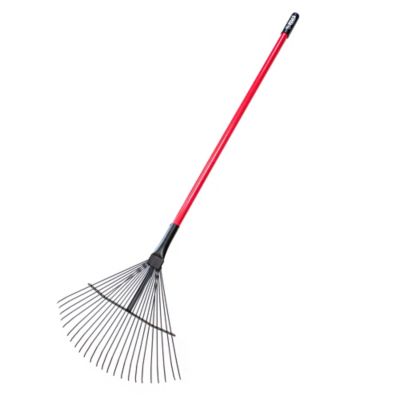
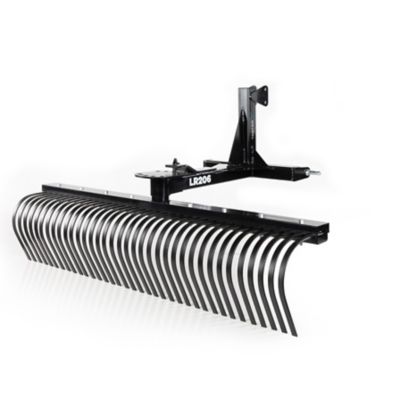
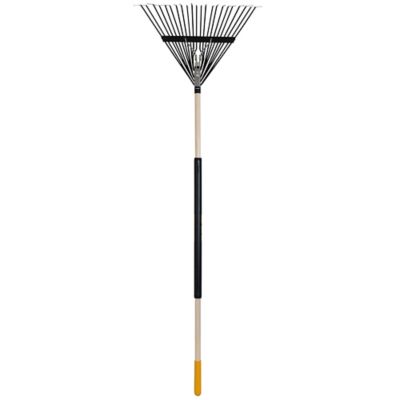
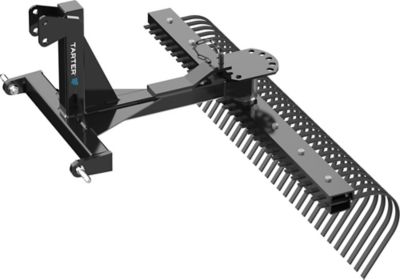
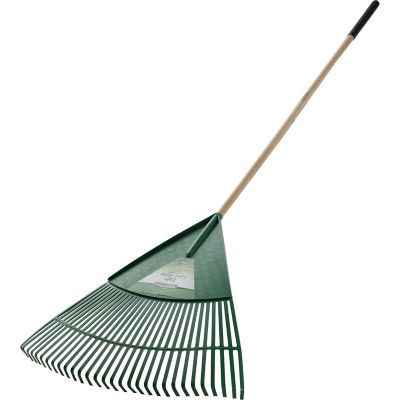
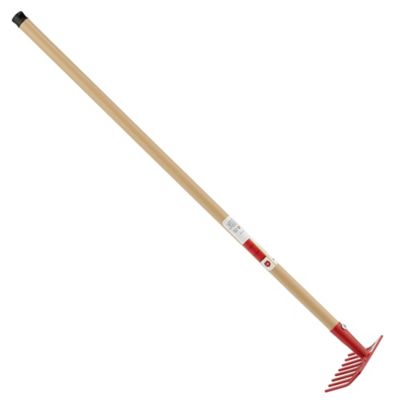
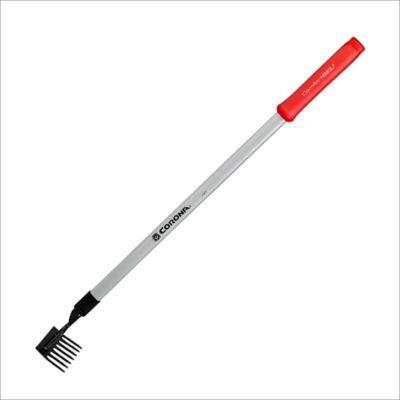
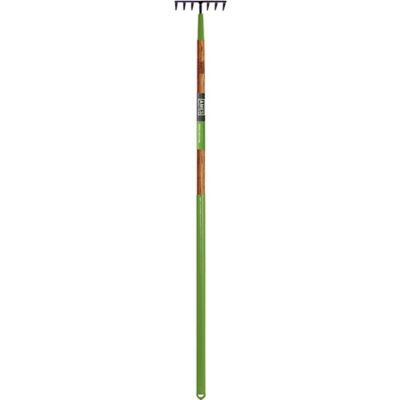
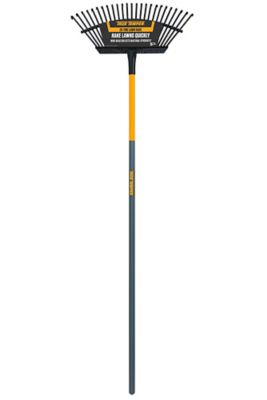
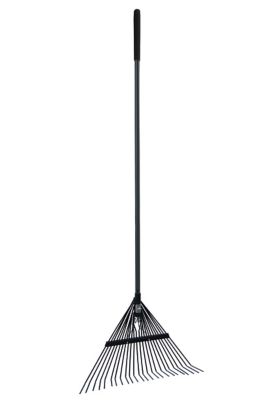
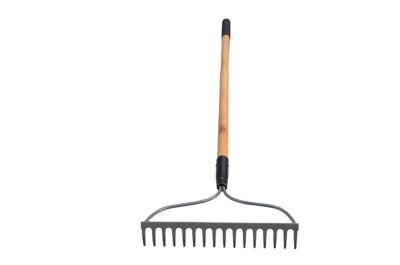
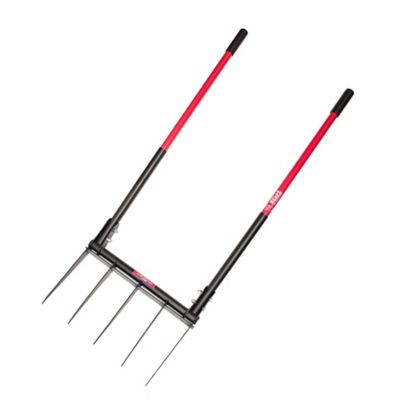
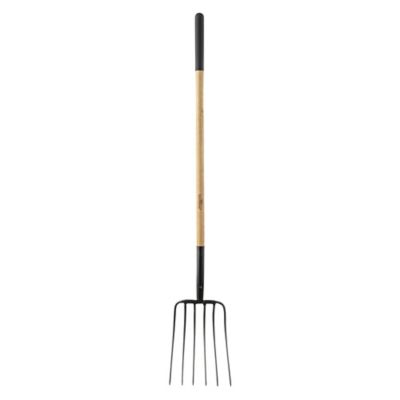
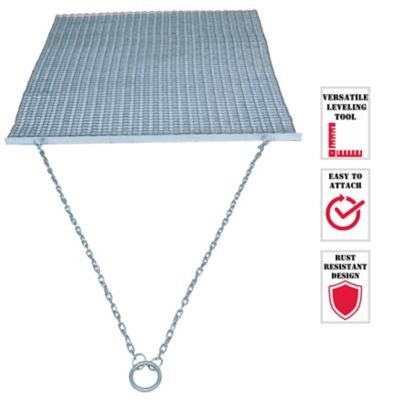
A yard leveling rake is a flat-headed lawn and landscape tool that spreads loose topsoil, sand, or screened compost into a more even layer. Often called a lawn leveling rake or leveling lute, it has a broad, open frame with crossbars that move material across the surface as the head travels back and forth. That design makes it suited to light topdressing, shallow depressions, and finishing loose soil before seeding. Around a country home, those jobs might include smoothing a small dip beside the walkway, distributing soil over a patch where grass has thinned, or evening out a newly prepared section near the back porch. Unlike a leaf rake, which gathers lightweight debris with flexible tines, a leveling rake keeps its working surface close to the ground to redistribute loose material. A bow rake can break apart clods and pull soil into place, while a leveling head is better suited to the finishing passes that spread that soil across a wider area. The distinction matters: a yard leveling rake does not remove established humps, loosen deeply compacted ground, or correct drainage problems on its own. Its strength is smoothing material already loose enough to move. On established turf, an open head helps work a thin topdressing layer between grass blades rather than simply pushing a solid pile ahead of it. Grass still needs exposure to light and air, so a flat-looking surface should not come at the expense of burying the lawn. For homeowners tending a modest patch of grass, acreage owners maintaining the lawn around the house, or grounds crews handling smaller finishing jobs, this tool fills a practical gap between rough soil work and the final surface. It can also make a thoughtful gift for someone who takes pride in a neatly kept yard, especially when the head size and handle suit the ground they maintain.
Head width, frame weight, and handle fit all affect how a lawn leveling rake feels after several passes across the yard. Common head widths run from about 17 inches for smaller spaces to 36 or 48 inches for broad, open areas, although dimensions vary by design. A narrower frame is easier to steer between planting beds, alongside a fence, or around the edges of a walkway. A wider frame covers more ground per pass and bridges small surface dips, but it also takes more room to turn and more effort to push through a load of soil. For a yard broken up by trees, gates, and garden corners, maneuverability may matter more than maximum coverage. Weight deserves the same attention. A heavier steel head can maintain contact with loose material, while a lighter setup may be easier to carry from the shed and control during longer sessions. Carbon steel provides a sturdy working frame, though exposed metal can rust when moisture lingers. Powder-coated finishes help protect covered surfaces, but scraping across stones or concrete can wear through that protection. Stainless steel offers greater corrosion resistance, though it still benefits from cleaning and dry storage. Aluminum components can reduce carrying weight, with strength depending on the frame construction and connections. Smooth welds, firm handle brackets, and crossbars that sit evenly are worth a close look because loose joints or a twisted frame can leave ridges instead of a level finish. Handle length should allow a comfortable reach without constant bending or stretching. Adjustable handles offer flexibility for people of different heights, while fixed or sectional handles have their own balance and connection points to consider. A grip that sits comfortably in a gloved hand is useful during cooler-weather chores. Pivoting head connections help the frame stay against the ground as the handle angle changes, but they should move without excessive wobble. Replacement-handle compatibility, assembly requirements, and the amount of storage space the full rake needs are practical details that can matter as much as its working width.
The material being spread makes a difference in how well a yard leveling rake performs. Fine, screened topsoil generally moves through an open frame more readily than soil full of roots, stones, and hard clumps. Screened compost can suit light lawn topdressing, though it breaks down over time and is not a permanent fill for deeper depressions. Sand flows readily when dry, but it is not the right addition for every lawn or soil profile. The best topdressing choice depends on the existing soil, grass type, and purpose of the work; no single sand-and-soil blend fits every property. Damp, crumbly material is usually easier to manage than sticky mud, which can collect on the crossbars and add weight with every pass. Picture the difference between drawing a rake over a loose, prepared seedbed and dragging it through wet clay beside a downspout: the tool may be the same, but the surface calls for different work. Standing water, deep wheel ruts, or settling near a foundation may point to grading or drainage concerns beyond what a hand rake can address. A leveling rake is most useful where the job is surface finishing rather than excavation. It also belongs alongside other tools rather than replacing them all. Leaf removal, loosening soil, and gathering stones call for different head shapes and tine spacing, and
Yard Rakes For Outdoor Maintenance covers that broader range of outdoor chores. Care is straightforward but important: soil left packed around a bracket holds moisture, and grit inside a handle connection can make adjustment difficult. Cleaning off residue, drying the frame, and checking fasteners help keep the rake ready for its next outing. Coated surfaces benefit from attention to scratches according to the manufacturer's care directions, and a sheltered storage spot keeps the head out of wet grass and standing water. During the cooler months, turf growth and ground conditions should guide any topdressing plans; frozen, saturated, or dormant lawns may need the work postponed. Matched to the space, the soil, and the person behind the handle, a yard leveling rake is a straightforward tool for bringing loose material into an even finish.