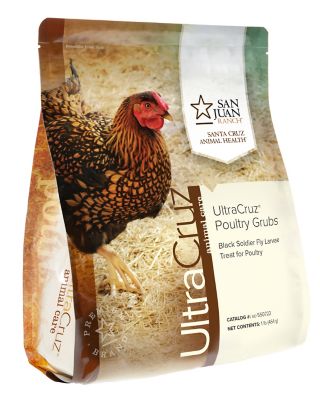
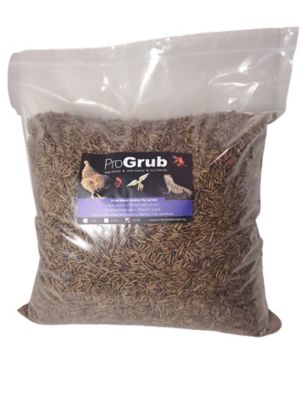
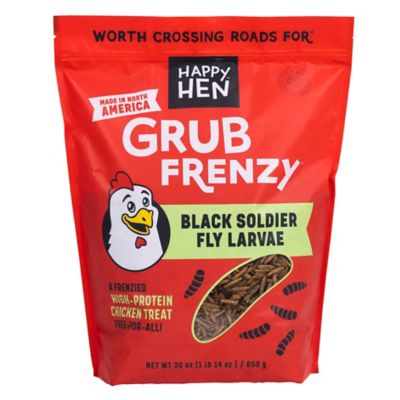
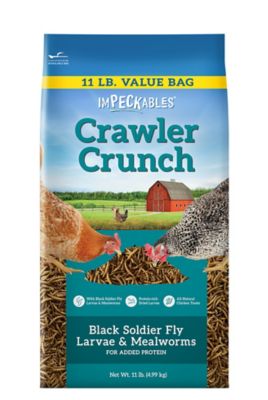
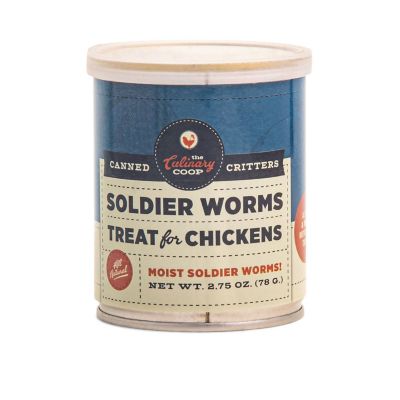
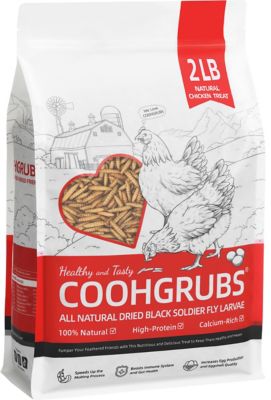
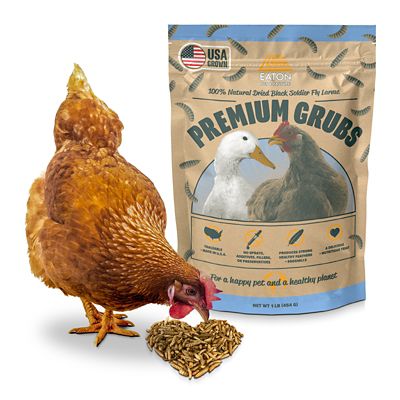
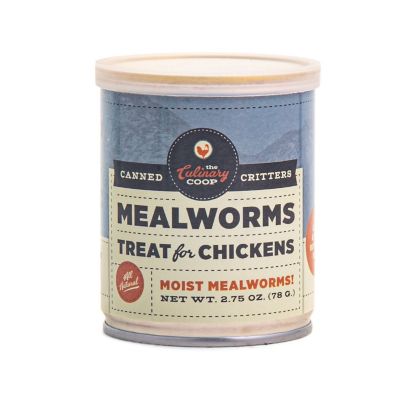
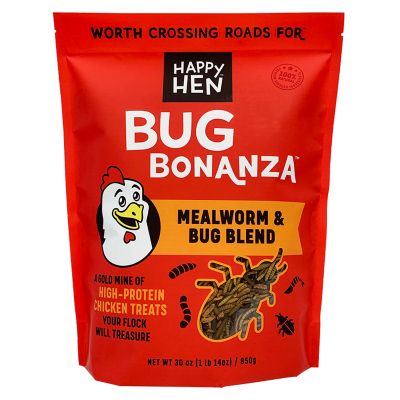
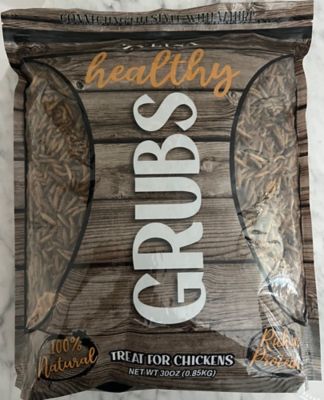
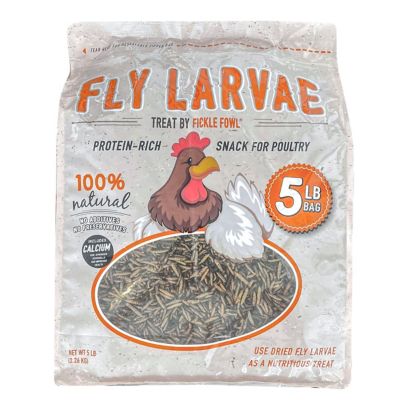
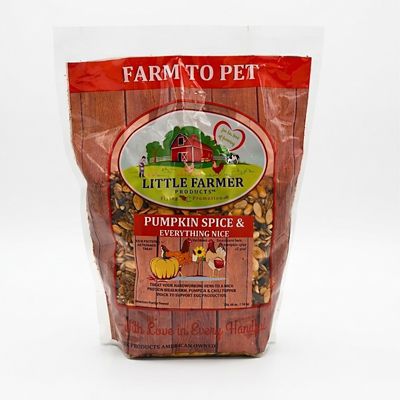
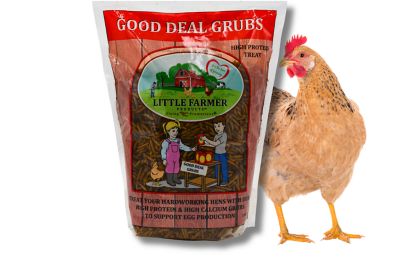
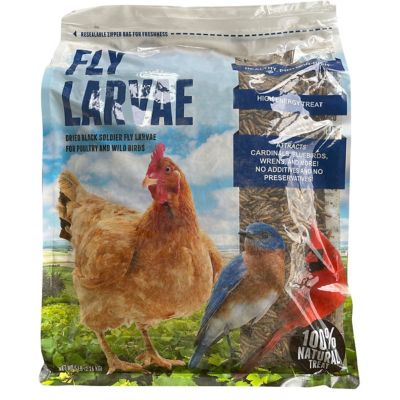
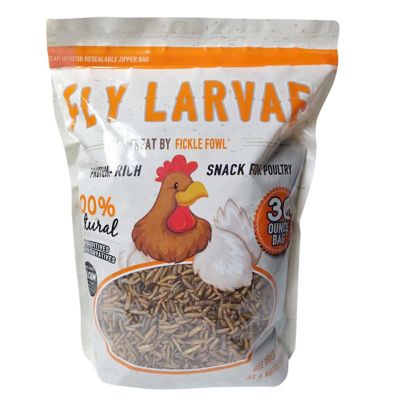
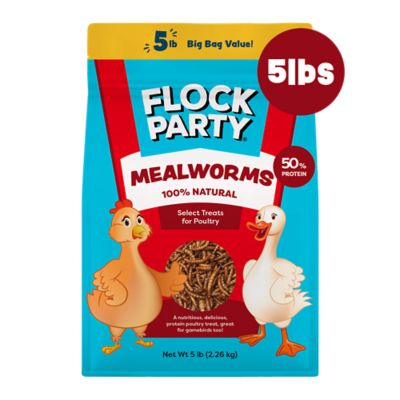
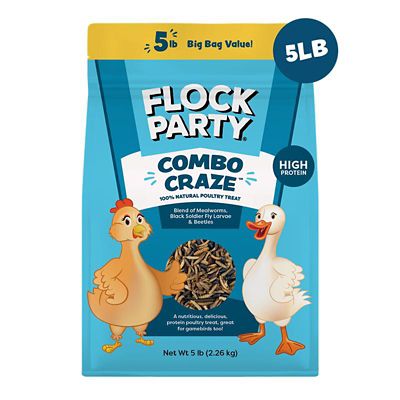
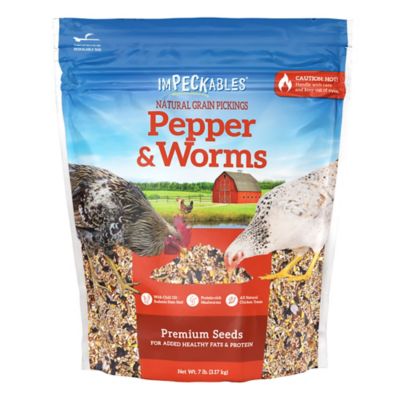
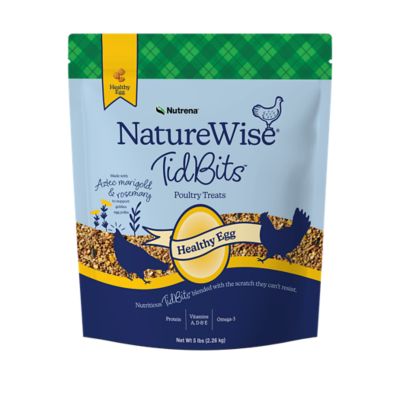
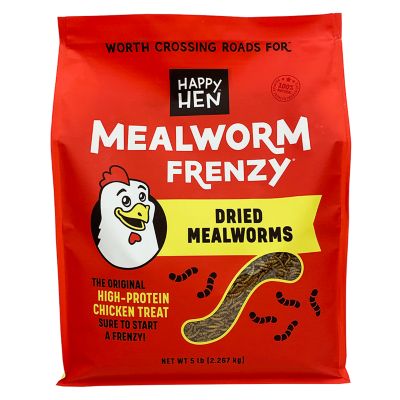
Chicken grubs are dried black soldier fly larvae made for use as a tasty, protein-rich treat for backyard chickens and other poultry. Their small, crunchy shape makes them easy to scoop, scatter or offer by hand, and many hens quickly learn to come running when they hear the feed bucket shake. Grubs can be especially useful for flock owners who want to add variety to the daily routine while encouraging natural scratching and pecking behavior. Toss a small handful into clean bedding, a run, or a patch of safe ground, and birds can spend time searching, scratching and picking through the litter much like they would when looking for insects outdoors. That activity can help keep a flock occupied during rainy stretches, cold weather or other times when free-ranging is limited. Dried grubs are also handy for homesteaders, new chicken keepers and families with backyard hens because they store easily and do not require refrigeration. They can be used as a training treat when getting birds accustomed to a new coop, run or handling routine, and they make a practical gift for a friend who keeps laying hens, raises poultry for 4-H projects or enjoys caring for a small farm flock. For a well-rounded feeding plan, treats should complement—not replace—a complete poultry ration such as
Corn Chicken Feed. Complete feed supplies the balanced blend of energy, protein, vitamins and minerals birds need each day, while grubs add a little extra interest and nutrition around that foundation. Adult hens, roosters and growing birds may enjoy them, but the proper feed for the bird’s age and purpose should remain the main part of the diet. Chicks in particular have precise nutritional needs, so treats should be introduced carefully and only when appropriate for their stage of growth.
The nutritional appeal of chicken grubs comes from their naturally concentrated protein, fat and essential amino acids. Protein supports normal muscle maintenance and feather growth, making grubs a popular choice during molting, when a hen may look ragged and spend considerable energy replacing old feathers with a fresh coat. A few grubs scattered through the run can also provide an engaging reward during the cooler months, when insects are harder for chickens to find on their own. Black soldier fly larvae are known for containing substantially more calcium than many other common dried insect treats, which can make them a useful addition to a feeding routine for laying hens that are producing eggs. Calcium is important for strong eggshell formation, but grubs are not a substitute for a complete layer ration or a properly offered calcium source. Watch the flock’s eggs, body condition and overall behavior, and keep fresh water available at all times. The larvae’s natural chitin, found in the insect’s outer covering, adds texture and may support normal digestive function as part of a varied diet, while naturally occurring compounds such as lauric acid are often associated with the nutritional value of black soldier fly larvae. These benefits are best viewed as part of the bigger picture: clean housing, good ventilation, safe outdoor access, fresh water, suitable feed and regular observation all matter just as much. To help prevent an unbalanced diet, keep treats—including dried grubs—to about 10% or less of the flock’s total daily intake. The remaining 90% or more should come from a complete poultry feed suited to the birds. Offer only clean, dry treats, remove anything that becomes damp or spoiled, and store the bag in a cool, dry place where rodents and moisture cannot reach it. If several birds share a feeding area, scatter grubs widely enough that timid hens have a chance to find some instead of letting the dominant birds claim the whole handful.
Choosing chicken grubs is mostly about matching the package size and feeding style to the flock you care for. A small backyard flock may do well with a modest bag that stays fresh between occasional training sessions and enrichment activities, while a larger homestead flock may need a bigger supply for regular scattering. Look for clearly labeled poultry treats, straightforward ingredient information and packaging that can be sealed tightly after each use. Dried larvae should have a clean, natural appearance and smell; avoid feeding any treat that shows mold, moisture damage or an unusual odor. Some keepers prefer to use grubs as a hand-fed reward, which can help build trust with newly acquired hens, while others mix a small amount into a forage area so the entire flock gets exercise along with the snack. A shallow pan, treat ball or clean patch of straw can turn feeding time into a simple enrichment activity, especially when birds are spending more time inside the coop during wet or freezing conditions. Always provide poultry grit when chickens are eating whole dried insects or other foods that are not part of their complete ration. Grit helps birds grind fibrous, coarse foods in the gizzard, and it is different from calcium supplements such as oyster shell. Keep grit in a separate accessible container and follow local poultry-care guidance for the age and type of birds in your flock. Introduce any new treat gradually, paying attention to droppings, appetite and body condition, and reduce the amount if birds begin ignoring their regular feed. With sensible portions, chicken grubs can bring a little movement and excitement to the daily chore routine: a handful flicked across the ground, a chorus of clucks from the run and a flock happily scratching through the litter for one more crunchy bite.