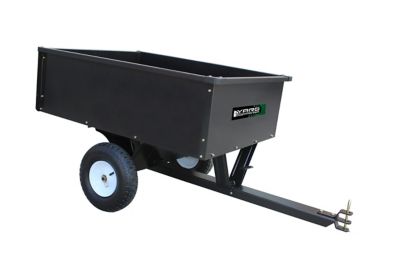
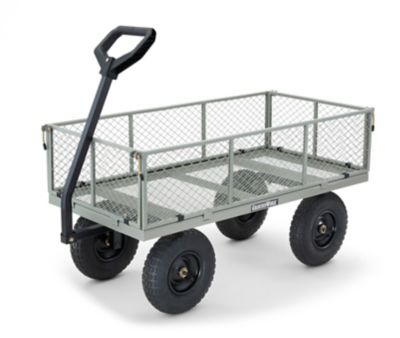
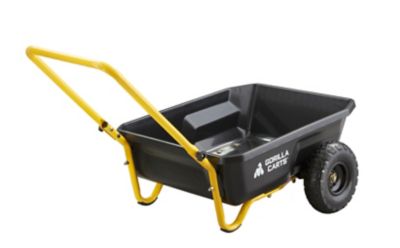
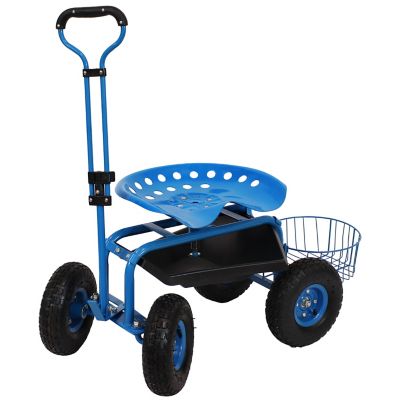
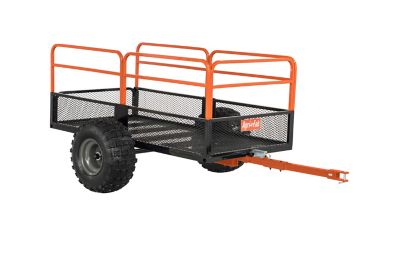
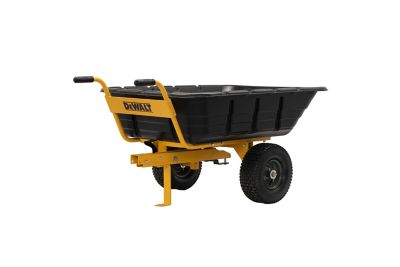
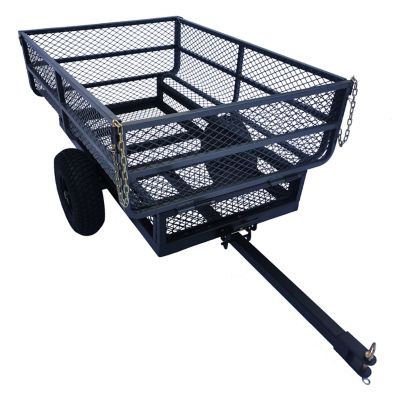
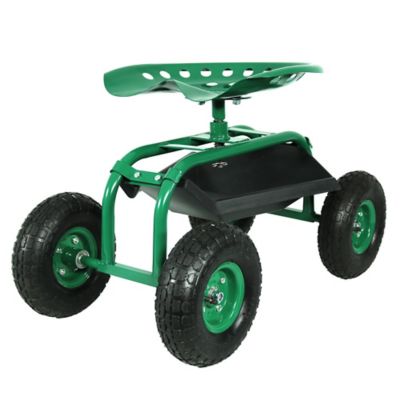
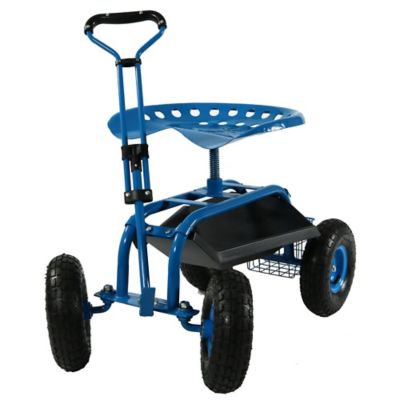
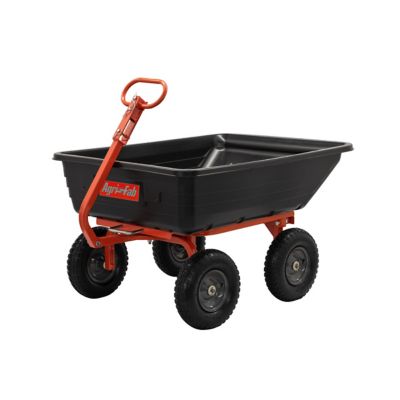
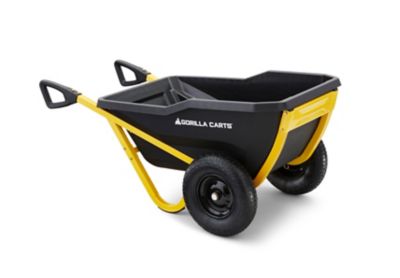
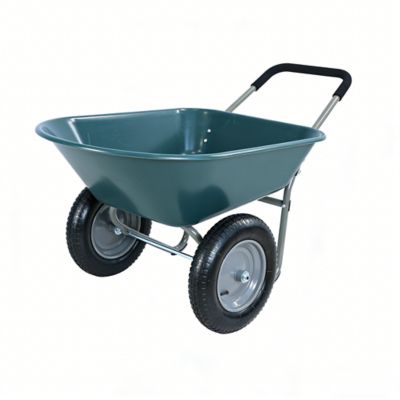
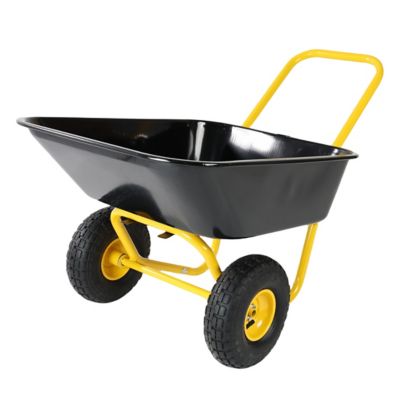
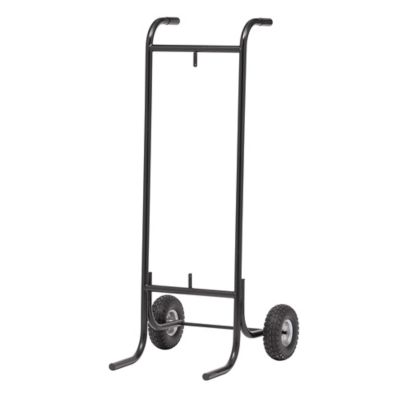
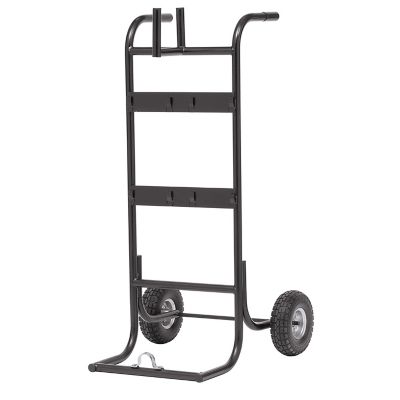
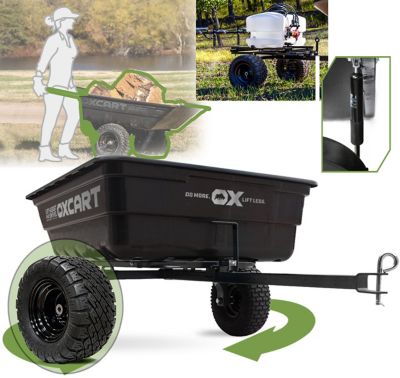
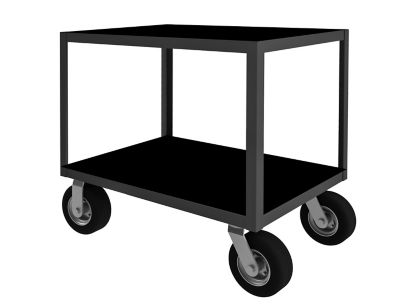
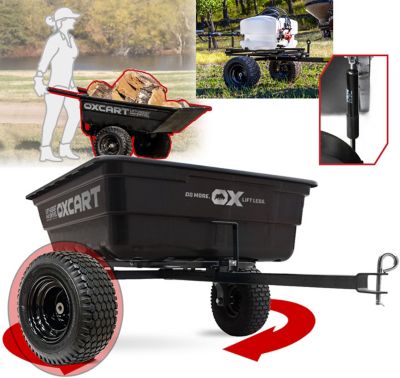
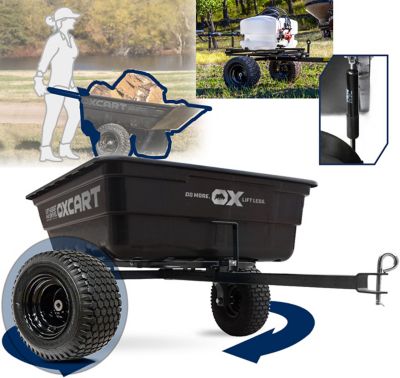
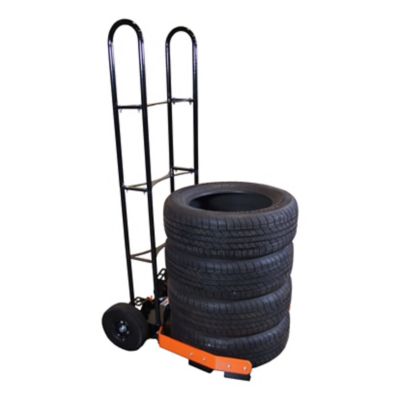
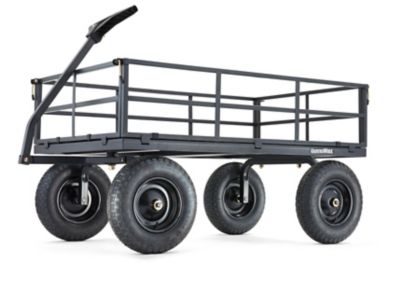
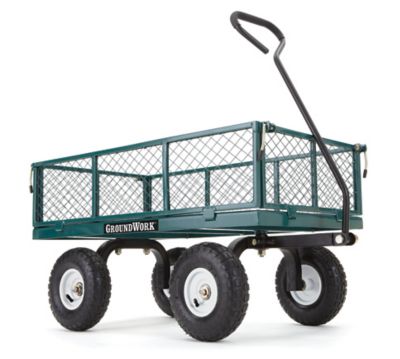
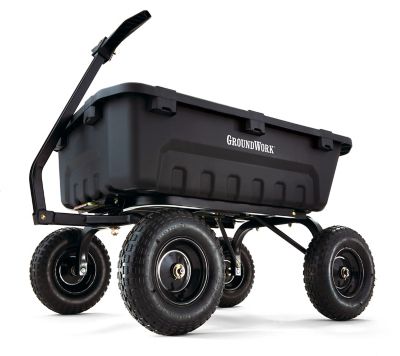
Carts with pneumatic tires have air-filled tires that cushion a load as it rolls over gravel, grass, packed dirt, and uneven paths. That cushion helps take the jolt out of crossing a driveway rut or moving from a barn aisle onto a stone lane. Compared with a hard wheel, an inflated tire can flex around small surface irregularities, helping the cart roll with less chatter and keeping tools, feed bags, and other cargo from bouncing as much. For folks tending a garden, caring for livestock, or keeping a property in shape, that can make a full day of hauling a little easier. A garden cart might carry compost and nursery pots to a planting bed, while a utility wagon can move fencing supplies, buckets, and hand tools between the shed and a repair job. The tire tread, wheel diameter, and weight of the load all affect how the cart handles those trips. Larger wheels generally cross small obstacles more easily than smaller wheels, while tread patterns influence grip on different surfaces. Air-filled tires are not a promise of easy travel everywhere; deep sand, loose soil, and heavily rutted ground can still make a loaded cart tough to pull. The cart’s layout matters, too. Four-wheel wagons support the load while parked and moving, making them handy for jobs with plenty of stops. Two-wheel carts balance around an axle and require the person at the handle to manage part of the load. A pivoting front axle can help a wagon follow turns around a shed or through a gate, although tight turns with a tall load call for extra care. For regular trips across a property, the best match comes down to the route as much as the cargo: the width of a gate, the lip at a barn entrance, and the room beside a raised bed all shape how comfortably a cart fits the job. A roomy bed offers little benefit if the cart cannot pass through the opening on the way there.
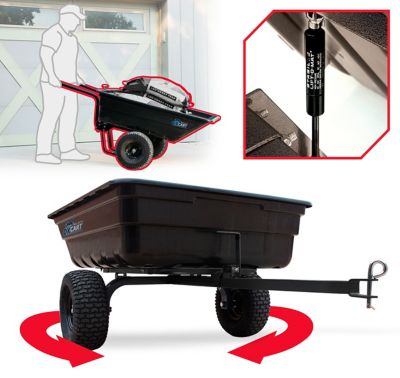
The bed and frame determine what a pneumatic-tire cart can carry and how it holds up to everyday chores. Steel frames and beds offer a firm platform for tools, split wood, and other substantial loads, while painted or powder-coated finishes help protect the metal when the finish stays intact. Scratches that expose bare steel deserve attention before rust spreads. Molded polyethylene beds resist rust and can be convenient for hauling soil, compost, and loose garden material, though sharp edges and concentrated impacts can damage the surface. Mesh beds let dirt and small debris fall through, which suits some hauling jobs but makes a liner or separate container helpful for fine material. Solid beds keep small parts and loose contents contained. Removable side panels can make it easier to set down a wide load, and a tipping bed can reduce the lifting involved in unloading mulch or compost. Those features serve different chores rather than making one cart the answer for every property. Bed dimensions are just as important as the stated weight capacity: a long-handled shovel, several feed sacks, and a wide planter take up space in different ways. A cart’s rated capacity also does not describe how easy that weight will be for a person to start, steer, stop, or pull uphill. Ratings should be read with the manufacturer’s conditions in mind, including any separate limits for hauling and dumping. Keeping heavier cargo low and centered helps limit shifting, while an even load puts less strain on one side of the cart. Handle height, grip shape, and clearance between the handle and bed affect comfort during repeated trips. For a shared cart, those details matter to everyone who takes a turn pulling it. Models intended for towing need the specified hitch connection and must stay within the maker’s towing limits; a pull handle alone does not make a cart suitable for attachment to a mower or utility vehicle.
Tire fit and routine care help keep a cart ready for the next chore. When matching replacement
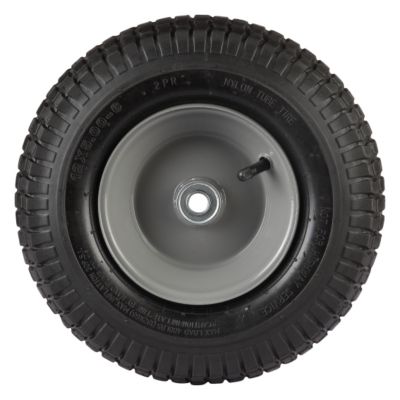
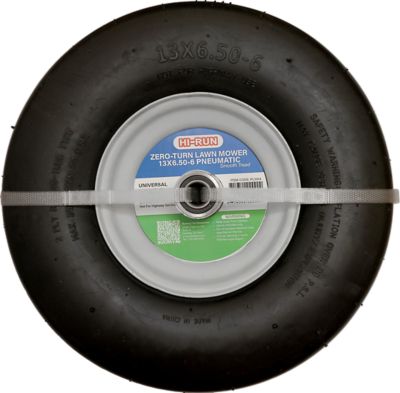
Pneumatic Tires to a cart, the tire size is only one part of the fit. Overall wheel diameter and width affect ground clearance and room beneath the bed, while axle bore size, hub length, bearing type, and mounting hardware determine whether a wheel assembly fits correctly. Two wheels that look alike from across the aisle may have different hub dimensions. Some pneumatic tires have inner tubes, while others are tubeless, so replacement parts need to match the wheel’s construction. Tire load ratings matter as well, but a higher-rated tire does not raise the cart frame’s stated capacity. Air pressure affects both support and rolling feel. Too little air can make a loaded cart harder to pull and increase stress on the tire, tube, or rim; excess pressure can reduce cushioning and exceed the limits of the assembly. The cart and tire manufacturer’s inflation directions provide the right reference, rather than judging pressure by appearance alone. Periodic checks with a tire gauge are especially helpful before hauling a substantial load. Thorns, nails, and sharp scraps around a work area can puncture an air-filled tire, so keeping the travel path clear pays off. A glance at the tread, valve stems, sidewalls, and wheel hardware can catch embedded debris, cracking, loose fasteners, or a developing leak before the cart is loaded. Bearings and pivot points may also need attention according to the manufacturer’s maintenance schedule. Cleaning soil and manure from the bed and frame, letting the cart dry, and giving it a sheltered storage spot help protect the parts between jobs. For someone who makes the same trip from feed room to barn or shed to garden day after day, a cart matched to the load, pathway, and person pulling it becomes a practical part of the routine.