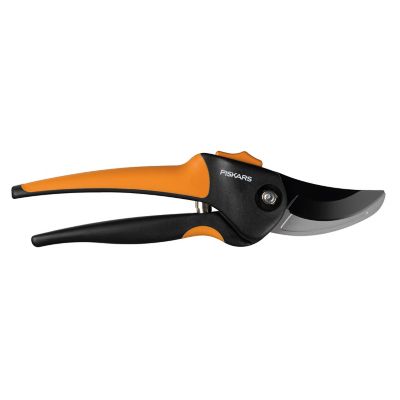
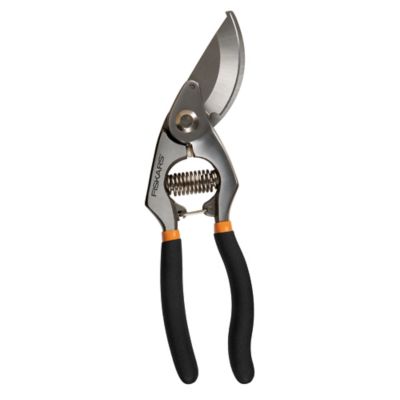
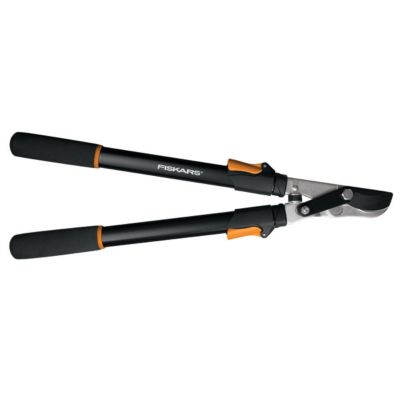
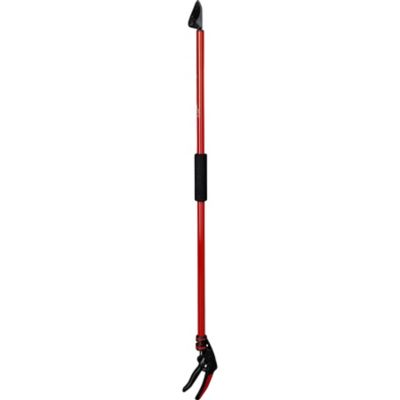
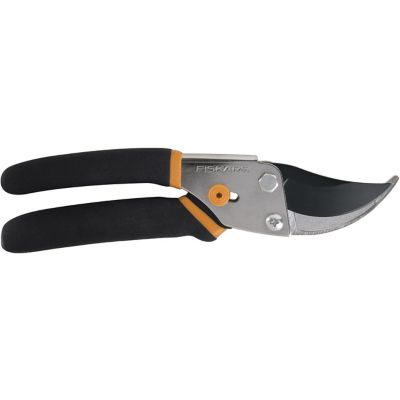
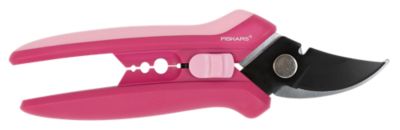
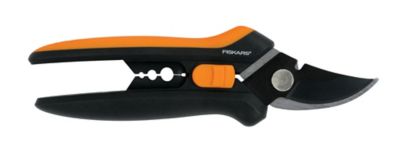
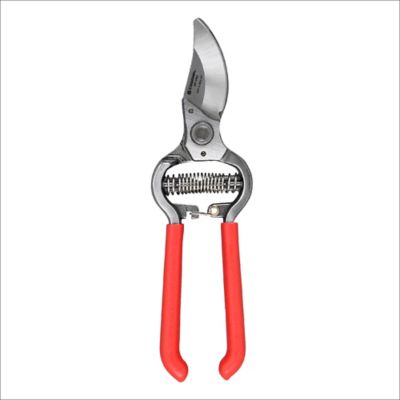
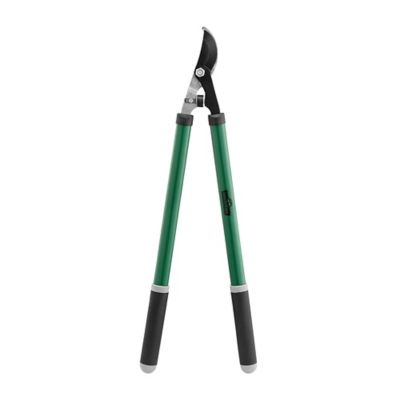
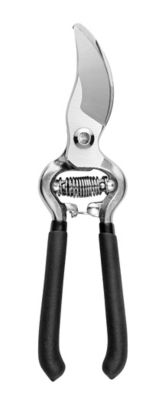
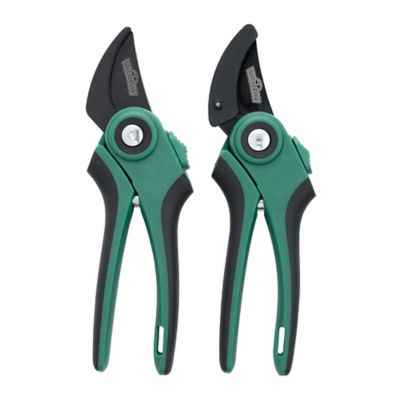
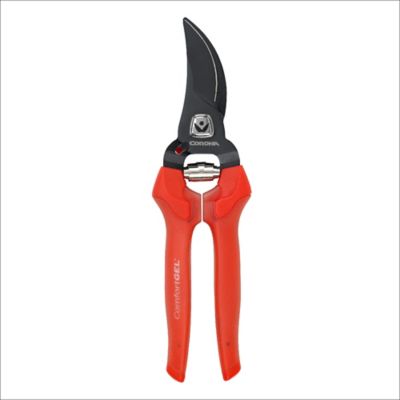
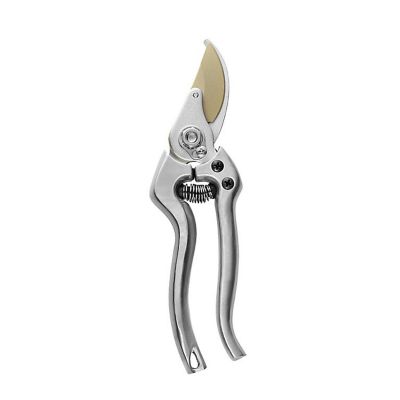
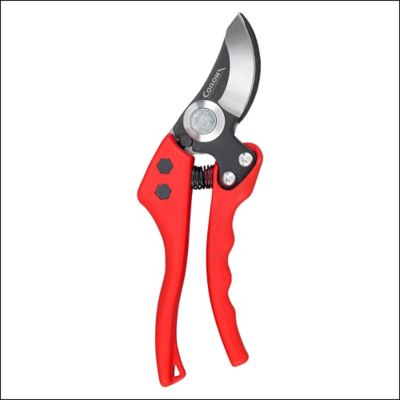
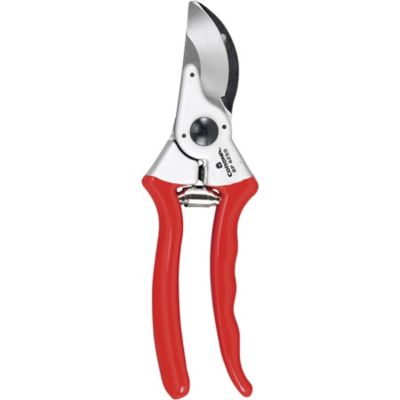
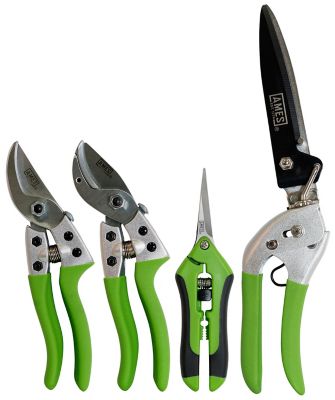
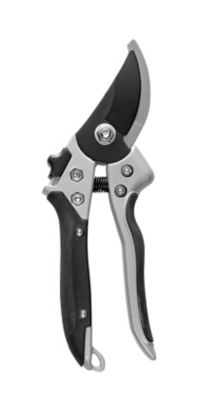
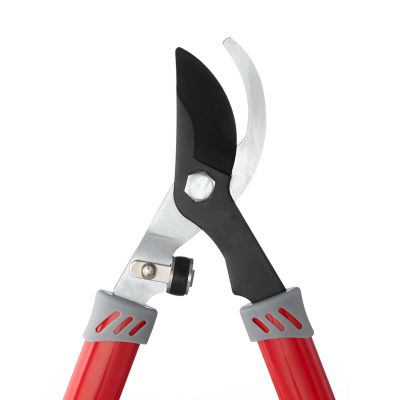
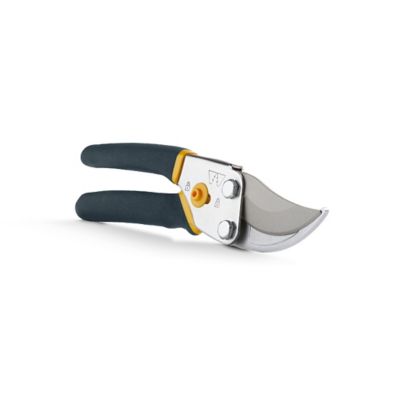
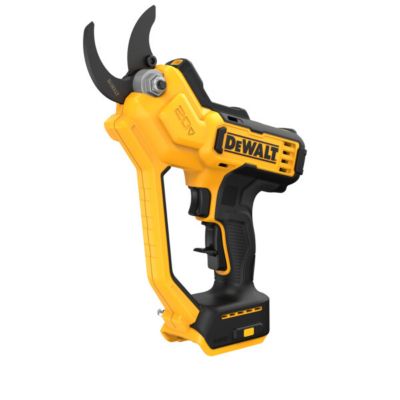
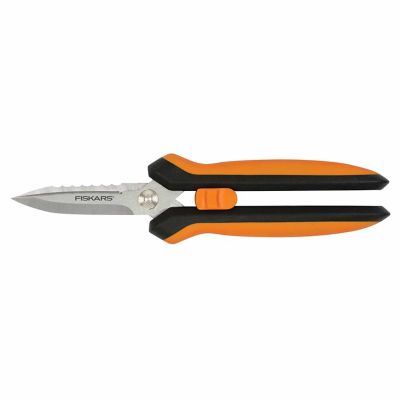
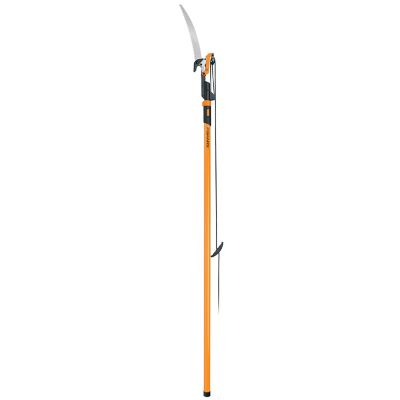
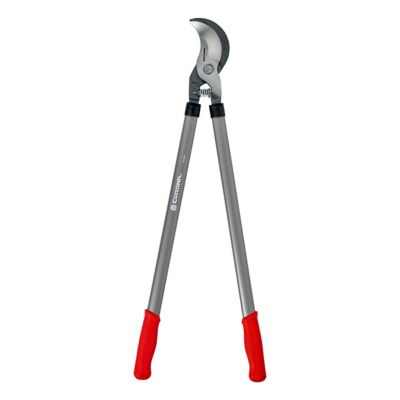
Bypass pruners are handheld cutting tools with a sharp blade that slides past a curved lower blade or hook, creating a scissor-like cut through living stems and small branches. The lower hook supports the stem while the cutting blade passes alongside it, helping limit crushing around the cut. That action makes bypass pruning shears a practical choice for shaping shrubs, clipping flower stems, trimming berry canes and tending young trees. Around a garden or small acreage, they handle the little cuts that come up between bigger jobs: a rose stem leaning across a walkway, an unwanted shoot along a fruit tree trunk or a crowded branch rubbing against its neighbor. Their compact shape helps them reach into branching growth without bringing a larger tool into tight spaces. Compared with anvil pruners, which press a blade against a flat surface and generally suit dry, dead wood, bypass pruners are especially suited to live growth where a clean cut matters. Cutting capacity varies by tool, and the listed maximum branch diameter is an important consideration rather than a promise that every branch of that size will cut with equal effort. Hard wood, dense growth and awkward cutting angles can all make a stem tougher to clip. A well-matched pair should handle its intended work without twisting the handles or forcing the blades sideways. For thicker branches or work that calls for two-handed leverage,
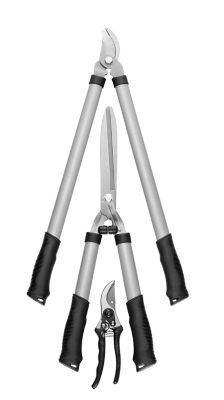
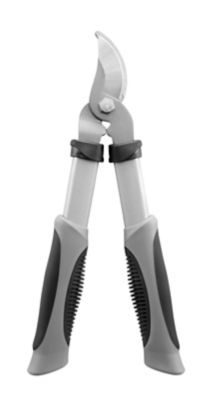
Long Handle Pruning Shears offer another tool category worth considering. Keeping the tool matched to the branch helps protect both the cutting edge and the plant. Bypass hand pruners earn their place in a tool pouch through close, controlled work, whether that means clipping herbs beside the porch, tending a row of grapes or keeping a few shrubs from crowding a gate. They complement larger pruning equipment rather than taking its place, giving gardeners and landowners a manageable tool for the smaller details.
Blade material, handle construction and hand fit all affect how bypass pruners feel after more than a few snips. Hardened steel cutting blades can hold an edge through repeated trimming, while stainless steel offers resistance to rust; either type still benefits from cleaning and dry storage. Some blade finishes help reduce sap buildup or friction, but no coating eliminates the need to clear away sticky plant residue. A blade that can be sharpened, along with replaceable parts where the design allows, gives a hardworking tool more room for ongoing maintenance. Handle materials also bring different trade-offs. Metal handles can provide a solid feel, while composite handles may reduce weight. Cushioned grips can soften contact against the palm, and textured surfaces can help keep the tool settled in the hand. The best fit depends on hand size, grip strength and the gloves worn for the job. Handles that open too far can make every cut a reach, especially for smaller hands, while cramped handles may feel awkward in a larger palm. An adjustable opening can help match the handle span to the person holding it. Spring-assisted opening reduces the effort of reopening the blades between cuts, though spring tension should still feel comfortable through repeated squeezing. Some designs include rotating handles that move with the fingers to reduce rubbing during extended work. Left-handed and right-handed configurations also deserve attention because blade orientation and lock placement can affect access and control. A latch should be easy to operate intentionally without getting in the way while cutting. Tool weight matters when trimming a long stretch of shrubs or carrying pruners from the vegetable patch to the orchard. Balance can matter just as much: a pair that sits naturally in the palm may feel easier to manage than one that pulls toward the blade. For someone working among thorny roses or dense canes, enough handle clearance for protective gloves can be more useful than an extra feature that adds weight without helping the task.
Care is part of keeping bypass pruners cutting cleanly, especially around sap-heavy stems, soil and plant debris. Sticky buildup can make the blades drag, while grit caught near the pivot can interfere with their movement. Accessible blade surfaces and a straightforward pivot design make routine cleaning less of a chore after a stretch of yard work. Wiping away residue, drying metal surfaces and applying lubricant at the points recommended by the manufacturer help preserve smooth operation. The cutting edge also needs occasional attention; sharpening should follow the blade’s original bevel and the tool’s care directions rather than grinding both sides indiscriminately. Blade alignment and pivot tension matter because excessive play can let a thin stem fold between the blades instead of separating cleanly. When working around diseased plants, cleaning and disinfecting cutting surfaces according to appropriate plant-health guidance can help reduce the chance of carrying pathogens to another plant. A secure blade lock and a fitted sheath support safer storage and carrying, with the edge enclosed and the tool kept away from children. Pruners belong with plant-care tools, not as a substitute for wire cutters, since fencing wire and similar materials can nick the cutting edge. For home gardeners, landscape crews and folks maintaining a few fruit trees, the right pair comes down to the work done most often and the hand doing it. A flower grower may value easy maneuvering among slender stems, while someone tending established shrubs may put more emphasis on leverage and a comfortable grip. Bypass pruners can also make a thoughtful gift for a gardener setting up a first tool kit or a neighbor who spends plenty of time tending plants. Familiarity with the recipient’s hand size and usual chores helps make that choice more useful. With a suitable cutting capacity, comfortable handles and practical upkeep, these compact tools fit naturally into everyday plant care around the house, garden and farm.