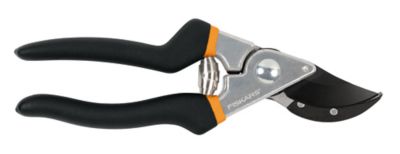
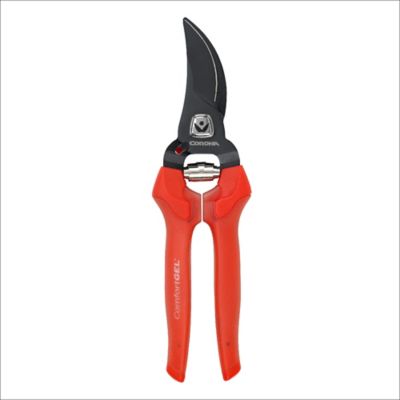
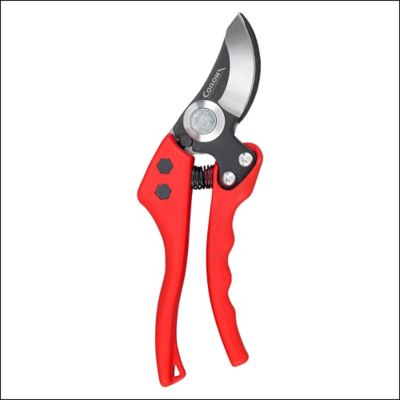
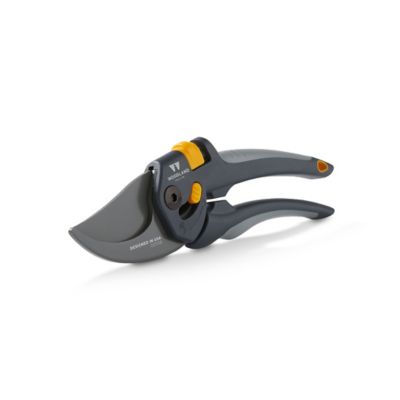
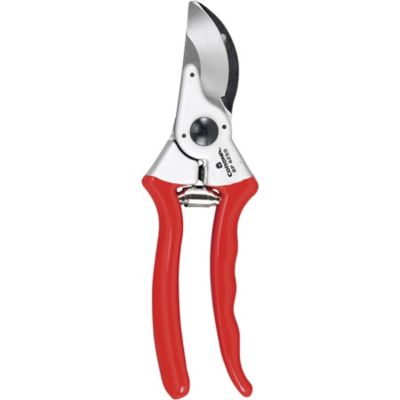
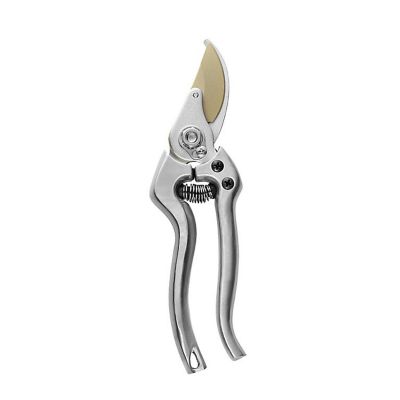
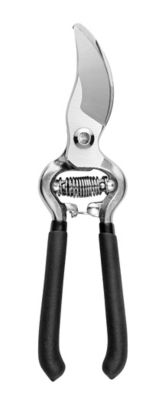
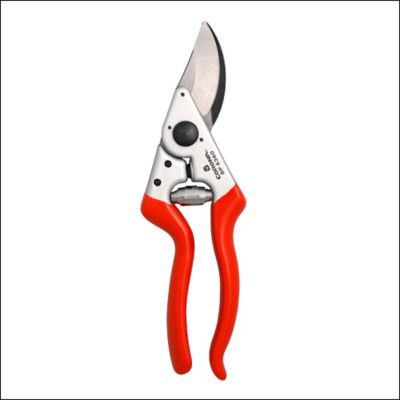
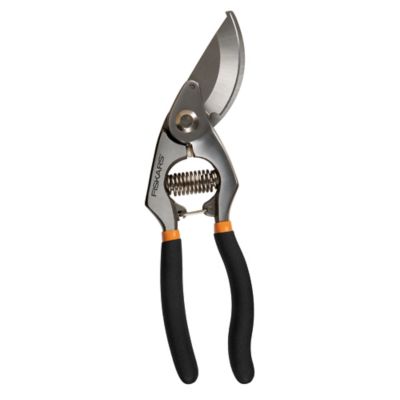
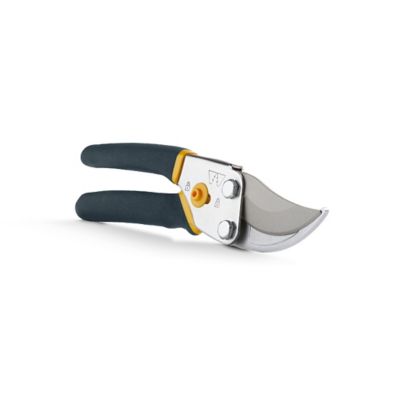
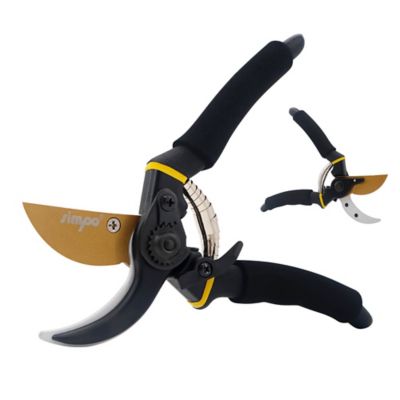
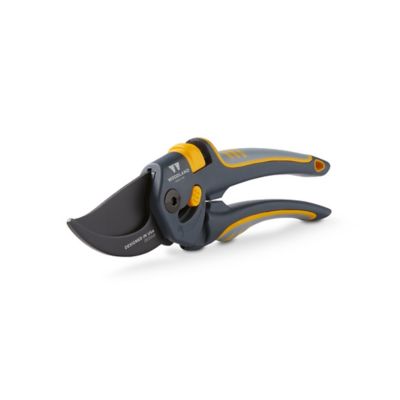
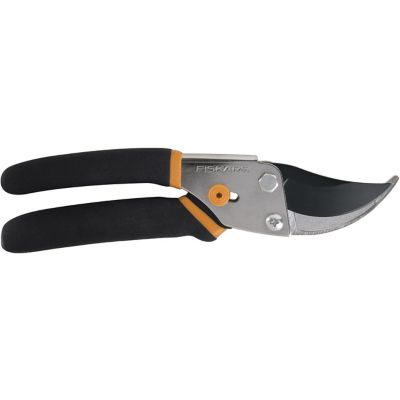
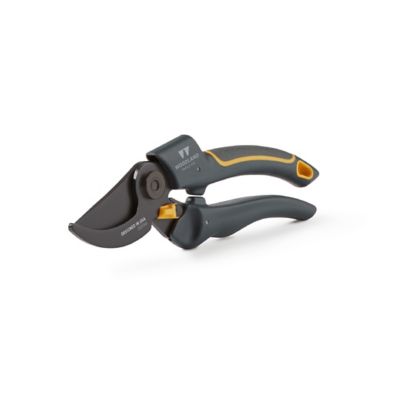
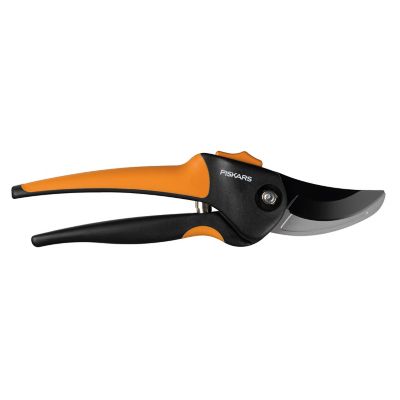
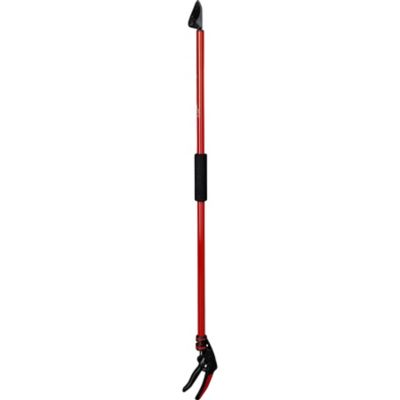
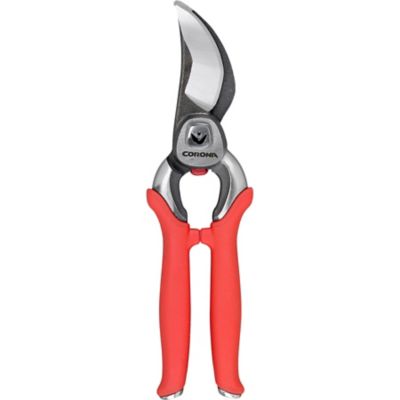
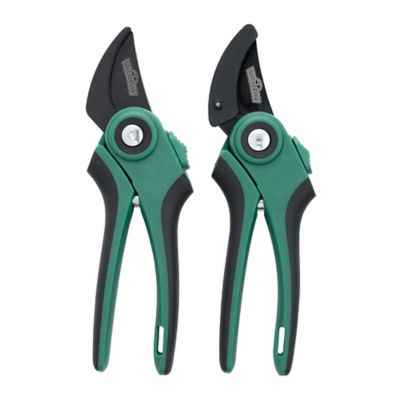
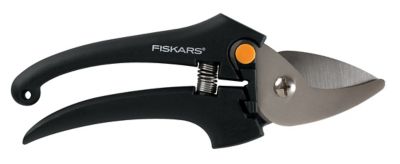
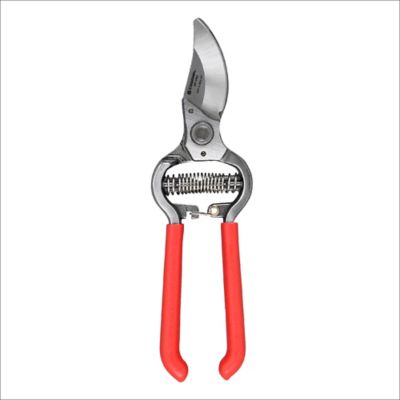
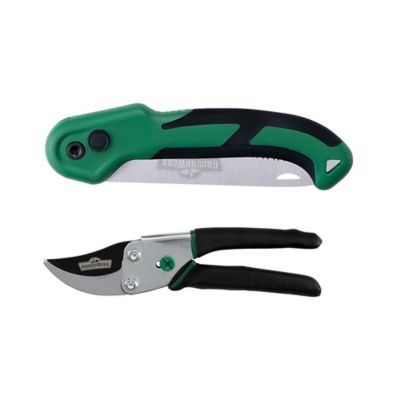
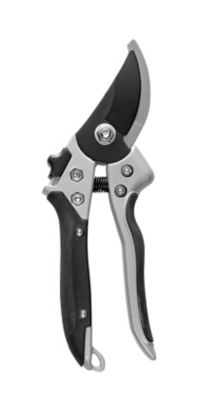
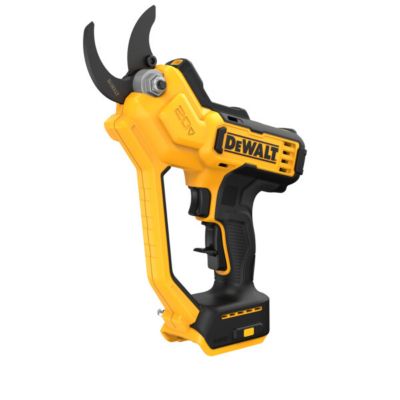
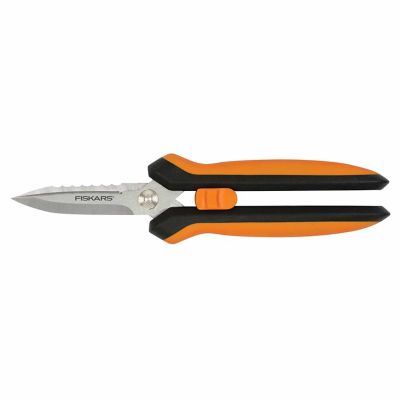
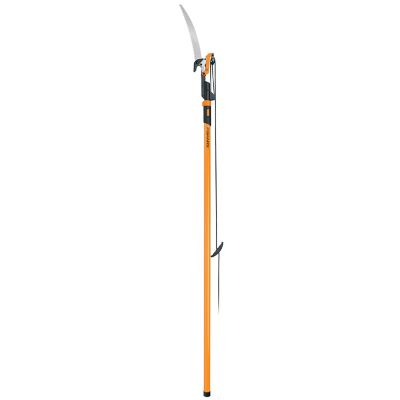
Bypass pruners for shrubs are hand pruners that cut like scissors: a sharpened blade slides past a curved lower jaw that holds the stem in place. That slicing action makes them a good fit for live, green stems and small woody branches, where a clean cut leaves less crushed tissue. Anvil pruners, by contrast, press a blade down against a flat surface and are generally better suited to dry, dead twigs. The difference is easy to see on a shrub with a mix of tender tips and older wood. Bypass pruners can take out a stem that crosses through the middle of a lilac or trim one stray shoot off a boxwood without cutting the growth around it. Hedge shears cut across a wider patch at once, while hand pruners give you room to pick out one branch at a time. When comparing pairs, look at the cutting capacity in terms of the stems you trim most often. Many full-size bypass pruners are rated for stems up to about 3/4 inch to 1 inch in diameter, depending on the design, while compact pairs may have a smaller opening. The rating is a limit, not a promise that every branch of that size will cut with the same effort. A green shoot may slice easily where a dense, older stem makes the handles hard to close. A branch seated deep in the jaws near the pivot takes less effort to cut than one caught at the tips. Keeping the sharpened blade on the side of the stem that stays on the shrub also puts the cleanest side of the cut where it matters. If a branch won’t settle into the jaws or takes enough force that you have to twist the handles,
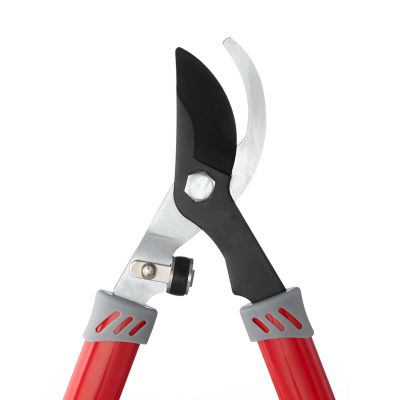
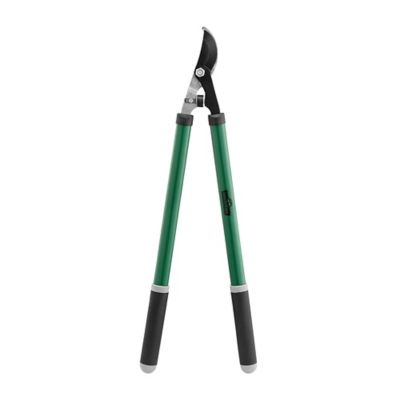
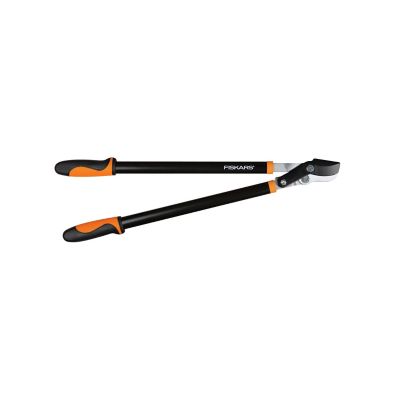
Bypass Loppers offer longer handles for more leverage on thicker live branches.
Blade material, handle shape and jaw size all affect how a pair feels from the first cut to the last. Hardened steel blades can hold an edge through repeated trimming, while stainless steel offers help resisting rust. A low-friction coating can help the blade move through stems with less drag and make sticky residue easier to wipe away. A slim cutting head is handy when you need to reach between tightly spaced stems at the base of a shrub. A wider jaw makes more sense if most of the work involves woody growth with enough room to get the blade around it. Lightweight aluminum handles can take some weight out of a tool you’ll lift and lower over a long stretch of shrubs, while steel handles can give the pruners a heftier feel. Cushioned grips can soften the pressure on your palm, but a handle that spreads too far can still make your hand work harder with every squeeze. A pair that fits lets you open the jaws, wrap your fingers around the grip and close the handles without having to shift your hold. That’s worth thinking about if you prune in work gloves or have a smaller hand. A spring that opens the jaws again after each cut comes in handy when there’s a row of shrubs to get through. For left-handed trimming, take note of where the latch sits and whether the grip is shaped for one hand or either. A latch you can reach with your thumb makes it easier to lock the blades before slipping the tool into a holster. If shrub work is a regular chore, a design with a replaceable blade or spring can let you swap out a worn part instead of replacing the whole pair.
A pair of bypass pruners can cover a fair bit of ground, from taking back a green shoot that leans into the walkway to thinning a flowering shrub so its branches aren’t all rubbing against one another. For someone tending a few shrubs around the porch, a compact pair that’s easy to grip may do more good than a larger tool with extra cutting capacity. For someone keeping up with long borders or rows of berry bushes, an easy-opening spring and a grip that doesn’t dig into the palm may matter more after the first dozen cuts. Pruners can make a practical gift for a new homeowner with foundation shrubs to look after or a gardener who likes to keep a pair close at hand instead of walking back to the shed for every stray stem. A little care goes a long way toward keeping the cut smooth. Sap and bits of leaf can collect along the blade and around the pivot, so wiping the tool after trimming and drying it before storage can help keep the jaws from sticking. If you’ve been cutting stems that show signs of disease, clean and disinfect the blades before moving to another shrub to help limit what the tool carries from plant to plant. A small drop of tool oil at the pivot can keep the handles moving freely, and sharpening the beveled edge according to the tool’s directions can bring back a smooth cut when the blade starts to drag. If the jaws wobble or a thin stem starts folding between them instead of cutting, the pivot may need adjustment rather than more pressure on the handles. With the blades closed and latched in a dry spot, the pruners are ready to grab the next time a branch noses through the fence or starts catching on a sleeve by the gate.