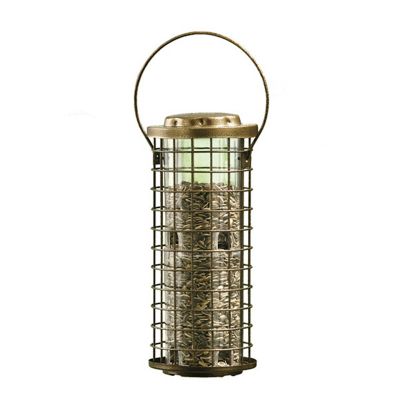
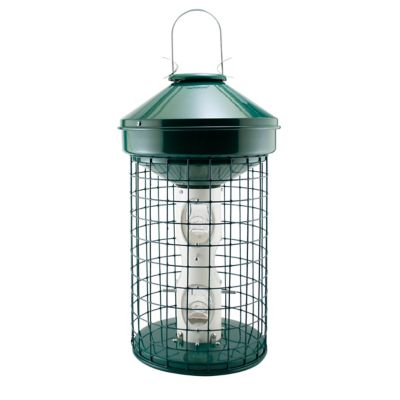
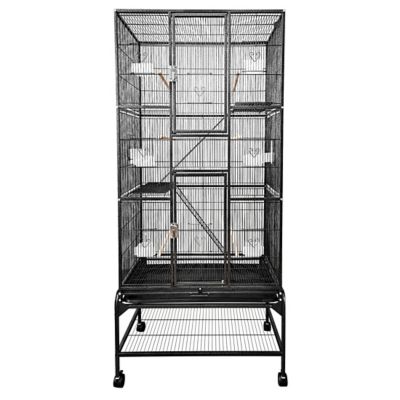
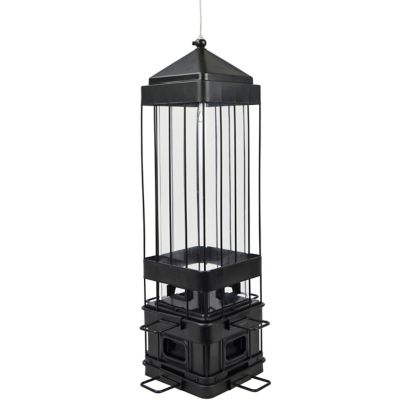
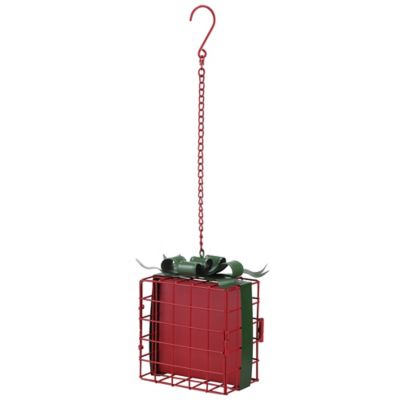
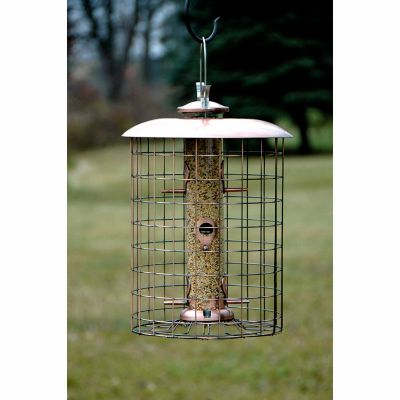
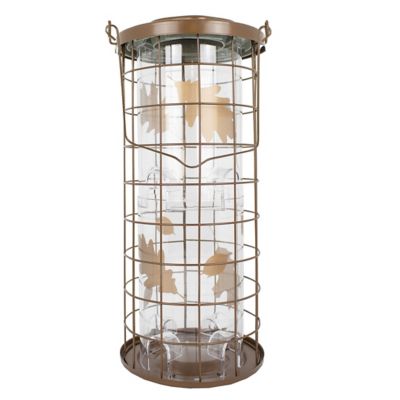
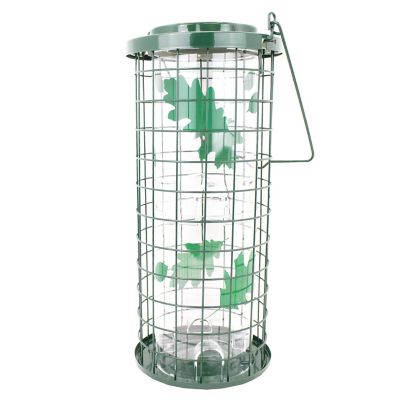
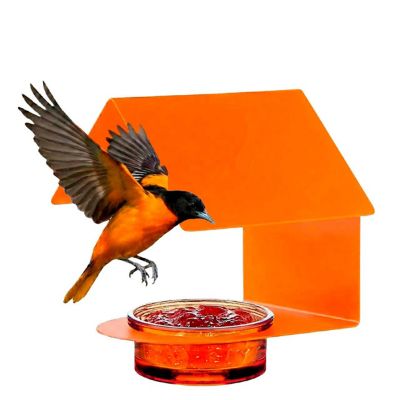
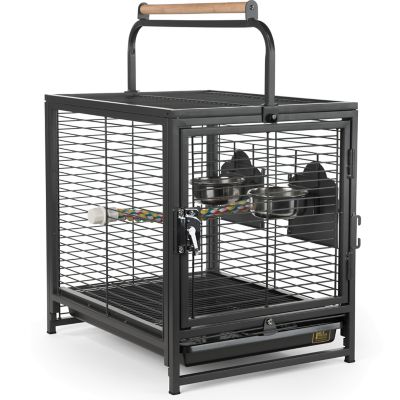
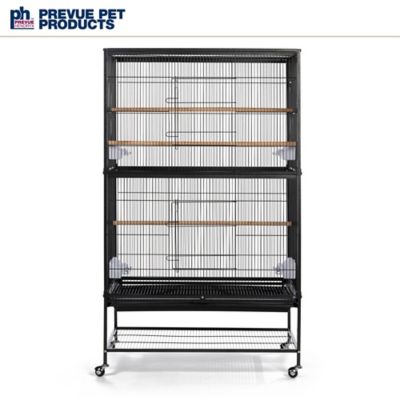
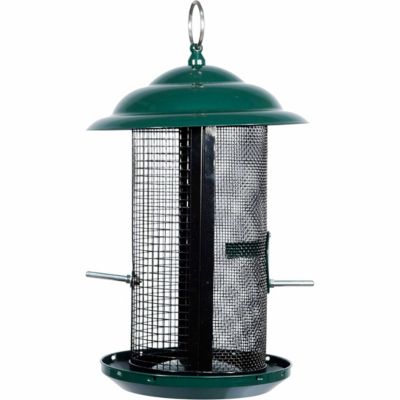
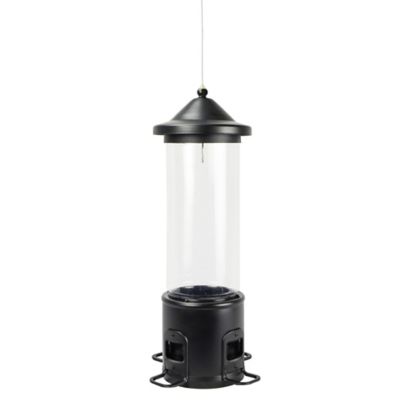
A bird feeder cage is an outer wire enclosure that surrounds a seed or suet feeder, allowing smaller birds to reach the food while limiting access for larger birds and, with some designs, squirrels. Unlike a cage for keeping pet birds, this open feeding setup lets wild birds come and go freely. The center may hold a tube feeder, a hopper, or a suet holder, with space between the feeding area and the surrounding wire. Many designs have openings around 1.5 inches wide, though spacing varies, and that measurement alone does not determine which animals can get through. Opening shape, the distance from the cage to the food, and the size of the visiting bird all matter. Chickadees, finches, titmice, and nuthatches are among the smaller birds that may enter suitable cages, while larger visitors such as grackles and jays may have trouble reaching the feeding ports. Not every cage excludes every larger bird, and a squirrel-resistant enclosure is not a promise that squirrels cannot reach the seed. A squirrel may still stretch a paw through the wire if the food sits close enough to the edge. For a yard where bigger visitors tend to crowd the feeder, that extra barrier can give smaller songbirds more room to settle in and feed. Some cages form part of a complete feeder, while separate enclosures fit around an existing feeder of a compatible size. That distinction matters when putting together a feeding station beside a farmhouse, along a garden path, or within sight of the kitchen window. A cage should leave enough room for birds to enter, turn, and perch without pressing against the central feeder. Birds that cling naturally may approach differently from birds that prefer a perch, so the arrangement inside the wire deserves as much attention as the outer dimensions. The goal is a feeding space that suits the birds you hope to watch, rather than simply the smallest possible opening.
Materials and fit make a real difference in how a bird feeder cage handles everyday activity. Metal wire provides the enclosure’s structure, while galvanized surfaces or powder-coated finishes can help limit corrosion. Smooth welds, firmly joined panels, and neatly finished wire ends matter wherever birds land or squeeze through an opening. A sound frame should hold its shape without creating gaps around doors, lids, or attachment points. For a separate cage, the fit includes more than whether the feeder slips inside: hanging loops, perches, seed trays, and lid clearance all take up room. Enough space above the feeder allows refilling without forcing the lid against the cage, while sufficient clearance around the sides helps keep food beyond the reach of animals outside it. The hanger or mounting hardware also needs to support the combined weight of the enclosure, feeder, and a full load of food. A pole-mounted arrangement and a hanging arrangement place different demands on brackets and attachment points, so compatible hardware is part of a secure setup. Placement matters, too, because a cage cannot prevent a squirrel from approaching along a nearby railing or branch. A properly fitted baffle can add another obstacle, though the whole feeding station still needs to work together. Inside the enclosure, the feeder should match the food: sunflower seed and seed blends need suitable ports, tiny Nyjer seed calls for smaller openings, and suet needs a holder that supports the cake while allowing birds to reach it. Cage access may also limit visits from larger woodpeckers, even when the suet itself would interest them. Seed trays can catch some fallen food, but they also need room inside the enclosure and access for cleaning. For a broader look at feeding setups,
Best Bird Feeder provides a helpful starting point alongside these cage-specific considerations. Capacity deserves a look as well: a larger feeder holds more food, but a smaller one may better match a lightly visited yard where seed sits longer between visits.
Easy access for cleaning is one of the most practical features in a caged feeding setup. An enclosure with a manageable opening or removable section makes it easier to reach the feeder, clear out lodged seed, and scrub the places where birds perch. Hinges and latches should close securely after each refill without leaving a gap that changes how the cage works. Seed dust, hulls, and droppings can collect along the bottom, around feeding ports, and at wire intersections, so those small corners deserve attention along with the main food container. Regular washing and disinfection according to the feeder maker’s directions, followed by thorough rinsing and drying, help keep the feeding area clean. Fresh food belongs in a clean, dry feeder rather than on top of damp or moldy leftovers. During routine care, check for loose hardware, bent wire, peeling finishes, or sharp edges that could catch a foot or feather. Keeping the ground beneath the feeder clear of spilled seed also helps limit unwanted animal traffic around the station. A good viewing spot balances convenience with bird safety: the feeder needs to be reachable for refilling, visible enough to enjoy, and positioned where cats cannot hide directly beneath it. Nearby shrubs can offer birds cover, but dense hiding places right at the feeding area can give predators an advantage. Window placement deserves care, too; feeding stations close to glass benefit from exterior bird-visible markings that help prevent collisions. For someone who enjoys watching birds between chores, a cage-style feeder can bring small details into view, from a nuthatch working down the wire to a chickadee carrying off a sunflower seed. It can also make a thoughtful gift for a birdwatcher, a gardener, or a family that enjoys noticing the wildlife around their place. The best match is an enclosure that fits the feeding station, welcomes the intended birds, and stays straightforward to refill, inspect, and clean.