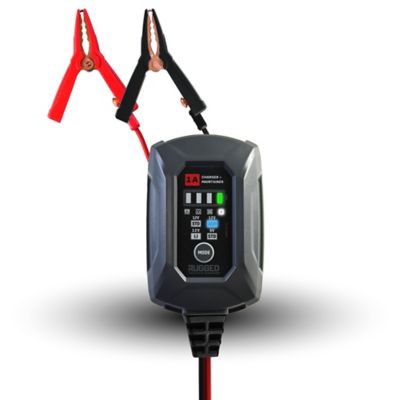
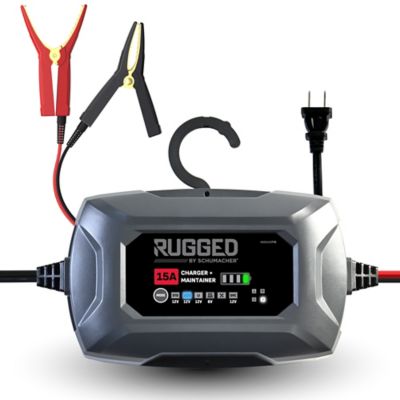
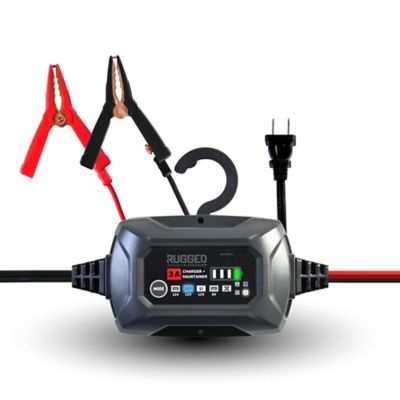
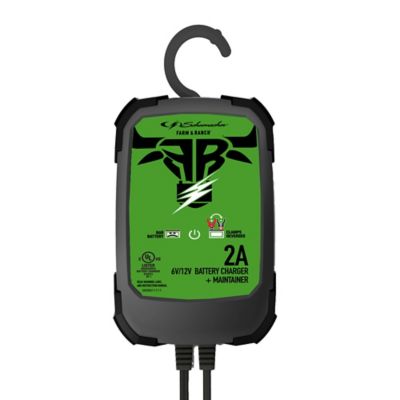
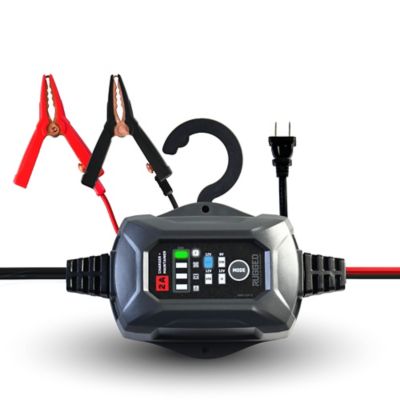
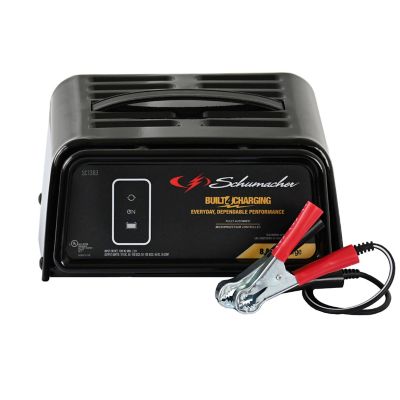
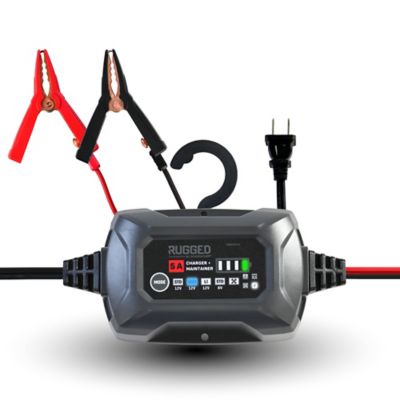
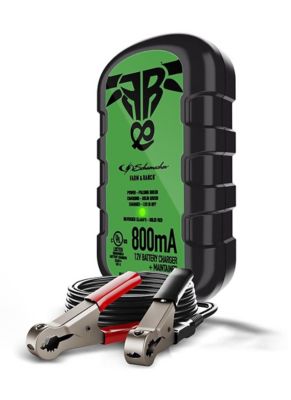
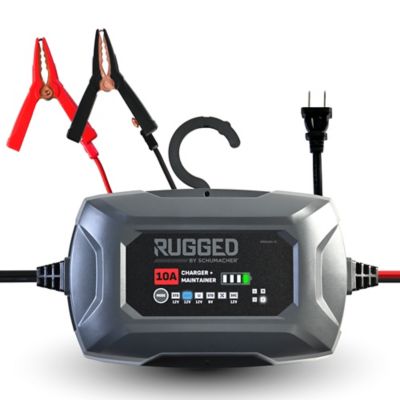
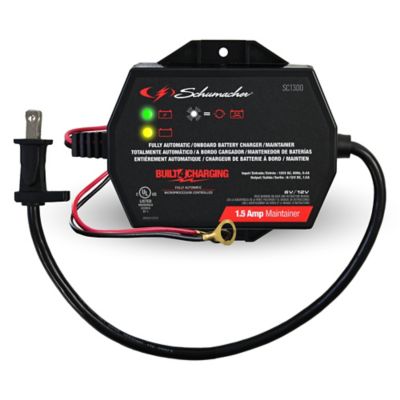
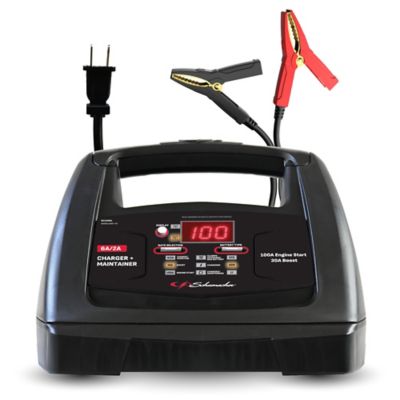
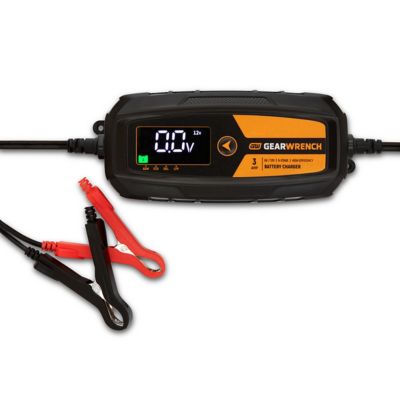
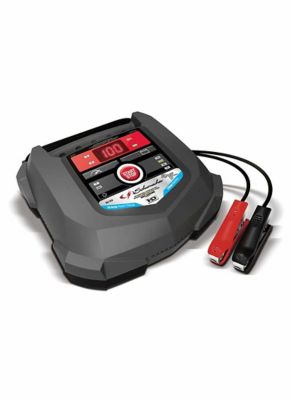
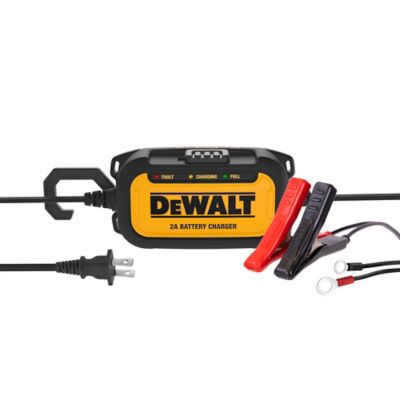
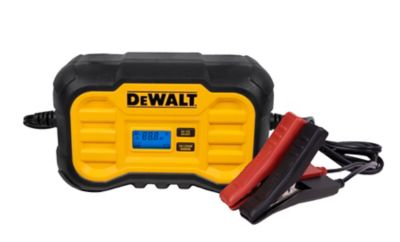
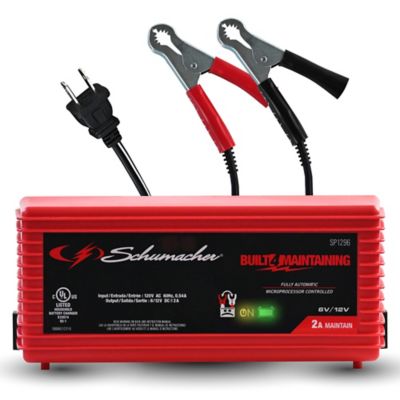
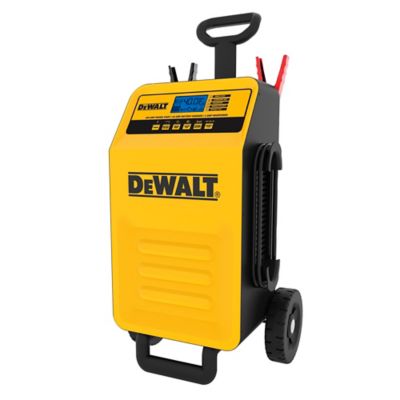
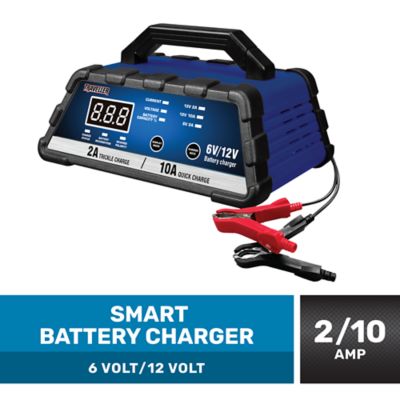
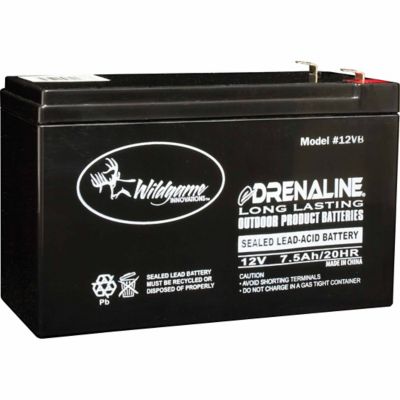
A battery maintainer is an automatic, low-current charger designed to keep a compatible battery charged while a vehicle or piece of equipment sits between jobs. It monitors the battery and adjusts its output to replace charge lost through natural self-discharge or small electrical draws. Once the battery reaches its target charge, the maintainer reduces, pauses or cycles its output according to its charging program. That makes battery maintainers a practical fit for tractors, riding mowers, motorcycles, ATVs, boats and vehicles that do not run often enough to replenish their batteries regularly. A pickup parked beside the barn or a mower waiting for its next round of work can still lose charge even when the engine stays off. Clocks, security systems and onboard electronics can add to that drain. Maintaining a suitable charge helps keep equipment ready for its next start and can help limit the battery wear associated with sitting partially discharged. Many maintainers deliver around 1 to 2 amps, though charging output varies by design. That gentle pace suits ongoing maintenance better than a quick turnaround on a large, depleted battery. A maintainer is not a jump starter, and it cannot make up for a failed battery, damaged wiring or a charging-system problem. It also differs from a basic continuous-output trickle charger: an automatic maintainer manages its output rather than supplying the same current indefinitely. Some units combine a charging stage with a maintenance stage, bringing a partially discharged battery up to charge before settling into long-term monitoring. Others are intended mainly to hold an already charged battery near its target level. For folks who rotate among several machines, travel away from their property or keep an extra vehicle parked for stretches at a time, that distinction matters. The best fit depends on the battery and how the equipment spends its downtime, not simply on the size of the engine under the hood.
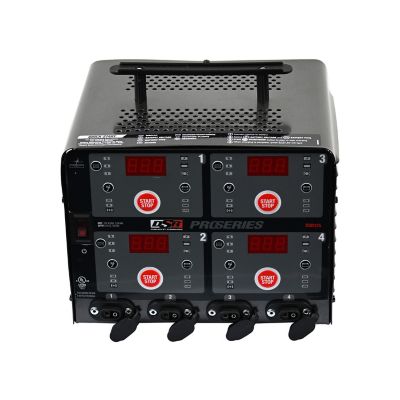
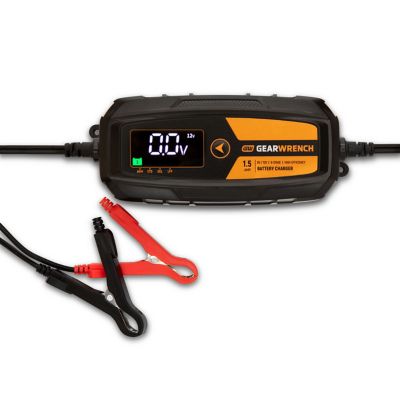
Battery voltage, chemistry and capacity are the main considerations when comparing battery maintainers. A 6-volt battery needs a maintainer with a compatible 6-volt setting, while a 12-volt battery needs a compatible 12-volt output. A selectable-voltage unit can serve more than one application, provided its settings match each battery. Chemistry matters just as much. Flooded lead-acid, AGM, gel and lithium batteries can have different charging requirements, so a general lead-acid setting is not a substitute for a charging program approved for the battery in question. Lithium batteries, including lithium iron phosphate batteries, need a specifically compatible maintainer and any additional provisions required by the battery manufacturer. Reconditioning or desulfation modes intended for certain lead-acid batteries are not appropriate for every battery type. Capacity ratings, commonly listed in amp-hours, help establish whether a maintainer suits a small powersports battery or a larger equipment battery. Charging current affects how quickly a depleted battery can recover, while the supported maintenance capacity indicates what the unit can keep charged over time; those ratings are not always the same. A larger battery may take much longer to recharge with a low-output maintainer, even when that maintainer is suitable for holding its charge afterward. For equipment storage with several separate batteries, multi-bank designs can provide independent charging channels without treating every battery as one connected pack. Each channel still needs to match its assigned battery. Helpful features can include automatic maintenance operation, reverse-polarity protection, short-circuit protection and indicators that distinguish charging, maintenance and connection faults. These features vary by model and do not replace proper connections or the manufacturer’s operating requirements. Clear status lights are especially handy when the battery sits beneath a seat, behind a side panel or in another spot that makes repeated checks awkward. A display that separates a connection problem from a charging condition can make routine checks less of a guessing game.
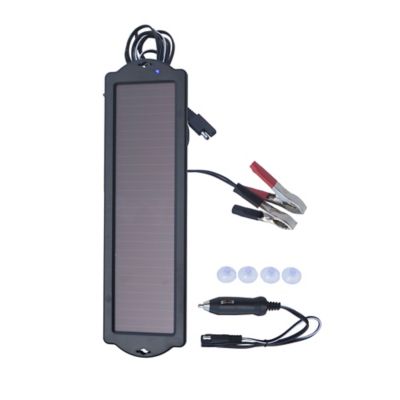
Physical fit matters around a working garage, shed or equipment bay, too. Cable length determines whether the maintainer can sit securely near an outlet without pulling against the battery terminals. Clamp leads make sense for occasional connections across different machines, while ring-terminal leads can provide a more convenient connection point on equipment that returns to the same parking spot. A quick-disconnect lead can reduce the need to reach into a tight battery compartment every time the maintainer is connected, provided the lead is correctly fitted and kept clear of belts, fans, hot engine parts and moving linkages. Insulated conductors, covered connectors, firm clamp contact and strain relief at cable entry points are construction details worth considering. Housings and connectors also need to suit their location; a unit intended for a dry indoor space should not be treated as though it belongs beside a wash rack or on a damp floor. Mounting provisions can help keep a maintainer off a crowded bench, while a compact housing may fit more easily near a motorcycle stand or mower parking space. Compatible leads, terminal covers and other
Battery Accessories can help round out the connection setup without leaving exposed terminals or loose wiring. Routine care centers on intact cable insulation, clean contact points and a housing free from damage. Battery charging also calls for the ventilation specified by the battery and maintainer manufacturers, with sparks and open flames kept away. A battery that is cracked, leaking, swollen or otherwise damaged needs attention rather than a maintainer connection. For a home mechanic, equipment owner or someone tending a small acreage, a properly matched maintainer can be a practical gift that earns its place near the workbench. The appeal is straightforward: less repeated access to tucked-away batteries, a clearer view of charging status and a way to support battery readiness between runs. Matching the electrical requirements, connection style and installation setting brings those everyday benefits together without asking the maintainer to do a job beyond its design.