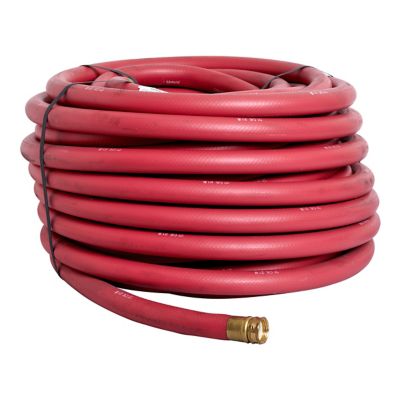
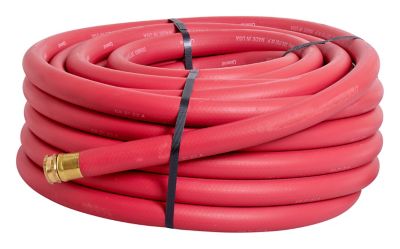
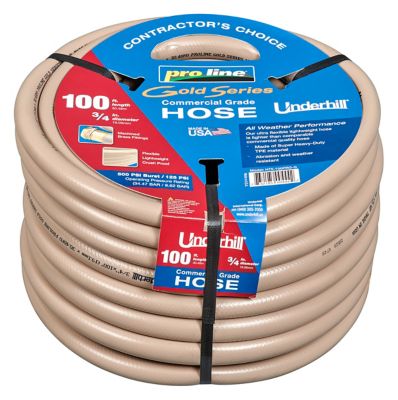
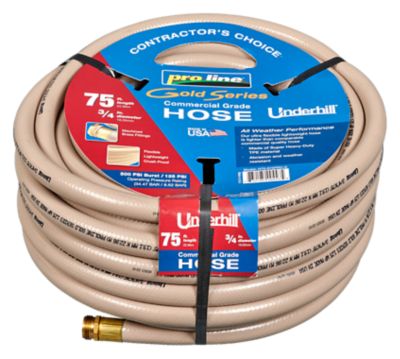
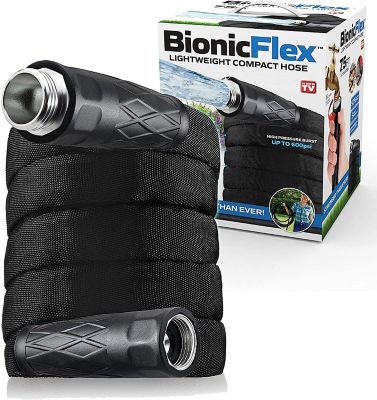
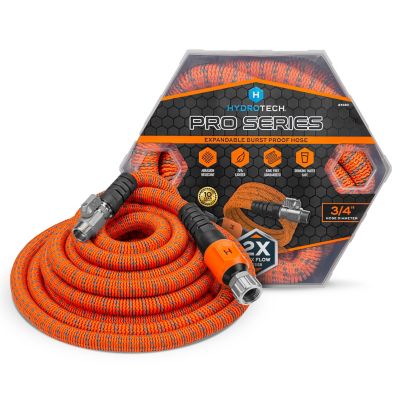
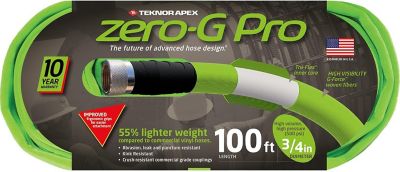
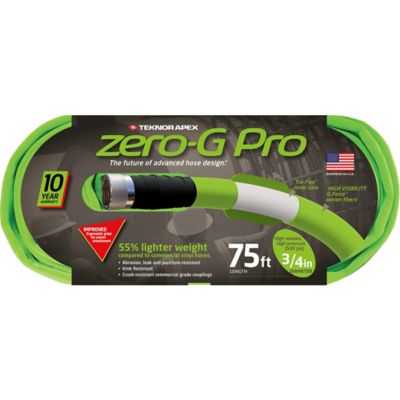
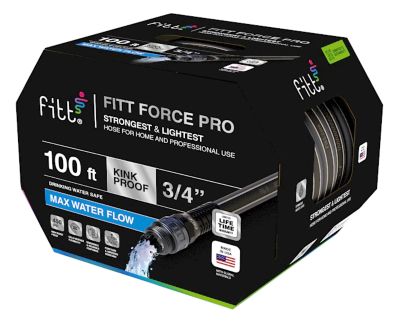
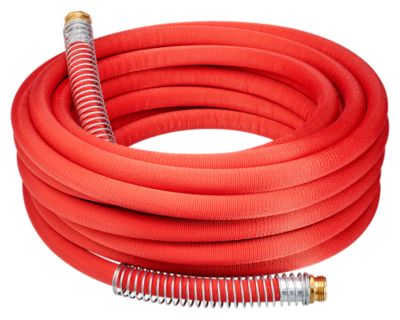
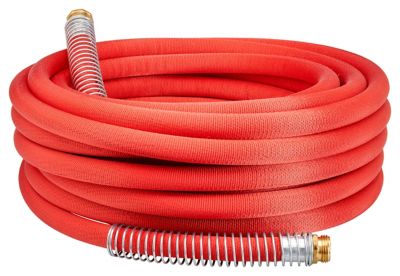
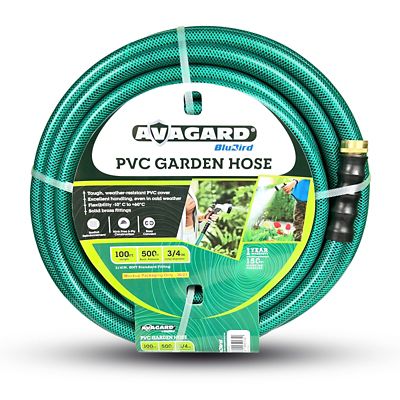
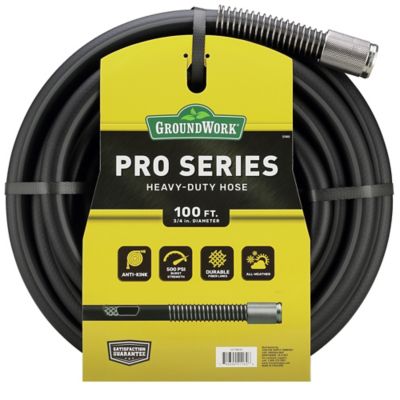
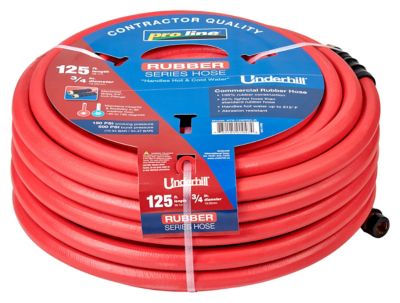
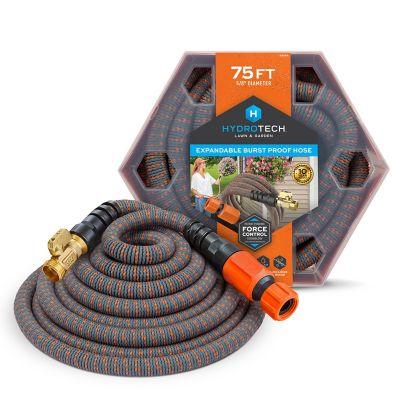
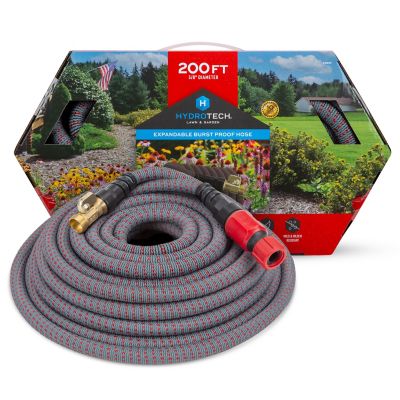
A 3/4-inch garden hose has a nominal inside diameter of three-quarters of an inch, giving water a wider path than a 5/8-inch hose. With the same water supply and hose length, that larger opening can support higher flow with less friction loss, making this size a practical fit for bigger watering jobs and longer runs. That extra capacity comes in handy when filling a stock tank, watering a broad vegetable patch, or rinsing mud from equipment in the driveway. It can also help supply sprinklers that need more water than a smaller hose can comfortably deliver over the same distance. A larger hose does not raise the pressure coming from the spigot, though, and actual output still depends on the water source, hose length, fittings, and attachment at the end. For acreage owners, gardeners, grounds crews, and folks tending several watering areas, the appeal is getting water where it needs to go without an unnecessarily narrow hose slowing the job down. Length matters just as much as diameter. A hose that reaches the far side of a garden with a little room to spare is easier to manage than several sections stretched tight around fence posts. Shorter runs generally lose less pressure to friction, while longer lengths offer reach at the cost of more weight and more hose to gather afterward. The route matters, too: a straight shot across open ground is different from a path around a shed, through a gate, and down a row of raised beds. A water-filled 3/4-inch hose weighs more than a comparable smaller-diameter hose, so handling deserves a place alongside flow capacity when comparing options. Reel capacity, storage space, and the distance between the spigot and the work area all help determine which length makes sense. For frequent moves between chores, a manageable hose can be a better fit than the longest possible reach.
Material and construction shape how a 3/4-inch garden hose feels in hand and stands up to everyday chores. Rubber hoses often have a substantial feel and good abrasion resistance, though their weight can be noticeable when pulling a long section across the yard. Vinyl hoses are often lighter, with flexibility and resistance to wear depending on their construction. Hybrid blends can offer a balance of handling and strength, while reinforcement helps the hose wall hold its shape under pressure. Layer counts alone do not tell the whole story; wall construction, reinforcement, coupling design, and the stated working pressure all deserve attention. A hose pulled around rough concrete, gravel, or fence corners faces different demands from one that stays beside a small garden. For those tougher routes, abrasion resistance and a strong outer jacket matter. Kink resistance is another helpful feature, but even a hose built to resist kinking can fold if it is pulled into a tight bend. Couplings deserve a close look because they take plenty of knocks against spigots, reels, and the ground. Brass, aluminum, and polymer connections offer different combinations of weight and strength, and a roomy gripping surface can make connections easier with wet hands. Reinforcement near the coupling can help reduce sharp bending where the hose meets the fitting. Connection size also needs a little care: the 3/4-inch measurement describing the hose bore is not the same thing as the nominal size assigned to garden hose threads. Hoses with different inside diameters can share standard garden hose connections. Compatible
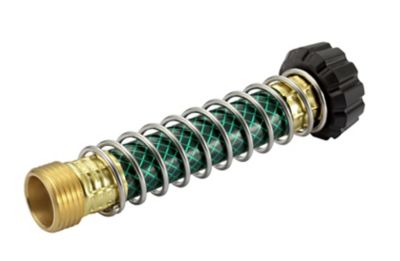
3/4 Inch Garden Hose Fittings help connect sections, replace worn ends, or join watering attachments, but both thread type and hose size need to match the application. Garden hose threads and pipe threads are not interchangeable just because both carry a 3/4-inch label. At a standard swivel garden hose connection, an intact flat washer provides the seal; forcing mismatched threads or overtightening the connection can damage parts without stopping a leak.
The right 3/4-inch water hose also needs to suit the work at the far end. A watering wand can direct a gentle stream around plant roots, while an adjustable nozzle gives more control when rinsing tools or washing out garden carts. Sprinklers have their own flow and pressure requirements, and a larger hose can help reduce supply losses without guaranteeing that every sprinkler arrangement will perform well. Running several outlets through a splitter divides the available water, so the source must be able to support the combined demand. Narrow adapters, restrictive attachments, and extra connections can also limit the benefit of a larger bore. For equipment washing, a garden hose supplies water at ordinary hose pressure; it is not a substitute for a pressure washer’s high-pressure line. Pressure ratings should be read with the same practical eye. Working pressure describes the operating limit specified by the manufacturer, while burst pressure is not an everyday operating target. Leaving a hose pressurized for extended periods calls for a hose and connected equipment expressly rated for that service. Water safety matters around the house and barn as well. A general-purpose garden hose should not be assumed suitable for drinking water; filling containers for people or animals calls for a hose specifically labeled for that purpose. Keeping the hose outlet above the water level in a tank or bucket, along with appropriate backflow protection, helps protect the supply from contamination. Routine care keeps handling simpler and gives connections a better chance of staying leak-free. Turning off the supply and releasing trapped pressure before disconnecting reduces splashing, while draining and gathering the hose in broad loops helps prevent tight folds. A reel should accommodate the hose’s diameter, length, and weight without forcing sharp bends. Keeping threads free of grit, checking washers, and looking for splits or worn spots makes it easier to catch small problems before the next round of chores. Stored clear of tires, mower blades, and busy walkways, a well-matched hose is ready for the next trip from the spigot to the garden or barn.