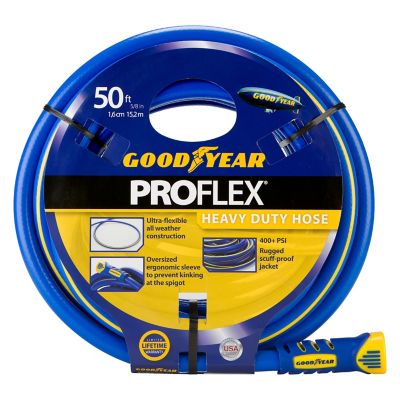
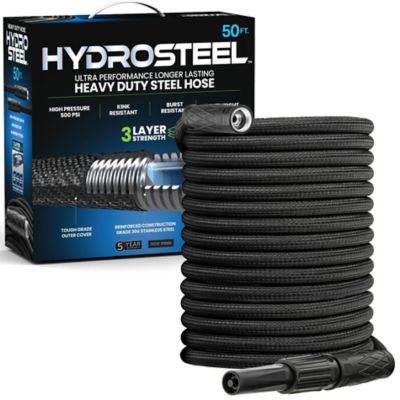
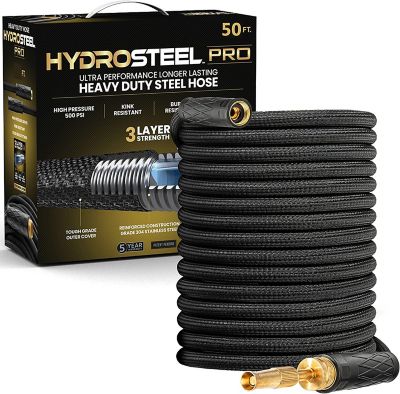
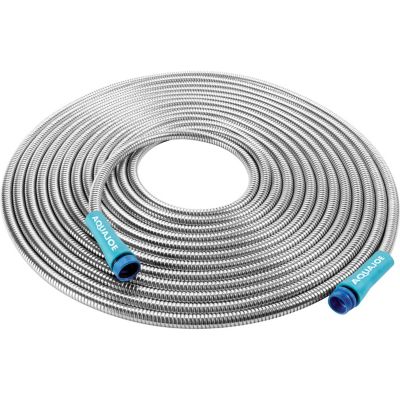
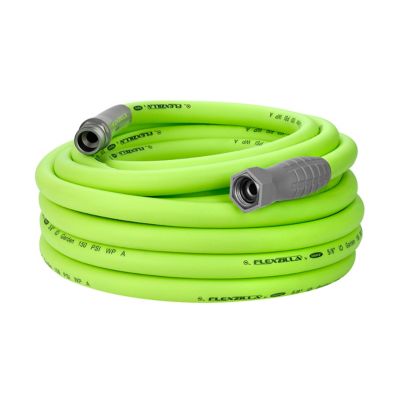
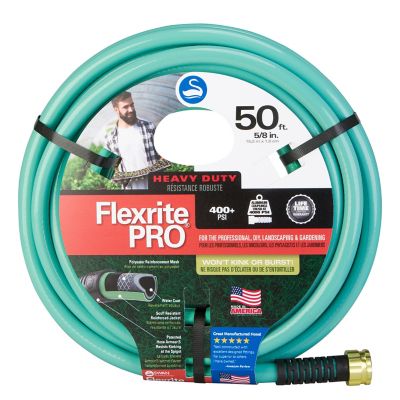
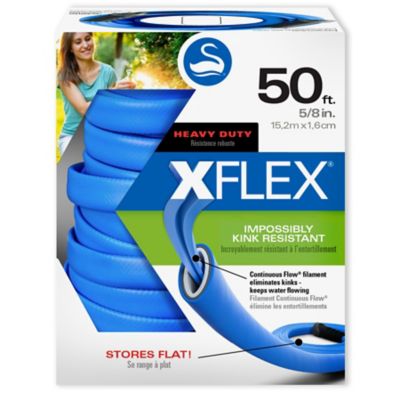
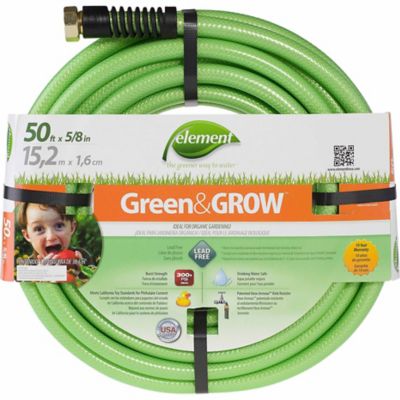
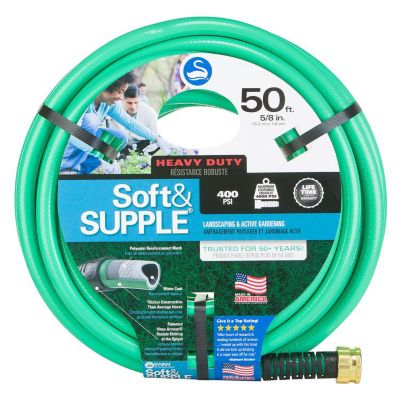
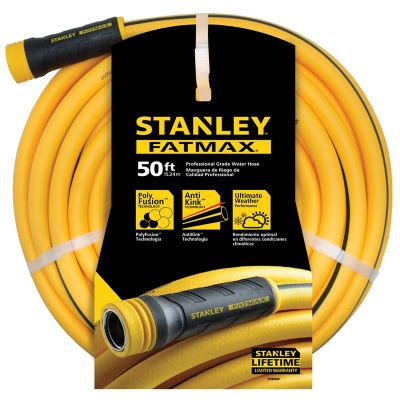
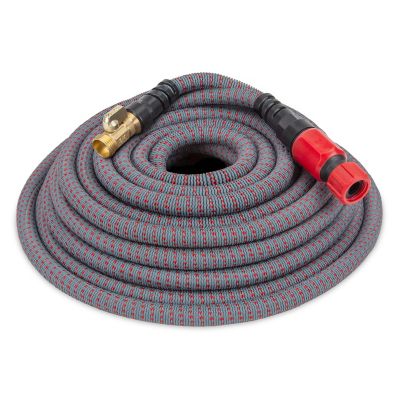
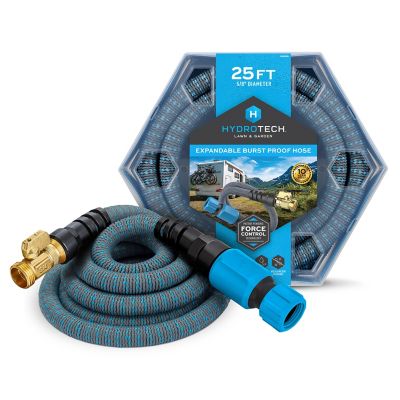
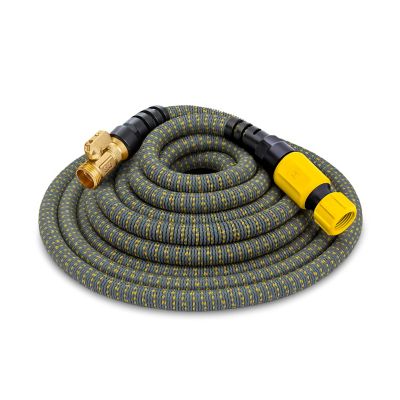
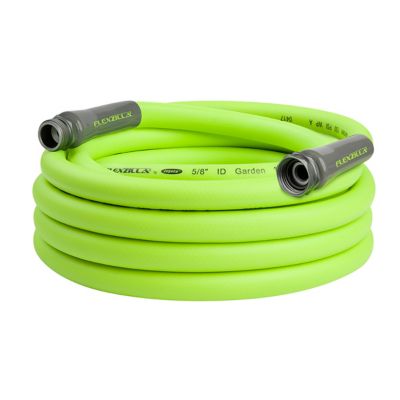
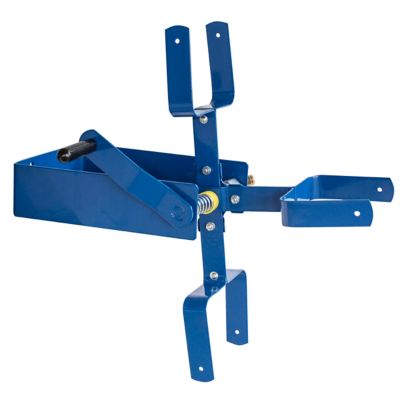
A 50 foot garden hose is a handy fit for small- to medium-sized yards, garden beds, patios, driveways, and many everyday jobs around the homestead. It gives you enough reach to water plants, rinse off muddy boots, fill stock tanks, wash vehicles, clean outdoor furniture, or spray down a barn aisle without leaving a long coil scattered across the ground. For many homes, 50 feet reaches from the outdoor spigot to the edge of a lawn or across a backyard with room to spare. It can also be a practical choice for raised beds and container gardens where a shorter hose may come up shy, while a longer hose could be more hose than you want to drag, coil, and store. A 50 foot garden hose makes a useful addition to a new homeowner’s tool collection, a thoughtful gift for someone tending a first garden, and a dependable replacement for a worn-out hose that has spent too many seasons baking in the sun. During warmer stretches, it can handle regular watering and cleanup, while during the cooler months it remains useful for washing equipment, rinsing outdoor surfaces, and taking care of chores before temperatures dip low enough for freezing conditions. Keep the hose close to its intended work area, and consider adding a hose reel, hanger, or storage tub to keep it off rough ground and protected between uses.
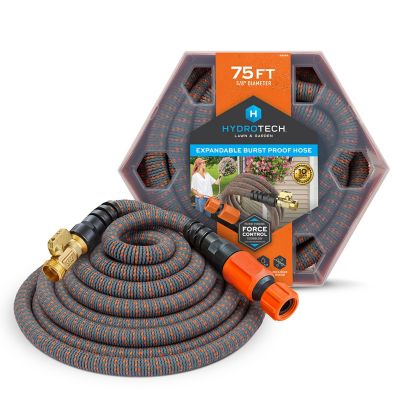
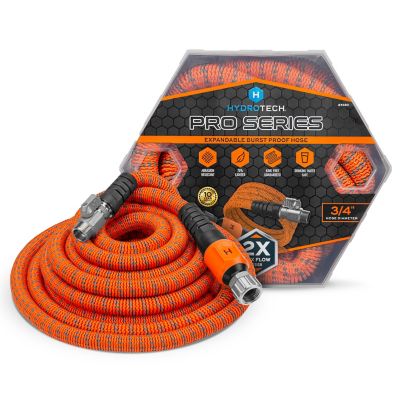
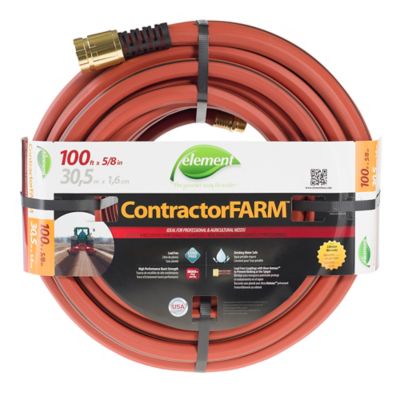
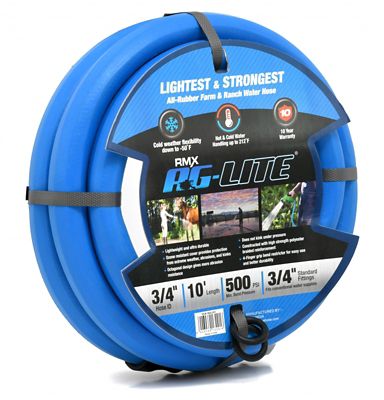
The right construction depends on how you plan to use your 50 foot garden hose. Standard vinyl hoses are often affordable, flexible, and well suited to general lawn and garden care, including watering flower beds, vegetable plots, shrubs, and potted plants. Rubber hoses tend to feel sturdier and may hold up well for frequent use, though they can be heavier to carry. Metal or stainless-steel outer jackets are valued for their light feel, resistance to punctures, and added protection against rough surfaces, curious pets, and the occasional bite from a puppy that has decided the hose is a chew toy. Expandable hoses are compact when empty and convenient for storage in a small shed, garage, or utility room, but they should be handled according to the maker’s instructions and stored out of harsh weather when not in use. Kink resistance is another worthwhile feature, especially when the hose will be pulled around corners, garden edging, porch steps, or parked equipment. Reinforced layers, woven mesh, and flexible outer jackets can help the hose bend without folding shut. A kink may seem like a small nuisance, but repeated kinks can restrict water flow and put stress on the hose over time. For most household watering and washing tasks, a 5/8-inch diameter offers a useful balance of water pressure, flow, weight, and flexibility. A 3/4-inch hose can move more water for larger jobs, such as filling containers or handling high-flow cleanup, although it may feel heavier when full. When comparing options, also look closely at the fittings. Solid brass or crush-resistant aluminum connections can help reduce leaks at the spigot and nozzle, while a comfortable grip makes attaching and removing the hose easier for hands that are wet, cold, or covered in garden soil.
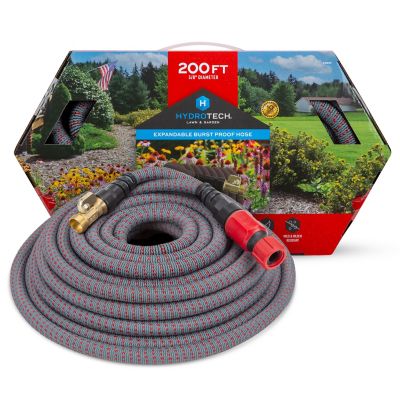
Before choosing from 50 foot garden hoses, take a quick look at the path between your spigot and the area you plan to reach. Measure around corners and along fences rather than guessing from one straight line, and leave enough slack to move the hose without pulling hard on the faucet connection. If the hose will cross a driveway or walkway, a durable exterior and careful storage can help limit wear from foot traffic, tires, and sharp gravel. For delicate plants, a spray nozzle with adjustable settings can provide a gentle shower instead of blasting soil from around roots. A shutoff valve near the end of the hose can save steps when changing attachments, filling a watering can, or moving between beds. Anyone caring for a larger property may find that 50 feet is a convenient section for everyday chores, while a longer reach may be better when the spigot sits far from the garden or work area; shoppers comparing lengths can also browse
100 Ft Hose options. After use, turn off the water at the spigot, drain the remaining water, and coil the hose in broad loops instead of tight bends. Store it in shade when possible, and protect it from freezing temperatures, since trapped water can expand and damage the hose or its fittings. Whether it is being used to brighten a row of thirsty plants, rinse dust from a trailer, or clean up after a muddy afternoon outside, a well-matched 50 foot garden hose is a simple, useful piece of equipment that earns its place near the garden, garage, or back porch.