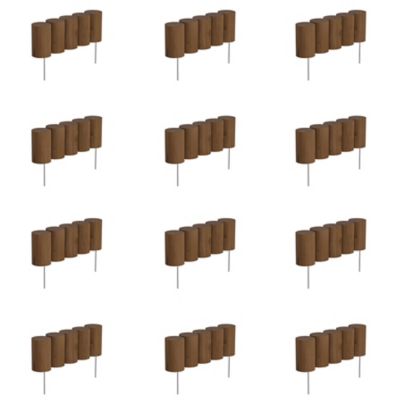
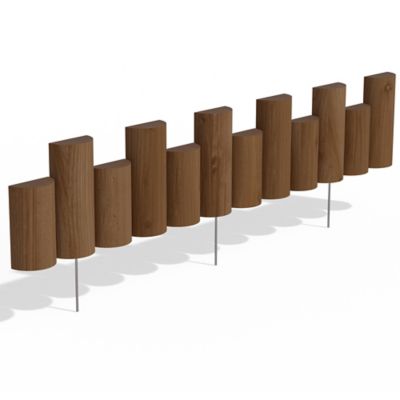
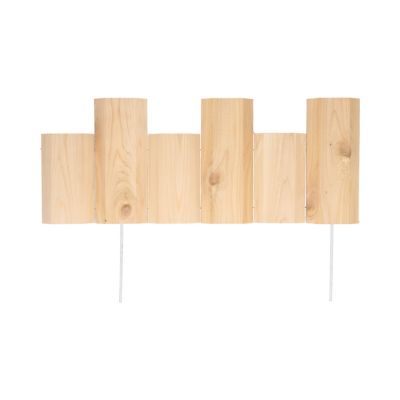
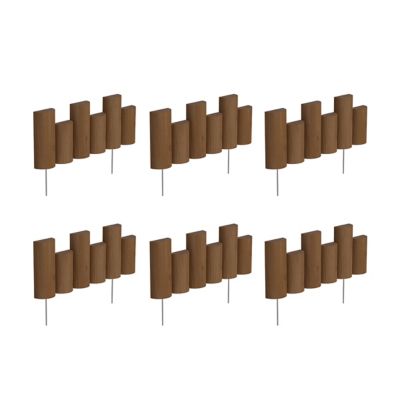
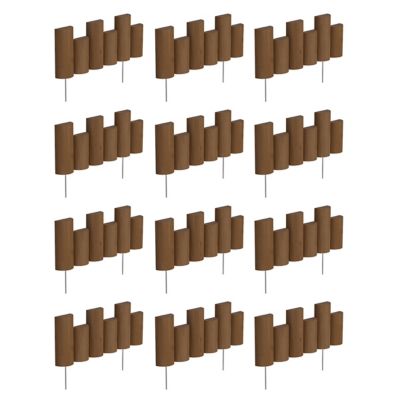
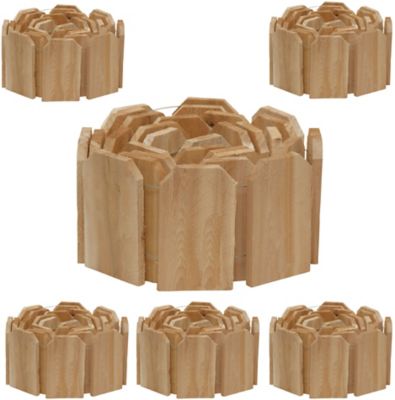
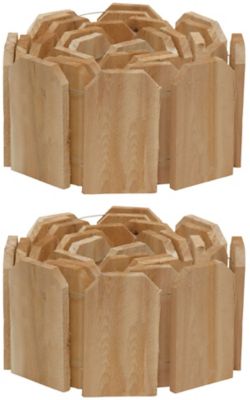
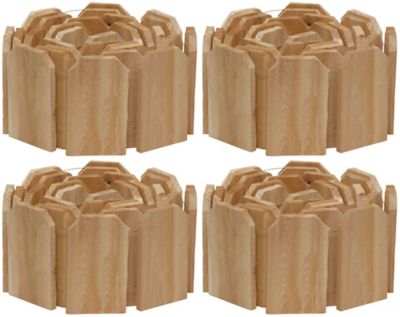
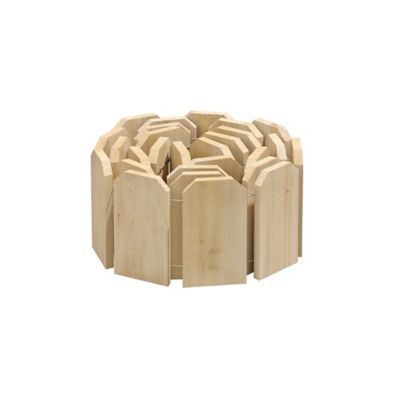
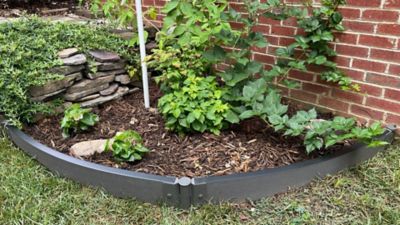
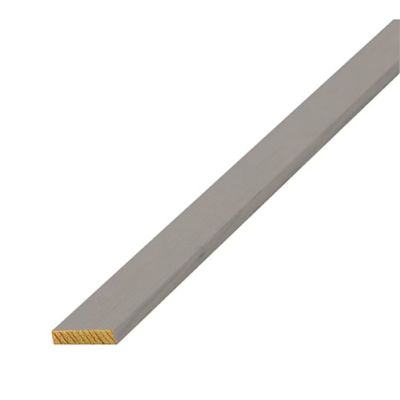
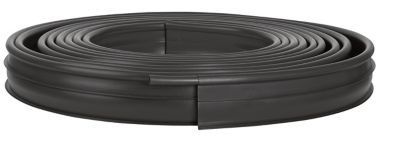
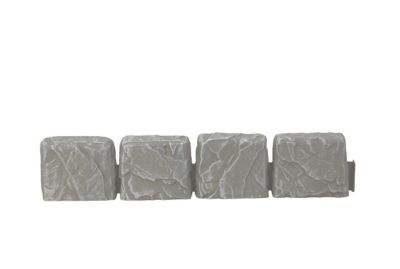
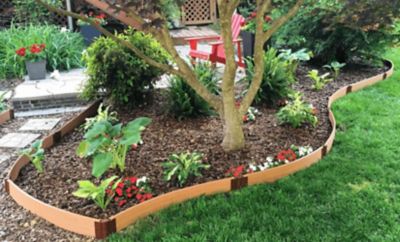
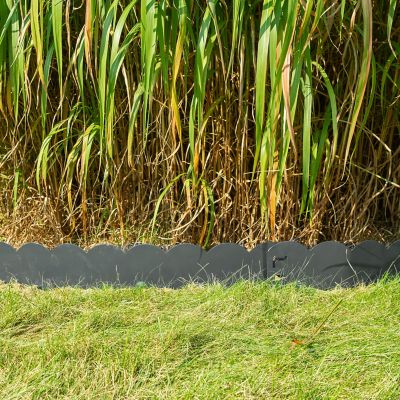
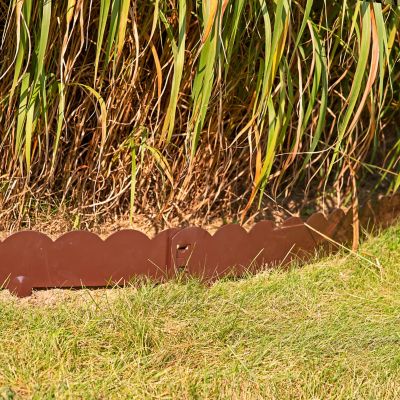
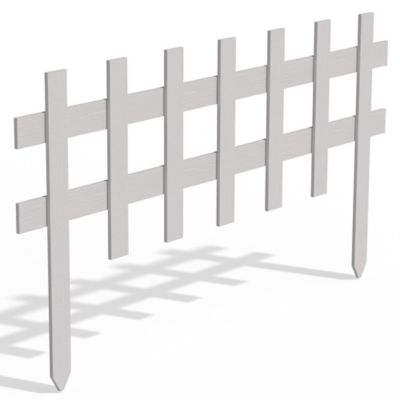
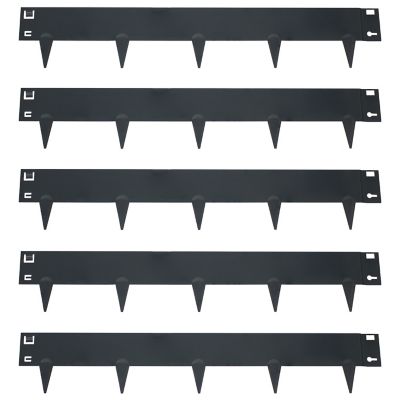
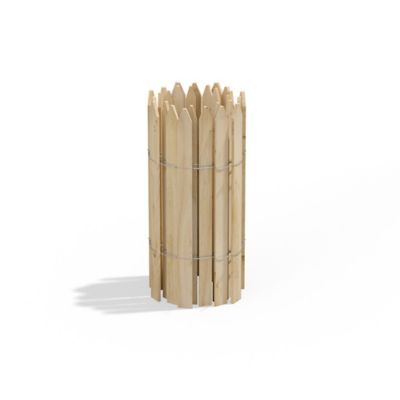
Wooden edgings are low landscape borders that separate flower beds, lawns, walkways and other planting areas. They give loose materials such as mulch a defined stopping point while bringing the grain and texture of wood into the yard. Common styles include flexible roll-out log borders, short picket-style sections and straight boards or timbers. Each shape suits a different layout. Flexible sections can follow a rounded bed beside a porch, while rigid boards work well along a straight garden path or around a rectangular planting area. The amount of bend varies by construction, so a broad sweep and a tight circle may call for different designs. A low border keeps the view open across flowers and ground covers; a taller edge makes a stronger division between a bed and the surrounding grass. Overall height is not always the same as exposed height, since part of the edging or its attached stakes may sit below the soil. That distinction matters when matching a border to mulch depth, nearby plants and the height of a walkway. Section length also affects the finished look: longer pieces create fewer joints on straight runs, while shorter sections offer more flexibility around corners and small beds. On a larger property, wood edging can give the planting strip beside a shed the same tidy outline as the beds near the house without making either space feel too formal. Rounded log faces have a different character from flat boards, and spaced pickets leave a more open boundary than closely fitted sections. Those differences go beyond appearance. Gaps can allow fine mulch or soil to pass through, while a continuous face provides a more complete separation. Wooden garden edging works best as a modest border, not as a substitute for a retaining wall where substantial soil pressure or a steep grade calls for structural support.
The wood species and its suitability for soil contact have a big influence on how an edging holds up. Cedar and redwood are known for natural resistance to decay, although resistance varies with the portion of the tree and does not make the wood immune to rot. Pine and fir may need treatment appropriate to their intended placement, especially where the border stays in contact with damp soil. Pressure-treated wood intended for above-ground applications is not automatically suitable for ground contact; the treatment rating matters more than the appearance alone. For edging beside vegetables, herbs or other edible plants, treatment information and manufacturer guidance help establish whether a material suits that setting. The same care applies near animal enclosures or places where pets may chew exposed wood. Smooth faces and rounded edges can be worth considering beside narrow paths, play areas and spots where hands frequently brush the border. Bark-covered pieces bring a rougher texture, but bark can loosen over time. Knots, grain patterns and small checks are normal features of wood, and boards can move as their moisture content changes. Construction that allows for that movement helps keep joints and connections from becoming strained. Hardware matters, too: fasteners and brackets need to suit both outdoor exposure and the wood treatment, since incompatible metal can corrode. A finish may help manage surface absorption or preserve a preferred color, but it does not replace a ground-contact rating. Bare wood can also change color with exposure, giving the border a different appearance over its service life. Care generally centers on keeping drainage paths open, checking connections and watching for soft areas where wood meets soil. A border buried under excess mulch is harder to inspect and can stay damp longer. Easy access to the exposed face and its fasteners makes those routine checks less of a chore, particularly along a long run behind shrubs or beside a fence.
Fit on the property is just as important as the look of the wood. A border beside a gravel path has a different job from one outlining a shallow flower bed. Gravel puts pressure against the lower edge, while fine mulch may slip through joints or settle below the top of the border. The height and anchoring need to match the material being contained without creating an awkward step along the walking surface. Stakes, pins or brackets help hold sections in place, but the right arrangement depends on the edging design, soil conditions and the amount of pressure behind it. On uneven ground, shorter sections may follow the grade more closely, while a long rigid board can leave gaps beneath it. Drainage deserves room in the layout as well; a tidy boundary should not trap water against a building or block an established drainage route. Around a lawn, exposed height and placement affect mowing access. An upright wooden border is not necessarily a surface for mower wheels, and leaving room for trimming can keep routine yard work manageable. Tree roots also need consideration, since a border that fits beside a young tree may become restrictive as the trunk and roots expand. Near a porch, patio or garden entrance, wooden edging can tie ground-level planting areas to
Wooden Planters without requiring every piece of wood to match exactly. Similar tones, simple lines or repeated shapes can connect the spaces while letting flowers and foliage take center stage. For home gardeners, acreage owners and anyone keeping a well-tended yard around outbuildings, the best fit is a border sized for the job and practical to maintain. Clear measurements of the run, the bends and the intended exposed height make it easier to compare edging styles. The result is a defined planting area with the straightforward look of wood and enough room for everyday work around the property.