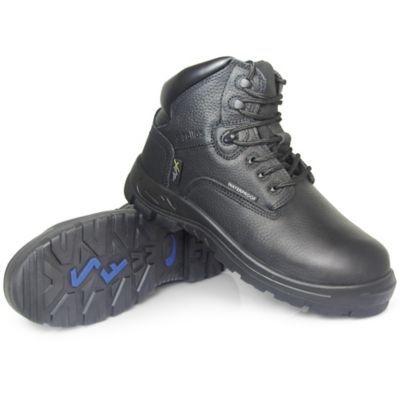
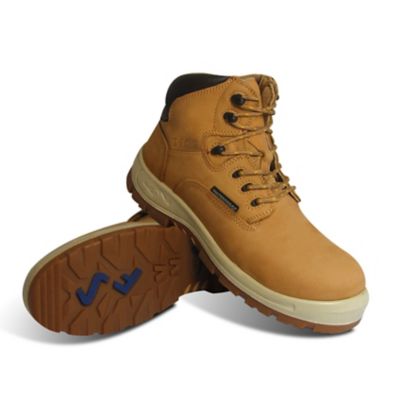
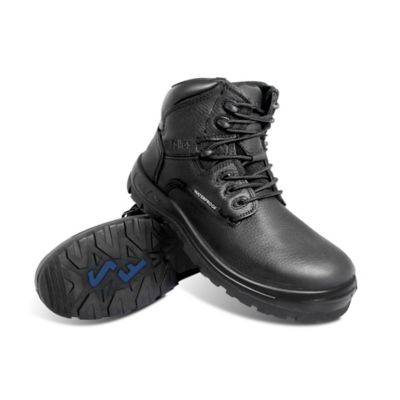
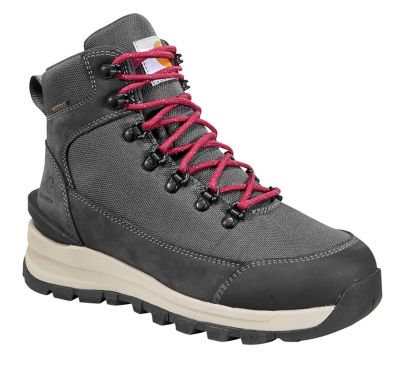
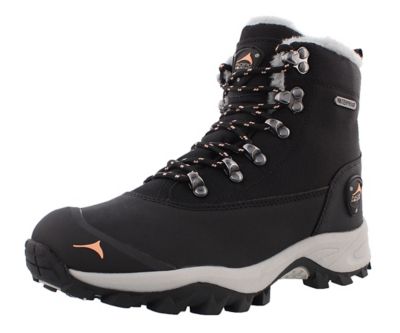
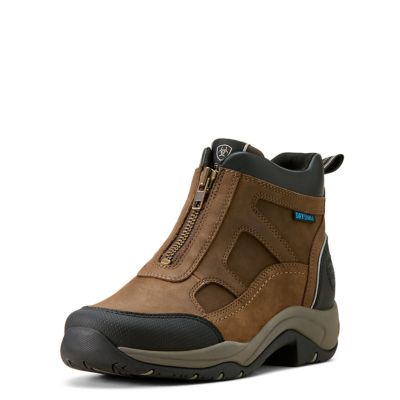
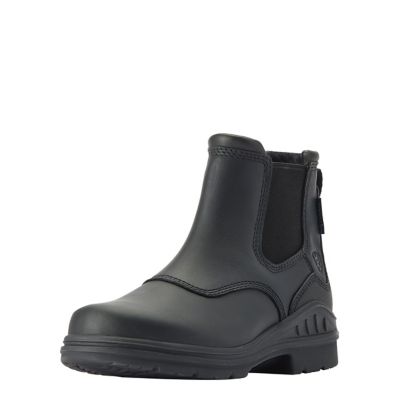
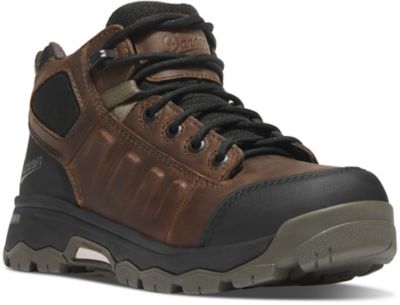
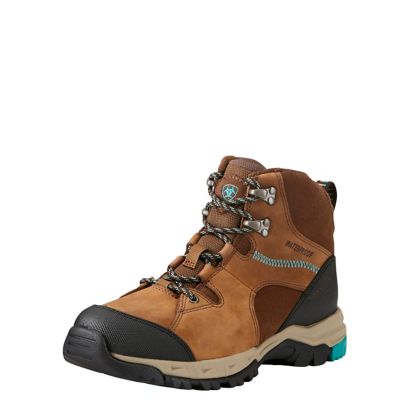
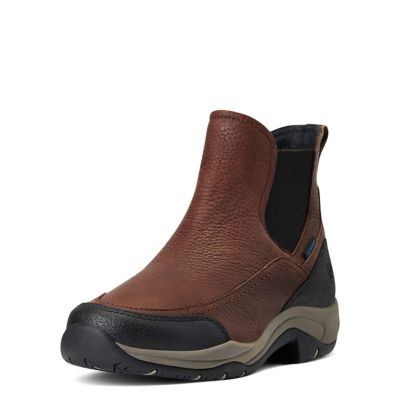
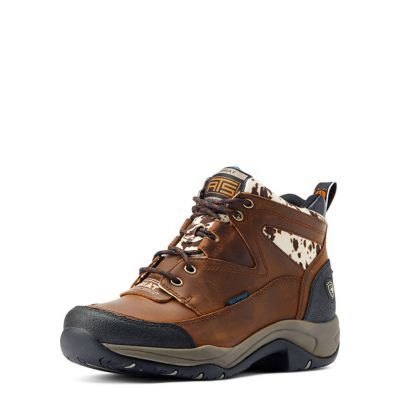
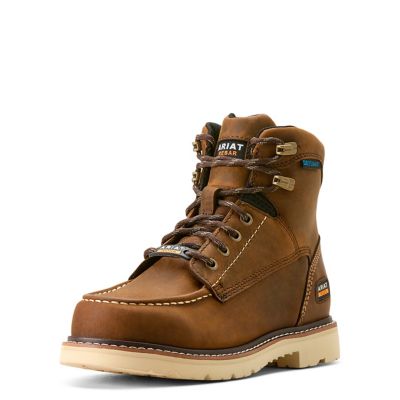
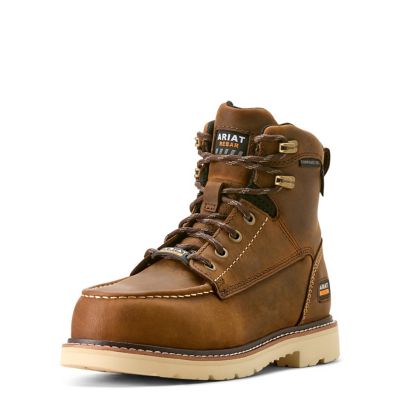
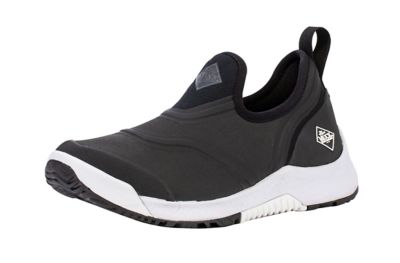
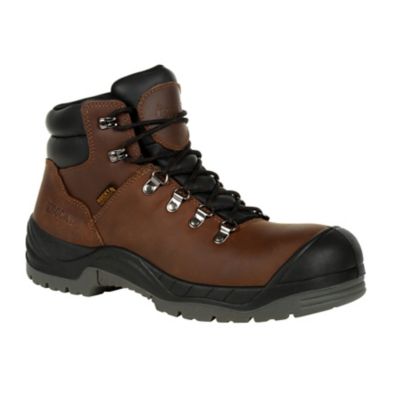
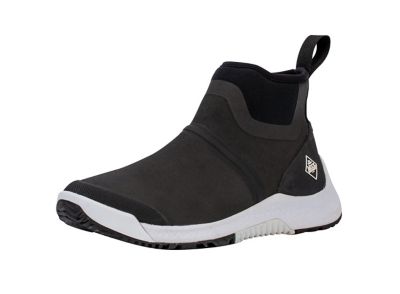
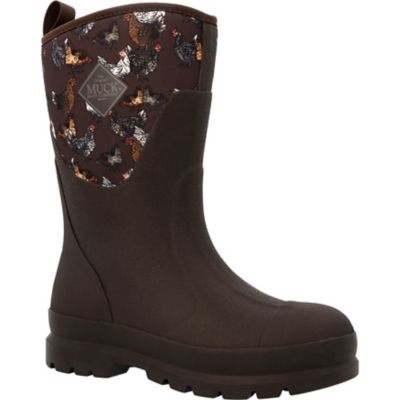
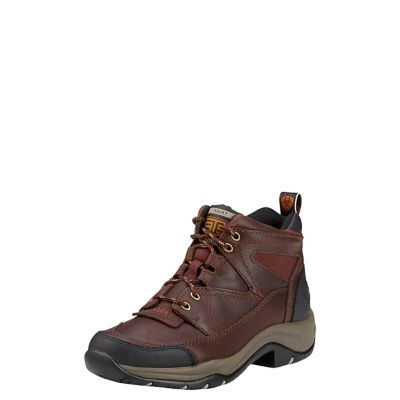
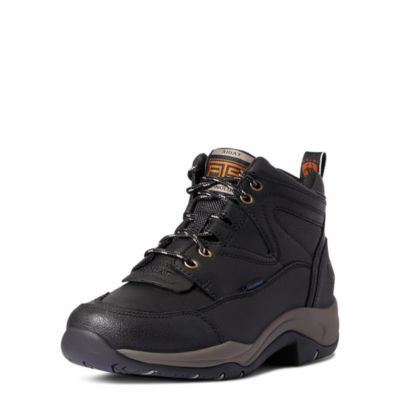
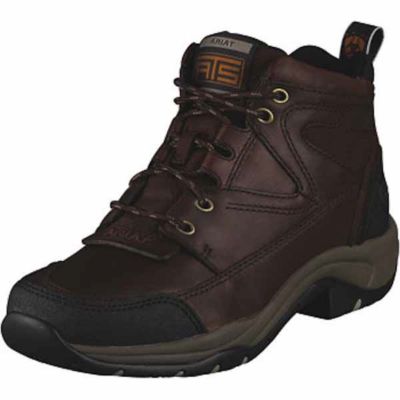
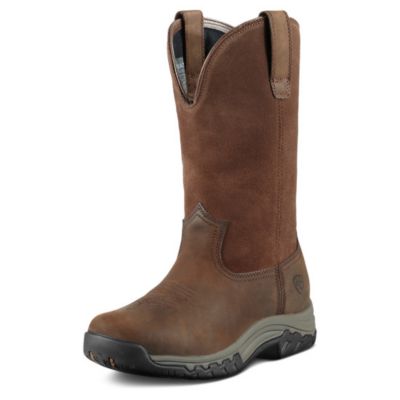
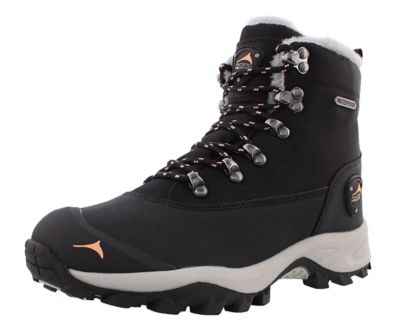
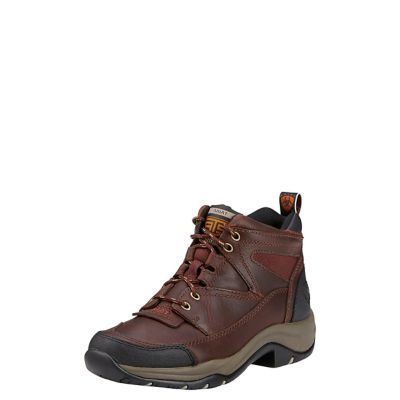
Women's hiking work boots bring trail-style traction and flexibility to chores, property upkeep and jobs that keep you on your feet. They suit women who move between packed dirt, gravel paths, workshop floors and uneven ground, with construction that can pair a hiking-inspired shape with work-focused features. A morning spent checking fence lines puts different demands on footwear than an afternoon standing at a workbench, so the right combination depends on where the day takes you. Mid-cut uppers provide coverage around the ankle, while laces help adjust the fit through the instep and heel. A padded collar can soften contact around the ankle without making the boot feel overly stiff. That hiking-inspired look does not automatically mean a boot meets workplace safety requirements, though. Safety-toe construction, electrical hazard protection and slip resistance are separate features that need their own labeling. Where impact and compression protection are required, the boot's markings should identify compliance with the applicable ASTM F2413 requirements. Steel, aluminum and composite safety toes differ in weight and construction, but the material alone does not establish the boot's protection rating. Composite toes are nonmetallic, while aluminum designs can weigh less than comparable steel designs; the weight of the complete boot still depends on its sole, upper and other components. Soft-toe boots do not provide safety-toe impact and compression protection, even when they share the same rugged appearance. Electrical hazard protection is also a separate designation, intended as secondary protection under specified dry conditions rather than a substitute for workplace electrical safety practices. For women working around equipment, handling materials or moving through a busy shop, matching those documented features to the job matters more than the boot's appearance. For property walks and general chores without a safety-toe requirement, comfort, traction and freedom of movement may take a larger role.
Materials and underfoot construction make a noticeable difference over a full day. Leather uppers can provide structure and resistance to scuffs, while textile panels can reduce weight and allow more airflow, depending on their weave and backing. Reinforced toe and heel areas help shield spots that scrape against steps, rocks and equipment. Flexible forefoot construction supports the bend of a walking stride, while a supportive midfoot helps the boot feel steadier when crossing rutted ground. EVA midsoles provide lightweight cushioning, and other cushioning compounds can offer a firmer or more responsive feel. More softness is not always better: a boot that feels pleasant for a few minutes may feel less settled during hours of standing or carrying supplies. Removable footbeds make room for compatible replacement insoles or prescribed orthotics, provided the change does not crowd the foot or interfere with the boot's fit. A women's-specific last shapes the boot around intended foot proportions, but heel width, instep height and toe shape still vary from person to person. Enough toe room matters when walking downhill, kneeling beside a gate or crouching to reach a lower shelf. The heel should stay reasonably seated without a tight band of pressure across the instep, and a safety toe should not press against the toes. Trying boots with the socks intended for work gives a better sense of the space inside. Underneath, lugged rubber outsoles can bite into loose ground, while tread spacing affects how readily dirt releases. Slip-resistant testing addresses particular conditions; no outsole guarantees footing on every surface. Water protection is another construction detail worth comparing. A waterproof membrane, sealed seams and the height of the gusseted tongue all affect where water can enter, and water can still come over the collar. For tasks where that feature matters, explore
Women's Hiking Waterproof Boots while keeping the job's other footwear requirements in view.
Long service life comes from matching the boot to the task and giving its materials regular attention. A flexible hiking-work design can make sense for walking acreage, tending animals, hauling light supplies or moving between a shed and a workshop, but specialized work may call for footwear with additional protection. Sharp debris, chemicals, heavy falling objects and other hazards each bring requirements that an everyday work boot may not meet. Even well-built uppers and soles wear faster when packed dirt stays in the seams or abrasive grit collects around the tongue. A soft brush helps lift loose dirt, and a damp cloth can clear residue before it settles into creases. Leather care products should match the manufacturer's recommendations, since the wrong treatment can change the finish or interfere with the boot's construction. Textile panels generally need gentle cleaning rather than leather conditioner, and waterproof membranes need care that preserves their intended function. After cleaning, loosen the laces and let the boots air-dry away from direct heat; removing compatible footbeds can help moisture escape from inside. Clean tread channels give the outsole a better chance to contact the ground instead of riding on packed material. Frayed laces, loose stitching, separating soles and worn-down tread deserve attention before another long day on foot. A safety toe that has taken a substantial impact may need replacement even when damage is not obvious, following the manufacturer's directions. For women who split their time between a jobsite and home chores, small details such as easy-to-grip lace hooks, a smooth lining and a heel loop can make the daily routine simpler. These boots can also be a practical gift for someone who spends plenty of time walking property or working on her feet, provided her size, preferred fit and workplace requirements are known. The best match is a boot that fits the actual work, leaves room for natural movement and feels settled from heel to toe.