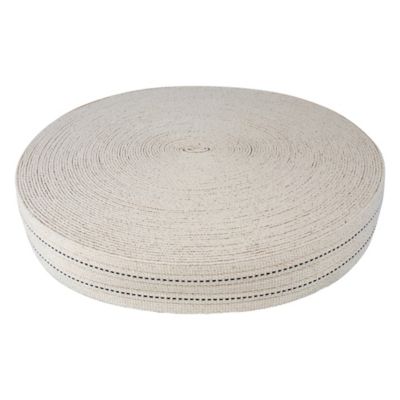
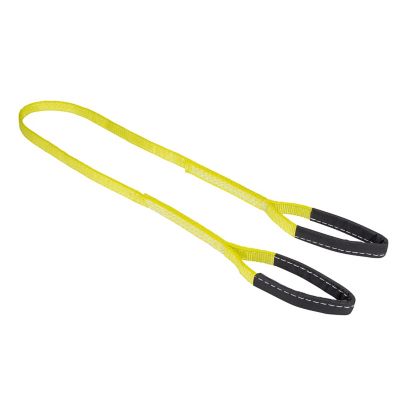
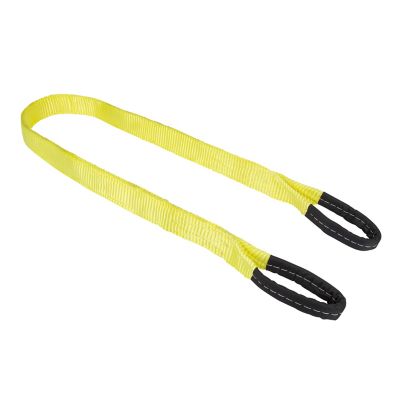
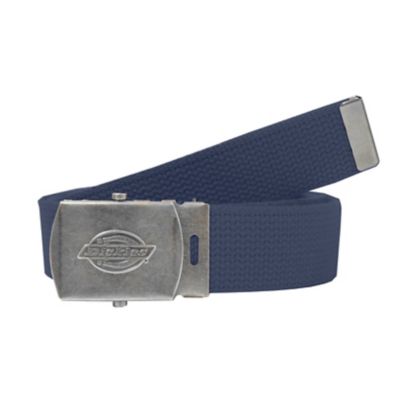
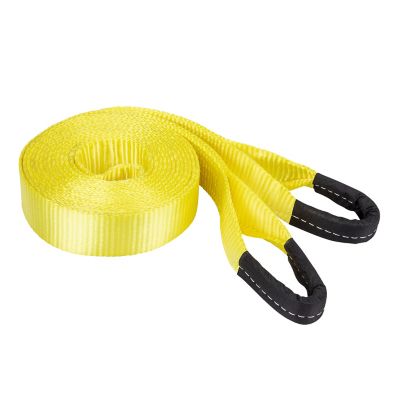
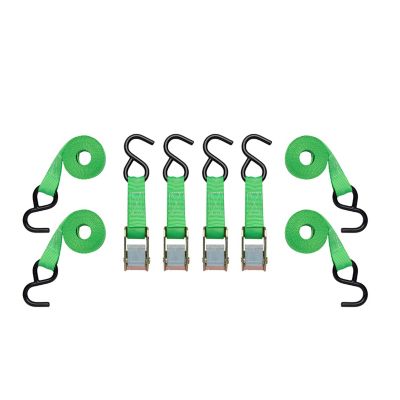
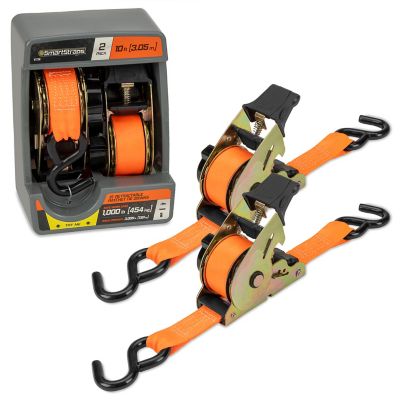
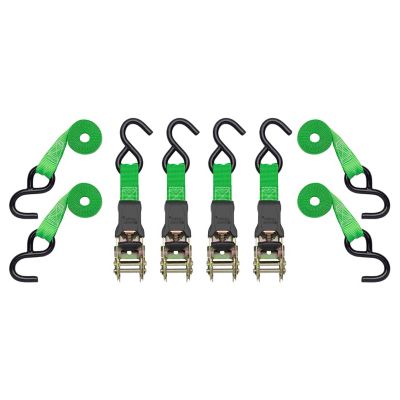
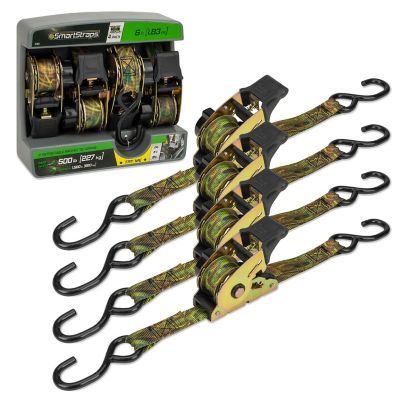
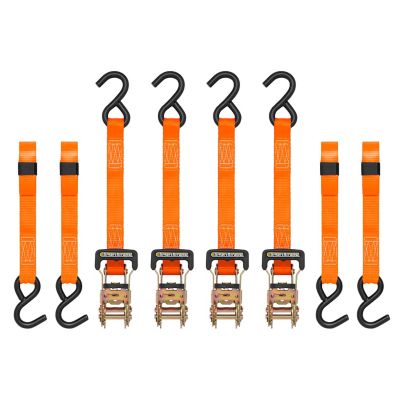
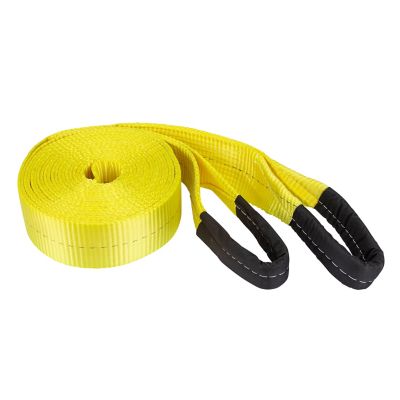
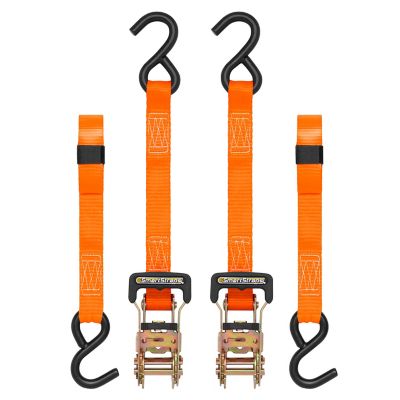
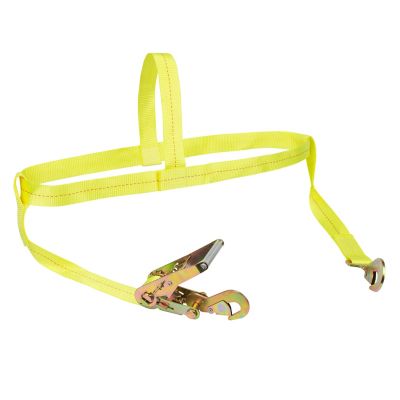
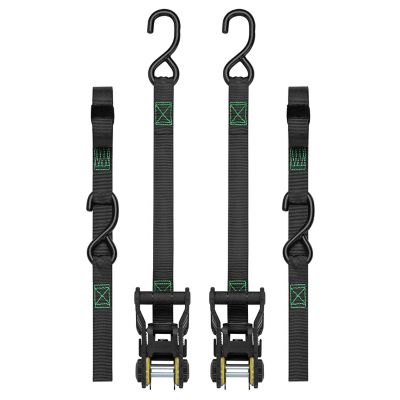
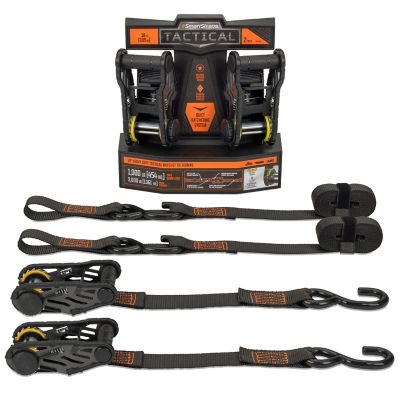
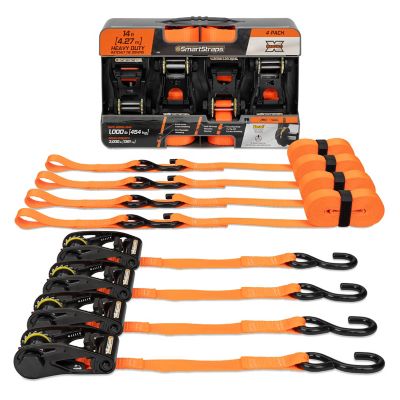
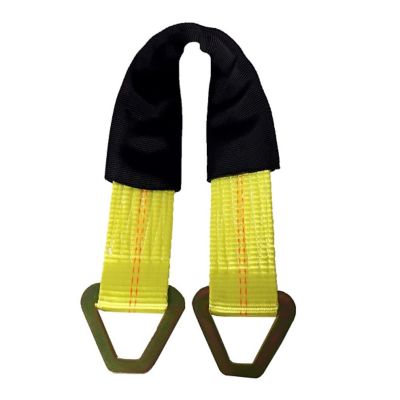
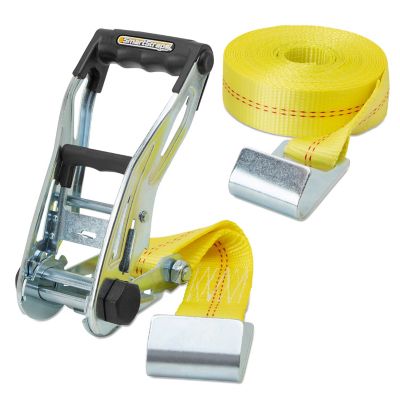
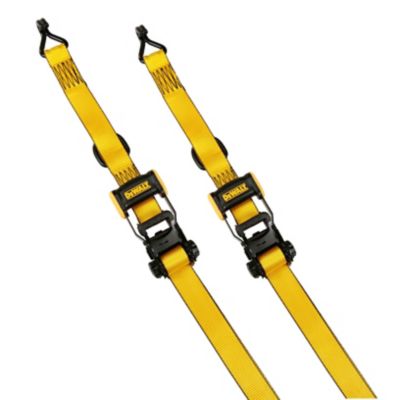
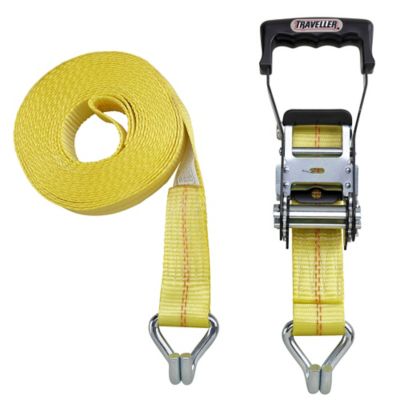
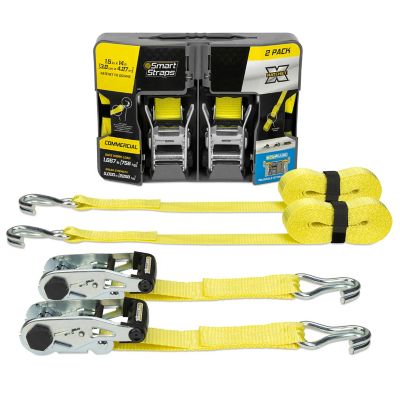
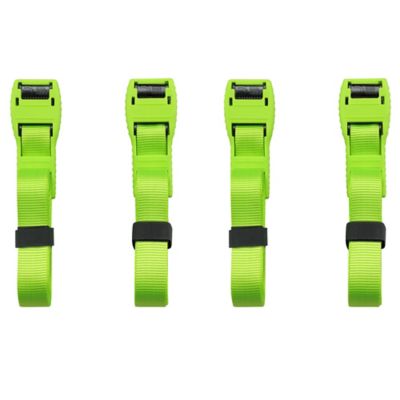
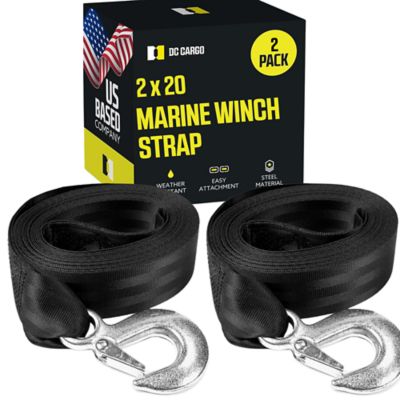
Webbing straps are flat, tightly woven fabric bands that help secure, support, carry, or bundle a load. Their broad surface spreads contact across more area than a narrow cord, while their flexible construction lets them wrap around gear and fit through compatible buckles, loops, and anchor points. Around a farm, shop, or home, that can mean keeping equipment together, holding a toolbox in place during transport, or adding a carrying handle to a gear bag. The term covers both unfinished webbing for sewing and repair work and finished straps with attached hardware. Those two forms serve different purposes: a length of woven material is a component, while a finished tie-down is an assembly whose strength depends on the webbing, stitching, and fittings together. Polyester, nylon, polypropylene, and cotton are common webbing materials, each with its own feel and performance characteristics. Polyester generally has low stretch and good resistance to moisture absorption, making it a common choice for cargo tie-downs. Nylon offers strength and abrasion resistance, but it stretches more under load and can absorb water. That give may suit some carrying and equipment applications, though it is not interchangeable with the lower stretch often wanted for securing cargo. Polypropylene is lightweight, absorbs little water, and often suits light bundling or carrying tasks when its rating allows. Cotton has a softer feel against the hand and is often a good fit for bag handles and other sewn accessories rather than demanding cargo work. Material alone does not establish a strap’s capacity. Weave, thickness, width, stitching, and hardware all affect how an assembly performs. For someone hauling supplies between the barn and workshop, the best match starts with the job itself: what needs holding, how much it weighs, where the strap will attach, and whether the strap is meant for transport, carrying, or simple organization. A soft handle and a load-rated tie-down may both be webbing straps, but they should not be treated as substitutes.
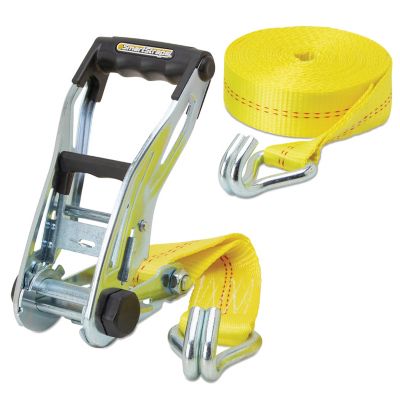
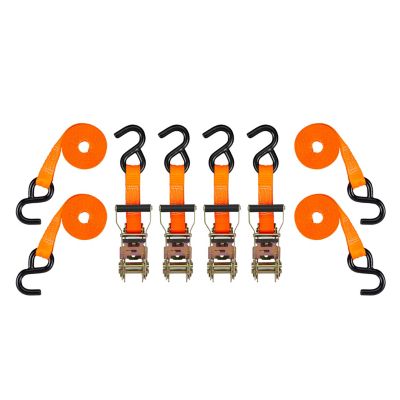
Width, length, and end fittings make a noticeable difference in how webbing straps fit a task. A wider strap provides a broader contact surface, which can help distribute pressure, but extra width does not automatically mean a higher load rating. The strap also needs to fit the slots, buckles, and attachment points it passes through without folding or bunching. Length should account for the full path around or over the load, plus the amount needed to thread and tension the hardware as directed. Too little length makes attachment difficult; excessive loose webbing needs securing so it cannot drag, flap, or catch in moving parts. Adjustable webbing straps offer flexibility when the load changes from one trip to the next, while a fixed loop can suit a dedicated attachment or carrying application. Ratchet hardware provides mechanical leverage for tensioning cargo straps, which is helpful for firm loads but calls for care around surfaces that could bend or crush. Cam buckles hold webbing with a spring-loaded gripping mechanism and are often suited to tasks where hand-applied tension is enough, provided the assembly’s rating meets the job. Hooks, sewn loops, and other end fittings need compatible anchor points that can handle the forces involved. A strong strap attached to a weak rail does not make a sound securement system. For transport, the working load limit is the key capacity figure to check; breaking strength describes failure under test conditions and is not a safe working capacity. The lowest-rated component limits the assembly, and the number and placement of tie-downs matter along with their individual ratings. Picture a mower on a trailer or a stack of fence panels headed down a gravel lane: the load needs restraint against forward, backward, sideways, and upward movement, not merely a strap pulled tight across the top. Related
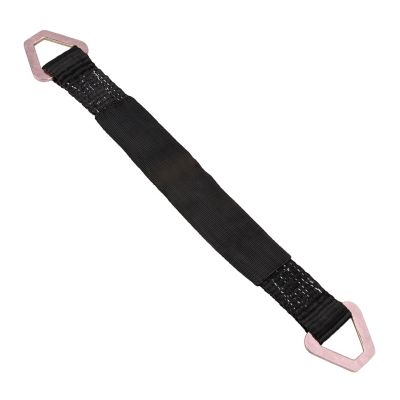
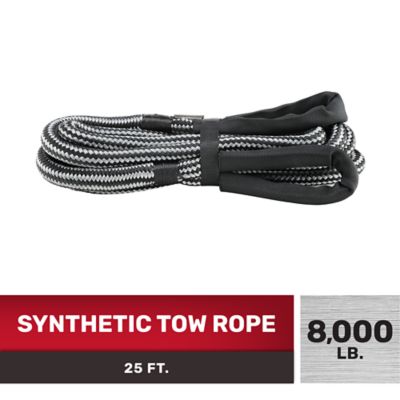
Industrial Straps provide another category to consider for equipment and load-handling needs, with intended application and stated capacity still guiding the choice. Ordinary cargo straps are not lifting slings, recovery straps, or fall-protection equipment; those jobs require equipment specifically designed and rated for them.
Care and handling have a lot to do with how long webbing straps remain fit for service. Woven fibers can take repeated flexing, but sharp edges, ground-in grit, excessive heat, and incompatible chemicals can weaken them. A strap pulled across the corner of a steel implement needs suitable edge protection, not just another turn of the ratchet. Contact surfaces matter even with lighter loads: a rough trailer rail can rub the same spot on every trip, gradually wearing the fibers where the damage may be easy to miss. Before a load goes on the road, a look along the full strap helps reveal cuts, frayed edges, broken stitches, melted areas, and wear near fittings. Hardware deserves the same attention, including bent hooks, cracks, corrosion, and buckles that no longer grip or release properly. A missing or unreadable capacity label makes a load-rated strap difficult to assess and is a reason to follow the maker’s removal-from-service guidance. Knots, patches, and improvised stitching are not a sound repair for a damaged cargo tie-down. Cleaning should follow the manufacturer’s directions, generally avoiding harsh chemicals and aggressive treatments that may harm the fibers or finish. Straps should dry thoroughly before storage and stay away from sharp tools, chemical containers, and heat sources. Rolled or loosely coiled webbing is easier to inspect and untangle than a heap on the shop floor, and keeping matched straps together makes the next loading job less of a scramble. For bag repairs and carrying projects, the feel of the edges, flexibility of the weave, and compatibility with sewing equipment deserve attention alongside width and color. A stiff, thick band may hold its shape well but feel awkward as a shoulder strap; softer webbing may sit more comfortably against clothing. Farmers, tradespeople, campers, and folks who regularly haul equipment all have reasons to keep task-matched straps close at hand. Whether the purpose is carrying tools or securing a trailer load, the right combination of material, dimensions, hardware, and rated capacity matters more than appearance alone.