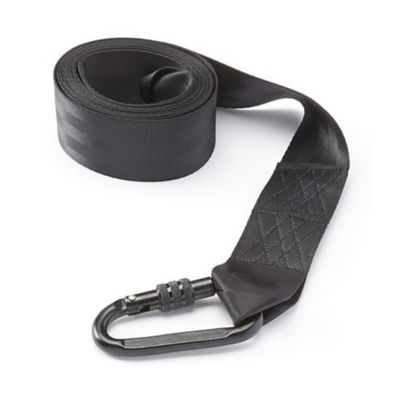
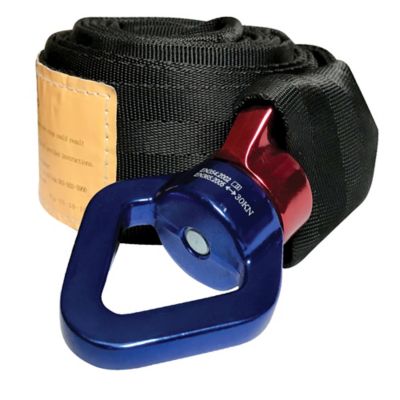
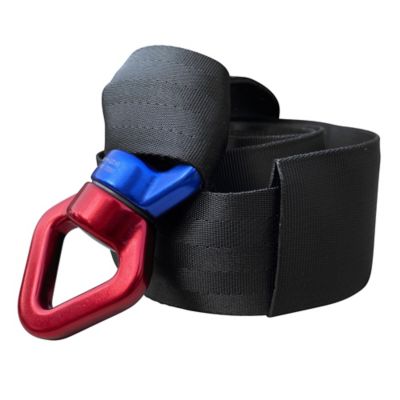
Tree swing hanging straps are load-bearing webbing straps designed to connect a compatible swing to an overhead branch. Many styles loop around the branch without drilling into the tree, with reinforced attachment points for the hardware that connects to the swing’s ropes or chains. They suit the kind of backyard setup where a sturdy shade tree stands beside an open patch of grass and there’s room for a seat to travel without bumping a fence, trunk, or outbuilding. Depending on their stated purpose and ratings, hanging straps can support traditional swing seats, tire swings, saucer swings, or other suspended seating. Hammock compatibility should be listed by the manufacturer rather than assumed just because the attachment looks similar. Materials make a difference in how these straps handle tension and repeated movement. Polyester webbing is common because it offers relatively low stretch and resistance to moisture and sunlight. Polypropylene appears in some designs, while nylon generally stretches more under load than polyester. Fiber type alone doesn’t establish a strap’s capacity; webbing construction, reinforced stitching, attachment hardware, and the complete system’s rating all matter. Wide, flat webbing provides a broader contact surface than narrow rope or bare chain, helping distribute pressure against the branch instead of concentrating it along a thin line. That can reduce bark abrasion, but no strap makes a tree immune to damage. Some designs include a separate branch-protection sleeve or mat, which adds a buffer where the strap rests. Smooth edges, even stitching, and clearly identified connection points are useful features to compare. A simple loop-ended strap may suit a straightforward attachment, while a design with several reinforced loops can offer more connection positions when its instructions allow them. The right choice comes down to the swing’s intended motion, the attachment arrangement, and the tree itself—not simply how substantial the webbing looks. For a child’s everyday play spot or an adult’s quiet seat at the edge of the yard, compatibility matters more than an oversized-looking clip or an impressive number on the package.
Length and width are separate fit considerations for tree swing straps. Part of a strap’s length goes around the branch, leaving the remainder for the connection below it, so the printed length doesn’t equal the distance the swing will hang beneath the limb. A thick branch takes up more webbing than a slender one, and the swing’s own ropes, chains, or suspension lines also affect seat height. Longer straps aren’t automatically a better fit; extra material needs an approved arrangement that keeps it clear of moving parts and riders. Width affects the contact area against the bark, while the size of sewn loops and metal rings affects hardware compatibility. A carabiner needs room to sit in its intended orientation, close completely, and engage its locking mechanism without webbing bunching against the gate. Screw-lock and other locking connectors can help limit unintended opening, but they still need inspection and proper engagement. The manufacturer’s stated working-load limit and intended application deserve close attention. Breaking strength describes a failure threshold, not an allowable rider weight, and ratings for two separate straps shouldn’t simply be added together to decide how much a swing can carry. Swinging introduces changing forces, and weight may not divide evenly between attachment points. The straps, connectors, suspension lines, and swing seat all need to suit the same application; a stronger strap doesn’t increase the rating of another component. One-point and two-point suspension arrangements also aren’t interchangeable unless the swing’s instructions allow them. A broad platform seat may have a different hanging layout and clearance requirement than a narrow board seat. Tree condition is another part of the fit that a hardware rating cannot cover. A limb that looks stout from the ground may have hidden decay, cracks, or a weak attachment to the trunk. An arborist can assess uncertain trees and branches. Beyond the attachment point, the full swing path needs separation from nearby objects, along with an appropriate landing surface and the clearances specified for the swing.
Care and inspection help keep tree swing hanging straps ready for repeated backyard play. Webbing deserves a close look at the edges, sewn loops, and places where it bends around hardware. Cuts, fraying, pulled stitches, melted patches, or noticeable thinning are reasons to take the setup out of service and follow the manufacturer’s replacement guidance. Metal parts need attention, too: a gate that sticks, a locking sleeve that won’t engage, corrosion, or a bent connector can affect the entire attachment. A clear, readable rating label is handy for keeping the strap’s limits and identification with the equipment instead of relying on memory after the packaging is gone. Cleaning methods vary by material, so the maker’s care directions take priority over a hard scrub or a strong cleaner from the barn shelf. When washing is permitted, gentle cleaning and thorough drying before storage help keep grit and trapped moisture from lingering in the weave. Straps stored off the tree belong away from sharp tools, fuel, chemicals, and pests that could damage the fibers. The branch-contact area also needs ongoing checks. Bark can rub beneath a moving strap, and a tight band left in place can interfere with growth as a branch thickens. Protective sleeves don’t remove the need to inspect both the webbing and the tree. For families putting together a play area, replacement straps can be a practical addition when their dimensions, ratings, and connectors match an existing swing. They can also make a thoughtful gift for someone planning a backyard swing, provided the tree and seating requirements are settled first. When a suitable tree isn’t part of the yard,
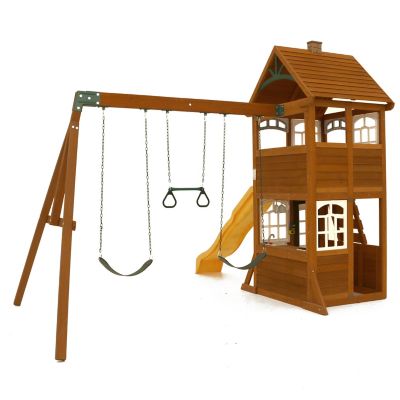
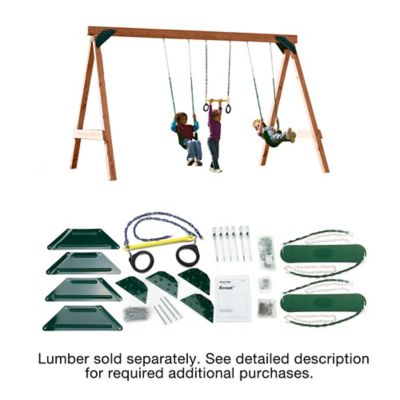
Swing Set Kits offer another way to plan a play space around a purpose-built structure. Whether the goal is a familiar seat for the kids or a spot for grown folks to take a break, clearly stated specifications and straightforward care requirements make hanging equipment easier to match to the job.