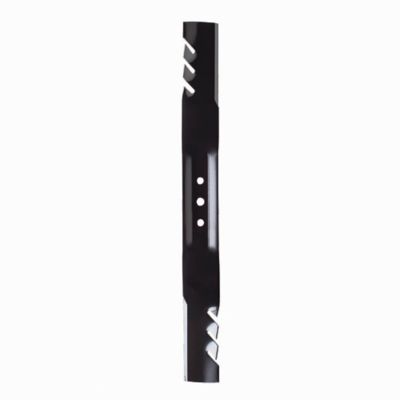
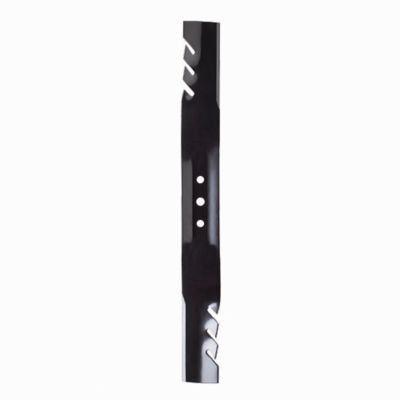
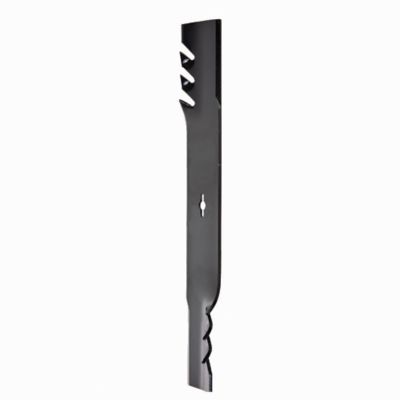
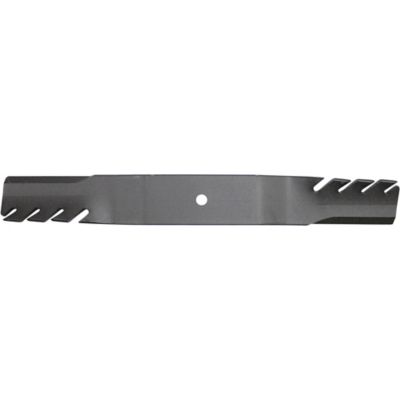
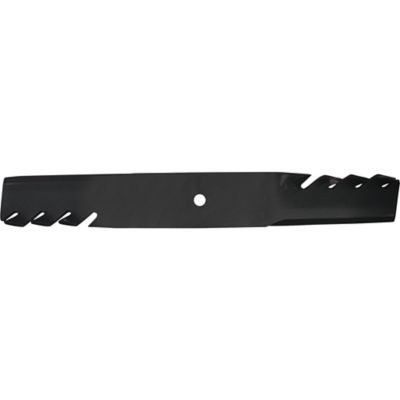
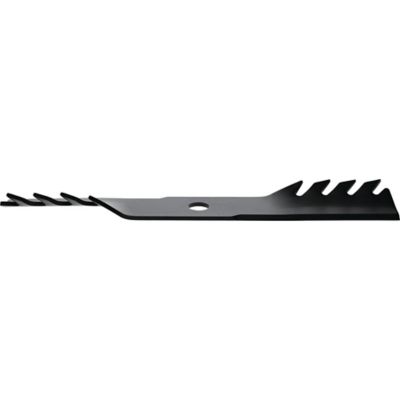
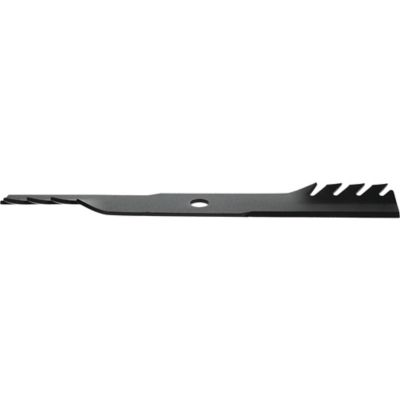
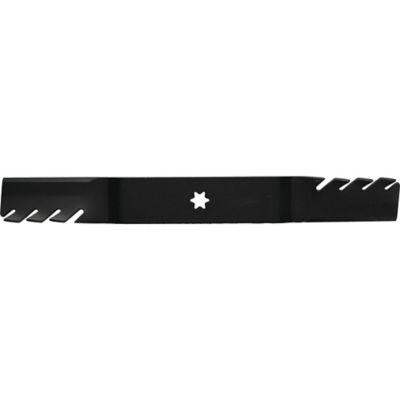
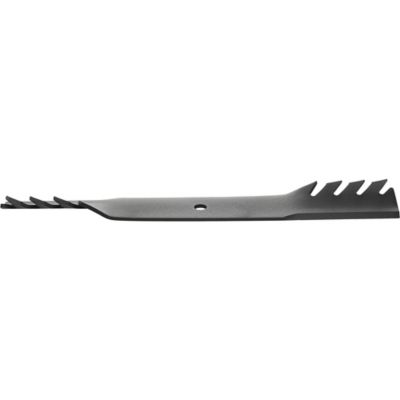
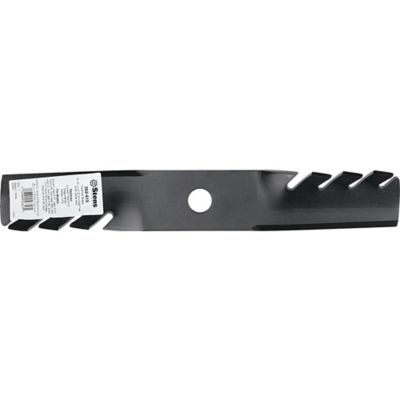
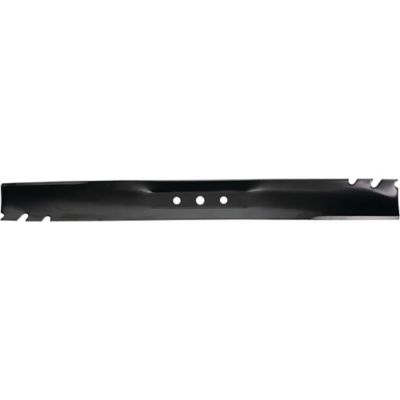
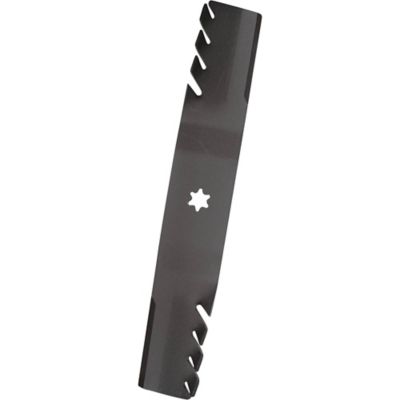
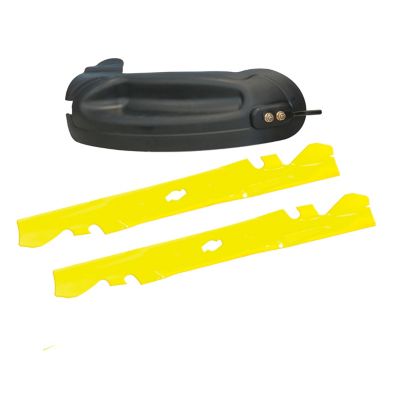
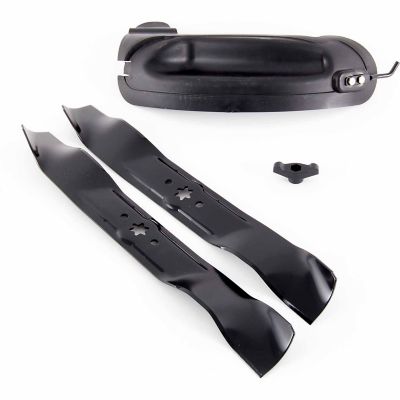
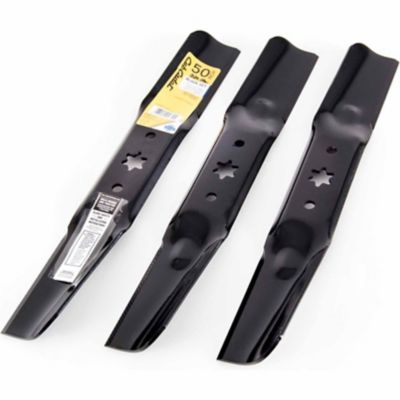
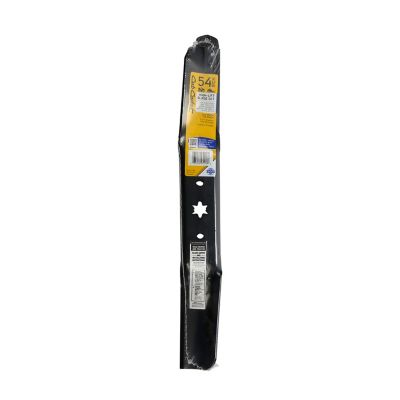
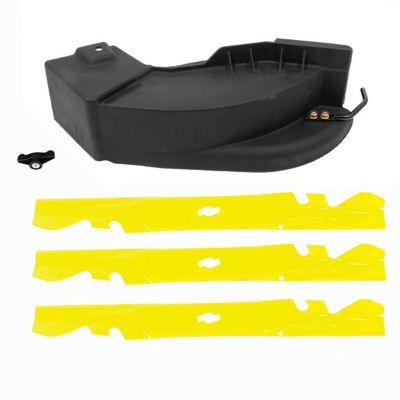
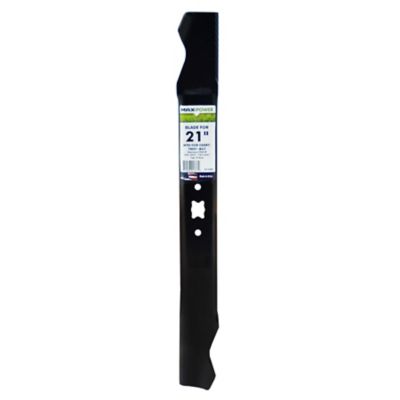
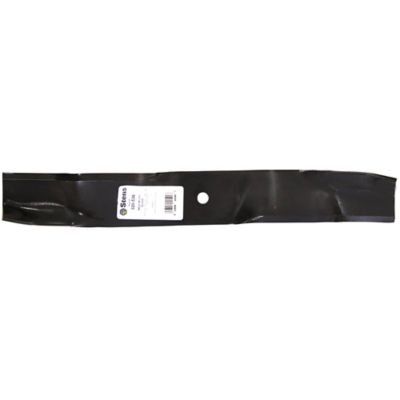
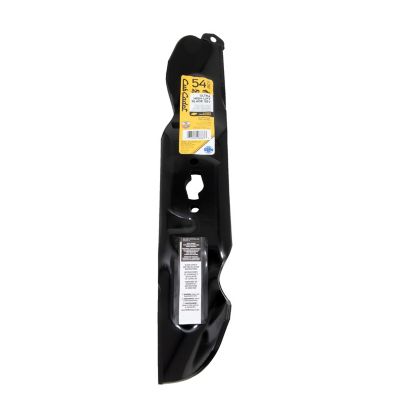
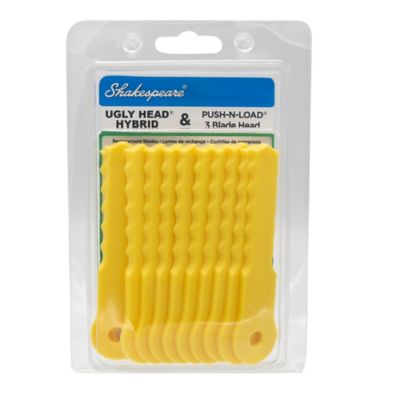
Toothed mower blades give grass clippings another pass through the cutting action before they leave the mower deck. On many designs, the teeth sit along the raised trailing section of the blade, often called the sail, rather than along the sharpened cutting edge. Those notches help redirect airflow and clippings inside the deck; they are not a second row of cutting edges that saw through standing grass. The leading edge still does the cutting, while the blade’s overall shape helps determine how grass lifts, circulates and exits. That combination makes toothed lawn mower blades worth considering for homeowners tending a broad yard, property owners mowing around outbuildings and crews maintaining larger stretches of turf. Their appeal is straightforward: smaller clippings can settle between grass stems instead of leaving conspicuous ribbons across a freshly cut lawn. Depending on the blade design and the mower’s approved setup, toothed blades may support mulching, bagging or side discharge. A blade described as a three-in-one option still needs to match the deck and its attachments; the teeth alone do not make every blade suitable for every discharge arrangement. Mulching performance also depends on having enough room beneath the deck for clippings to circulate. Tall, heavy grass can overwhelm that space, leaving clumps even when the blade is designed for repeated cutting. A toothed profile can also help process light leaf litter when the mower manufacturer allows it, but it does not turn a lawn mower into a brush cutter or debris shredder. Sticks, rocks and woody growth remain outside the job these blades are built to handle. For a yard with open runs, tight turns around fence corners and a stretch beside the driveway, the right blade is one that matches both the mower and the way the clippings need to leave the deck.
Fit starts with the mower’s model information and the replacement blade specifications, not just the cutting width printed on the deck. Two mowers with the same deck width can require different blade lengths, center openings, offsets or mounting patterns. A round center hole, a star-shaped opening and a multi-hole arrangement are not interchangeable simply because the blades look close when laid side by side. Blade width, thickness and the height of the sail can also affect clearance beneath the deck. The correct replacement must seat properly on the spindle and work with the hardware specified for that mower. Equipment-focused categories such as
Grasshopper Mower Blades offer a starting point for browsing, while the model number and replacement specifications settle the fit. On decks with more than one blade, the required blade count and arrangement matter, too. Matching the specified blade design across the deck helps maintain the cutting and airflow pattern the mower was built around. Most mower blades are made from steel, with heat treatment helping balance cutting-edge wear resistance and toughness. Different steel formulations, thicknesses and blade profiles serve different equipment needs, so a heavier blade is not automatically a better match. Added thickness must stay within the mower manufacturer’s requirements, including mounting clearance and operating limits. The same goes for lift: a taller sail or more aggressive profile changes airflow, but more lift is not always the answer. Sandy ground can make excessive lift undesirable because it draws more abrasive material through the deck, while some bagging arrangements need a particular airflow pattern to move clippings into the collection system. Dedicated mulching kits may also require a specified blade rather than any toothed replacement. A blade that performs well with an open discharge chute may behave differently when that opening is blocked by a mulch kit. Product specifications and the mower manual matter more than a general label such as “mulching blade.”
Grass sap, packed clippings and grit all leave their mark on a mower blade. Even a well-matched toothed blade needs a sound cutting edge and a clean deck to do its job. A dull edge can tear grass tips rather than cut them cleanly, leaving the lawn looking ragged despite an even cutting height. Buildup beneath the deck takes away circulation space and can interfere with discharge, especially when grass is damp or dense. That is why blade care and deck care belong together: teeth cannot make up for a deck packed with clippings or a cutting edge worn round. Inspection and service call for a mower that is shut down, secured against movement and protected against accidental starting, with the power source disconnected as directed in the equipment manual. Gloves help protect hands around sharp edges, but they do not replace those precautions. Sharpening should follow the blade manufacturer’s guidance, preserving the specified cutting angle and blade balance rather than reshaping the raised teeth. Cracks, bends, damaged mounting holes or badly worn sails are reasons to replace a blade, not straighten it back into service. Proper mounting hardware and the specified tightening torque are just as important as the blade itself. Out in the yard, clipping results also depend on mowing habits. Taking off too much grass in one pass gives any blade more material to handle; a suitable cutting height and a manageable ground speed help keep the deck from getting overloaded. For acreage owners, groundskeepers and folks keeping the home place neat, that balance of fit, blade condition and mowing pace makes more difference than tooth count alone. Toothed replacement mower blades are a practical option when their airflow design suits the equipment and the job, whether the goal is returning finer clippings to the lawn, moving grass into a bagger or spreading it through a side-discharge chute.