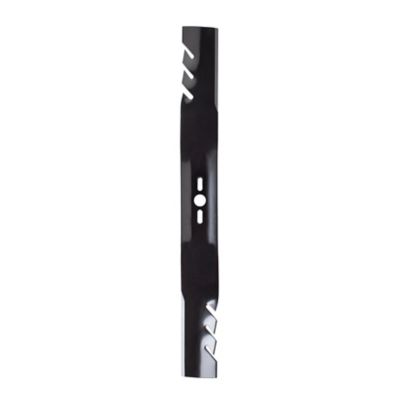
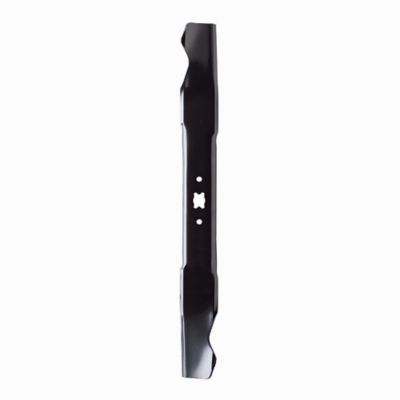
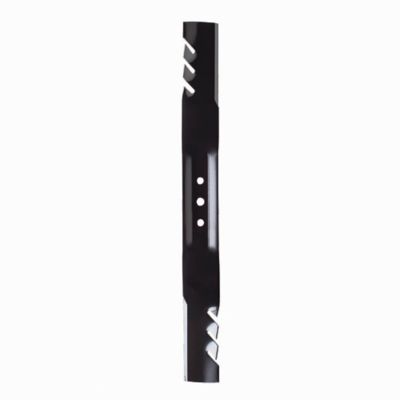
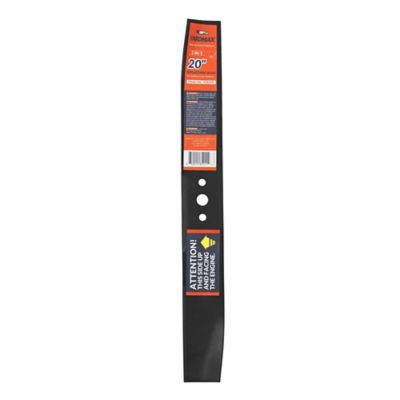
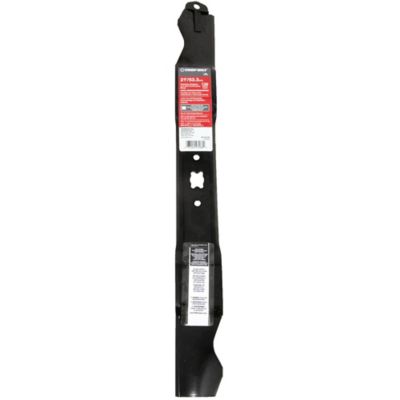
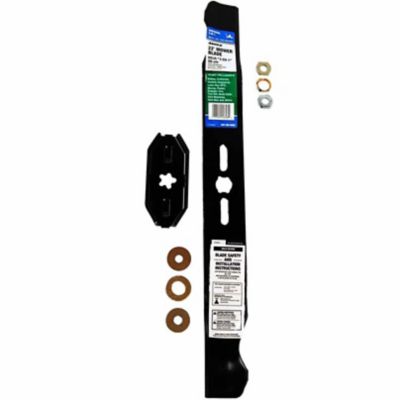
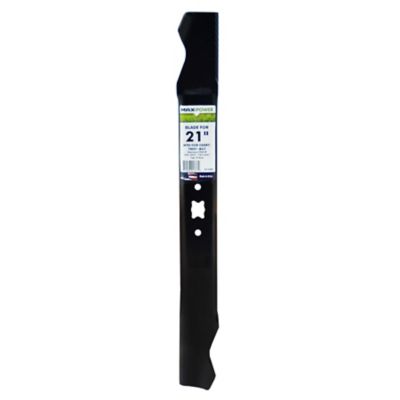
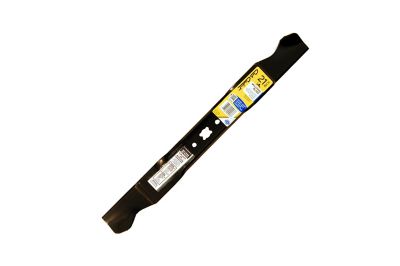
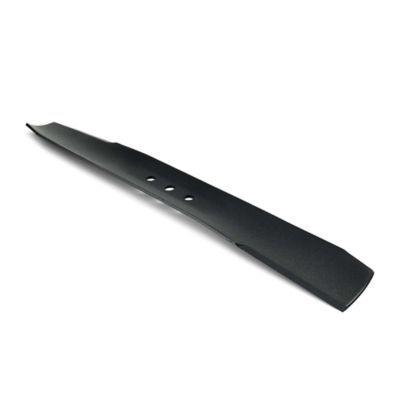
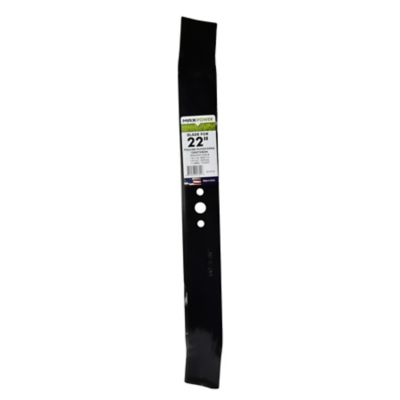
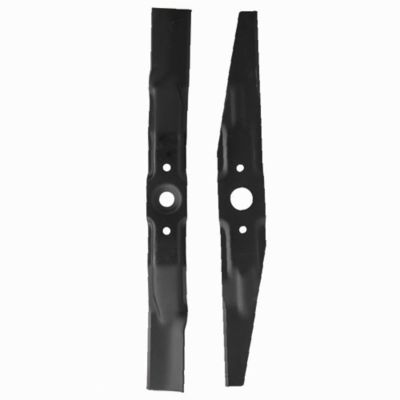
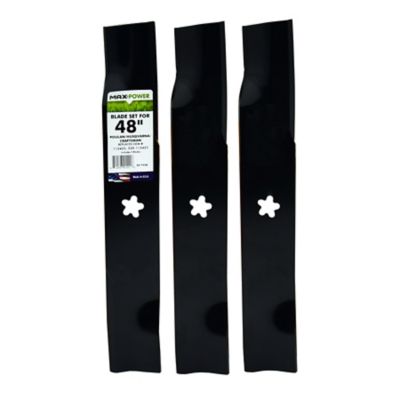
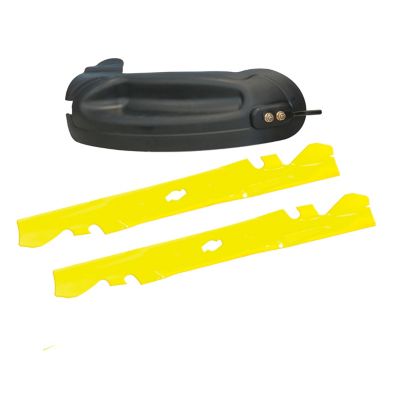
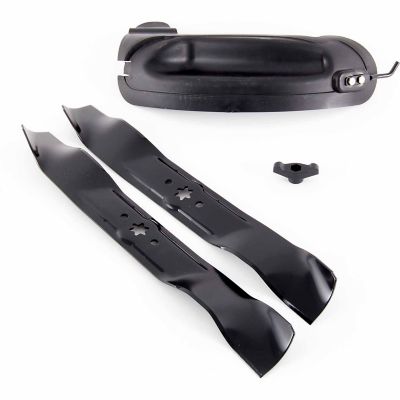
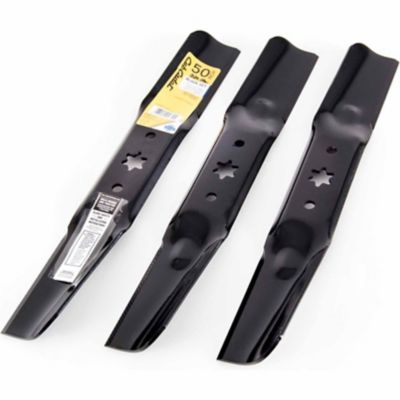
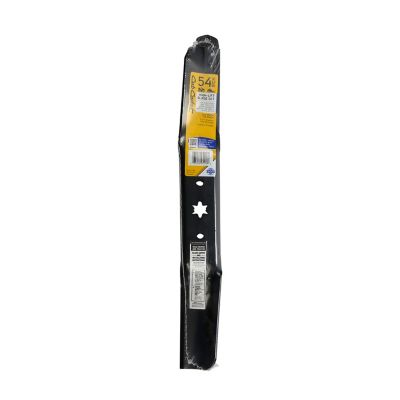
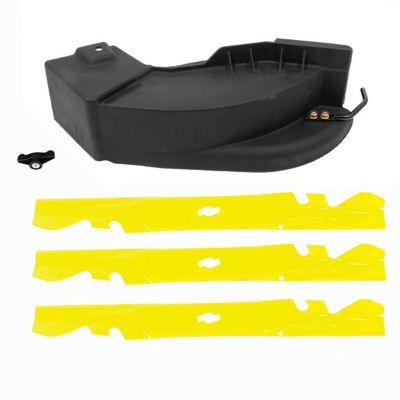
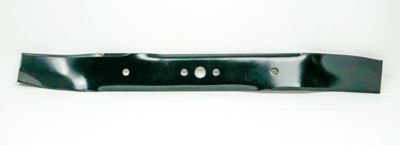
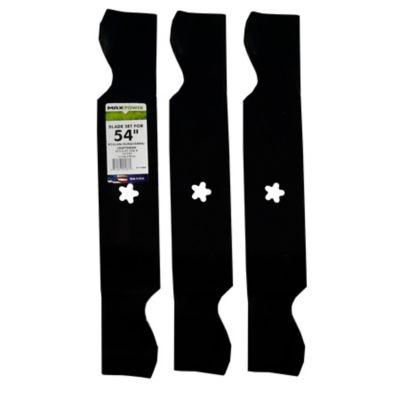
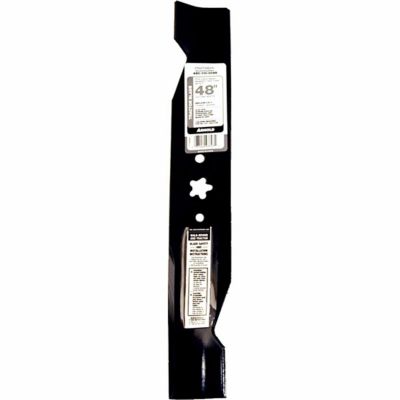
Push mower blades are replacement cutting parts for rotary walk-behind lawn mowers, including compatible gas-powered and battery-powered models. The right blade fits the mower’s mounting system and cutting deck while supporting the way the machine handles grass clippings. For a yard around the house, a strip beside the driveway, or a fenced patch that a larger mower cannot easily reach, that combination matters more than appearance. A blade in good condition cuts grass cleanly instead of leaving ragged tips and scattered missed stems, although mowing height, ground speed, and deck condition also affect the finish. Standard blades generally suit the clipping-handling setup specified for the mower, while mulching, bagging, and high-lift designs have different shapes to move grass and air through the deck. Mulching blades commonly have curved profiles and longer cutting edges that help recut clippings before returning them to the lawn. Bagging-compatible blades help move clippings toward the collection system, and high-lift designs create stronger upward airflow where the mower manufacturer approves them. More lift is not automatically a better match for every machine; blade design can affect power demand, noise, and clipping movement. Some three-in-one blades support mulching, bagging, and side discharge when paired with the mower’s specified equipment. A mulching blade alone does not turn every mower into a mulching setup, since the deck and required attachments also play a part. For someone who regularly collects clippings near a porch or walkway, bagging compatibility may carry more weight than mulching performance. For someone who prefers to return finely cut grass to the yard, a matching mulching blade makes more sense. These replacement blades are different from the rotating cutting reel and stationary bedknife on a manual reel mower, so the mower’s cutting system is the first distinction to settle. The best match starts with the machine and the job, not simply a blade that looks about the same.
Fit comes down to several details working together: blade length, center-hole shape, mounting-hole spacing where applicable, thickness, offset, and clearance inside the deck. An advertised mower cutting width is not always the same as the replacement blade’s measured length, and two blades with similar dimensions may attach differently. Round openings, shaped center holes, and additional mounting holes must match the mower’s blade adapter and hardware. A difference that looks small on the workbench can keep a blade from seating correctly or maintaining the required clearance. The mower’s model number and the replacement blade number listed in its manual provide a stronger starting point than appearance alone. A mower’s make can narrow the search to a category such as
Murray Mowers Blades, but model-specific fit still needs to line up. Compatibility also matters across power sources: a blade intended for one gas mower is not automatically suitable for a battery-powered mower with a similar deck width. Blade weight, profile, and the manufacturer’s approved specifications can affect how the machine operates. Most rotary mower blades are steel, often with heat treatment that helps the cutting edge resist wear while providing the properties needed for its intended application. The exact steel formulation and treatment vary, so thickness alone does not tell the whole story about service life. A painted or coated surface can help limit corrosion, but the cutting edge remains exposed to abrasion from grass, grit, and soil. Contact with rocks, roots, or other hard objects can damage even a substantial blade. Shape deserves a close look, too: raised ends, curved sections, and teeth on certain mulching designs are functional features, not interchangeable details. For homeowners maintaining one walk-behind mower, keeping the model information handy makes replacement shopping simpler. Grounds crews and property caretakers managing several machines benefit from keeping each mower’s blade requirements separate, especially when machines look alike but have different mounting arrangements. Matching the complete specification helps avoid a part that seems close but does not belong on that mower.
Blade care has a direct bearing on cutting performance and how long a replacement stays in service. A sharp, balanced edge helps the mower slice grass cleanly; a dull or damaged edge can leave shredded tips, uneven patches, and extra work for the machine. Grass buildup beneath the deck can also interfere with airflow and clipping movement, so a fresh blade cannot make up for a cutting chamber packed with residue. Cleaning, inspection, and sharpening should follow the mower manufacturer’s directions, with the machine fully shut down and protected against accidental starting before anyone works near the blade. Battery removal or spark-plug disconnection may be part of those precautions, depending on the machine. Proper sharpening preserves the specified cutting angle, and balance matters because uneven material removal can cause vibration. A blade does not need a razor-thin edge; grinding away too much metal can shorten its service life. Cracks, bends, deep damage, elongated mounting holes, and wear beyond the manufacturer’s limits call for replacement rather than an attempt to straighten or patch the part. The blade bolt, washer, and adapter also need to be in the condition and arrangement specified for the mower, with fastening torque taken from the manual rather than guesswork. Between mowing jobs, removing clinging grass and storing spare blades somewhere dry helps limit corrosion. Keeping the cutting edge away from loose tools protects both the edge and anyone reaching into the storage area. Around a farmhouse lawn, a small-town yard, or the grass beside an outbuilding, clearing stones and stray objects before mowing helps protect the blade and reduces thrown-object hazards. Replacement timing depends on wear and damage rather than a single schedule that suits every property. Sandy ground, hidden debris, and frequent mowing can change how quickly an edge wears. A blade matched to the mower, the clipping-handling setup, and the work at hand helps keep those everyday mowing jobs running smoothly without asking the machine to do something it was not built to do.