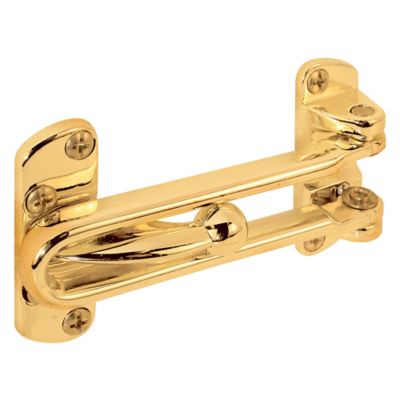
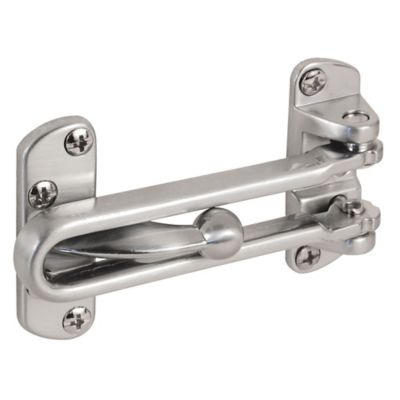
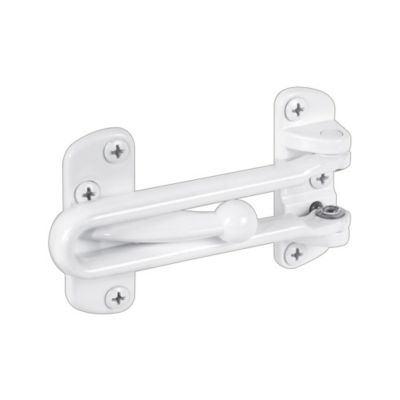
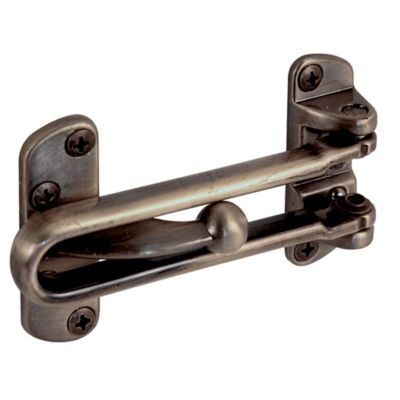
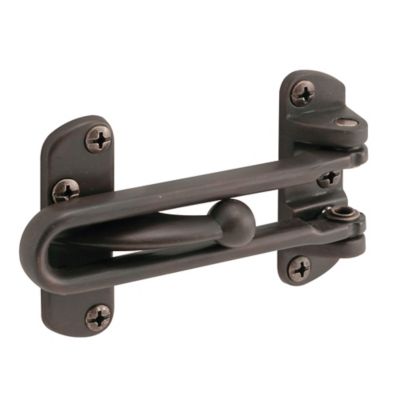
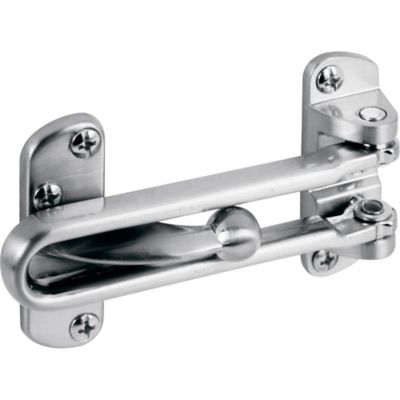
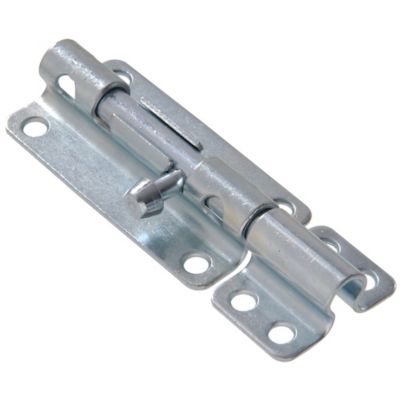
Swing locks, often called swing bar door guards or hotel latches, add a secondary restraint to compatible inward-swinging hinged doors. A pivoting bar engages a matching catch, allowing the door to open only a short distance while the guard remains engaged. The exact opening depends on the hardware and installation, but the purpose stays the same: limiting door travel without relying on the main latch alone. This style of door hardware typically operates from inside and works alongside a properly functioning entry lock or deadbolt, not in place of one. It can suit a house entry, an apartment door where alterations are permitted, or an inward-opening office door adjoining a shop or work area. For a farmhouse with regular deliveries or a home office just off the mudroom, that extra restraint can be a practical part of the entry setup. A limited opening provides a narrow sightline through the doorway, though it does not make an interaction with someone outside risk-free. Unlike a chain guard, a swing bar guard has a rigid arm rather than a flexible chain, giving the hardware a different feel in operation and a different mounting footprint. The bar usually folds aside when not engaged so the door can open normally, provided there is enough clearance around nearby trim and hardware. That compact arrangement makes these guards worth considering where a full-size additional lock would crowd the door face. Surface-mounted designs also keep the mechanism visible, making it easy to notice whether the bar is engaged before pulling the door open. Appearance matters here, too, especially on an entry that opens straight into a living area. A finish that works with existing knobs, hinges, and deadbolts can help the added hardware look like part of the doorway rather than an afterthought. The most important match, though, is between the guard’s design and the way the door, frame, and trim meet.
Fit involves more than finding an open patch of wood beside the handle. Swing locks depend on the relationship between the door face and the mounting surface on the frame, including any offset created by casing or a recessed door. A guard intended for one arrangement may not sit correctly on another, even when both doors swing inward. Mounting plate dimensions, screw-hole spacing, bar reach, and clearance through the full opening arc all affect whether the mechanism can engage and release without binding. Door handing can matter as well; some designs accommodate either side, while others have a specified orientation. A thick piece of trim, a nearby window, or a tightly placed deadbolt can change how much room the bar has to move. Those details are especially noticeable on older farmhouses, where a doorway may have several layers of casing or a replacement door fitted into an existing opening. Materials also shape how the hardware feels and holds up in everyday service. Depending on the design, swing guards may have steel, brass, or zinc-alloy components, with finishes chosen for appearance and resistance to surface wear or corrosion. Material names alone do not establish how much force a complete installation can withstand. The construction of the bar and catch, the strength of the mounting plates, the fasteners, and the condition of the underlying door and frame all play a part. A solid mounting surface matters far more than a screw that merely looks substantial. Hollow door sections, split jambs, loose trim, and stripped holes can undermine the connection, so compatibility with the actual door construction deserves close attention. Fastener length and placement must also suit the opening without interfering with other hardware or concealed components. Any spacers or alternate mounting arrangements need to follow the hardware manufacturer’s directions rather than an improvised stack of washers. A well-matched installation lets the bar move freely into position, sit securely in its intended engagement, and fold clear when the doorway needs its full opening.
Everyday use brings a few practical considerations beyond the initial fit. A door that gets frequent traffic needs hardware that household members can operate without fumbling, with enough space around the bar for a comfortable grip. Someone carrying a feed sack through the entry or bringing groceries in from the truck should not have to wrestle with a guard that catches on nearby trim. At the same time, ease of operation should not be confused with a childproof feature: an ordinary swing guard is not a substitute for appropriate supervision or hardware specifically designed and tested for that purpose. It also should not serve as a pet barrier or a way to hold back a heavy gate. Its intended job is restraining a compatible door within the limits of its design. Related hardware such as
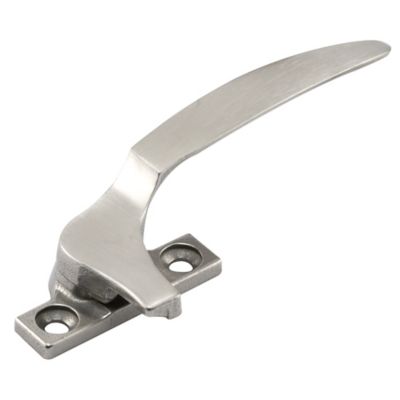
Locking Handles serves a different role, securing the operating handle rather than adding the same limited-opening restraint. Keeping those functions separate helps make sense of a complete doorway setup. Care is generally straightforward, with cleaning methods suited to the finish and occasional checks for loose fasteners, a bent arm, wear around the catch, or changes in alignment. A soft cloth can remove everyday dust and fingerprints; abrasive cleaners can damage some finishes. Lubrication, when called for, should match the manufacturer’s recommendations so buildup does not interfere with movement. A door that begins to sag or rub may need attention to its hinges or frame rather than extra force on the swing bar. Because the guard operates from inside, an engaged bar may also prevent entry by someone carrying a key, which matters for shared households, caregivers, and emergency access arrangements. Exit requirements, rental agreements, and fire-rated door restrictions can affect whether added hardware is appropriate. A swing lock belongs in a setup that still allows occupants to leave promptly and does not obstruct required access. With the right fit and sensible upkeep, it can provide a straightforward secondary restraint without adding unnecessary complication to the doorway.