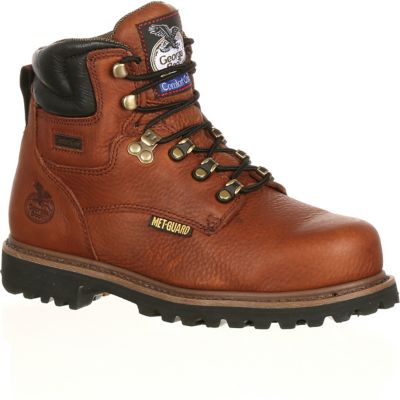
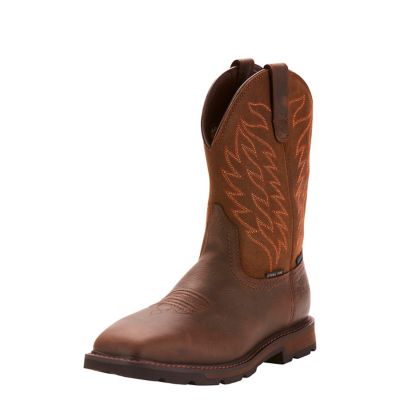
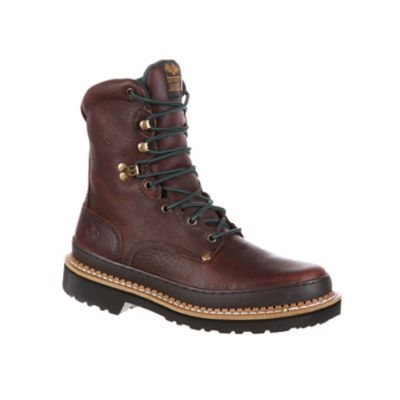
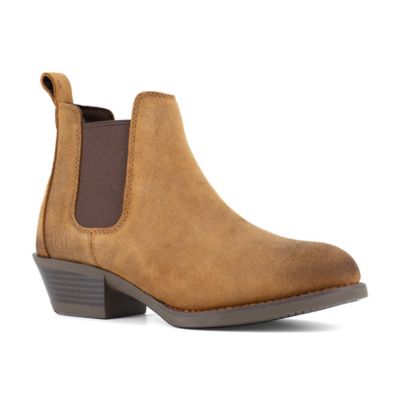
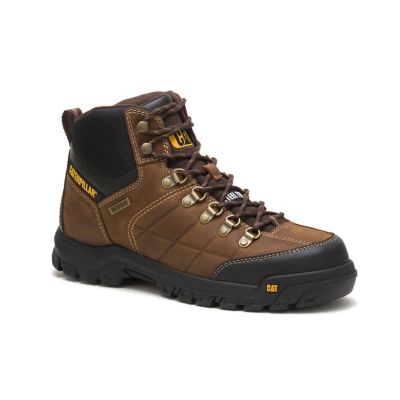
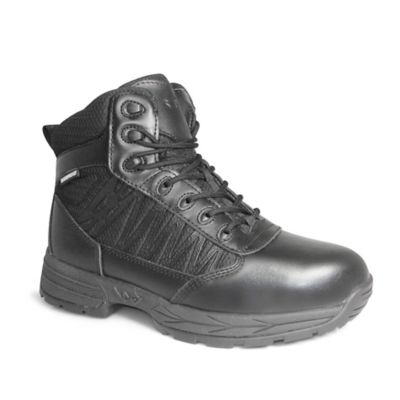
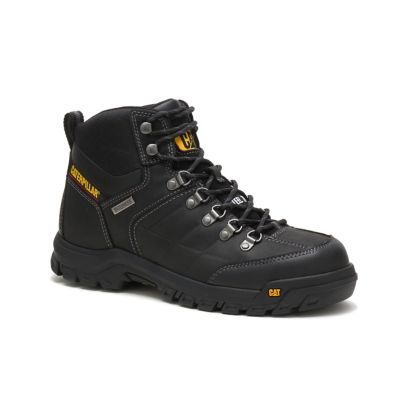
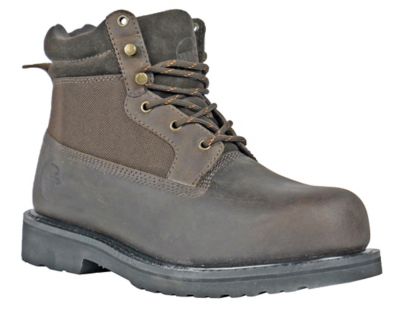
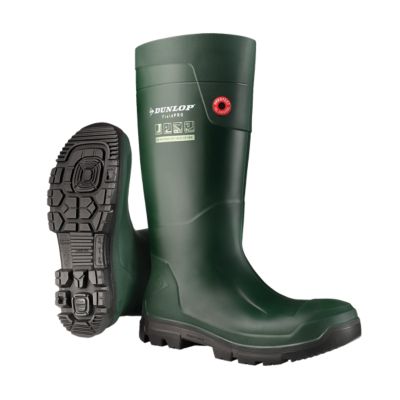
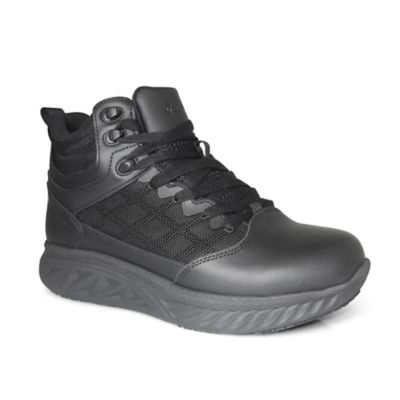
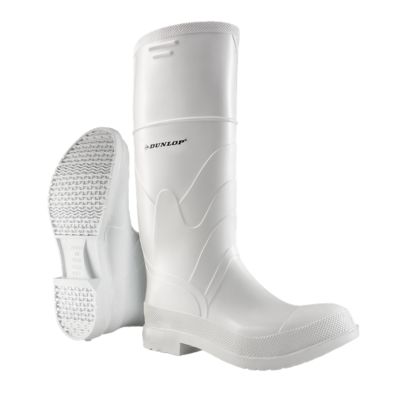
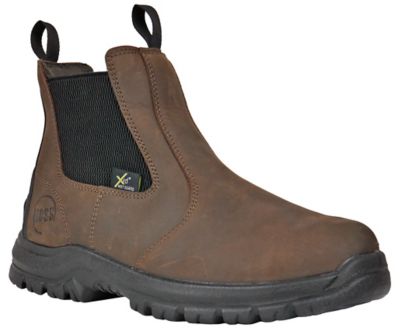
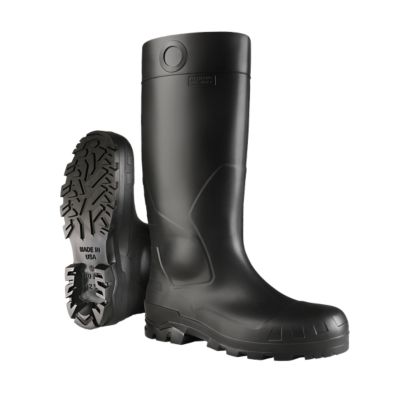
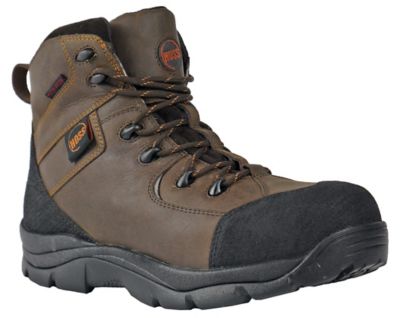
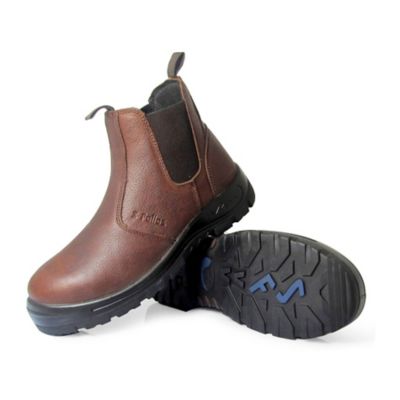
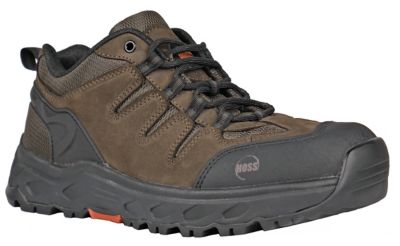
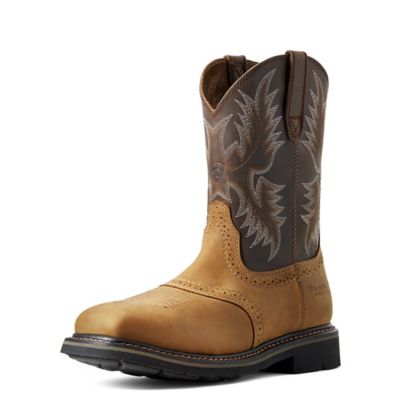
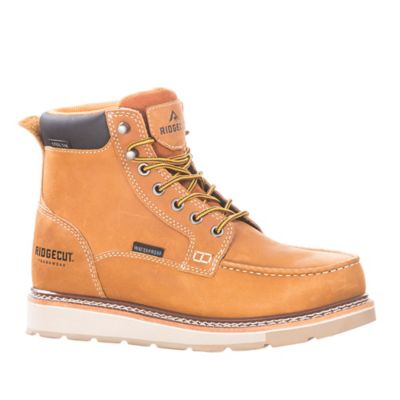
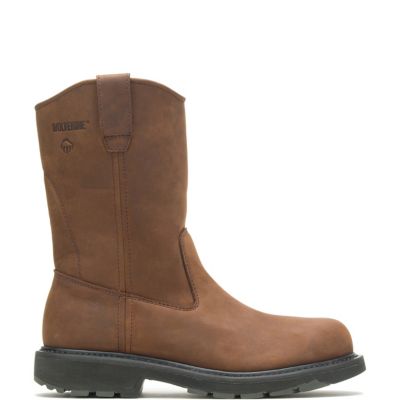
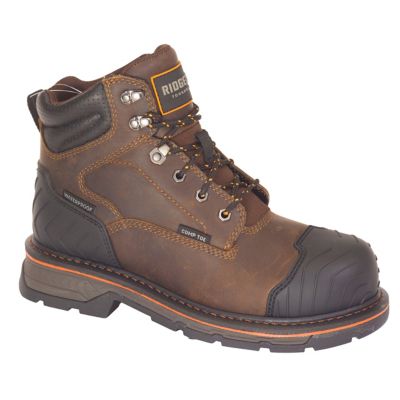
Safety shoes and boots are made for work where a regular shoe won’t give feet enough protection. A dropped wrench in the shop, a length of pipe that rolls off a rack and a pallet that shifts during unloading all put toes at risk in different ways. A safety toe helps protect against both impact from a blow and compression from a heavy load. In the United States, look for the ASTM F2413 marking on protective footwear to confirm that it meets impact and compression requirements. Steel, alloy and composite toe caps can all meet that standard. Steel is a common choice, while an alloy or composite cap may cut down on weight. A composite cap is nonmetallic, but that doesn’t mean the rest of the footwear is free of metal. A toe cap also doesn’t cover the bones farther back across the top of the foot. That’s where metatarsal protection comes in for jobs that call for it. If nails or sharp scrap tend to collect underfoot, check for a puncture-resistance marking rather than counting on a thick outsole. For a feed room that gets hosed down or a shop floor where oil can spill, look for slip resistance suited to the walking surface. Slip resistance isn’t the same as being slip-proof, and a tread that works well on smooth concrete may not grip the same way on loose ground. Wider spaces between lugs can help the tread shed packed dirt instead of carrying it from the yard to the shop. An electrical hazard (EH) rating provides secondary protection against certain electrical hazards under dry conditions. It doesn’t replace the electrical safety equipment or procedures required for the work. None of those added features can be assumed from the presence of a safety toe alone. If a workplace calls for a particular rating, check the markings on the footwear against that requirement, even when a pair looks just like one that’s already approved for the job.
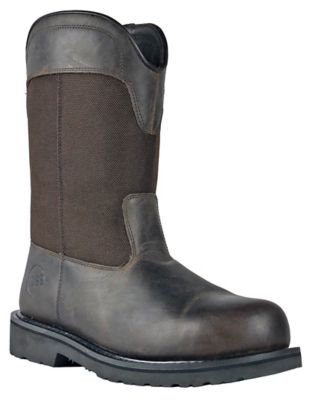
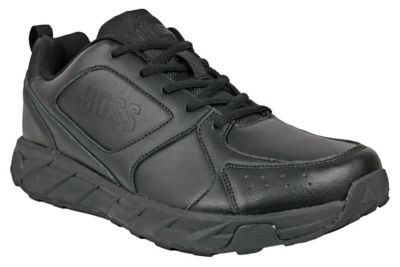
A low-cut safety shoe can be a good match for someone who spends a shift walking between warehouse aisles or standing at a workbench. A taller boot gives the ankle and lower leg more coverage for jobs that take you across gravel, through pens or around brush and debris. Lace-up styles let you adjust the hold across the instep and around the ankle, while pull-on styles are easy to step into when going back and forth between the house and the barn. With a pull-on boot, pay close attention to the fit over the instep since there are no laces to take up extra room. Leather uppers can stand up to scuffs from kneeling beside equipment or brushing against gate hardware. Textile panels can cut down on weight and help air move through the upper, though the lining and the rest of the construction make a difference, too. A waterproof lining can help keep wash water out during cleanup, but it won’t stop water that comes in over the collar. Cushioning matters on concrete, especially for someone who stands in one spot for hours, but a soft footbed won’t make up for a pinched toe or a heel that rubs. Try both shoes or boots on with the socks you normally wear for work. Walk a bit, then kneel or bend the way you would to reach a low shelf or tighten a bolt. There should be room to wiggle your toes without your foot sliding forward into the cap. If the cap presses on the side of your foot, try a different width or toe shape rather than waiting for it to loosen up. The upper may soften with wear, but the safety cap won’t stretch. The heel should feel secure without repeated rubbing, and the collar shouldn’t dig in when you bend. If the job calls for black footwear, start with
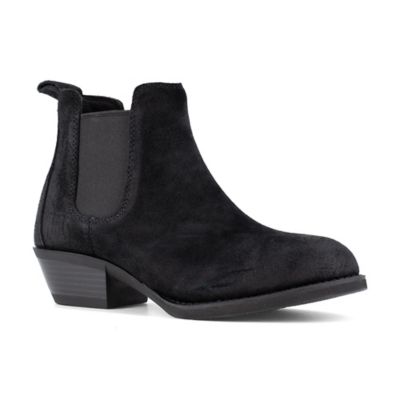
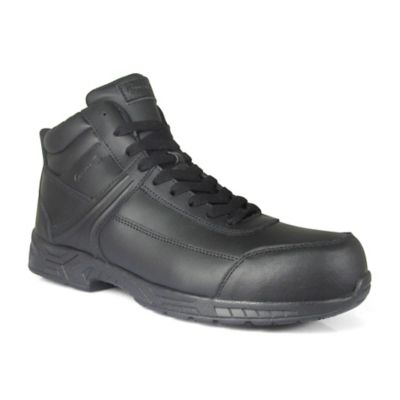
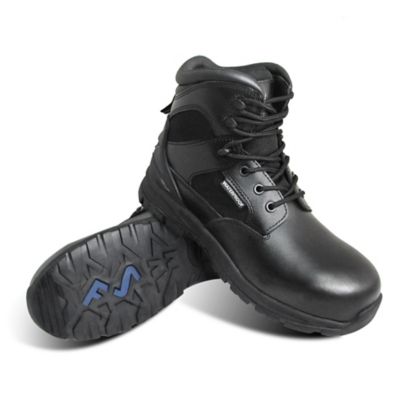
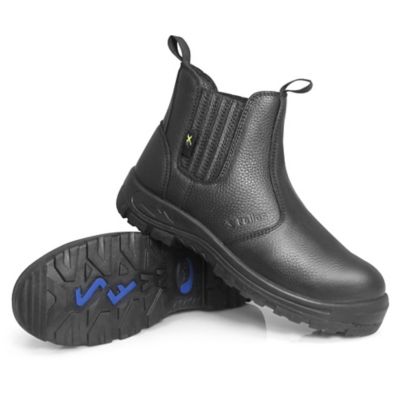
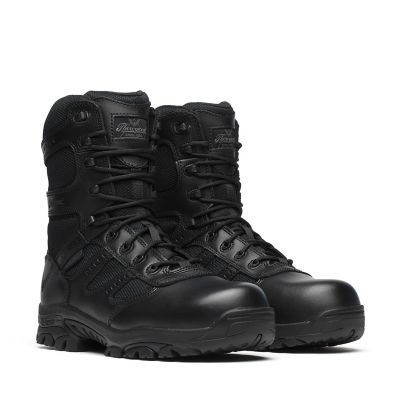
Mens Black Safety Boots, then check the fit and markings just as you would for any other work pair.
How long safety footwear holds up depends on the work it sees and what happens when it comes off at the end of the day. A pair worn on concrete may lose tread first at the heel or ball of the foot, while boots that spend more time around pens and gates may show wear at the toe, along the flex points or where the upper meets the sole. Brush loose dirt out of the tread and clear away stones or other debris you can remove safely. Wipe off grime from the upper before it settles into seams, and follow the footwear maker’s instructions for cleaning and conditioning leather or caring for fabric. When footwear gets damp during cleanup or a long shift, open up the laces and let it air out away from a heater. Direct heat can dry out leather and harm some of the materials that hold the sole and upper together. Give the soles a look when cleaning them. Smooth patches on a once-grippy tread, deep cuts, a sole that’s pulling away or a toe cap that’s showing through the upper are reasons to replace the pair. After a hard hit or a crushing load, don’t judge the safety toe by the outside alone. Damage can be hidden under leather or fabric, so follow the workplace’s replacement procedure before wearing the pair back on the job. Safety shoes or boots can also make a practical gift for someone starting a trade program, taking on shop work or spending more time on farm chores. The best starting point is the recipient’s work: a person loading trailers may need impact protection and a firm fit on ramps, while someone doing daily washdowns may care more about grip and keeping water out. Check any school or job requirements first and leave room for the recipient to try on the footwear with work socks. A pair that fits the job on paper still needs to feel right when it’s time to carry feed, climb a step or spend another hour on concrete.