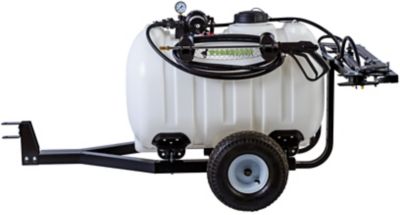
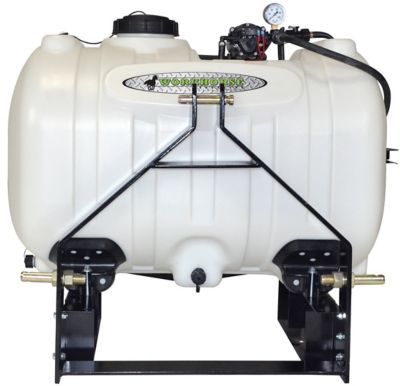
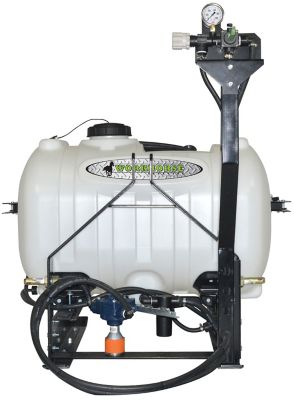
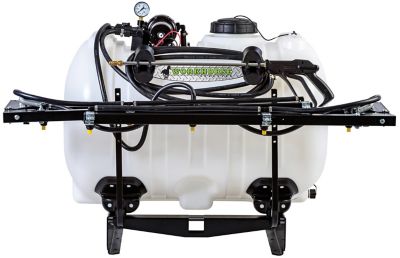
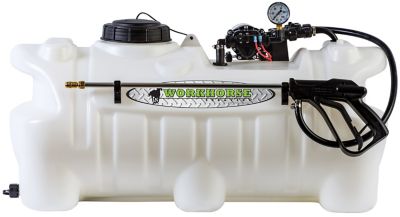
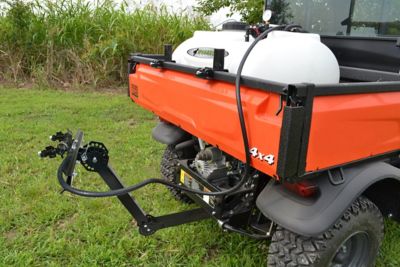
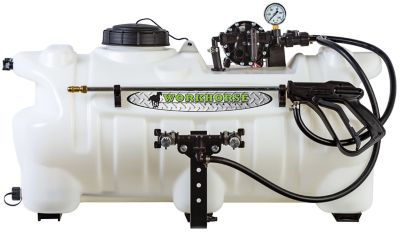
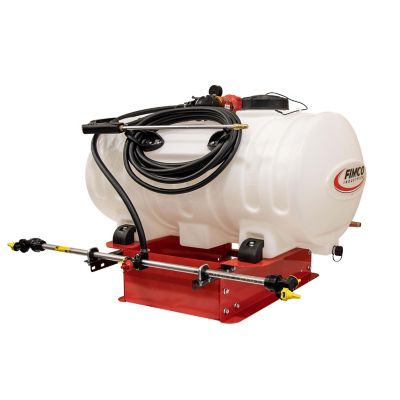
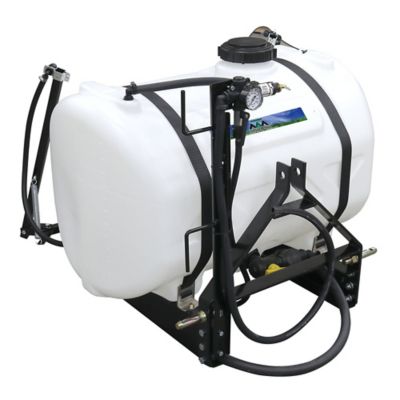
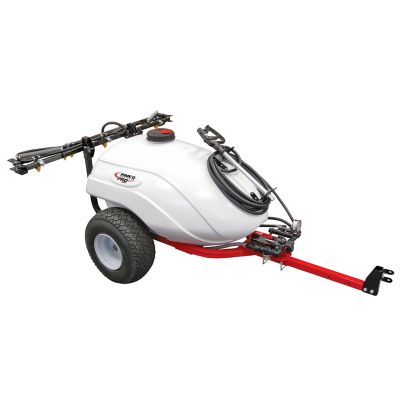
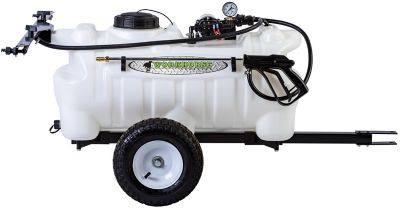
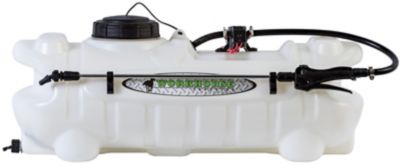
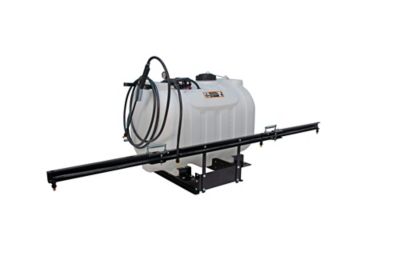
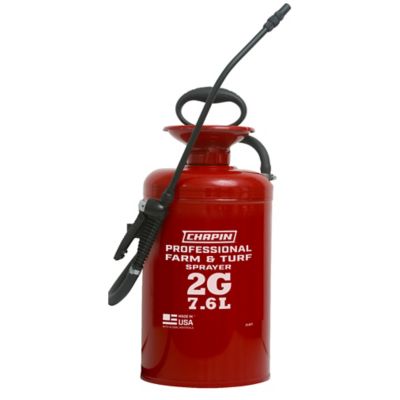
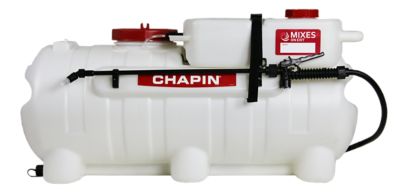
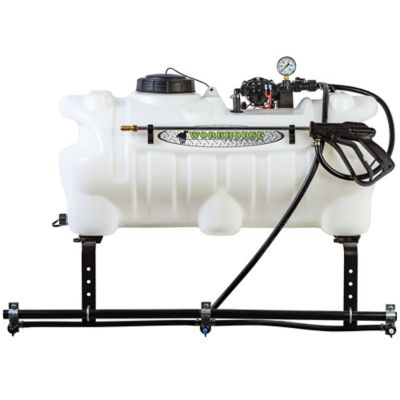
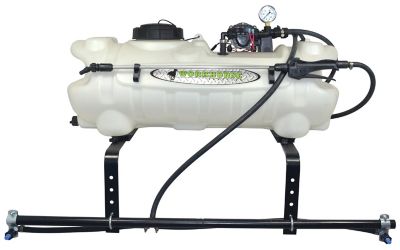
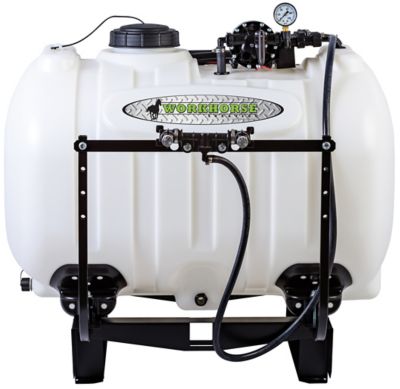
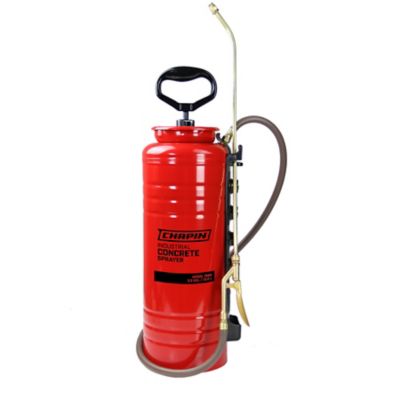
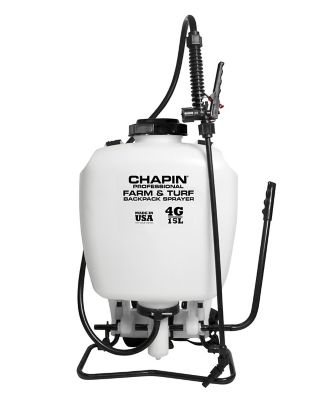
Pasture sprayers are agricultural sprayers built to apply labeled herbicides, pesticides, and liquid fertilizers across grazing land, paddocks, and other acreage. They help livestock owners, horse property managers, and landowners handle both broad field applications and smaller patches of troublesome weeds. A pasture sprayer generally combines a tank, pump, hoses, controls, and spray outlets on a frame that mounts to or travels behind a compatible vehicle. The right setup depends on the ground to cover, the application rate, and the equipment already doing chores around the place. Three-point hitch sprayers attach to a tractor’s rear hitch, keeping the tank and spray assembly together as one mounted unit. Hitch category, tractor lift capacity, and the weight of a full tank all matter when matching the two. Pull-behind sprayers ride on their own wheels and connect to a suitable tow vehicle, making them a practical format for properties where an ATV, UTV, or lawn tractor handles fieldwork. Towing limits, tongue weight, coupler fit, and braking capability still need to match the loaded sprayer and the terrain. Skid-mounted sprayers sit on a suitable platform, such as a utility vehicle bed, with secure mounting and enough payload capacity for the tank, liquid, and equipment. Smaller tanks can suit scattered treatment areas, while larger tanks support longer passes before a refill. Capacity alone does not determine how much pasture a tank will cover; gallons applied per acre determine that figure. For example, a 100-gallon tank provides enough liquid for five acres at an application rate of 20 gallons per acre, before accounting for any liquid the system cannot discharge. A larger tank can cut refill trips, but it also adds considerable weight. Water alone weighs about 8.3 pounds per gallon, and some spray mixtures weigh more. Gate openings, paths between paddocks, and the space needed to turn at a fence corner deserve just as much attention as acreage.
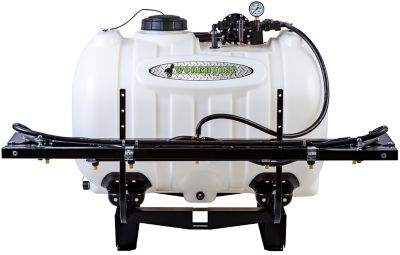
The spray system determines how a pasture sprayer delivers liquid to the ground or target plants. Traditional booms carry multiple nozzles spaced along a horizontal assembly, creating overlapping spray patterns when nozzle spacing and operating height match the manufacturer’s specifications. This arrangement suits open stretches where consistent passes and controlled coverage are the main goals. Folding booms can make transport through gates and storage in a shed more manageable, though working width and folded width are separate measurements worth checking. Boomless sprayers distribute liquid through specialized nozzles without a long boom extending across the full spray width. That layout offers more clearance around obstacles and reduces the amount of projecting hardware near brush, posts, or uneven ground. It does not remove the need to check the actual spray pattern, maintain proper pressure, or protect nearby plants from off-target application. For a field with open ground in the middle and awkward corners along the edges, a broadcast system paired with a hand wand offers two ways to tackle the work. The broadcast outlets cover larger areas, while the wand reaches isolated thistles, patches around posts, and spots beyond the vehicle’s path. Hose length, hose routing, trigger comfort, and a secure place to carry the wand all affect how smoothly those stops go. Pump output needs to support the combined flow of the active nozzles at the intended operating pressure, along with agitation when the mixture requires it. Electric diaphragm pumps commonly run on compatible 12-volt power systems, while other sprayer arrangements rely on tractor PTO power or a separate engine. Electrical connections, current requirements, PTO compatibility, and pump materials vary by setup. Pressure gauges and regulators help monitor and control delivery, but more pressure is not automatically better coverage. Nozzle selection, travel speed, pressure, and application height work together. Shoppers comparing equipment for other labeled pest-control applications can also explore
Pesticide Sprayers, while keeping pasture application requirements and livestock restrictions central to the choice.
Materials and service access make a real difference when a sprayer becomes part of regular property work. Polyethylene tanks are common because they resist corrosion and keep tank weight manageable, but the tank, pump, seals, hoses, and fittings must all be compatible with the intended spray solution. A tank that tolerates a chemical does not mean every component in the fluid path will do the same. Steel frames provide support for the load, and protective finishes help limit corrosion when spills are cleaned up promptly. On a trailer sprayer, tire load ratings, wheel bearings, axle capacity, and ground clearance deserve a close look, especially where the route includes ruts or uneven lanes. On mounted equipment, firm attachment points and properly secured hoses help keep movement from creating wear. Wide fill openings, readable tank markings, accessible strainers, and convenient drains can make mixing, inspection, and cleanup less of a chore. Tank markings are helpful for tracking liquid levels, though measuring chemicals calls for suitable measuring equipment and the product label’s directions. Replaceable spray tips, screens, seals, and fittings also matter for long-term upkeep; a worn nozzle can change delivery even when the pressure gauge appears normal. Calibration with clean water helps establish output before an application, and checking individual nozzle flow can reveal uneven delivery across a boom. A pasture sprayer should match both the job and the operator’s ability to handle filling, hookup, transport, and cleaning safely. That includes having appropriate protective equipment, a suitable water source, and a plan for rinsate that follows the chemical label and applicable requirements. After spraying, label-directed cleaning helps prevent residues from affecting a later application or harming desirable plants. Any pesticide application on grazing land also calls for confirming that the product is labeled for that site and observing livestock reentry, grazing, and haying restrictions. With the tank size, vehicle fit, spray pattern, and maintenance access matched to the property, pasture sprayers can support targeted weed management and field treatments without making every fence corner or refill stop a struggle.