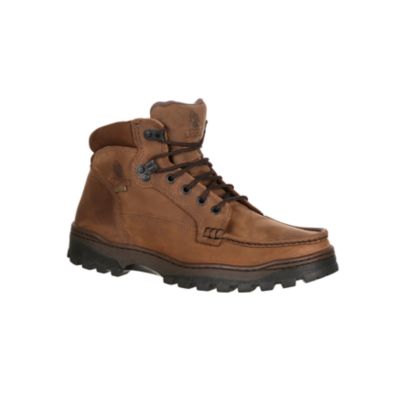
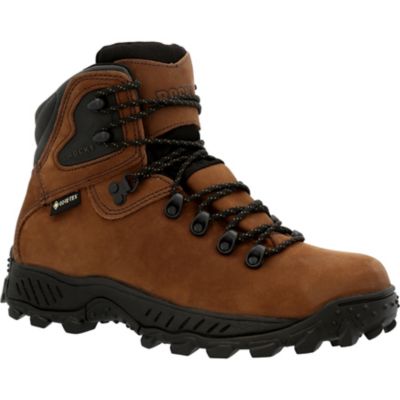
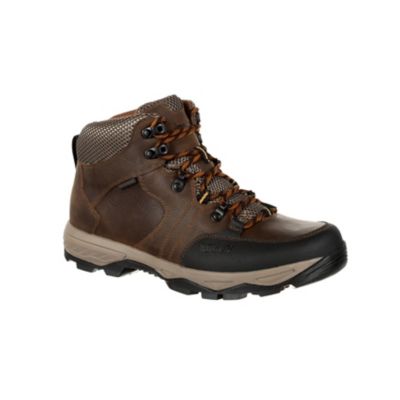
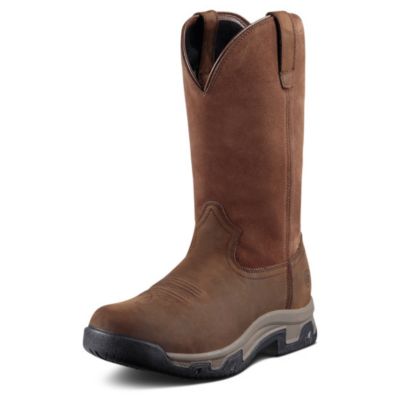
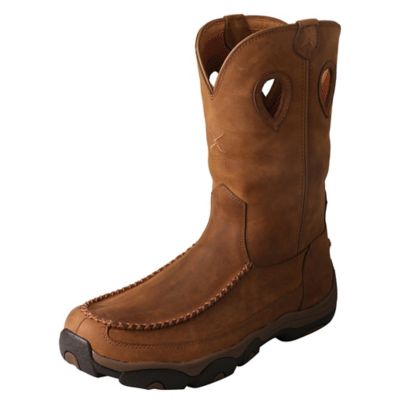
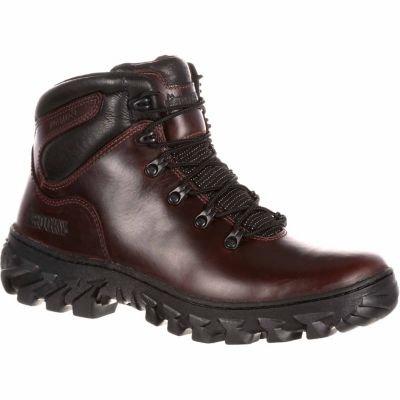
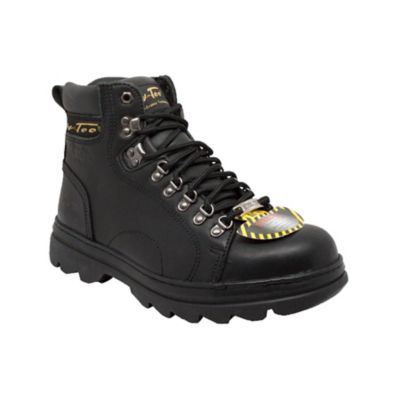
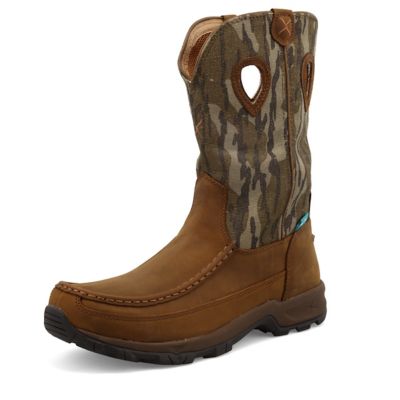
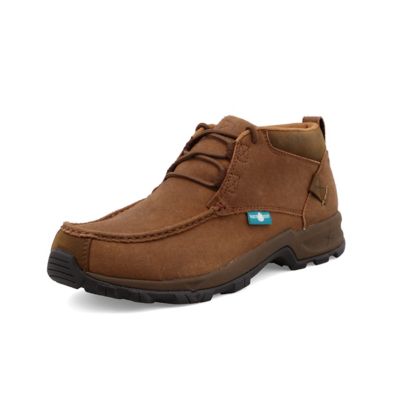
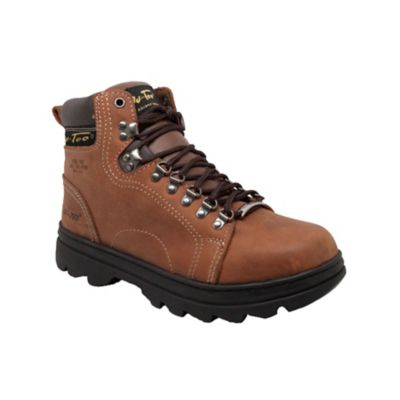
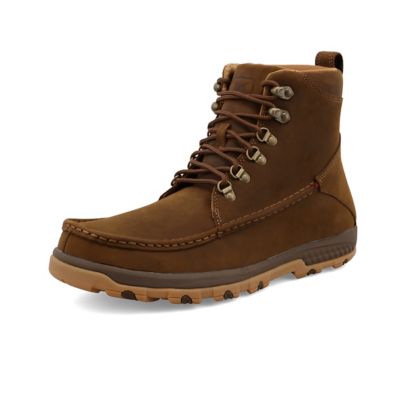
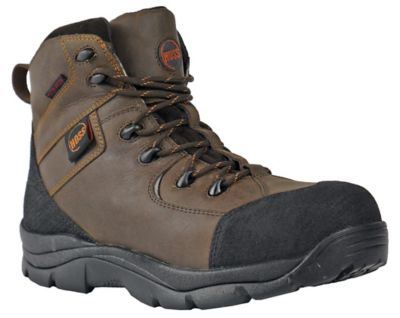
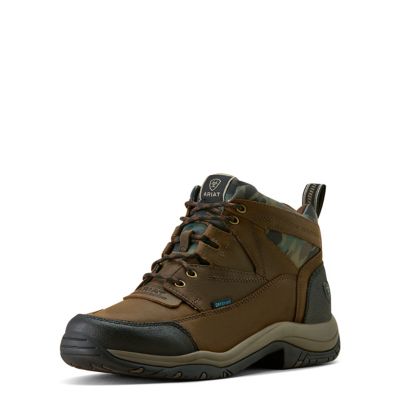
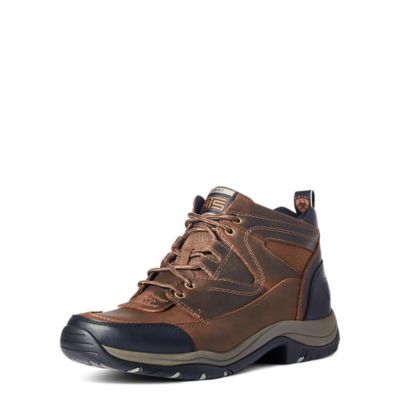
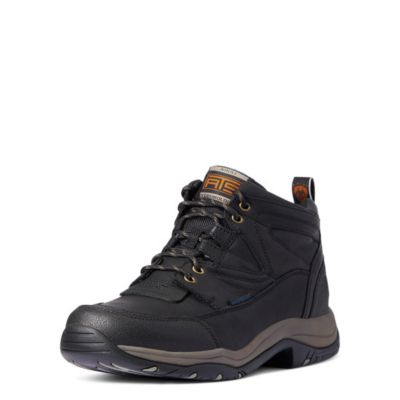
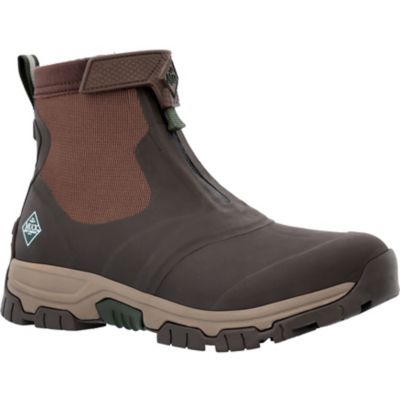
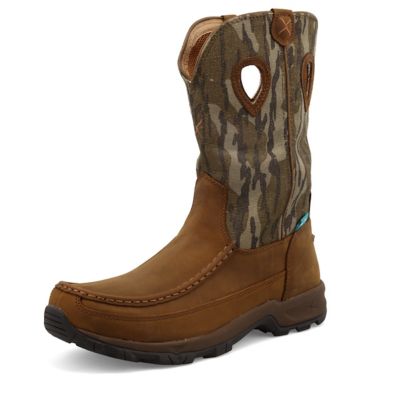
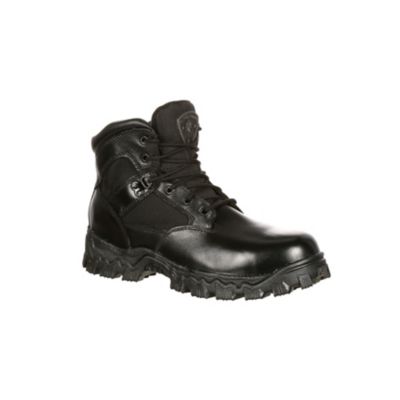
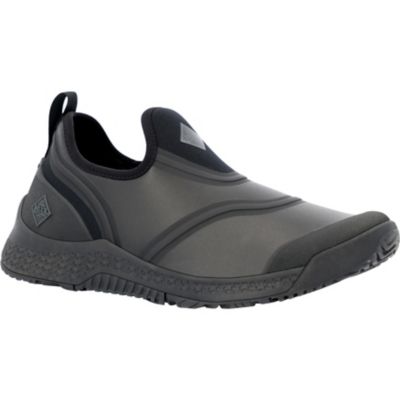
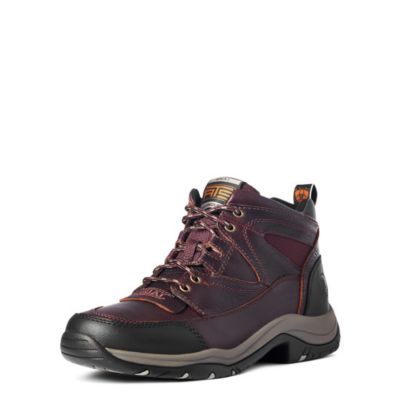
Men’s leather hiking boots bring together trail traction, underfoot cushioning and a supportive fit for everything from a short loop beyond the pasture to a full day on rocky paths. Leather uppers provide coverage against brush, grit and rubbing along the sides of the foot, while different leather finishes give each style its own feel and care requirements. Full-grain leather retains the outer grain of the hide and often starts out firmer, gradually flexing where the foot bends. Nubuck has a lightly buffed surface with a soft, brushed feel, but that finish calls for different cleaning and treatment than smooth leather. Split-leather panels paired with textile sections can reduce weight and allow more airflow, depending on the rest of the boot’s construction. Leather thickness, stitching, lining and reinforcement matter as much as appearance, especially for folks who spend several hours walking over uneven ground. A reinforced toe area can help shield the upper from scuffs against roots and rocks, though it is not the same as a safety-rated toe. Underneath, rubber outsoles and their tread patterns help determine how the boots handle dirt, gravel and broken ground. Widely spaced lugs give packed soil more room to release, while lug depth, shape and rubber composition influence grip on different surfaces. A defined heel can help with footing on descents, but no tread pattern grips every surface equally well. An all-leather upper is not automatically waterproof; a waterproof membrane, seam construction and tongue design can all play a part in keeping water out. Waterproof construction and breathability are separate considerations, too, since a lining that blocks outside moisture may change how readily moisture escapes from inside. For day hikers, rural property owners and backpackers, the most useful combination depends on the distance, terrain and load rather than the leather finish alone.
Fit makes a bigger difference over several miles than it does during a quick walk across a room. Men’s leather hiking boots should hold the heel securely without squeezing the forefoot, with enough space for the toes to move and stay clear of the front on downhill stretches. A little movement at the ankle is normal, but repeated heel sliding can create friction, and toes striking the front usually point to a sizing or fit problem. Length is only part of the picture: width, instep volume and the shape of the toe box all affect comfort. Trying boots with the hiking socks intended for the trail gives a better sense of the space inside, especially when thicker cushioning or an orthotic takes up extra room. Feet can expand over a long day, so a snug fit should not mean pressure across the toes or a tight band over the instep. Leather may soften with wear, but break-in should never be expected to fix cramped toes or sharp pressure points. Lacing also matters. Lower eyelets shape the fit across the foot, while upper hooks let the ankle area tighten separately on designs with that setup. Underfoot, EVA foam generally offers cushioning without much added weight, while polyurethane midsoles often feel firmer and resist compression well; actual feel varies by construction. A shank or support plate can add stiffness over rocky ground and beneath a loaded pack, although that same stiffness may feel unnecessary on a short, smooth path. Mid-height and taller collars add coverage around the ankle, but collar height alone does not determine stability or prevent an ankle injury. For walks along gravel lanes, moderate trails or access paths to a fishing spot, flexibility may matter more than substantial backpacking support. For longer outings with a heavier pack, a firmer platform can feel steadier underfoot. Shoppers comparing weight and airflow can also explore
Men's Summer Hiking Boots alongside leather-focused styles.
Regular care helps leather hiking boots stay flexible and keeps small problems from turning into a reason to leave them by the door. Loose dirt is easier to brush away before it settles into stitching, tongue folds and the edges where the upper meets the sole. A soft brush or damp cloth usually handles everyday buildup, while stubborn grime may call for a cleaner approved for that leather finish. Smooth leather may benefit from an appropriate conditioner, but too much treatment can soften it excessively or affect its appearance. Nubuck and suede-like finishes need products intended for their brushed surfaces, since ordinary leather creams can flatten the nap or darken the material. The boot maker’s care directions take priority, particularly when a waterproof membrane or bonded sole construction is involved. After cleaning, loosening the laces and removing removable insoles helps the interior air out. Direct heat from a stove, heater or dryer can dry out leather and stress adhesives, so gradual drying away from concentrated heat is the better approach. Treatments may help maintain surface water resistance, but they cannot repair an opening seam, a damaged membrane or a separating sole. Checking the tread, lace wear and attachment points now and then gives a clearer picture of how the boots are holding up. Flattened lugs, persistent uneven wear or a midsole that no longer cushions well can change the way a boot feels on the trail, even when the upper still looks sound. For a dad who enjoys walking fence lines, a brother planning longer hikes or a friend who spends weekends exploring public trails, leather hiking boots can make a practical gift when sizing and intended use are known. Familiarity with the recipient’s preferred width, sock thickness and usual walking distances is more helpful than choosing by looks alone. A well-matched pair should feel at home on the routes ahead, with enough room, support and flexibility to keep attention on the path rather than on sore feet.