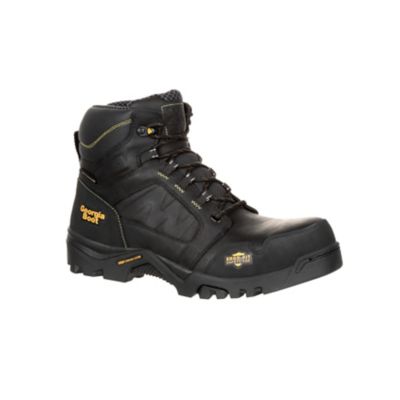
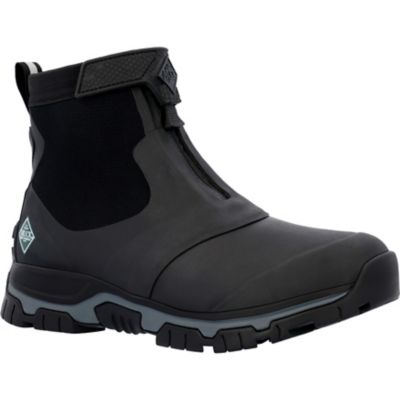
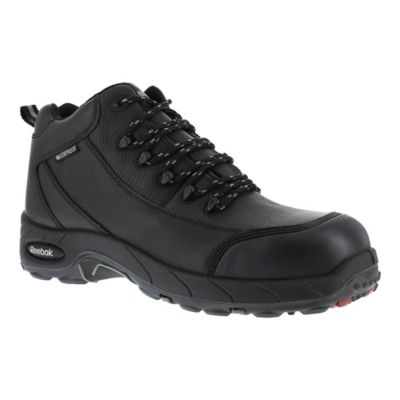
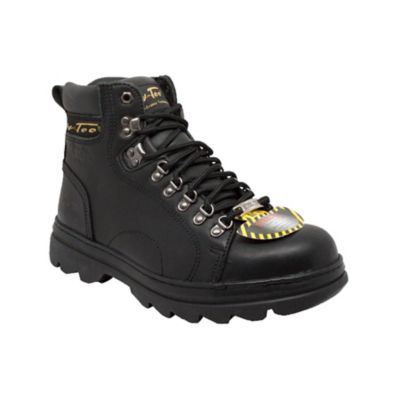
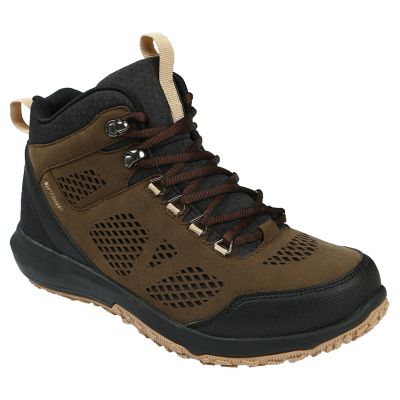
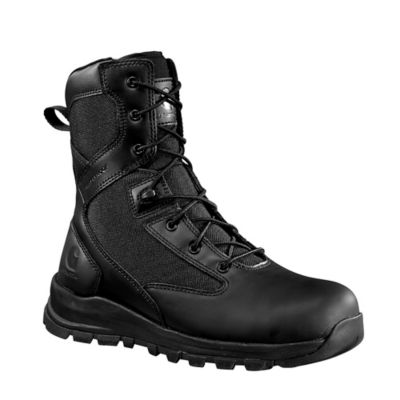
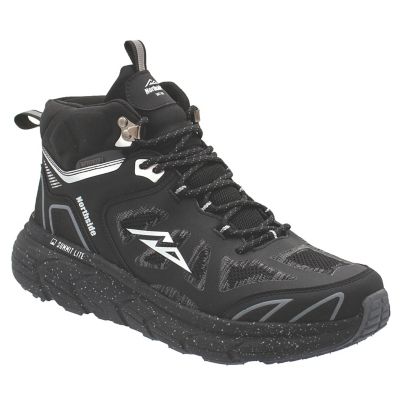
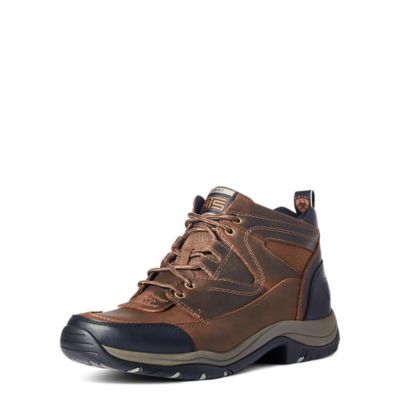
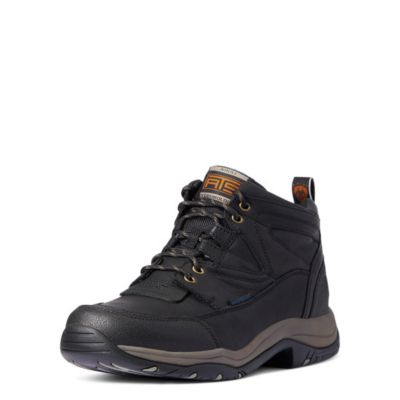
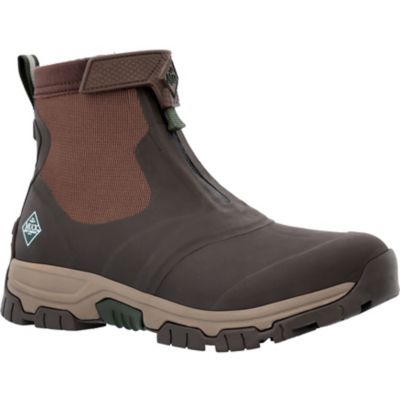
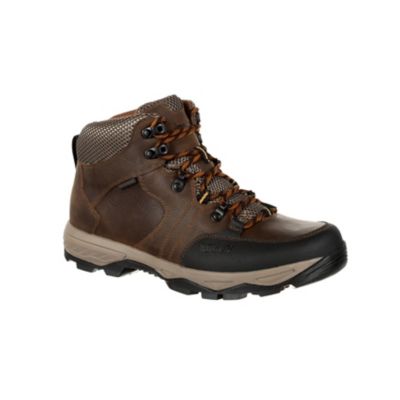
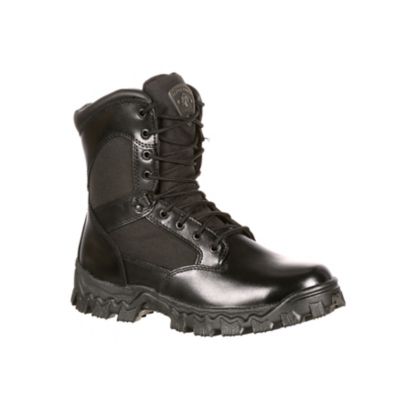
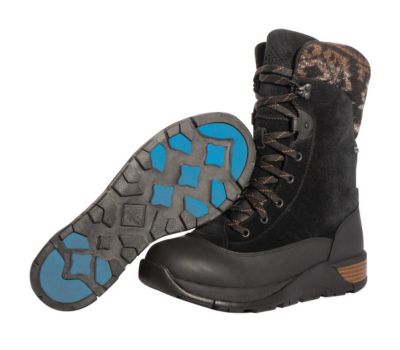
Men's black hiking boots are trail footwear built for walking on uneven ground, with features such as treaded outsoles, supportive midsoles, reinforced toe areas, and uppers that cover more of the foot than low-cut hiking shoes. Their black color gives them a straightforward look that pairs easily with work pants, hiking pants, or jeans, but color alone does not tell the whole story. Construction, fit, outsole design, and intended terrain matter more when a walk leaves the pavement. For someone following a wooded trail, crossing a gravel access road, or checking fence along a rocky hillside, traction and underfoot protection can make a noticeable difference. Rubber outsoles with pronounced lugs help grip loose surfaces, while wider spaces between lugs can help release dirt. Grip still depends on the rubber compound and the ground beneath it; no tread pattern makes slick roots or smooth stone foolproof. Some hiking boots include a shank or protective plate that helps distribute pressure from sharp rocks and adds stiffness through the middle of the foot. Others emphasize flexibility for shorter walks and less demanding trails. Leather uppers can provide structure and resist abrasion, while synthetic textiles often help reduce weight and allow more flexibility. Combination uppers bring those materials together, sometimes with overlays around high-wear areas. A toe bumper can help protect the front of the boot from scraping against rocks, and reinforced heel sections can help the boot hold its shape. Mid-height and taller collars offer additional coverage around the ankle, though collar height alone does not guarantee support or prevent injury. The way the heel sits, the firmness of the sole, and the security of the lacing all play a part. For day hikers, landowners, campers, and folks who spend a good stretch of the day on uneven paths, the best match comes down to the demands of the ground and the feel of the boot—not just its appearance.
Fit is especially important in men's black hiking boots because a trail puts different demands on footwear than a level floor. A foot can slide forward on a descent, spread slightly under a load, and move differently when stepping across a sloped path. Enough room through the toe box helps keep toes from pressing against the front, while a secure heel reduces rubbing from repeated movement. The fit should feel comfortably snug through the middle without squeezing the forefoot or creating pressure across the top. Trying boots with the socks intended for hiking gives a better sense of how that combination will feel on the trail. Any orthotics or replacement footbeds also need room inside without crowding the toes or lifting the heel too high. Lacing systems with hooks near the collar can make it easier to adjust tension between the foot and ankle, although the shape of the boot still needs to suit the wearer. Cushioning helps soften repeated steps, while a firmer platform may feel steadier under a loaded daypack. More padding is not automatically a better match for every foot or every route. Weight matters, too: a substantial boot may feel right on broken ground, while a lighter build can feel less tiring on an easy loop. Waterproofing is another separate consideration rather than something the black color indicates. A waterproof membrane or treated upper may help limit water entry when crossing damp grass or stepping through shallow puddles, but water can still enter over the collar. Breathable construction and waterproof construction also involve trade-offs, since added barriers can affect how readily moisture escapes. For someone whose miles stay mostly on maintained paths and neighborhood routes,
men's black walking boots offer a related category to consider alongside hiking footwear. Hiking boots generally put more emphasis on trail traction, protection, and stability, although those features vary by construction. A comfortable boot should not depend on painful wear-in to become tolerable; stiffness may ease, but persistent pinching deserves attention.
The long-term wear of black hiking boots depends on more than the upper material. Stitching, bonded joints, lace hardware, outsole wear, and the way the boot flexes all affect how it holds up through repeated miles. A boot that regularly scrapes against rock faces or pushes through brush faces different demands than one worn on packed dirt trails. Scuff-resistant panels and toe reinforcement can help in those contact areas, while a well-shaped heel and secure lacing help limit unnecessary movement inside. Black uppers can make some marks less noticeable, but pale dust, dried mud, and salt residue may stand out against the darker finish. Regular cleaning helps keep that buildup from settling into seams and folds. Loose dirt can come off with a soft brush, followed by cleaning suited to the upper material and the manufacturer's directions. Leather, suede, nubuck, and synthetic fabrics do not all respond to the same treatments, so a care product meant for smooth leather may be a poor match for a textile panel or a textured finish. Conditioning, when recommended, helps leather remain supple, while compatible water-repellent treatments can help maintain the outer surface's resistance to moisture. Boots need time to dry away from direct heat, with removable footbeds taken out when appropriate. A heater, stove, or clothes dryer can damage materials and adhesives. Between outings, checking the tread, seams, and lace attachment points helps reveal wear before a long walk. For a gift recipient who enjoys trail walks, camping trips, or exploring the back forty, black hiking boots can be a practical choice when size and fit preferences are known. Familiar shoe size is only a starting point, since boot shapes differ. The most useful pair is one suited to the wearer's feet and everyday routes, whether that means a short climb above the creek, a long gravel approach to a trailhead, or several miles with lunch and water in a daypack. Hiking footwear also serves a different purpose from job-site footwear, where required safety features need separate consideration.