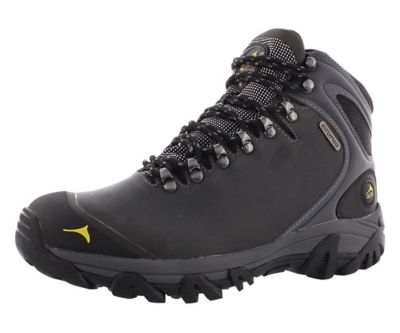
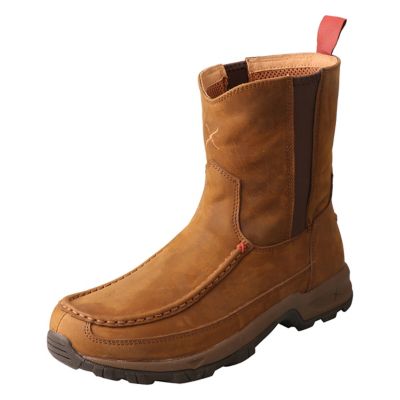
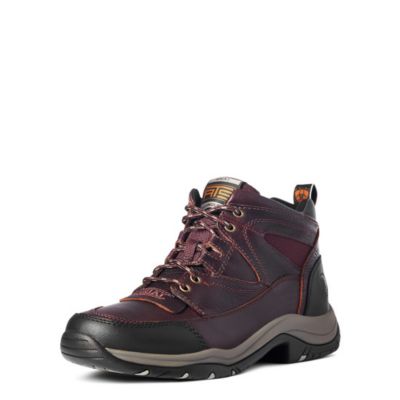
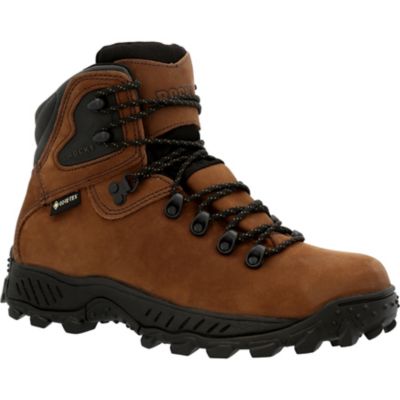
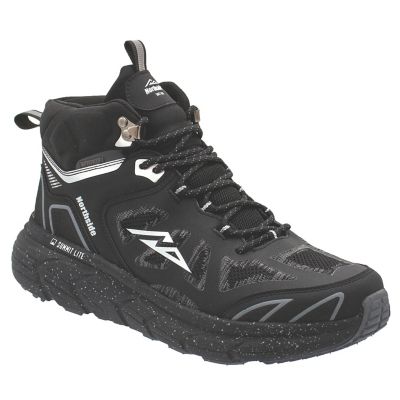
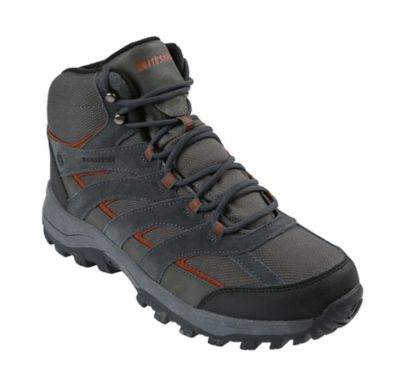
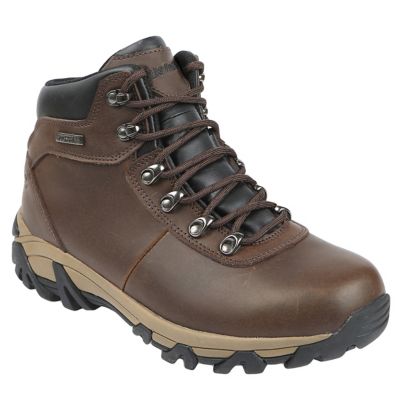
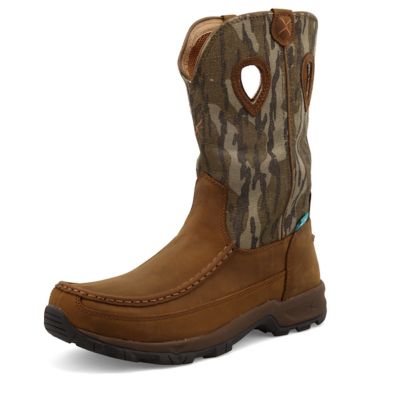
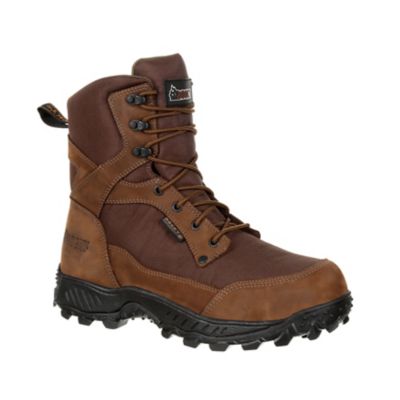
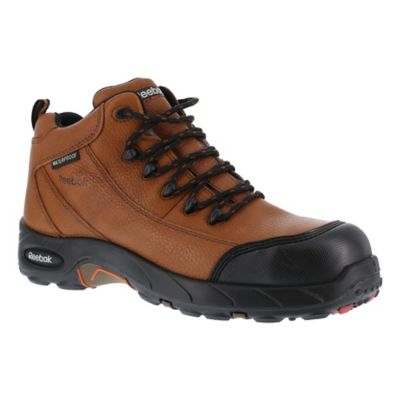
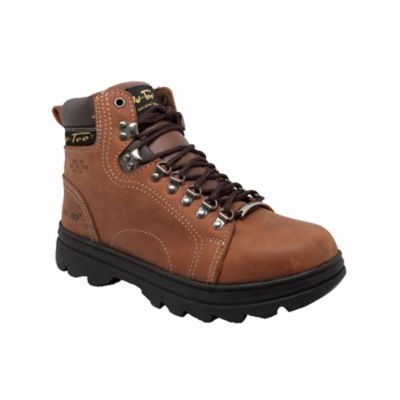
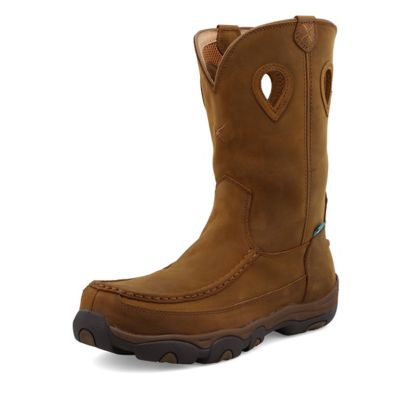
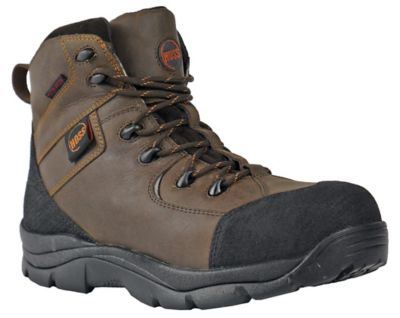
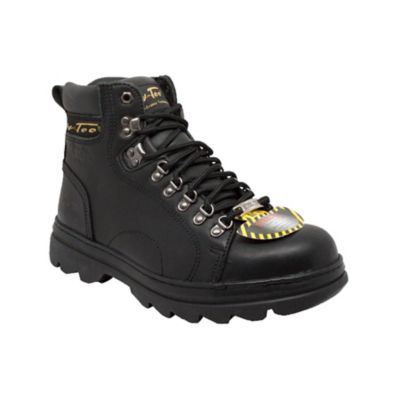
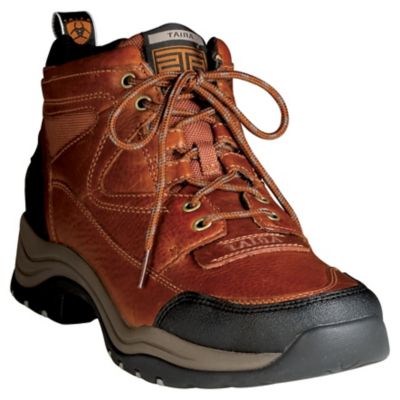
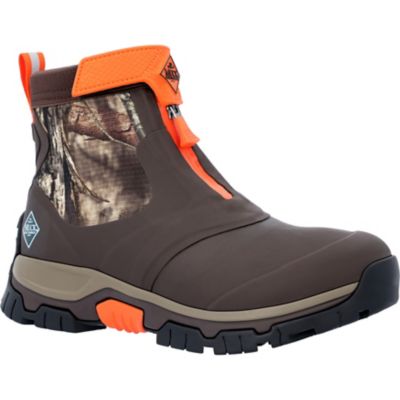
Comfortable men’s hiking boots hold the heel steady, leave room for the toes to spread and provide enough cushioning for the ground underfoot. The fit that feels good on a level stretch should still feel good when the trail drops steeply and each step pushes the foot forward. On the way down, there should be enough space in front of the longest toe that it doesn’t bump the end of the boot. On the way back up, the heel should stay put without having to pull the laces tight across the top of the foot. A wide forefoot usually needs a wider fit rather than a longer boot, and a man with a narrow heel may do better with a snug heel pocket even if he needs plenty of room up front. Trying on both boots with the socks he’ll hike in can bring out differences that aren’t obvious from the size on the box. A thicker sock takes up space over the instep as well as around the toes, and one foot may need a little more room than the other. If there’s a chance to walk up and down an incline, that’s where heel slip and toe crowding are easiest to spot. A padded tongue can spread out lace pressure, while a collar that sits clear of the ankle bone can make a higher boot more comfortable. A removable footbed makes it easier to swap in an insert, though a thicker insert can raise the heel and leave less room over the toes. And while a sturdy upper often softens after a few walks, a boot that pinches across the ball of the foot or puts steady pressure on a bunion isn’t likely to solve that problem with more miles. It’s worth paying attention to the small rub you feel on the first walk around. That’s often the spot you’ll notice most after a long descent.
The route and the load on your back help sort out the rest. A lighter boot that bends easily at the ball of the foot can feel natural on a packed loop around the lake, where there’s little call for a stiff sole. On a rocky trail with a loaded pack, a firmer platform can keep sharp stones from pressing into the bottom of the foot and feel steadier when only part of the sole lands on a rock. A thick, soft midsole can take some sting out of repeated steps on hard ground, but more cushion isn’t always more comfortable. Some hikers prefer a firmer feel that doesn’t give as much when they step across an angled slab. Tread matters for the same reason: deeper, widely spaced lugs can dig into loose dirt and shed mud, while a less pronounced tread can feel smoother on well-packed paths. On steep descents, a defined heel edge can help the boot bite into softer ground. The upper changes how the boot feels, too. Mesh and synthetic panels often cut weight and flex readily, while leather tends to stand up well to scuffs from rocks and brush. The
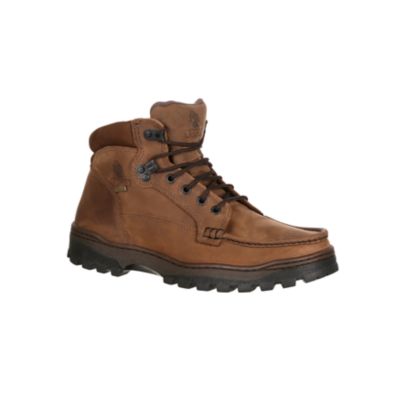
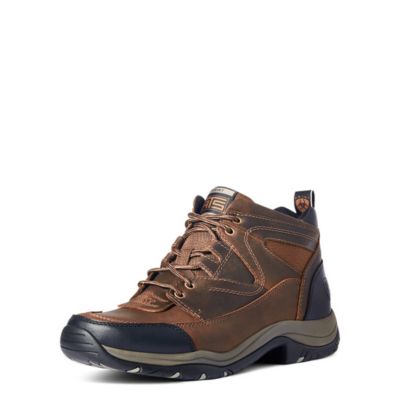
Men's Leather Hiking Boots page is a place to narrow the selection if a leather upper makes sense for the miles you have in mind. Thicker leather may take longer to soften around the ankle, and reinforced toes can be useful on trails where it’s common to clip roots or kick loose stones. Near creek crossings or in muddy stretches, a waterproof lining can help keep feet dry as long as water stays below the boot opening. Where water isn’t much of a concern, a boot without that lining may let more air through and dry faster if it does get soaked. Neither option makes up for a poor fit, but the difference can matter on a long walk when there’s nowhere handy to stop and take the boots off.
A pair that feels right for a short walk with the dog may not be the pair you’d reach for to carry camp gear over several miles of roots and rock. For somebody who splits time between walking the back of the property and hiking maintained trails, a boot that flexes under the forefoot and doesn’t feel heavy by the end of the day may be the better match. For someone who spends more time off the beaten path, coverage around the ankle and a sole that holds its shape on uneven footing may count for more. Hiking boots can make a fitting gift for a dad who spends his free time on the trail or a partner getting ready for a first backpacking trip. His usual size is a starting point, but knowing whether he needs a wide toe box or wears an insert can be more helpful than knowing the number alone. Once the boots are seeing regular miles, a little upkeep can help them last. Let loose dirt dry enough to brush off, pick gravel out of the tread, and wipe away caked mud with a damp cloth or a soft brush. Pulling out the footbeds and loosening the laces gives the inside room to air out. Let the boots dry away from a heater, since direct heat can stiffen leather and weaken the bonds that hold some soles in place. For leather uppers, follow the maker’s care directions rather than reaching for any oil or conditioner on the shelf, especially with suede or nubuck. Between walks, check the tread at the heel and forefoot, where wear often shows first. A boot can still look sound from above even when the edges of its lugs have rounded off enough to lose bite on a loose downhill stretch.