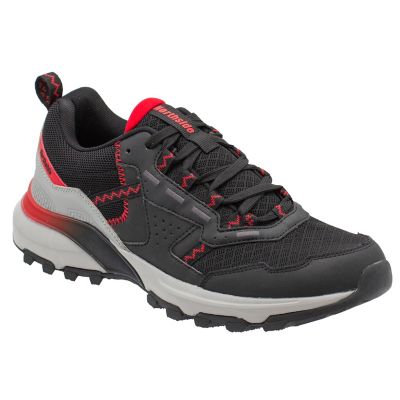
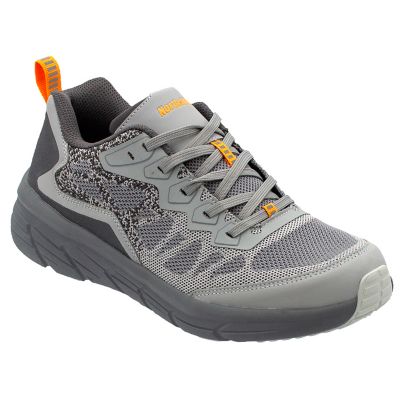
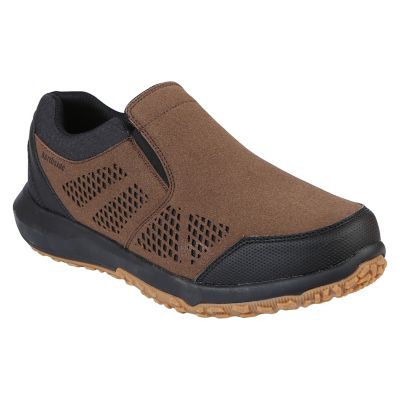
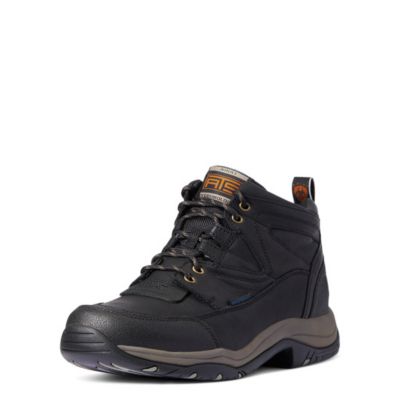
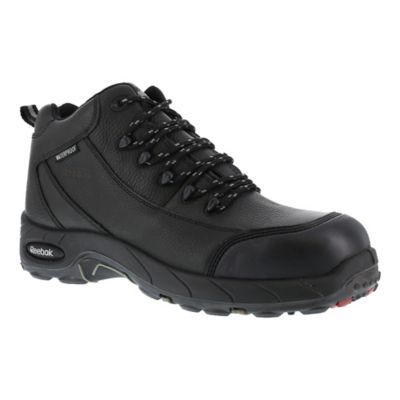
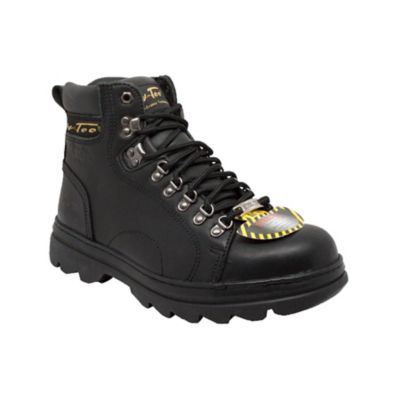
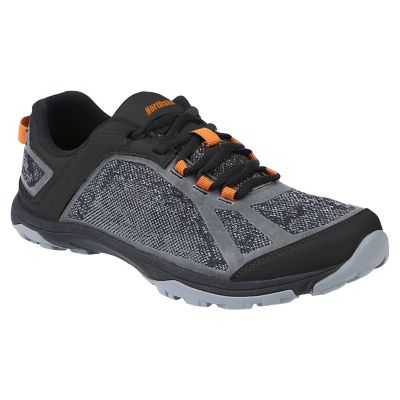
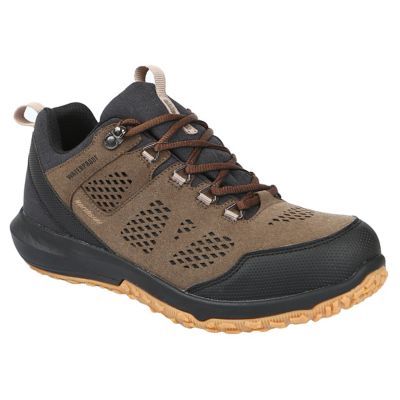
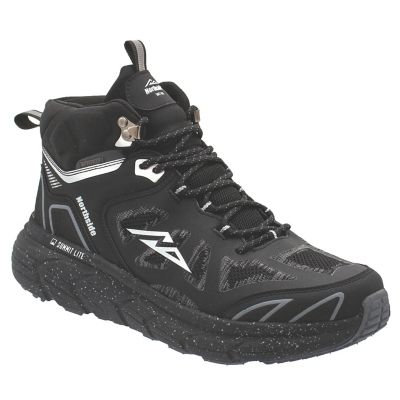
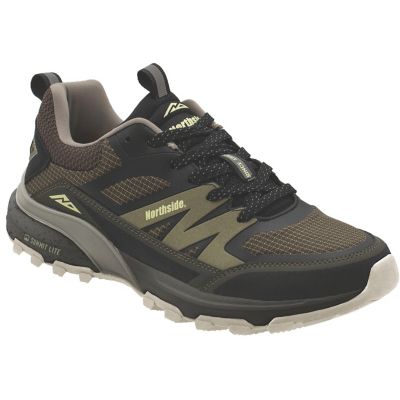
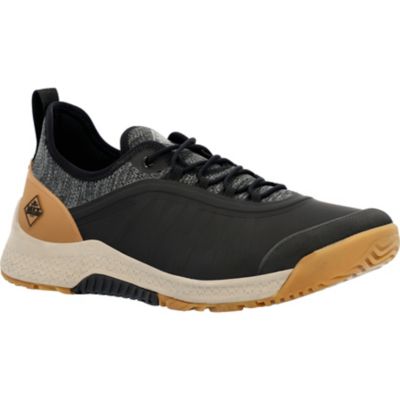
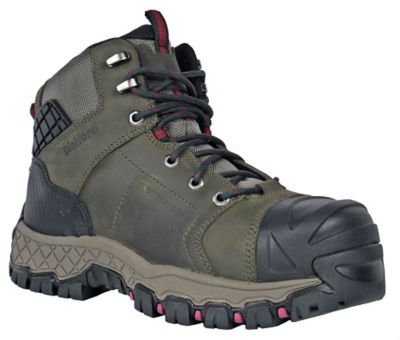
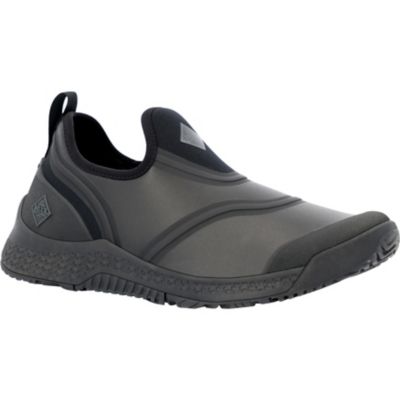
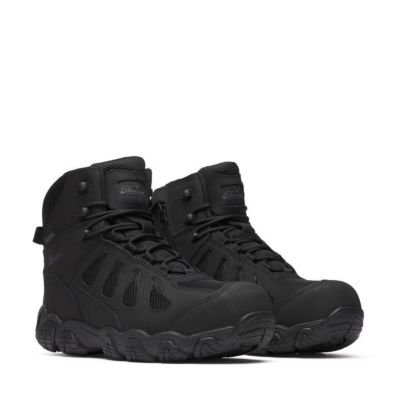
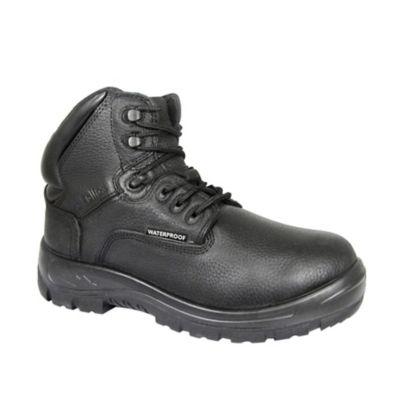
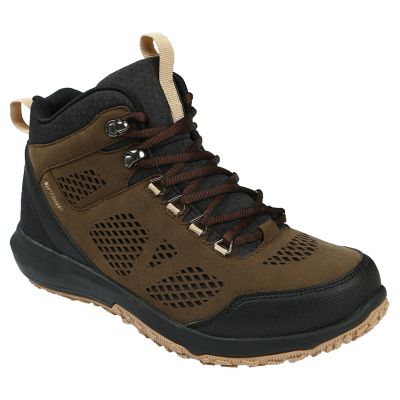
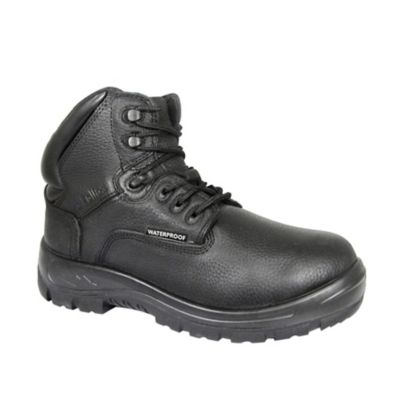
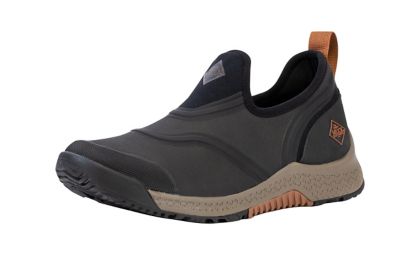
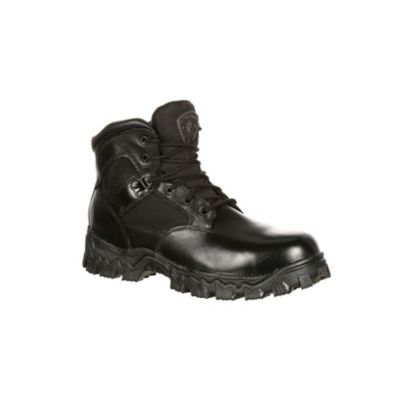
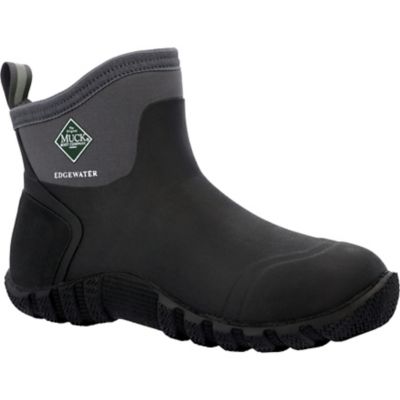
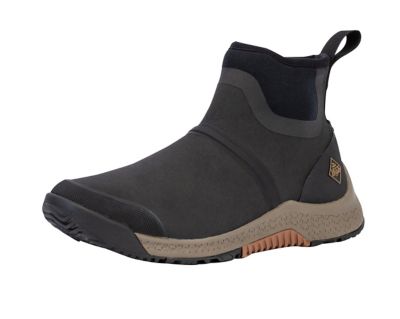
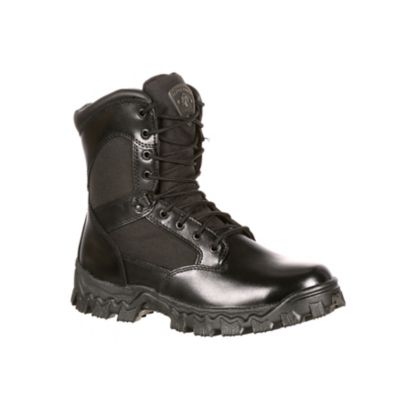
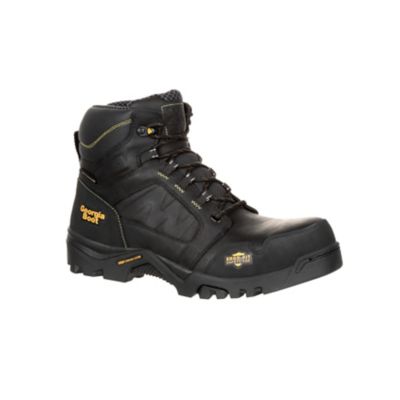
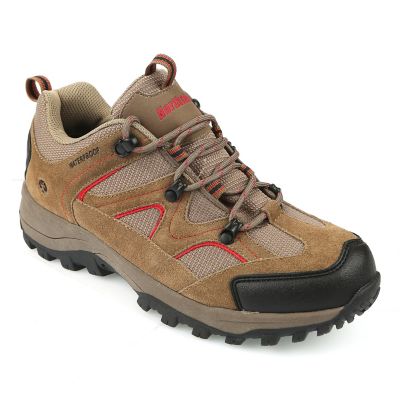
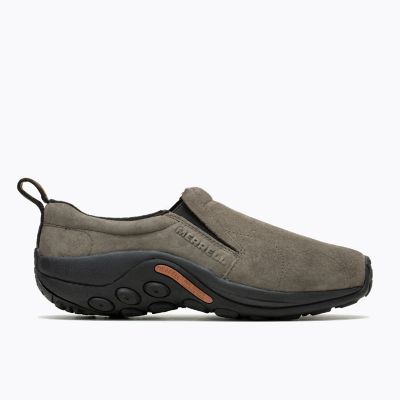
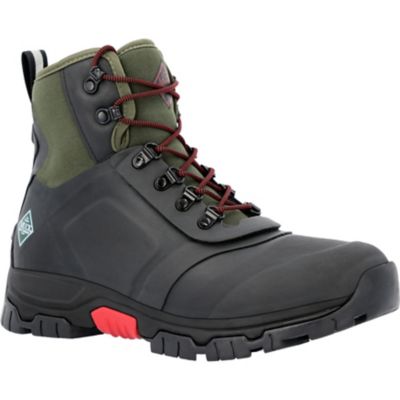
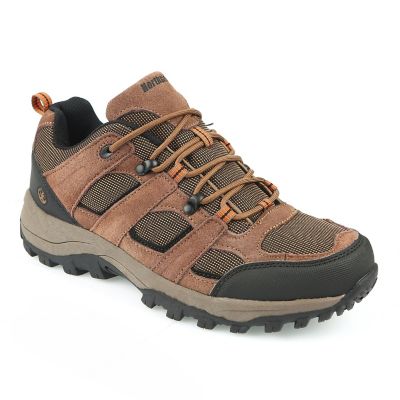
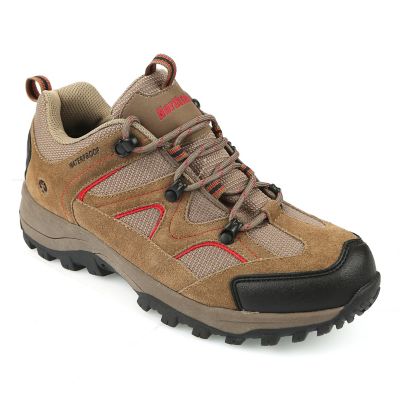
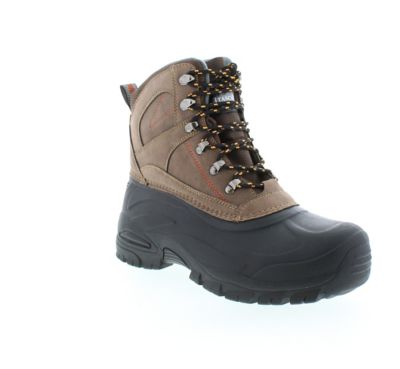
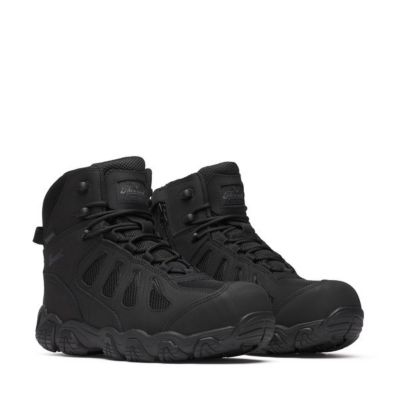
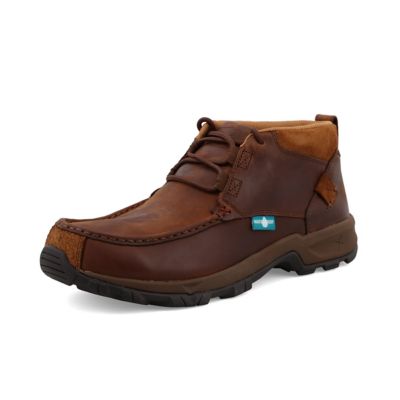
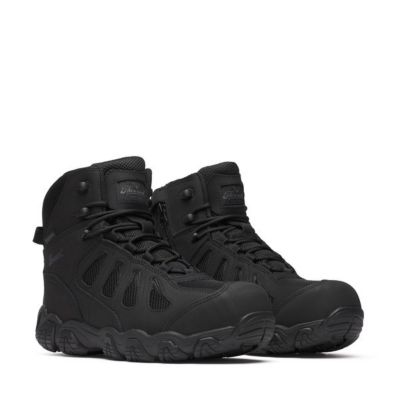
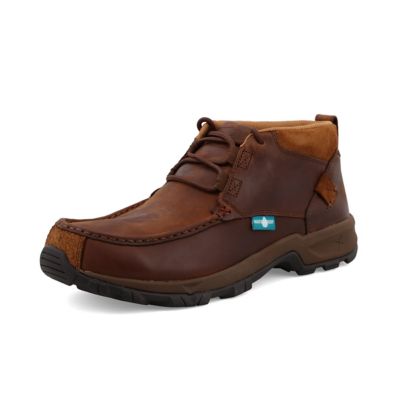
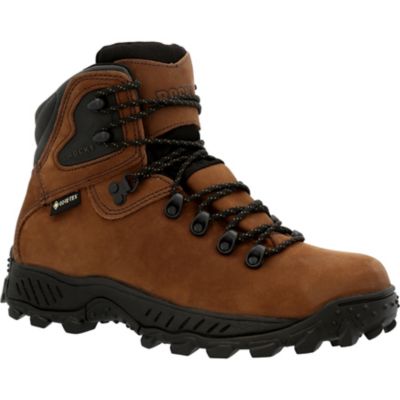
Men’s black hiking shoes bring trail-focused traction and underfoot support to a color that fits easily into everyday wear. They suit day hikers, campground regulars, and folks who spend their free time walking wooded paths, exploring nearby public land, or taking the long way around the property. Black uppers pair naturally with work pants, jeans, and hiking trousers, making the same pair practical for a trail outing followed by a stop in town. The color does not determine performance, though; materials, sole construction, and fit make the real difference underfoot. Leather uppers can offer structure and resistance to scuffs, while synthetic fabrics often help keep weight down. Mesh panels encourage airflow, and reinforced sections around the toe and heel help protect areas that meet rocks, roots, and repeated rubbing. Combinations of these materials balance flexibility, coverage, and weight in different ways. Waterproof hiking shoes incorporate construction intended to limit water entry, often through a membrane inside the upper. That protection comes with tradeoffs in airflow, and a waterproof upper does not prevent water from entering over a low collar. Non-waterproof construction may feel less restrictive for someone who values ventilation and a lighter feel. Low-cut hiking shoes leave the ankle freer to move than taller footwear, which can feel natural on maintained trails and familiar walking routes. Collar height alone does not determine stability; the shape of the heel, the firmness of the sole, and how securely the shoe holds the foot all play a part. For a short walk over packed ground, easy flex and moderate cushioning may be plenty. A longer route with loose stone and repeated climbs places greater demands on the tread, toe protection, and support beneath the arch. Those differences give men’s black hiking footwear a broad range of everyday and recreational uses without making every pair suited to every task.
Fit has a lot to do with how hiking shoes feel after the first mile. A secure heel helps limit rubbing, while room across the forefoot lets the toes spread rather than press against the sides. Extra space in front of the longest toe matters on downhill sections, where the foot can slide forward and meet the front of the shoe. That room should not come from an oversized fit that allows the heel to lift or the foot to shift from side to side. Standard and wide widths address different foot shapes, and width is separate from length; going longer does not always solve a tight forefoot. The socks worn on the trail also affect the feel, especially around the toes and instep. Someone who wears a foot orthotic benefits from enough interior depth and, where the design allows, a removable footbed. Lacing systems help fine-tune how firmly the upper holds the foot, but tight laces cannot make up for a poorly matched shape. Underfoot, midsoles cushion repeated steps and influence how much ground detail reaches the foot. EVA foam generally contributes light cushioning, while firmer compounds can provide a more structured feel. More padding is not automatically better for every walker; some prefer a softer step, while others favor a steadier platform on uneven ground. Outsole design matters just as much. Rubber tread with defined lugs can grip loose dirt and gravel, while lug spacing affects how readily small stones and packed soil clear from the sole. Deep tread does not guarantee secure footing on every surface, and smooth rock, exposed roots, and sloping ground still call for a measured pace. A reinforced toe bumper helps shield the front of the shoe from trail knocks, but it is not the same as a safety toe. Hiking footwear without the appropriate safety rating is not a substitute for required jobsite protection. For carrying a daypack, walking fence lines off duty, or covering a few miles of rolling trail, the right balance is enough structure to feel supported without unnecessary stiffness.
Wear life depends on both construction and the miles a pair sees. Abrasion-resistant panels, protected stitching, and reinforcement at common flex points can help shoes stand up to repeated trail contact. Long stretches on pavement may wear down pronounced lugs differently than dirt paths, so everyday errands count toward outsole wear, too. Black hiking shoes tend to blend well with a range of clothing, but pale dust and dried soil can still show clearly against a dark upper. Routine care keeps that buildup from working into seams and fabric. A soft brush lifts loose dirt, while a damp cloth handles many surface marks; leather, mesh, and synthetic panels may need different cleaners according to the footwear maker’s directions. Leather treatments should match the material and any membrane construction rather than simply add a heavy coating. Letting shoes air-dry away from heaters and other direct heat helps protect uppers, adhesives, and cushioning. Taking out removable footbeds opens the interior for drying, and loosening the laces makes it easier to clear grit from beneath the tongue. Worn laces, separating sole edges, flattened cushioning, and tread that has become smooth in key contact areas are worth noticing before a longer outing. A pair that still looks tidy from above may no longer feel the same underfoot. Men’s black hiking shoes can also make a practical gift for a regular trail walker or someone who enjoys exploring local parks, provided their size, width, and fit preferences are known. For a hiking partner shopping for a different fit and more ankle coverage,
Womens Black Hiking Boots are a related option. Whether the next outing means a gravel path beside the pasture or a rocky climb to a favorite overlook, footwear matched to the route and the wearer helps keep attention on the miles ahead rather than a pinched toe or slipping heel.