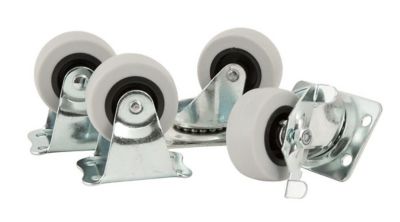
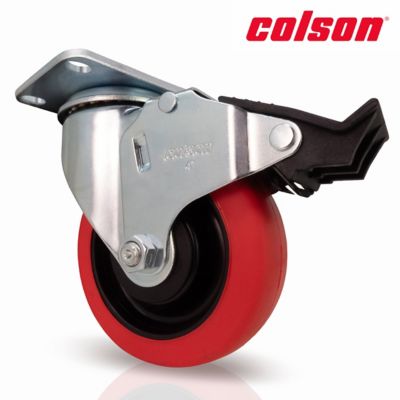
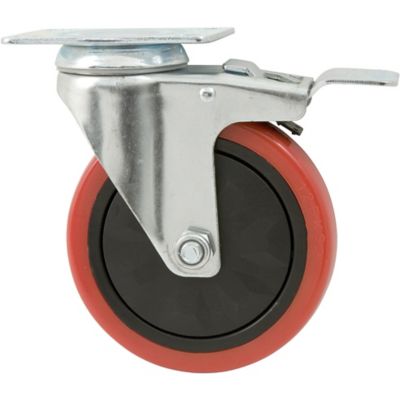
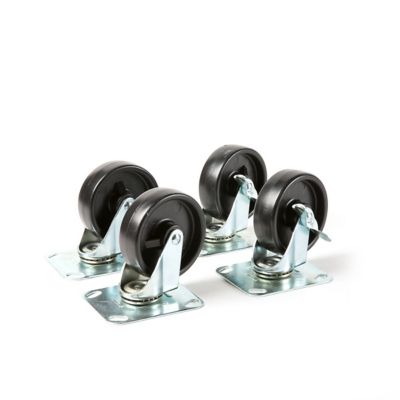
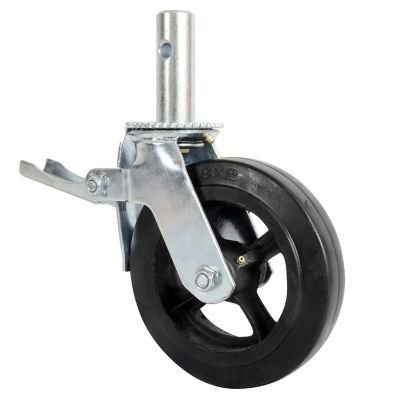
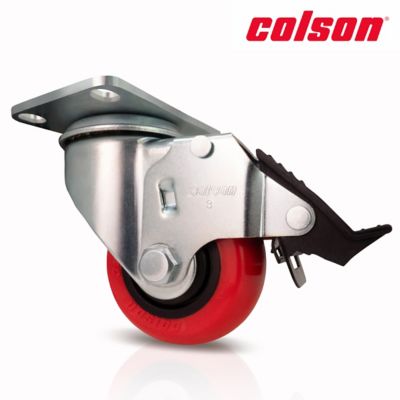
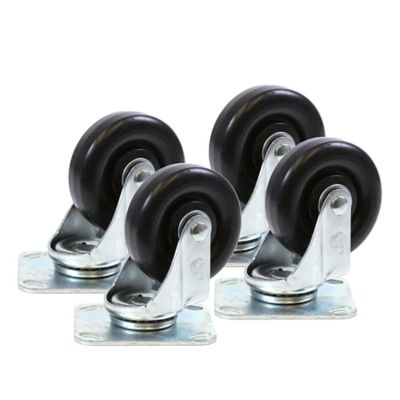
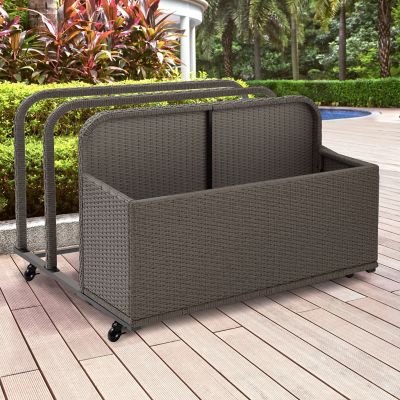
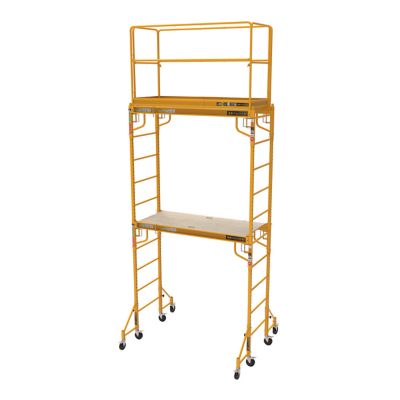
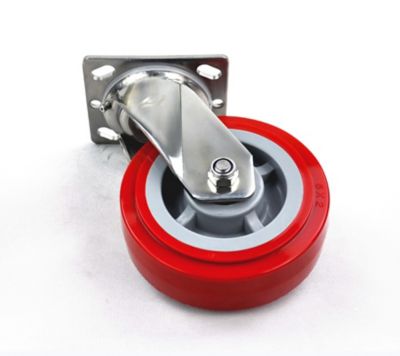
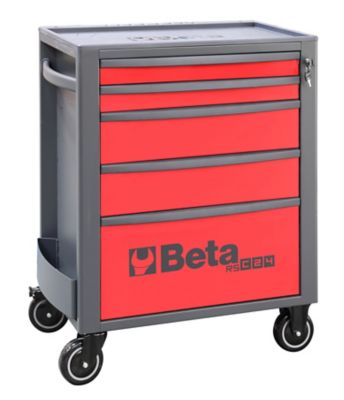
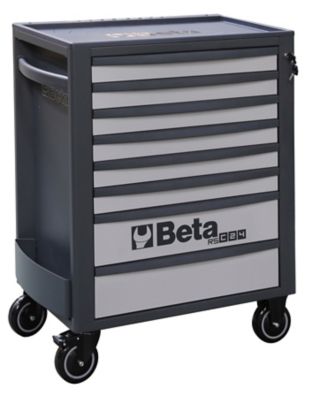
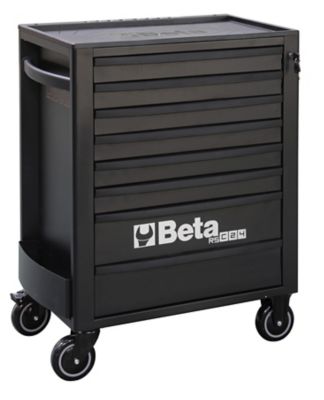
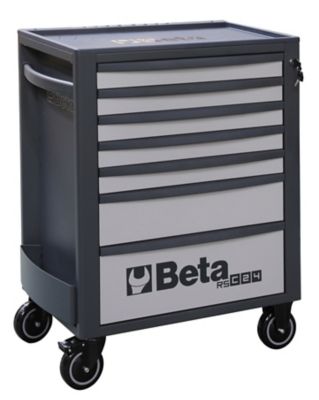
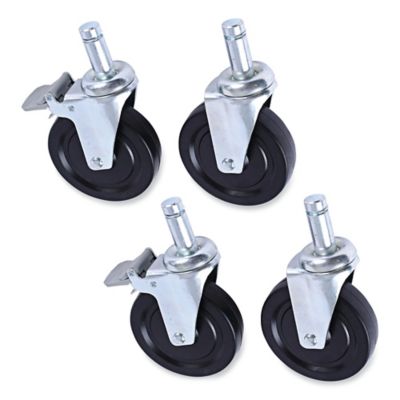
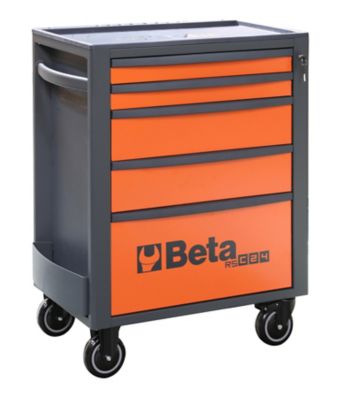
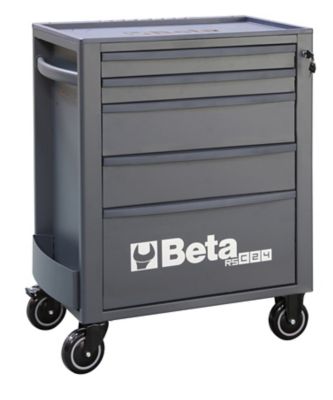
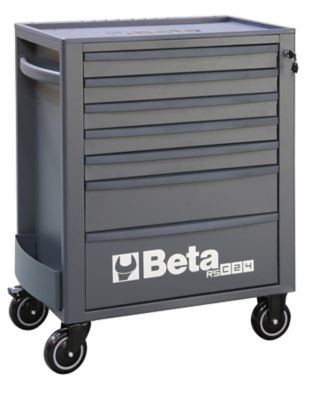
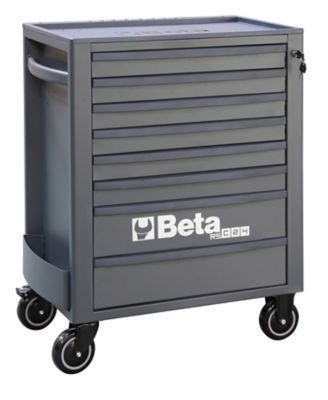
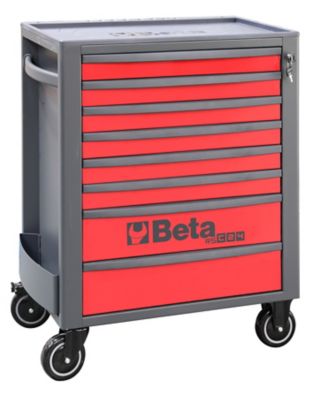
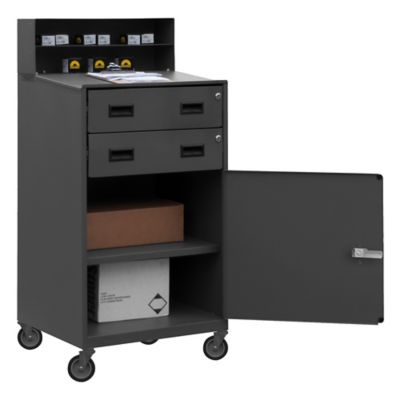
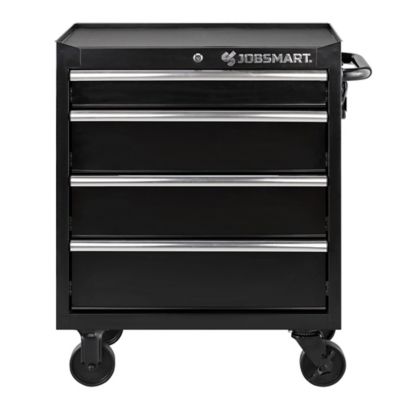
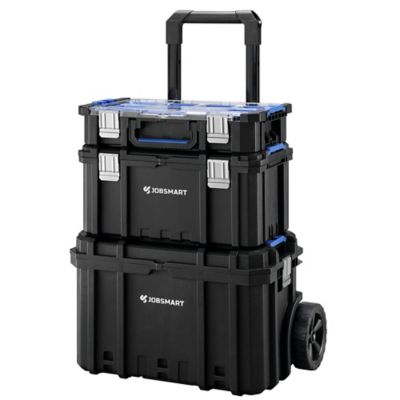
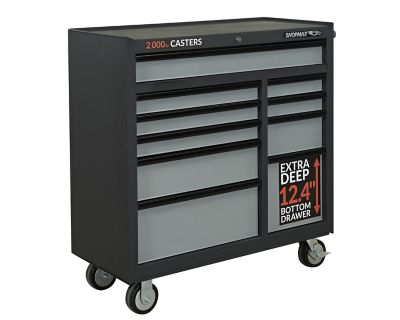
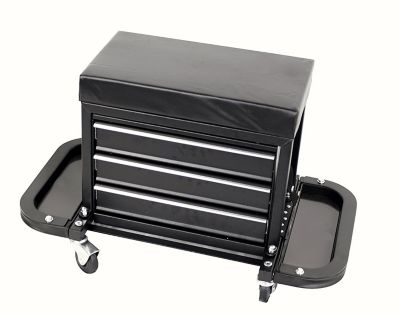
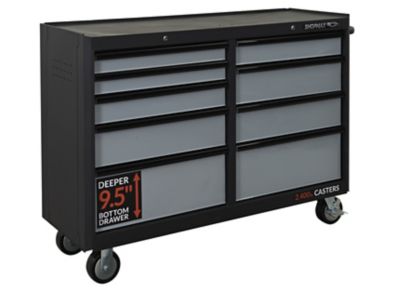
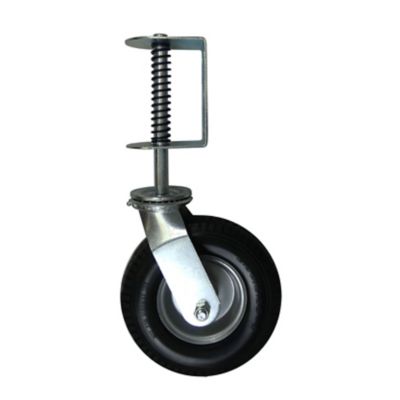
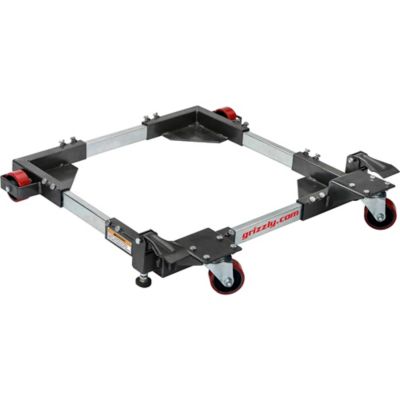
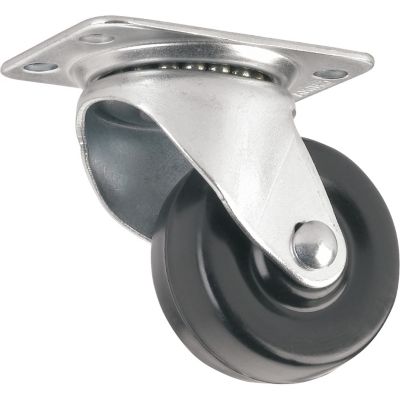
Locking casters make it easier to move heavy furniture, shop equipment, carts, workbenches and other useful items when you need them, then hold them steady when the job is underway. They’re a handy choice for a farm shop, garage, barn, greenhouse, office, classroom or home workspace where equipment may need to roll across the floor but should not wander once it is parked. A mobile worktable can be pulled closer to a project, a feed or supply cart can be moved out of the way for sweeping, and a tool cabinet can be positioned where the work is happening instead of staying planted in one corner. During the cooler months, locking casters can also help make seasonal storage easier by letting you shift bins, shelving or equipment without dragging it across the floor. When choosing locking casters, start with the total weight they need to carry. Add the weight of the cart, cabinet or workbench to the heaviest load you expect to place on it, then choose a set with a suitable capacity and a little extra room for real-world use. A four-caster setup does not always divide the weight perfectly, especially on uneven floors, so it is wise to avoid sizing right at the limit. Larger wheels generally roll more easily over thresholds, seams and small debris, while smaller wheels can work well on smooth, level floors and in tight spaces. The wheel material matters, too. Rubber and polyurethane wheels are often a good fit for finished concrete, tile, wood and other surfaces where quieter movement and reduced floor marking are important. Polyurethane can offer a helpful balance of durability, load support and smooth rolling, while rubber provides a softer ride and good grip on many indoor surfaces. Phenolic and steel wheels are built with demanding loads in mind and can be useful in rugged shop, warehouse or industrial settings, though they may be less forgiving on delicate flooring. For outdoor or rough-use areas, look closely at the wheel construction and hardware so the caster can handle dirt, moisture and repeated movement.
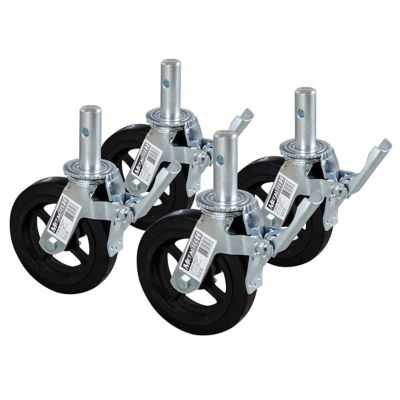
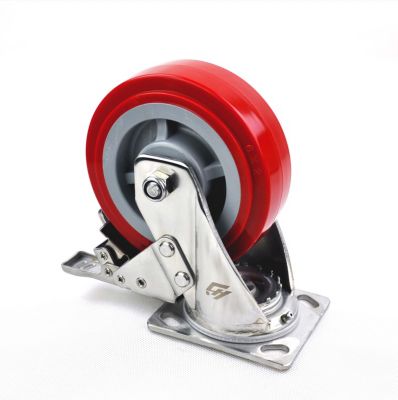
The locking mechanism is another important part of the decision. A wheel-brake, sometimes called a single-lock caster, stops the wheel from rolling while still allowing the caster to swivel. This style can be useful when you want a cart to stay in place but still need to turn or reposition it slightly. A total-lock caster secures both the wheel and the swivel, giving you a firmer, more stable base for tasks that involve pushing, pulling, drilling, cutting or reaching. Brake pedals are typically placed where they can be pressed with a toe, which makes them easier to use when your hands are full or dirty from a day of work. Check the brake location and clearance before installation, particularly on low equipment or units that will be pushed close to a wall. Locking casters are available with different mounting styles, including top plates and stems. Plate-mounted casters attach with several bolts through a flat mounting plate and are commonly used on workbenches, carts, cabinets and larger pieces of equipment with a broad, solid base. Stem-mounted casters fit into a prepared socket or mounting hole and can be a practical choice for furniture and equipment designed for that style of hardware. Measure the existing mounting area, hole spacing, stem size and available height before ordering. Overall caster height affects the finished height of the unit, and changing that height can alter how comfortably a work surface is used or how easily a door, drawer or shelf opens. The mounting surface should be strong enough to support the fasteners, and the hardware should be tightened securely without crushing wood or damaging thin material. If you are converting a stationary item, inspect the frame and corners first. A solid base, properly spaced casters and an even load will make the finished setup safer and easier to handle.
Locking casters can serve anyone who needs equipment to do two jobs: move when needed and stand firm when it matters. Homeowners use them on storage cabinets, laundry carts, craft tables and utility shelving. Gardeners may find them useful for potting benches, soil bins or movable greenhouse equipment, while livestock owners can use rolling carts to organize tools, buckets and routine supplies around the barn or shop. In a garage or farm workshop, casters can turn a fixed table into a flexible station that rolls out for repairs and tucks away when the floor needs cleaning. They can also be a thoughtful gift for a do-it-yourselfer, woodworker, mechanic or handy family member who enjoys improving a workspace one practical upgrade at a time. Before putting a newly fitted unit to work, test it on the same surface where it will be used. Roll it slowly, check that all casters track properly, engage each brake and make sure the load remains balanced. Brakes are intended to keep equipment from rolling or swiveling; they should not be treated as a substitute for tie-downs on a trailer, vehicle or steep incline. Keep wheels free of wrapped cords, hay, wire and other debris, and inspect the fasteners and brake action from time to time. For applications that need especially rugged wheel construction, compare locking options with
Metal Casters as well. The right combination of load rating, wheel material, mounting style, wheel size and brake design can make everyday chores feel more organized, whether you are moving equipment across a smooth shop floor, arranging storage before colder weather settles in or setting up a dependable mobile workstation for the season ahead.