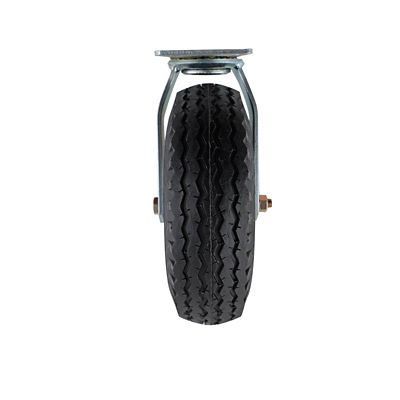
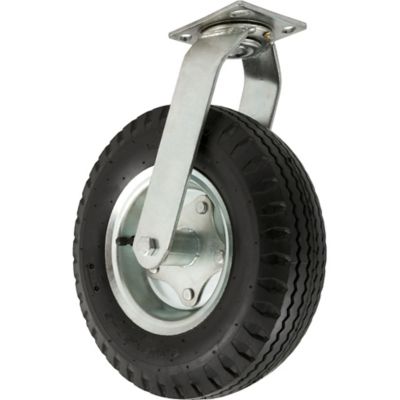
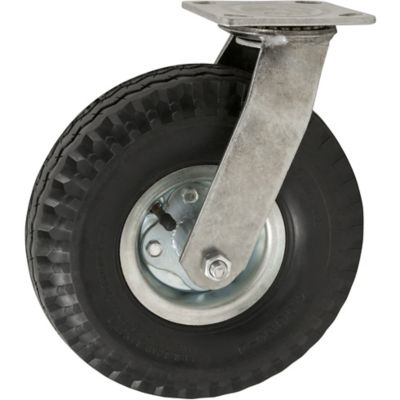
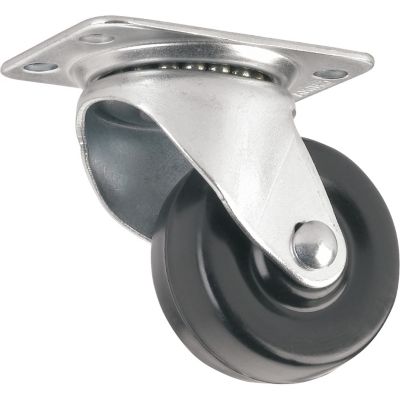
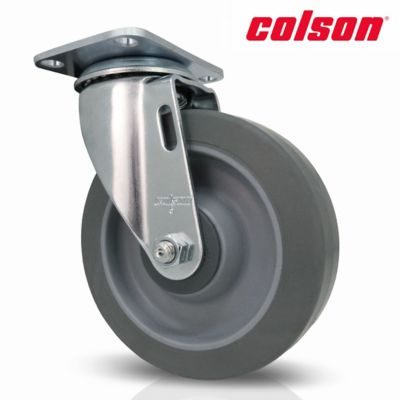
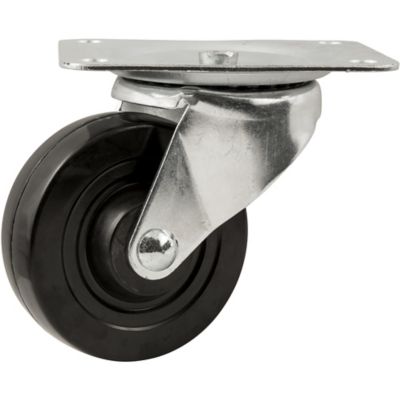
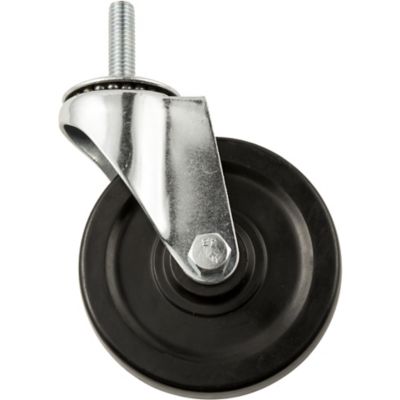
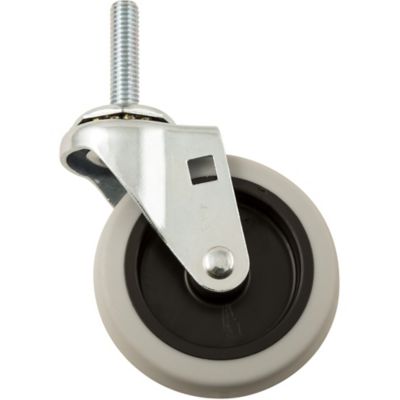
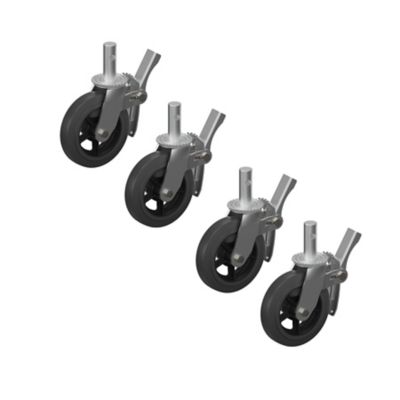
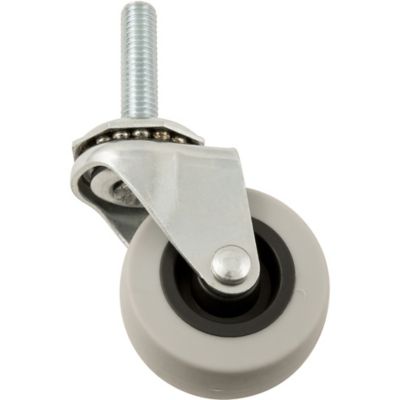
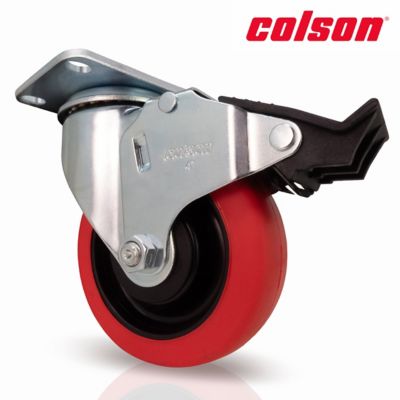
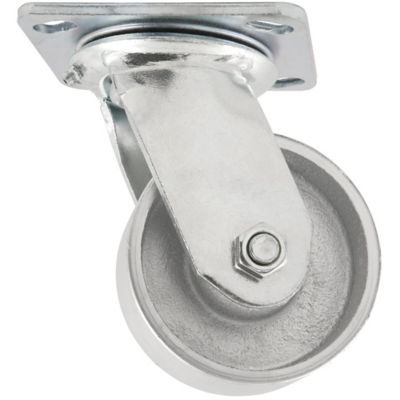
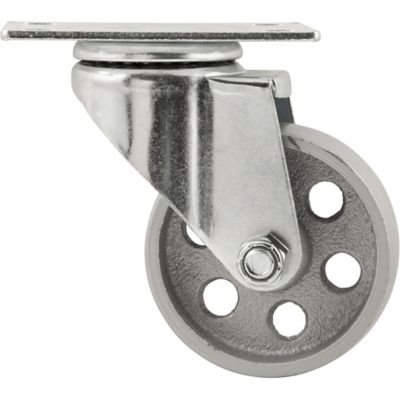
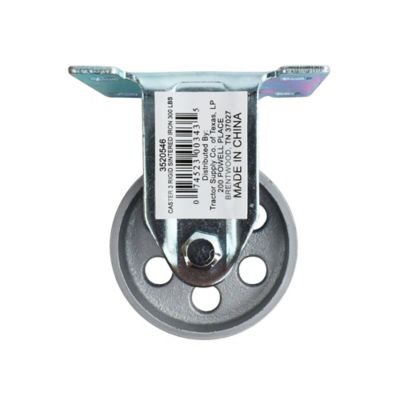
Rubber casters make it easier to move carts, tables, bins, shop fixtures, and other equipment across the places where work gets done. A rubber tread can help soften the rumble of rolling over tile, wood, sealed concrete, and other hard surfaces, which comes in handy in a barn office, garage, feed room, greenhouse, workshop, or store area. The flexible tread also helps absorb some of the bumps caused by cracks, thresholds, gravel tracked indoors, and uneven flooring. That cushioning can make a loaded cart easier to guide and may help reduce jolts to the items riding on it. Many rubber casters are made with non-marking tread compounds, though floor results can vary by material, surface condition, load, and moisture, so checking the product details before purchase is a smart step. They can be a practical choice for anyone moving supplies around the farm, organizing a busy workshop, setting up a mobile workbench, or making office furniture easier to shift when it is time to sweep, repair, or rearrange a room. They also make a handy gift for a mechanic, shop owner, woodworker, teacher, facility manager, or weekend tinkerer who is always finding a better way to move things. A small set may help freshen up a light cart or chair, while larger casters can support shop equipment and heavier rolling frames.
Start by looking at the load each caster can support, then consider the combined weight of the cart, equipment, materials, and anything that may be added later. Divide the total load among the number of casters, but leave room for uneven floors and the fact that the weight may not rest evenly on every wheel. For example, a cart with four casters will not always place exactly one-fourth of its load on each caster while turning or crossing a threshold. A sensible safety margin can help the cart roll more steadily and reduce strain on the wheels and mounting points. Caster size matters, too. Smaller 2- to 3-inch casters are often suited to light utility carts, office chairs, small displays, and indoor equipment. Larger 4- to 5-inch and bigger casters generally roll more easily over seams, doorway lips, and rougher shop floors, while also offering greater ground clearance. Think about the surface before choosing the tread. Rubber is often a good fit for hard indoor floors where quieter travel and reduced scuffing matter, while a rough outdoor path, wet area, or wash-down space may call for a caster specifically rated for those conditions. Check the listed weight rating, wheel diameter, tread material, temperature range, and any care instructions. If the cart will travel over gravel, packed dirt, or a rough concrete slab, a larger wheel may handle the route with less pushing effort than a small wheel.
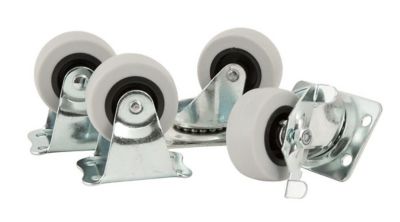
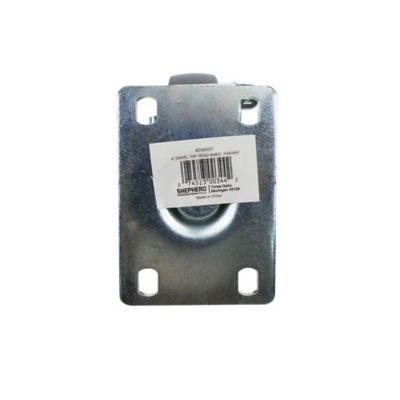
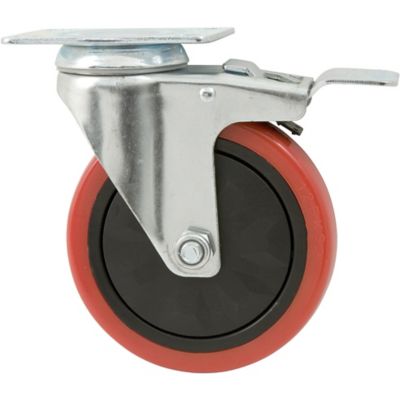
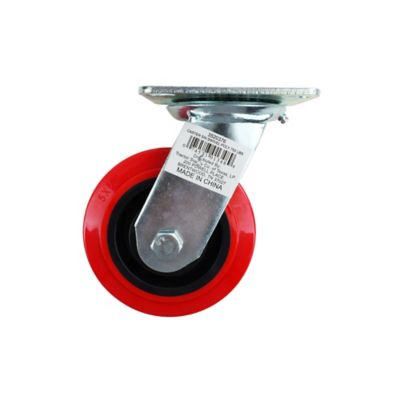
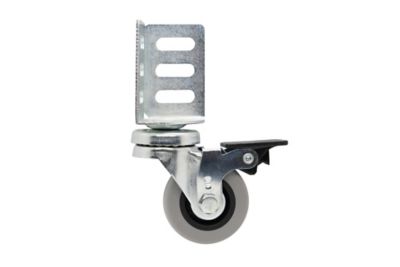
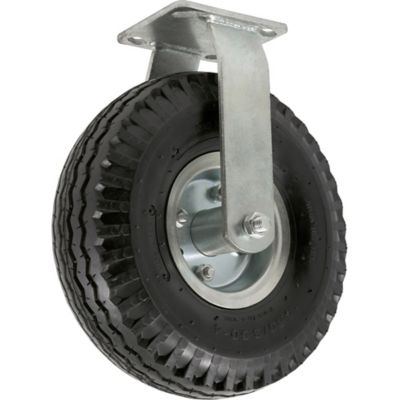
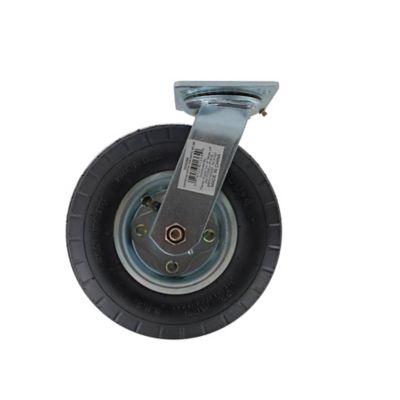
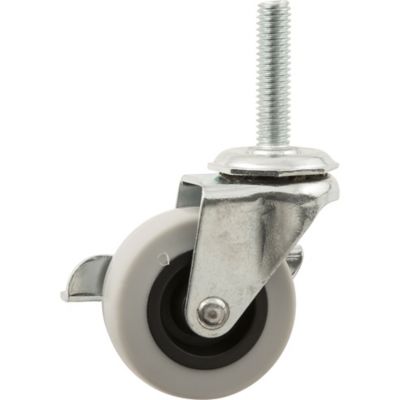
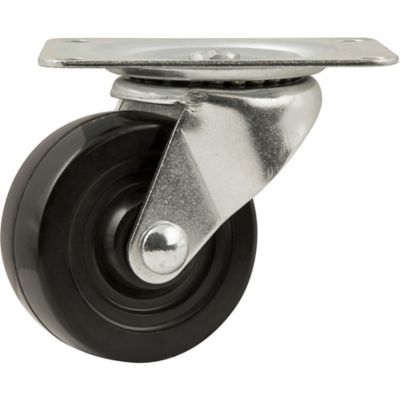
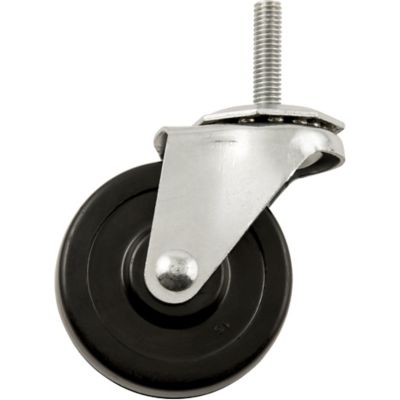
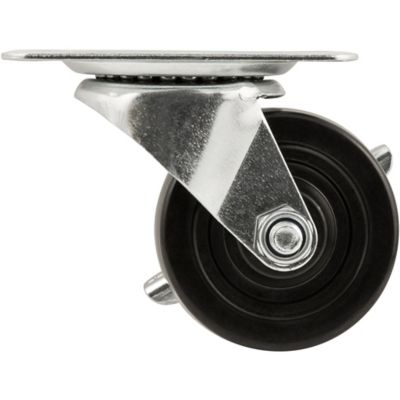
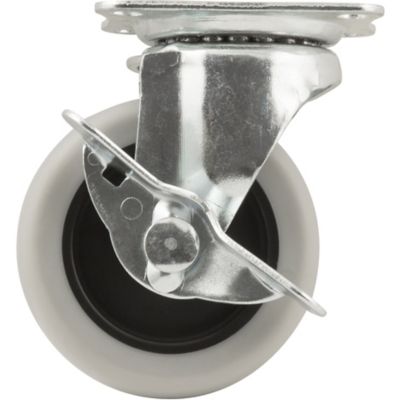
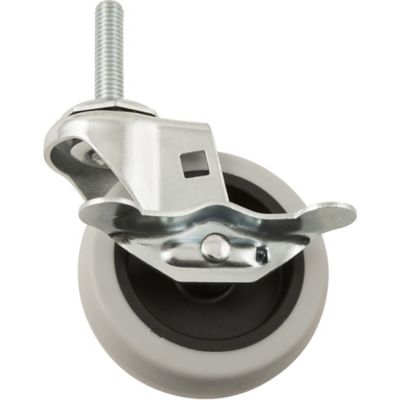
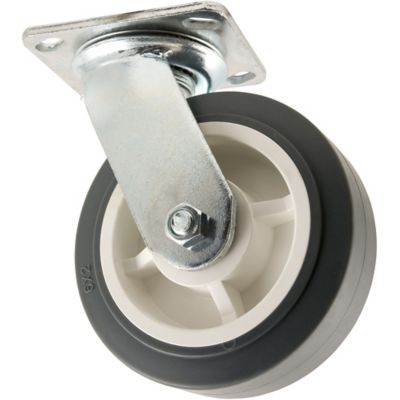
The mounting style needs to match the equipment. Plate casters attach with a flat top plate and fasteners, making them a common choice for carts, platforms, cabinets, and worktables with a solid mounting surface. Stem casters fit into a socket or opening and may be found on chairs, stands, and tubular frames. Threaded stems screw into a matching fitting, while grip-ring or expanding rubber stems can fit certain hollow tubing when the opening and stem dimensions line up. Measure the mounting hole, stem diameter, stem length, and available clearance before ordering; even a small mismatch can leave a caster loose or prevent it from seating fully. Swivel casters turn as the cart changes direction, which helps in narrow aisles and crowded work areas. Rigid casters roll in a straight line and can add tracking control, making a combination of swivel and rigid wheels useful on longer carts. A brake can lock the wheel, the swivel, or both, depending on the design. That extra control is helpful when loading a cart, working at a bench, or parking equipment on a slight slope. For a setup that needs to stay put during work, browse
Locking Casters as another option. Before installation, inspect the frame for cracks or weak spots, use fasteners suited to the mounting surface, and make sure every wheel sits flat. After fitting the casters, roll the empty cart first, then add weight gradually and test turns, stops, doorways, and thresholds. During the cooler months, indoor projects often bring forgotten carts and shop equipment back into regular rotation, making it a good time to check for worn wheels, loose hardware, packed debris, or tread damage. A clean, properly matched set of rubber casters can help keep daily chores moving with less noise and fewer scrapes along the way.