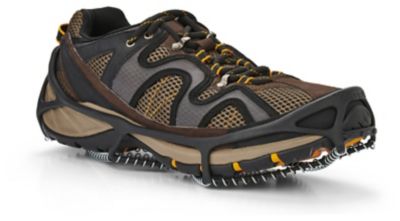
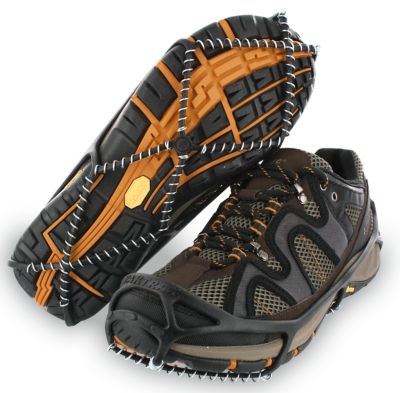
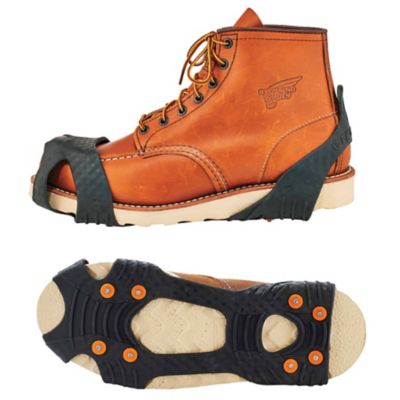
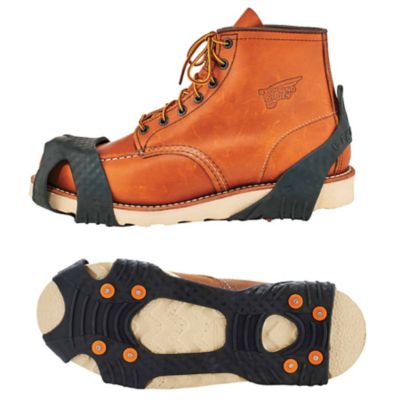
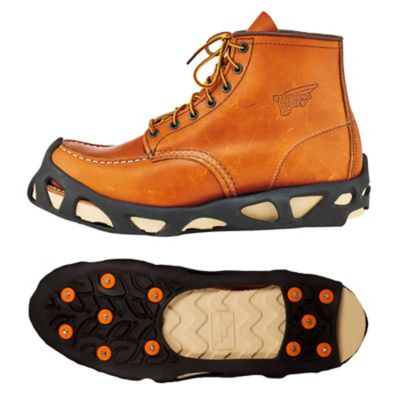
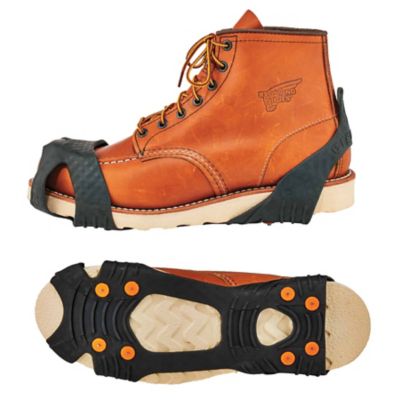
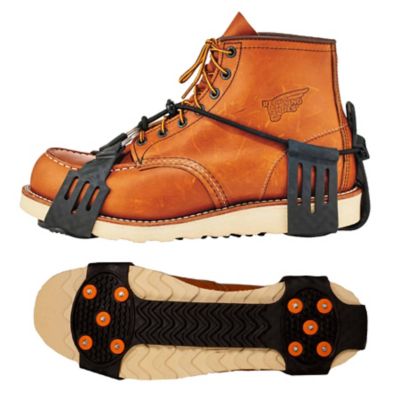
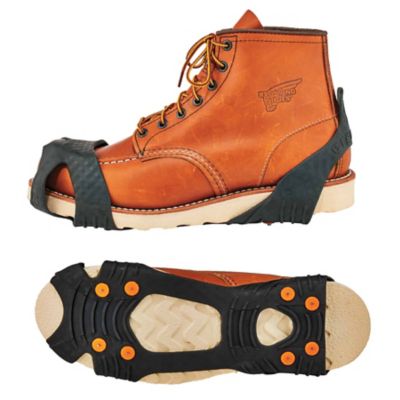
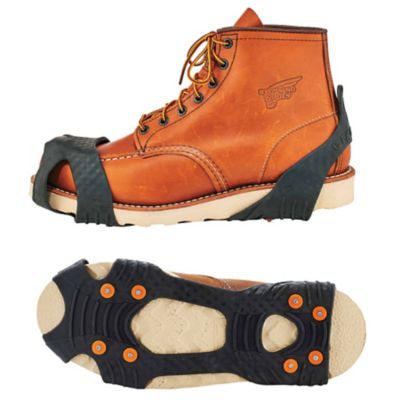
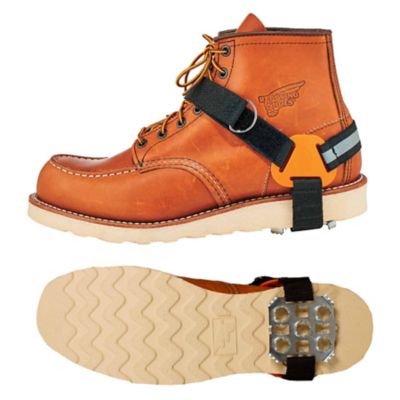
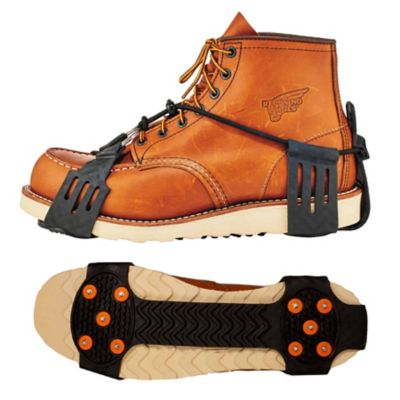
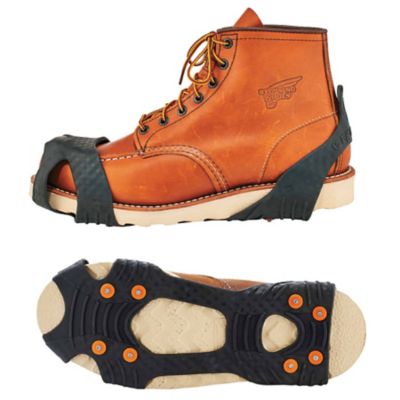
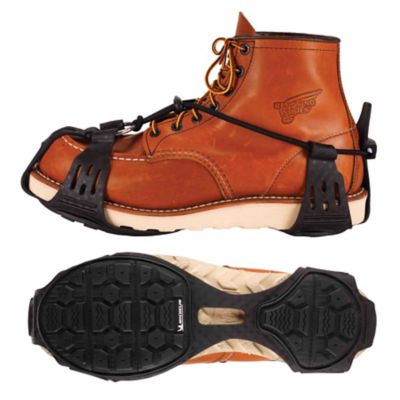
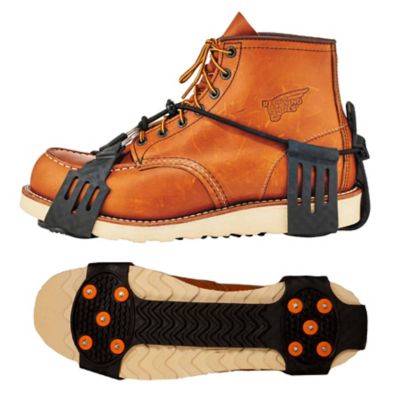
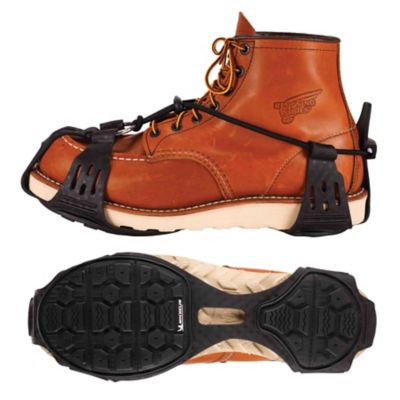
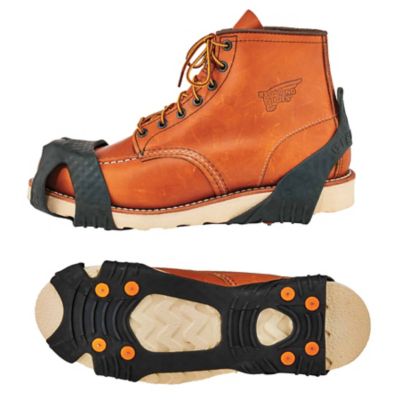
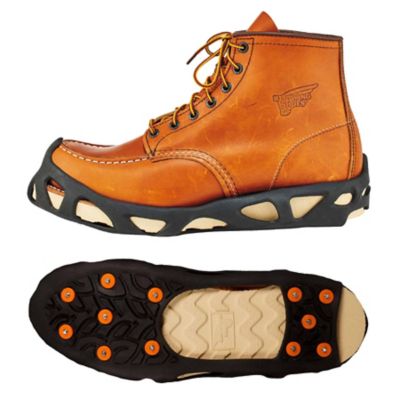
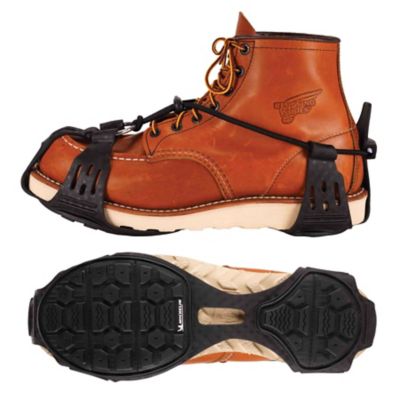
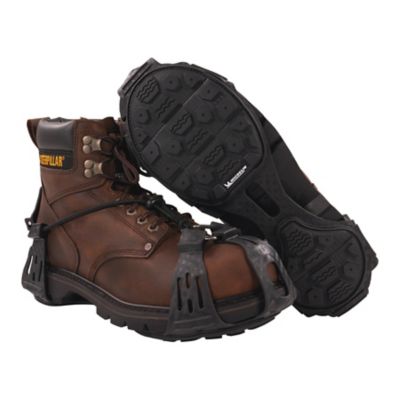
Ice traction devices for work boots are removable attachments that add metal contact points beneath the sole to help improve footing on ice and packed snow. They fit over or fasten around a boot, giving winter work footwear extra grip when the walk to the barn, equipment shed, or feed room gets slick. For folks hauling feed, checking water troughs, clearing a driveway, or crossing a frozen yard before daylight, that added traction can make everyday chores more manageable. The main styles include stretch-on cleats with small studs, coil-style traction devices, and more substantial attachments with chains or longer points. Each has a different feel underfoot, and the right match depends on the surface and the work. Short studs offer a lower-profile option for intermittent icy patches, while more pronounced points may be better suited to deeper ice or hard-packed snow, depending on their design. Coil patterns spread contact across portions of the sole, though their grip varies with the snow, ice, and underlying ground. Coverage matters, too: heel-only attachments concentrate traction at the back of the boot, while full-foot styles place gripping elements beneath both the heel and forefoot. That distinction matters when taking short steps across a slick barnyard or carrying a bucket along an icy path. No attachment makes ice slip-proof, and deeper points are not automatically the right choice for every task. Raised cleats can feel awkward on bare pavement, catch on some surfaces, and interfere with certain work activities. Metal traction can also scratch floors or slip on tile, smooth concrete, and other hard indoor surfaces. Unless a device is specifically designed and approved for the surface involved, removing it before heading indoors is the safer approach. For work that moves between a frozen lot and a shop floor, an attachment that comes off without a wrestling match can be especially practical. Easy removal still needs to go hand in hand with a secure fit outdoors, where loose traction gear can shift just when steady footing matters most.
Construction and fit have a lot to do with how ice cleats for work boots perform through repeated chores. Flexible rubber or other elastomer harnesses stretch around the toe and heel, while straps, chains, and molded retainers help hold different designs in position. Cold-weather flexibility matters because a harness that becomes stiff can be harder to pull over a broad work boot. Steel studs, carbide tips, steel coils, and chain sections offer different combinations of bite, weight, and resistance to wear; the design of the whole attachment matters as much as the metal itself. Abrasive pavement can wear down gripping points, and repeated stretching puts strain on the harness, so construction should suit the amount of walking and the mix of surfaces involved. Sizing deserves more attention than simply matching the number printed inside a boot. A wide toe box, thick outsole, tall heel, or heavily insulated upper can change how an attachment sits, even when two pairs share the same shoe size. Manufacturer sizing charts and fit instructions help account for those differences. A secure attachment should stay centered beneath the sole without rolling sideways, slipping off the heel, or squeezing the upper enough to affect comfort. The front edge should seat properly around the toe rather than perch on top of it. For anyone pairing traction gear with
Cold Weather Composite Toe Work Boots, the boot’s outside dimensions are especially important; a protective toe and insulation can add shape that a traction harness needs to accommodate. Ice traction attachments do not add toe protection, insulation, waterproofing, or electrical protection to a boot. Those features come from the footwear itself. Enough room to work a strap with gloves on, a heel tab that is easy to grasp, and a shape that clears the boot’s tread can all make the difference between gear that fits the chore and gear that gets in the way.
Intended use also shapes which traction features make sense for a workday. Someone walking a short stretch from the house to the chicken coop has different needs from a worker covering an icy equipment yard for hours. Frequent transitions between snow, gravel, bare pavement, and indoor flooring call for attention to removal, storage, and how the attachment behaves on each surface. Longer points intended for outdoor ice may be a poor match for driving, climbing ladders, or working around pedals and machinery. Equipment rules and the traction manufacturer’s instructions should settle those questions, rather than assuming an attachment can stay on for every job. Workplace requirements matter as well, particularly where a task calls for specified footwear or other protective equipment. Good traction works alongside sensible habits: shorter steps, a clear view of the path, and keeping a hand free when possible. Carrying a sack that blocks the view of an icy threshold still creates a hazard, even with cleats underfoot. Care is straightforward but worth keeping up with. Removing packed snow, mud, and grit helps expose damage and keeps moving parts from staying clogged. Road salt and deicing residue should be cleaned away according to the maker’s directions, followed by drying before storage. Excess heat can harm some flexible materials, so setting attachments against a heater is not a substitute for following care instructions. Before heading out, a quick look for missing studs, worn points, cracked harness sections, loose connections, or bent components can catch trouble early. Replacement parts belong only on designs that allow them, with the specified parts fitted as directed. A small storage bag or designated spot near the boot rack keeps sharp metal away from gloves and makes the pair easier to find before chores. With a sound fit, suitable gripping elements, and regular attention to wear, work boot traction devices can be a practical addition for handling the icy stretches between the porch, gate, and barn.