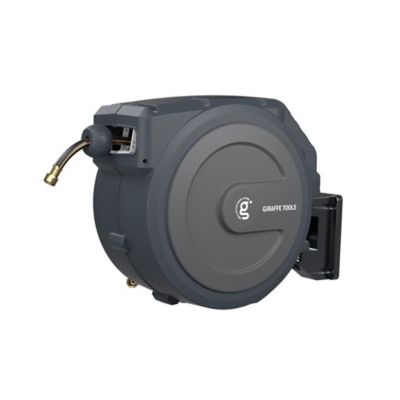
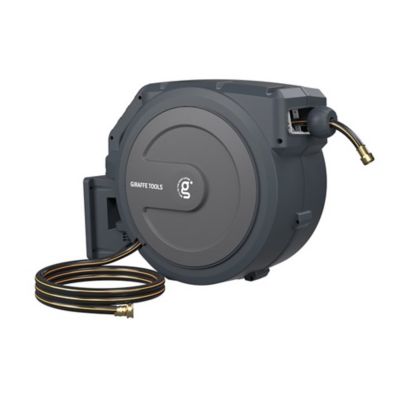
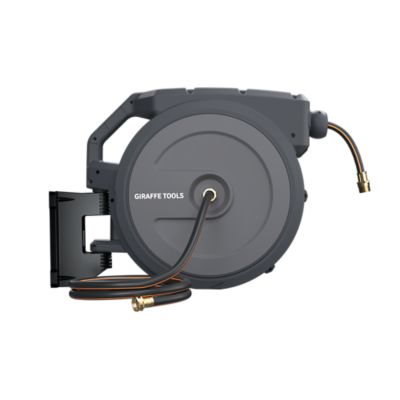
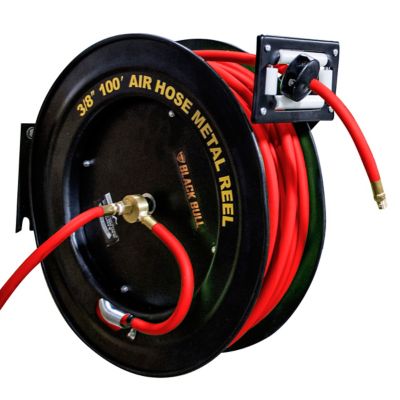
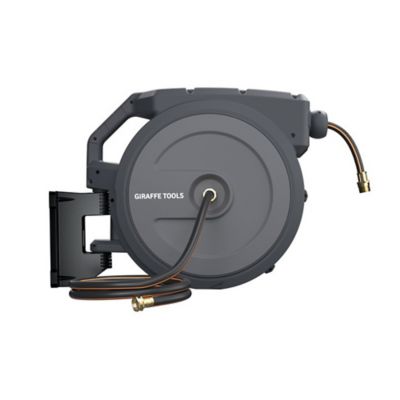
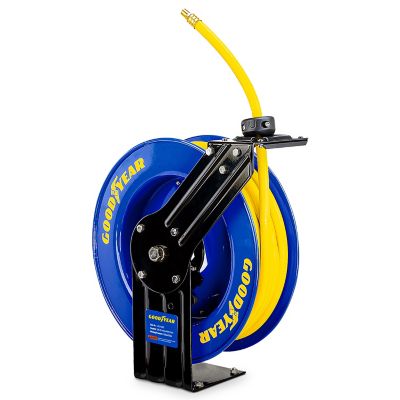
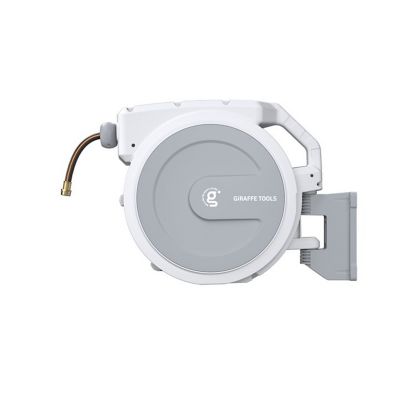
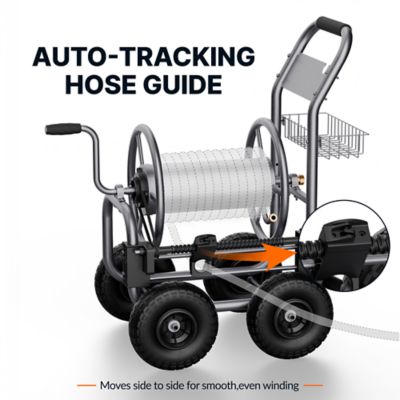
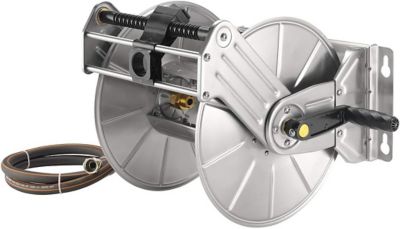
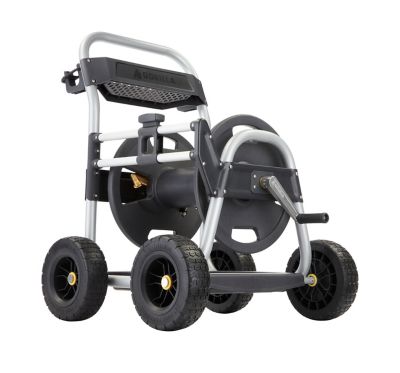
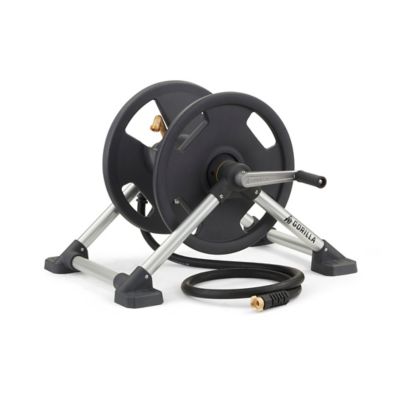
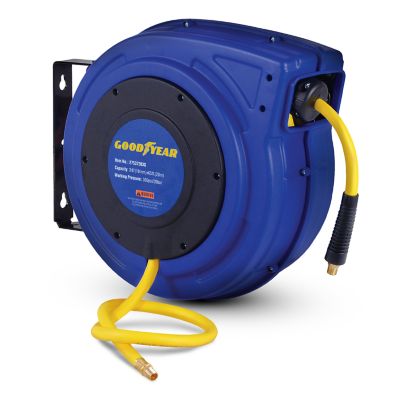
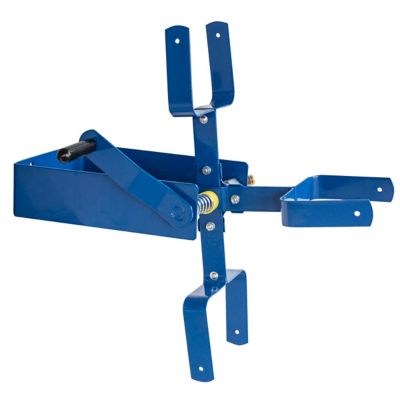
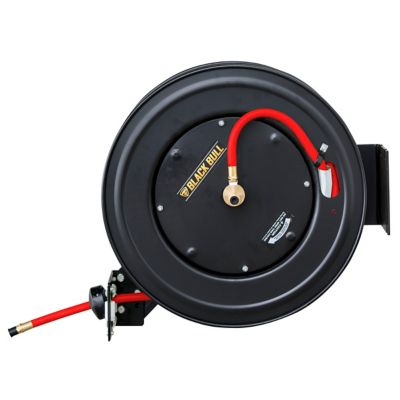
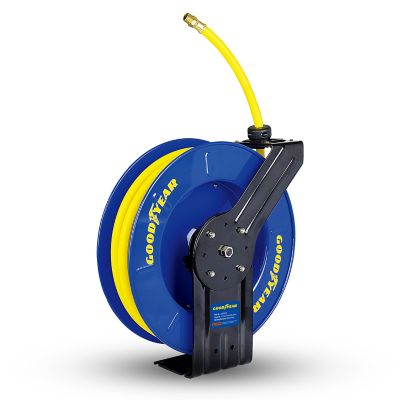
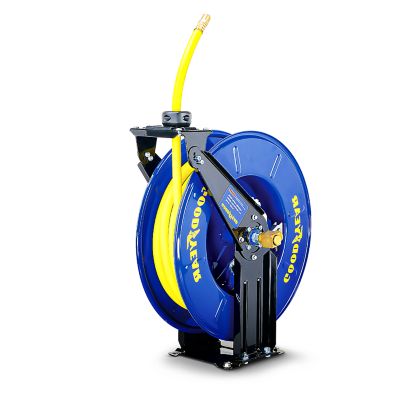
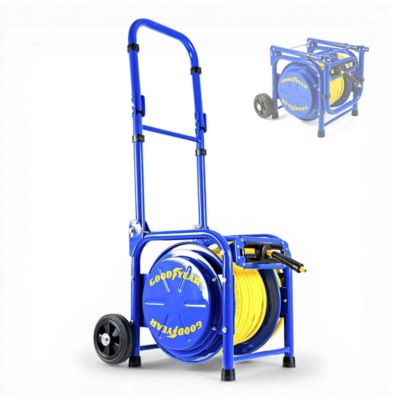
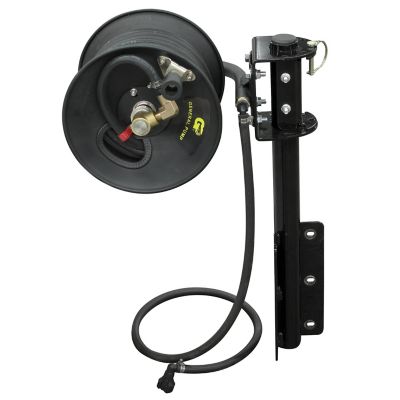
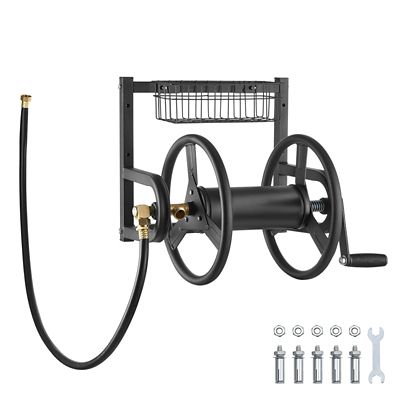
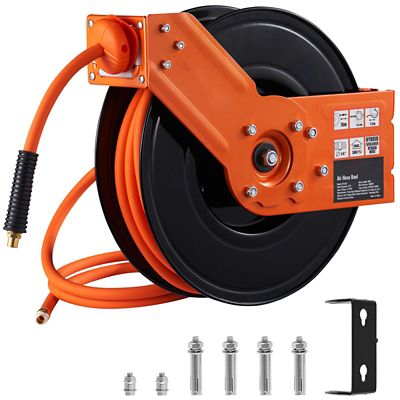
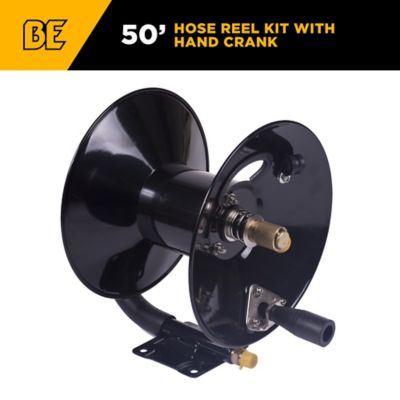
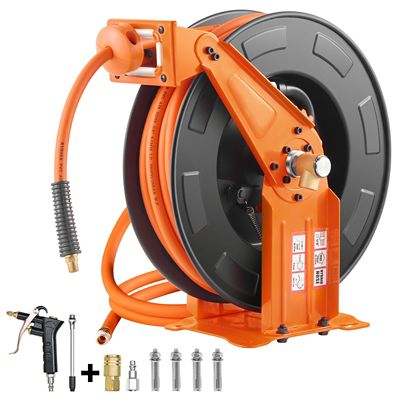
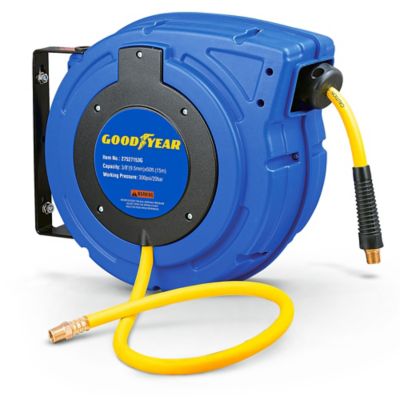
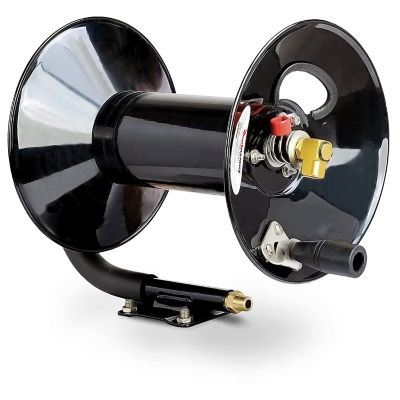
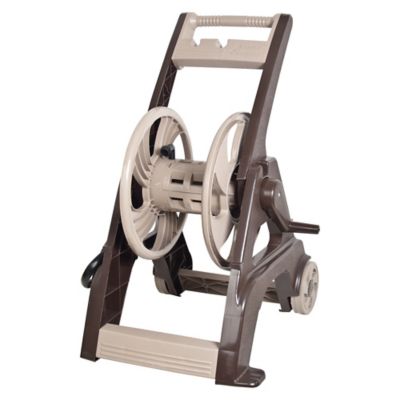
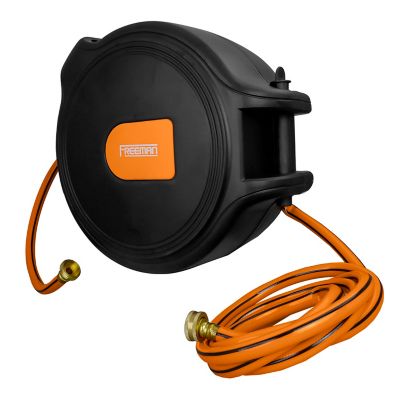
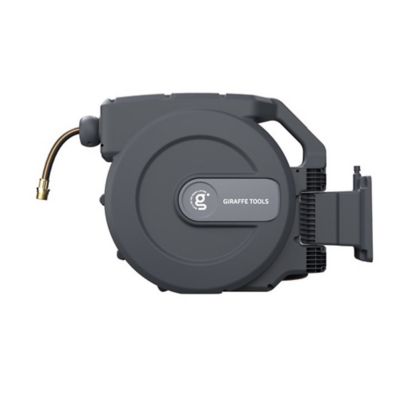
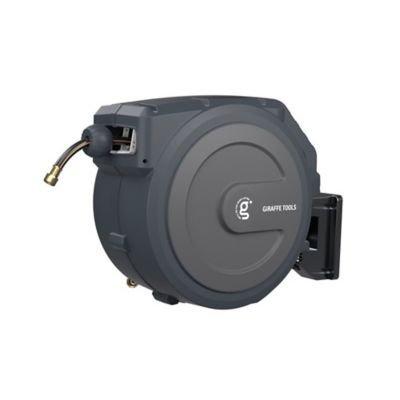
Heavy-duty hose reels give long, heavy hoses a steady place to wind, store, and feed out for repeated watering and washdown work. Keeping the hose on a reel helps reduce tangles, tight bends, and abrasion from loose coils dragging across concrete or gravel. That makes a difference around a barn aisle, beside a livestock water station, or near a shop where a hose comes out several times a day. The heavy-duty designation generally points to a stronger frame, substantial mounting points, and components intended to handle frequent pulling and rewinding, though actual capacities and ratings vary. Steel frames offer rigidity for busy work areas, while aluminum can reduce carrying weight and resist rust. Reinforced polymer housings offer another balance of weight, handling, and protection for the winding mechanism. A finish on a metal frame helps shield the surface from moisture, but the bearings, swivel, axle, and fasteners matter just as much as the outer shell. A stout frame with a smooth-turning drum is easier to work with than a reel that rocks or binds under a full hose load. Wall-mounted reels keep the floor clear and put the hose close to a water source, making them handy by a wash rack or garden spigot. Floor-mounted and post-mounted designs suit permanent work stations where a wall is not the best support. Wheeled hose reel carts bring the hose closer to scattered beds, distant pens, or equipment parked away from the building. Wide wheel spacing, a comfortable handle, and a balanced frame help a loaded cart feel more manageable over a packed dirt lane. The best fit depends on where the work happens, how often the hose moves, and whether the mounting surface can carry both its weight and the force of pulling out the hose. Room around the reel also matters, especially where gates swing open, wheelbarrows pass through, or equipment needs a clear path.
Hose capacity is one of the most useful details to compare, but length alone does not tell the whole story. A reel rated for a certain length of hose may base that figure on a particular hose diameter, and a thicker hose can take up more drum space. The hose’s inside diameter affects water flow, while its outside diameter affects how much room it needs when wound. Stiffer hose construction, large fittings, and the space needed for orderly winding can also influence fit. Enough capacity for the working length helps keep the hose from crowding the drum edges or rubbing against the frame. For a watering-focused comparison, the
Water Hose Reel collection provides another place to explore hose storage for garden beds, wash areas, and everyday chores. Connection size, thread type, and inlet placement deserve a close look, too. A short leader hose connects many reels to the spigot, and its length needs to suit the distance without stretching tight or folding sharply behind the frame. The swivel connection lets the drum turn while maintaining the water connection; accessible seals and fittings can make later service simpler. Working pressure ratings need to match the application across the reel, hose, swivel, and fittings, rather than just one component. A water hose reel is not automatically suitable for compressed air, hot water, chemicals, or drinking water; those jobs call for components specifically rated for that service. Winding style changes the day-to-day feel as well. A hand-crank reel gives the operator direct control over winding speed and hose placement. A spring-retractable reel can reduce hand winding, with features such as a hose stop, locking mechanism, or controlled retraction depending on the design. Powered winding can help with larger hose loads, but it also brings power-source requirements and additional service points. Whatever the mechanism, smooth payout and an easy-to-reach handle or control matter when one hand is already holding a nozzle or a gate.
Around a working property, a hose reel earns its place by making repeat chores less of a tangle. Someone rinsing mud from a tractor needs enough reach to move around the machine without pulling hard against the reel. A gardener watering several beds may care more about cart balance and a clear route between rows. Near animal pens, keeping coils out of walkways helps leave room for boots, feed carts, and routine cleanup. Placement should keep the hose away from sharp edges, vehicle tires, and doorways where it could get pinched. A pivoting mount can help the reel follow the direction of the pull, provided the bracket and mounting surface suit the load. Good care starts with the hose itself: a kinked or gritty hose is harder to wind neatly, even on a substantial reel. Loose dirt and grit can be wiped away as the hose returns to the drum, and even layers help prevent a high pile on one side. A nozzle dragging behind during retraction can strike equipment or catch on a post, so controlled handling matters with both crank and automatic designs. Shutting off the water supply and relieving pressure after the job, as directed by the manufacturer, reduces unnecessary strain on connections. Occasional checks for loose mounting hardware, damaged hose sections, worn seals, and leaks at the swivel can catch small troubles before they interrupt a full round of chores. Lubrication and replacement parts should follow the reel manufacturer’s recommendations, since not every bearing or enclosed mechanism needs the same attention. Clear access to fasteners and service points is worth considering for a reel that will see frequent work. A well-matched heavy-duty hose reel brings together manageable winding, suitable hose capacity, sound mounting, and straightforward upkeep, leaving the hose ready for the next rinse, refill, or watering round.