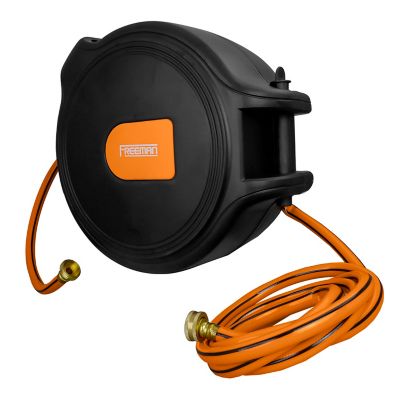
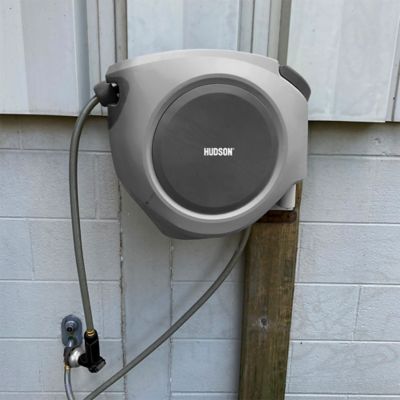
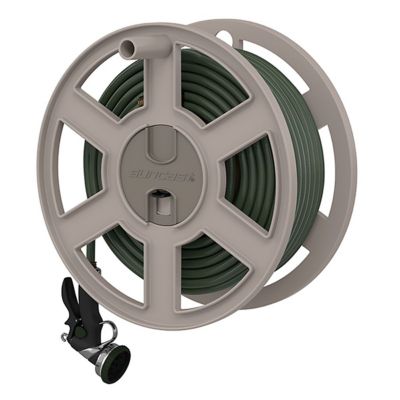
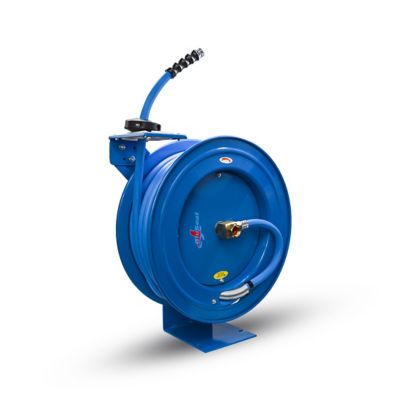
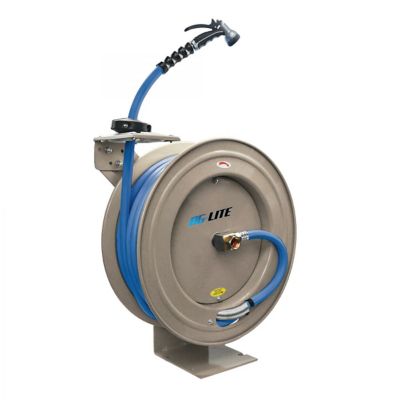
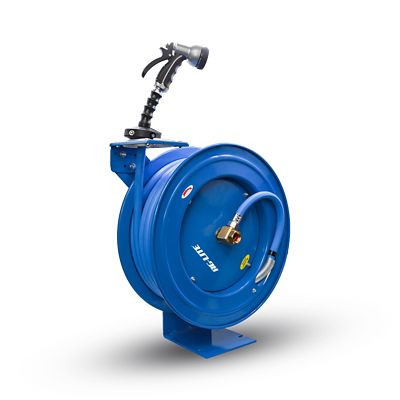
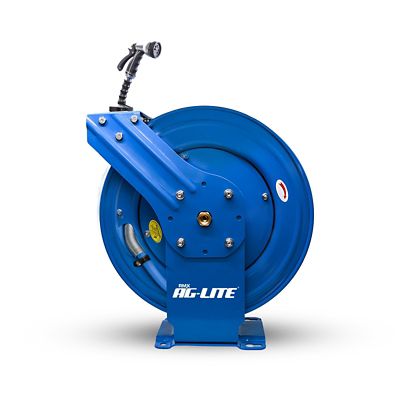
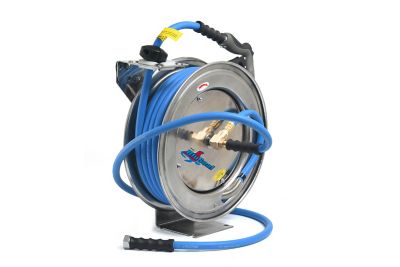
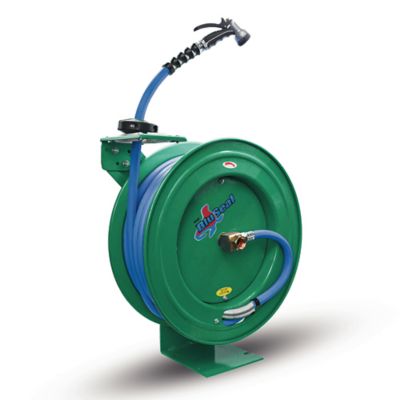
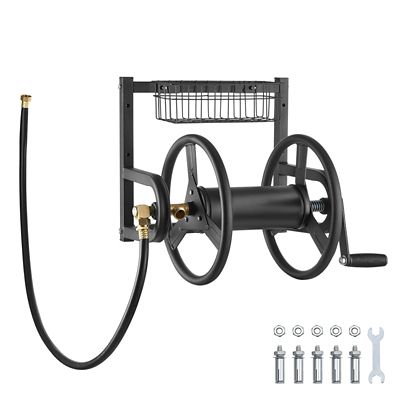
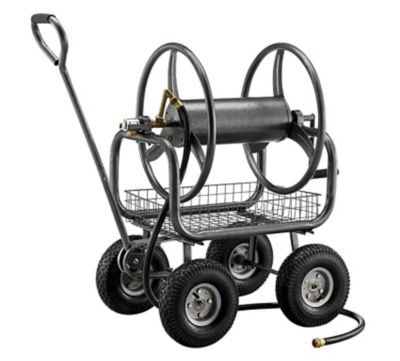
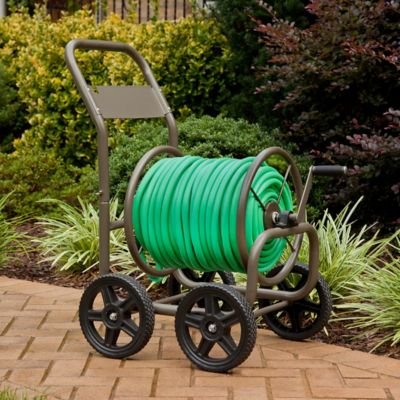
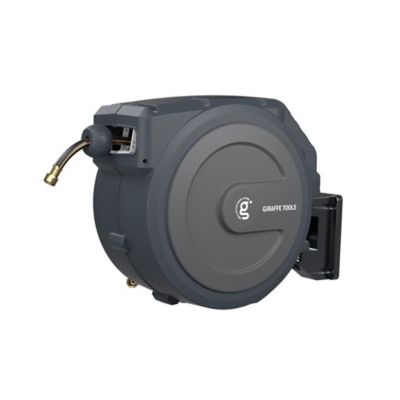
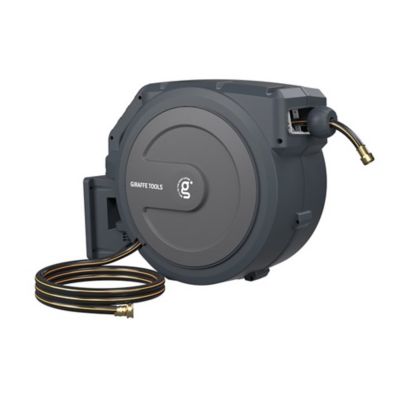
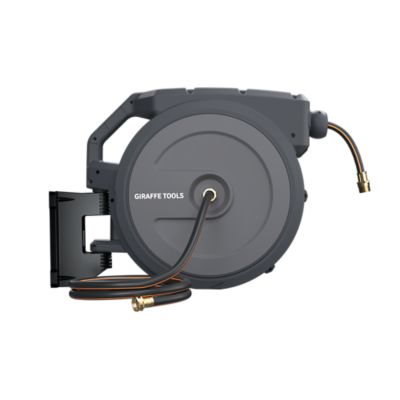
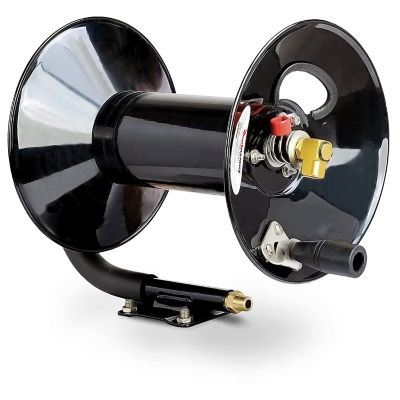
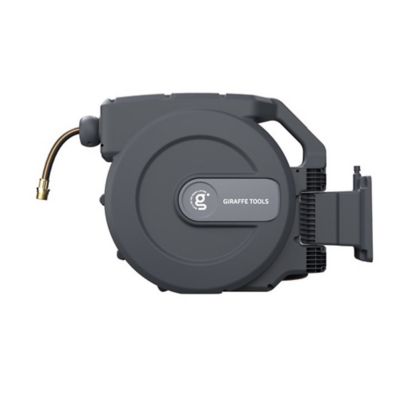
A water hose reel stores a garden hose on a spool, keeping it organized and helping reduce kinks, tangles, and wear from dragging or foot traffic. Keeping the hose off a busy walkway also leaves less to step around when carrying feed buckets, moving a wheelbarrow, or heading out to water the garden. Around a home, barn, or small acreage, a garden hose reel gives the hose a place to land between jobs instead of leaving it looped around a faucet or stretched across the driveway. The right setup depends on where the water source sits and how far the hose needs to reach. A wall-mounted hose reel works well beside a frequently visited spigot, while a freestanding reel can serve a watering spot without attaching anything to a building. A hose reel cart makes sense when watering chores take you between garden beds, animal pens, and several faucets across the property. Large wheels and a balanced frame matter when that route includes gravel or uneven ground, though the cart’s weight with a full hose deserves attention, too. Enclosed reels keep the coiled hose tucked inside a housing, while open-frame designs leave the spool and hose connections easier to see. Manual crank reels offer hands-on control over winding, and retractable designs bring the hose back with a spring-assisted mechanism. Features vary, so check whether a retractable reel locks at different lengths and whether its return speed is controlled. For someone tending a vegetable patch, rinsing hand tools, or filling troughs, easy access often matters more than extra features. A reel placed close to the faucet and aimed toward the usual work area can cut down on awkward pulls and sharp bends. It can also help extend hose life by keeping coils orderly rather than leaving tight twists and crushed sections behind after every chore.
Hose capacity is one of the most important fit details, and length alone does not tell the whole story. A reel rated to hold a certain length of narrow hose may hold much less of a wider or thicker-walled hose. Match the stated capacity to the hose diameter, construction, and length, and check whether the manufacturer’s measurement includes any connecting hose. A little room on the spool makes winding easier than packing every layer against the frame. Connection size matters separately from hose diameter: the threaded fittings at the faucet, inlet, and hose need to match, and the leader hose must reach the water source without stretching or folding sharply. If a leader hose is not included, account for that connection before setting the reel in place. For a wall-mounted reel, consider both the space needed to turn the crank and the clearance needed for a swiveling bracket to move. The mounting surface and fasteners must support the reel, the hose, and the pull of daily handling; thin siding alone is not a sound anchor. Materials affect weight, upkeep, and how the reel handles work around the property. Steel frames can provide substantial support, with protective finishes helping resist corrosion where the coating stays intact. Aluminum can reduce carrying weight, while molded resin housings avoid rust and keep moving parts covered. Construction still matters within each material: inspect the base, axle supports, crank attachment, and mounting points rather than judging by appearance alone. A steady base helps a freestanding reel resist tipping when the hose is pulled sideways. Smooth hose guides help feed each layer onto the spool, and a comfortable crank handle makes a noticeable difference when winding a long hose after filling several water tubs. Pay attention to the inlet swivel as well. That rotating connection lets the spool turn while remaining connected to the water supply, and accessible seals or replacement parts can make future upkeep simpler.
Everyday handling has plenty to do with how well a water hose reel serves its purpose. Pull the hose out in the direction the reel is designed to feed, and avoid dragging it around a sharp corner or beneath a heavy gate. Before rewinding, bring the hose back along a clear path and straighten any tight loops instead of forcing them onto the spool. With a manual reel, guide the hose in even layers without putting fingers near pinch points. With a retractable reel, keep hold of the hose and follow the return procedure rather than letting the nozzle snap back toward the housing. Shut off the water supply and relieve trapped pressure as directed before disconnecting fittings or performing maintenance. A drip at a threaded connection may call for a fresh washer, while a leak at the rotating inlet may involve a seal or swivel component; inspect the source instead of tightening every fitting harder. Clear grit from the guides and crank area, wipe down accessible surfaces, and follow the manufacturer’s directions for lubrication and storage. Check metal finishes for chips and mounting hardware for loosening, especially where repeated pulling puts stress on the frame. The intended job matters just as much as routine care. A standard garden hose reel handles a different task from a reel built for a pressure washer’s high-pressure discharge hose. Pressure ratings, fittings, hose construction, and attachment requirements are not interchangeable, so browse
Pressure Washer Hose Reels when organizing that side of a cleaning setup. For drinking water or water supplied to animals, check the hose and water-contact components for suitability rather than assuming every watering setup is meant for the same purpose. A well-matched reel can make a practical gift for a gardener or property owner, provided the hose size and mounting arrangement fit the space. Whether the main chore is watering raised beds, rinsing muddy boots, or reaching a trough beyond the barn, a reel that fits the work keeps the hose easier to reach, wind, and put away.