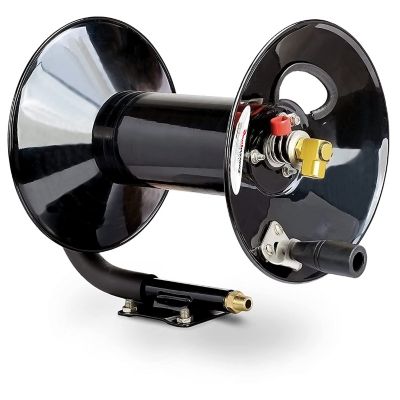
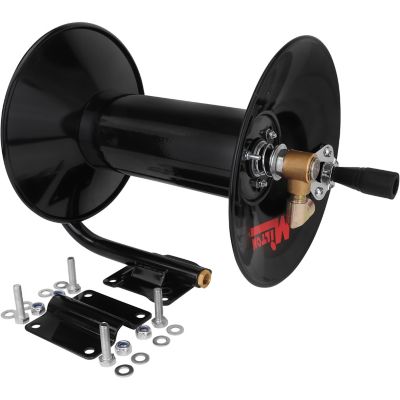
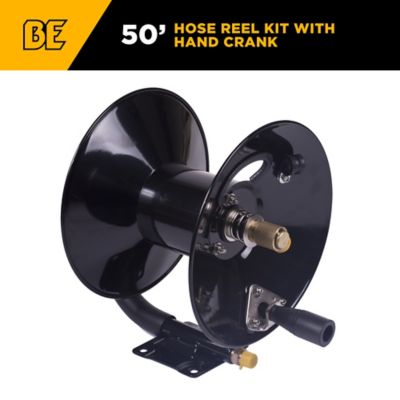
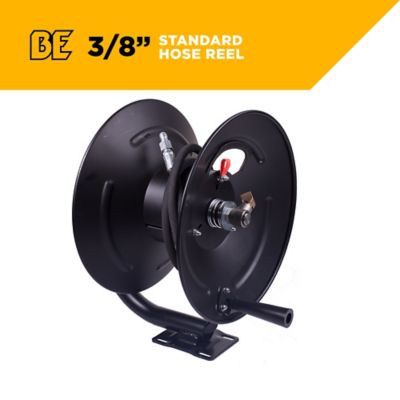
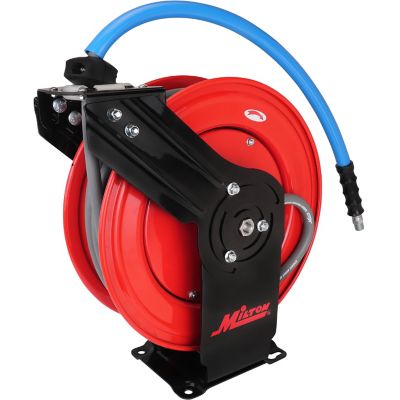
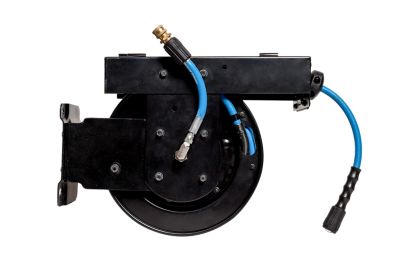
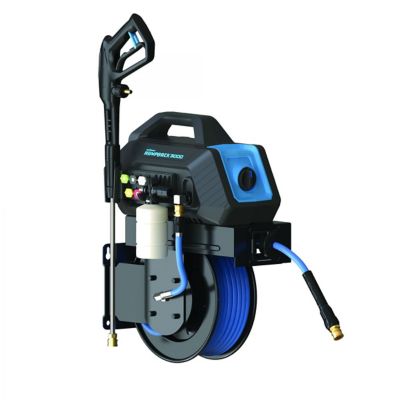
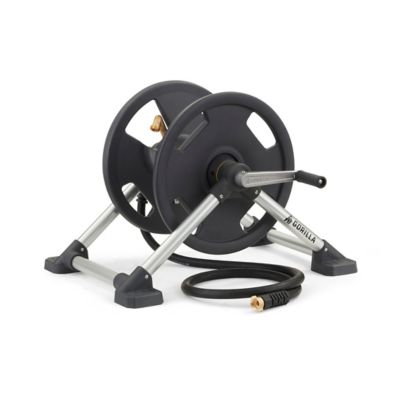
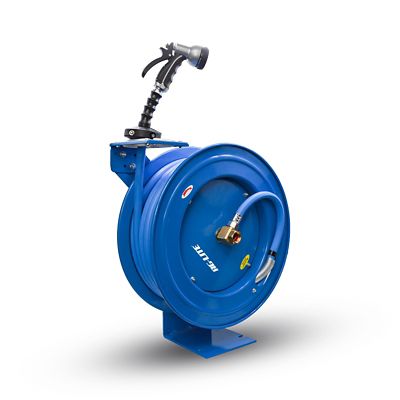
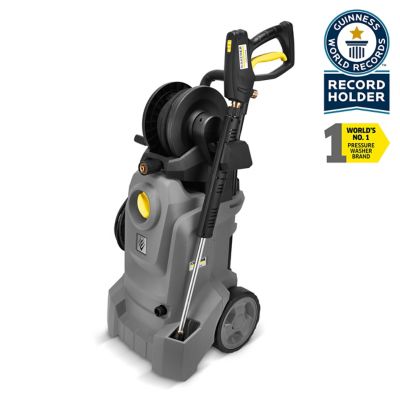
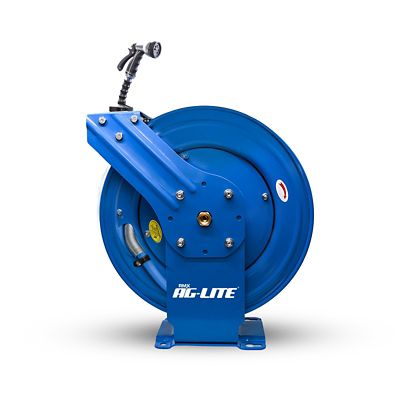
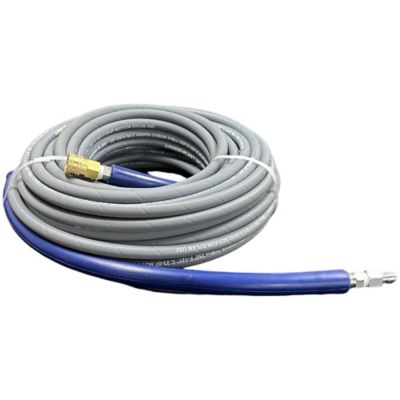
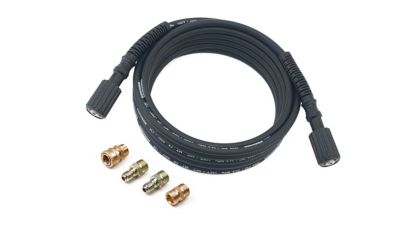
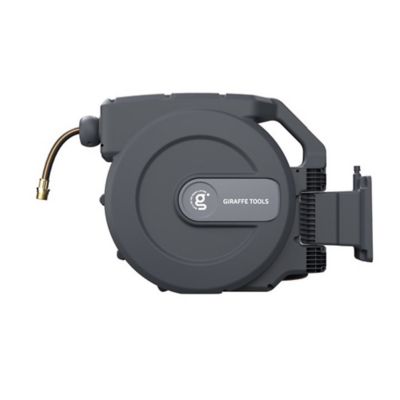
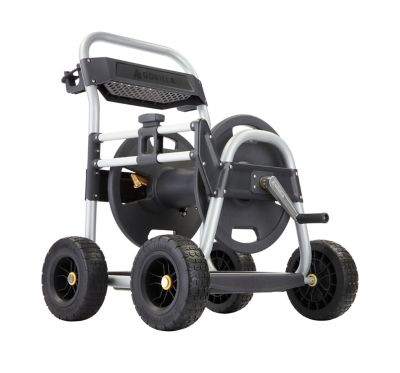
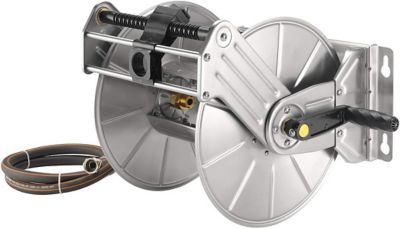
Pressure washer hose reels help keep a long stretch of high-pressure hose from taking over the shop floor, tangling beside the barn, or dragging through gravel between jobs. When there’s mud packed around tractor tires or grime building up on a concrete equipment pad, having the hose wound neatly and ready to pull makes setup less of a chore. A reel gives the hose a designated storage spot and helps limit unnecessary dragging, sharp bends, and contact with rough edges that can wear down its outer cover. These reels fit into plenty of routines, from a homeowner washing a driveway to a livestock owner cleaning suitable washdown areas or a grounds crew maintaining equipment. The right arrangement depends on where the pressure washer works and how often it moves. A wall-mounted reel can keep a permanent washing station organized, while a frame-mounted reel may suit a mobile cleaning setup when the equipment supports that installation. For a shop with a narrow aisle, the space needed to turn the crank matters just as much as the reel’s overall dimensions. Around a wash bay, hose routing deserves attention so the line doesn’t cross a doorway, rub against a post, or pass beneath vehicle tires. Manual-crank designs offer straightforward control over winding, and some reel styles include a locking feature to help keep the drum from turning during transport or storage. Handle placement, mounting orientation, and access to the hose connection can make a noticeable difference when hands are wet or gloved. A well-matched pressure washer hose reel isn’t just a place to park the hose after cleanup. It becomes part of the work area, helping keep the line together between chores and making it easier to put equipment away without leaving a loose pile beside the pressure washer. That’s useful whether washing happens every day or only after a particularly muddy stretch of work.
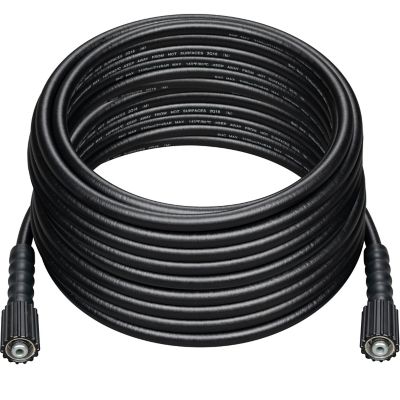
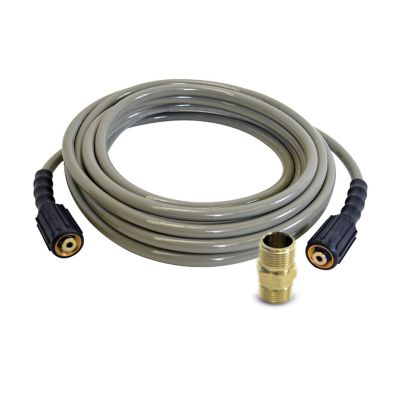
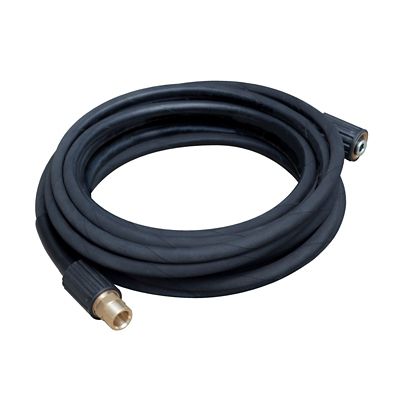
Fit starts with the hose and pressure washer specifications, not simply how much hose appears to fit on the drum. Pressure washer hose reels need a working-pressure rating suitable for the system, along with connections, swivels, and any connecting hose rated for the same operating conditions. A reel meant for an ordinary garden hose is not a substitute for a high-pressure reel. Hose capacity also depends on diameter and construction: a reel rated to hold a certain length of one hose size may hold considerably less of a thicker hose. Checking the stated capacity against the actual hose helps prevent overfilling, tight stacking, and fittings that catch against the frame. Connection type matters, too. Thread size, connector style, and the arrangement of the inlet and outlet all need to match, with properly rated adapters where the manufacturer permits them. On a live reel, the swivel allows the drum to turn while maintaining the fluid connection; its pressure rating, temperature limits, and seal compatibility deserve the same attention as the hose itself. Hot-water pressure washers require components specifically rated for the water temperature involved, and any cleaning solution that passes through the reel must be compatible with its wetted parts and seals. For the frame and drum, steel can provide a sturdy base for regular farm and shop work, while a protective finish helps shield exposed surfaces from moisture. Stainless steel construction can be worth considering in frequently wet settings, though even corrosion-resistant materials benefit from sensible care. Welds, brackets, axle supports, and the crank assembly all affect how a reel handles the pull of a long hose. A mounting surface must support both the reel and the loaded hose, along with the forces created during payout and winding. Bolting a reel to a thin panel without suitable reinforcement can leave the setup wobbling before the job is done. Manufacturer mounting requirements and clearance measurements help narrow the choices to a reel that fits the space and the work.
Day-to-day handling has plenty to do with how long a pressure washer hose reel and its hose stay in good shape. After cleaning a muddy mower deck or washing a suitable hard surface, winding grit into every layer can leave the hose rubbing against trapped debris. Removing surface dirt and checking for cuts, bulges, flattened spots, or exposed reinforcement before storage helps catch trouble early. A leaking swivel, loose mounting bolt, or rough-turning drum deserves attention before the next job; high-pressure leaks should never be checked with a hand. Shut off the machine and relieve system pressure according to the equipment instructions before inspecting connections, making adjustments, or disconnecting the hose. When winding, guiding the line evenly across the drum helps prevent a tall pile on one side and reduces pinching between layers. The hose should follow the reel’s intended path without tight bends at the fittings, and the crank should turn without forcing a snagged line. Whether a hose can remain partly wound during operation depends on the reel and hose design, so the manufacturer’s operating directions take priority. During the cooler months, trapped water needs particular attention. Freezing can damage hoses, swivels, and connected equipment, making proper draining, manufacturer-approved winter protection, and suitable storage important parts of putting the setup away. Keeping a reel sheltered when practical also limits exposure to weather and helps keep the winding mechanism clear of debris. For someone comparing hand-crank storage with spring-return options,
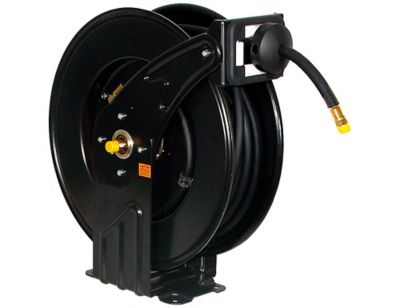
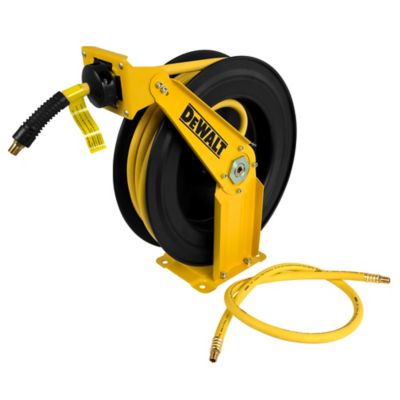
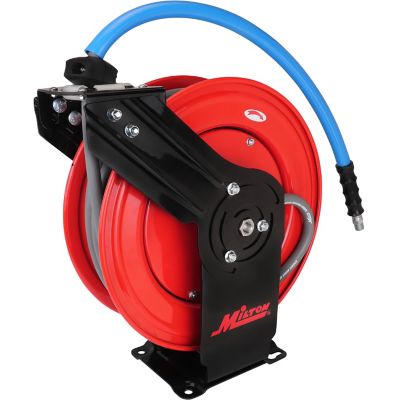
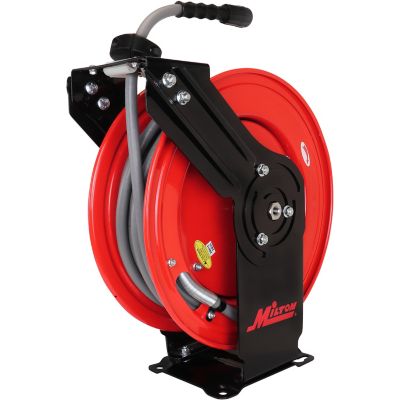
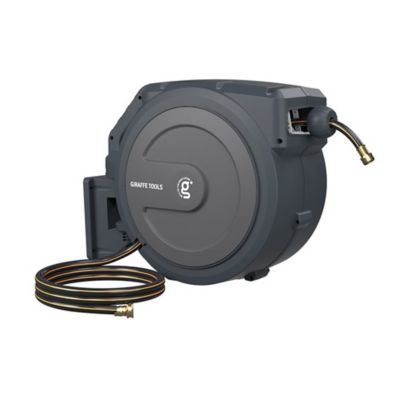
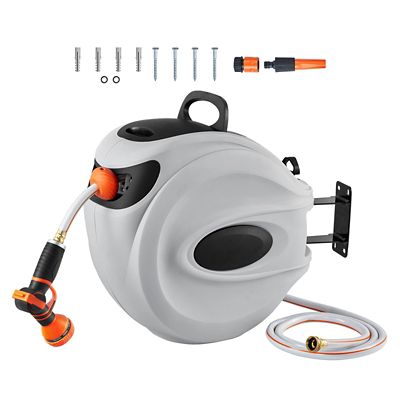
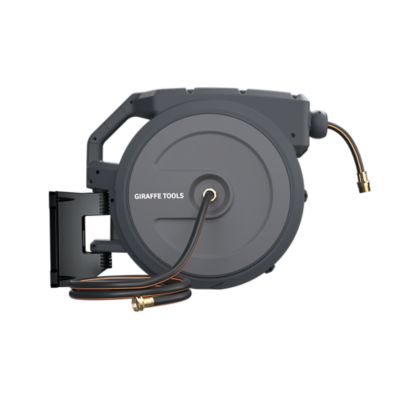
Automatic Hose Reels offer another type of hose management, but any reel connected to a pressure washer still needs an explicit rating for that application. A pressure washer hose reel can also make a practical gift for the person who’s always cleaning equipment after chores, provided the hose dimensions, operating ratings, and mounting needs are known beforehand. With those details matched, the reel can help turn a tangled end-of-day task into a more orderly finish, leaving the hose stored neatly and the work area ready for whatever comes through the gate next.