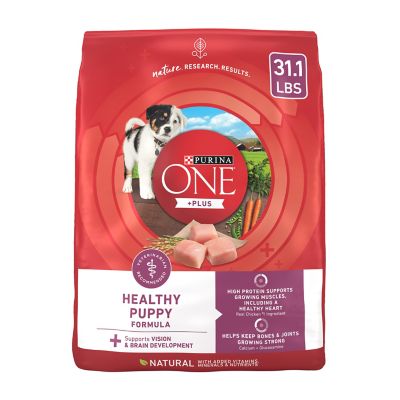
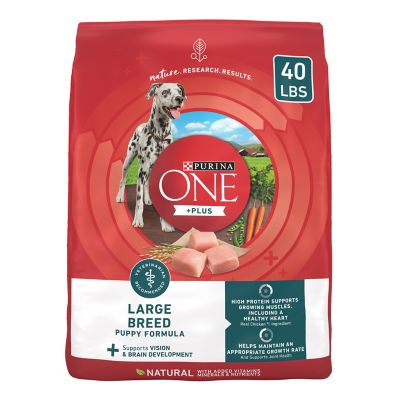
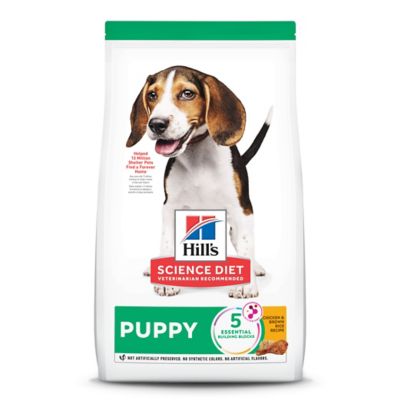
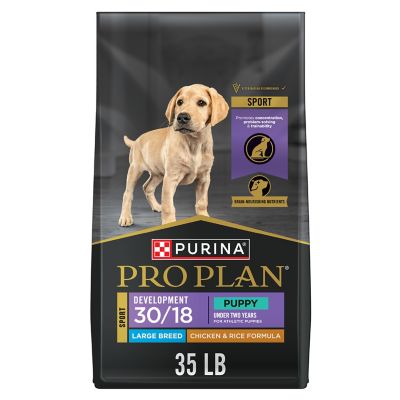
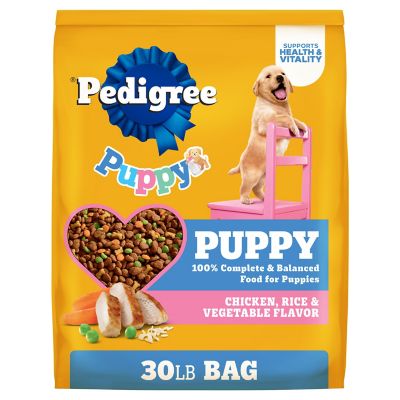
Healthy puppy food provides complete and balanced nutrition for growth, with protein for developing muscles, fats for energy, and the right amounts of vitamins and minerals for growing bones and teeth. Whether a pup spends the day tagging along on chores or snoozing beside the kitchen table, that little body has different nutritional needs from an adult dog. Food formulated for puppies brings those needs together in each serving, rather than relying on extra supplements to fill gaps. A nutritional adequacy statement on the package is one of the most useful details when comparing puppy food. It identifies whether the food meets nutrient profiles established by the Association of American Feed Control Officials, or AAFCO, or has demonstrated nutritional adequacy through feeding trials following AAFCO procedures. AAFCO sets nutritional standards; it does not approve or certify individual foods. A statement covering growth or all life stages is relevant for puppies, while adult maintenance alone is not. Animal proteins such as chicken, beef, lamb, and fish supply amino acids that help build and maintain body tissues. The full formula matters more than whether a particular ingredient appears first, since an ingredient list alone cannot show how well a food meets a puppy’s nutritional needs. Dietary fats supply concentrated energy and essential fatty acids, while DHA, an omega-3 fatty acid, supports brain and vision development. Calcium and phosphorus support skeletal development, but more is not necessarily better: their amounts and balance matter, especially for puppies expected to become large dogs. Grains and other carbohydrate sources can contribute energy, fiber, and nutrients, and their presence does not automatically make a food less suitable. For households comparing
puppy food options, the strongest starting point is a growth-appropriate nutritional statement, a formula suited to the puppy’s expected adult size, and clear feeding information. Details about who formulates the food, how it is tested, and how the maker answers nutrition questions can also help make the choice more straightforward.
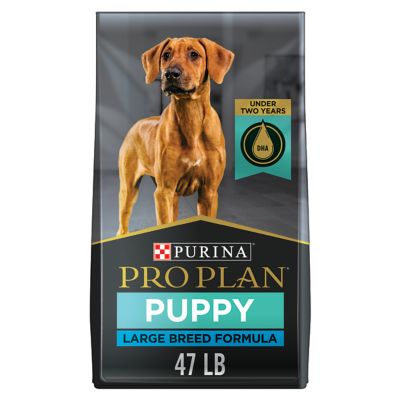
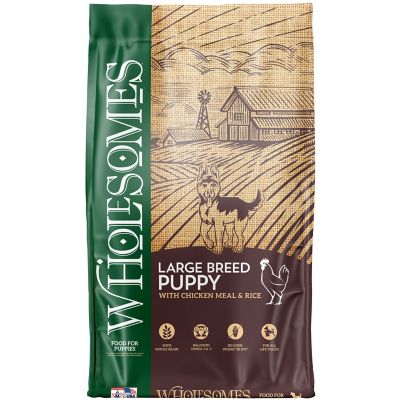
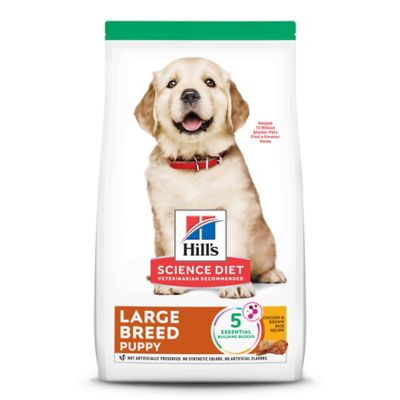
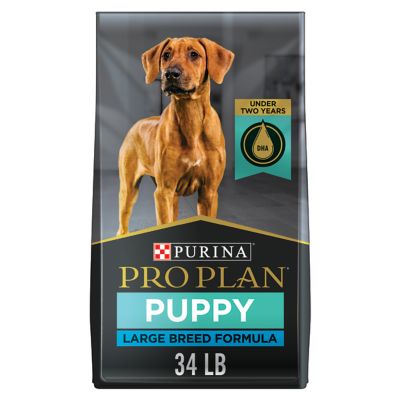
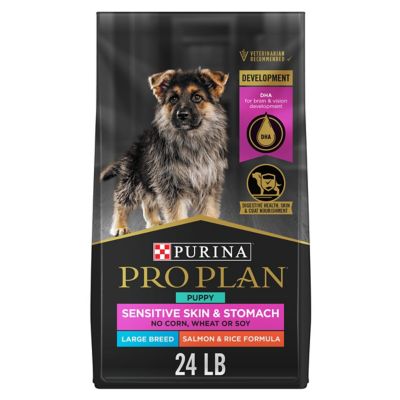
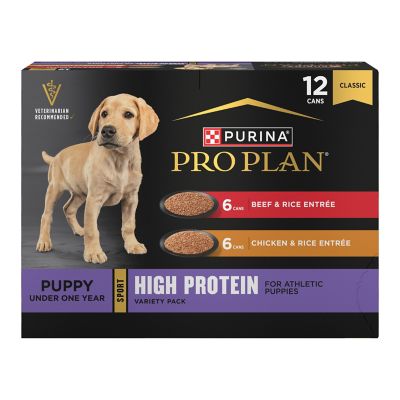
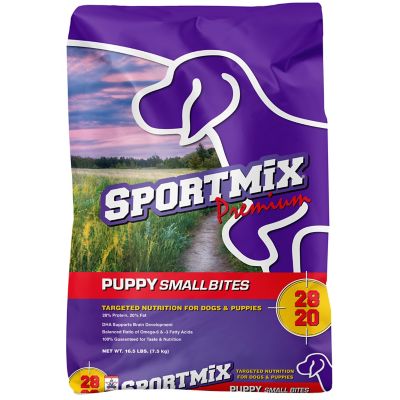
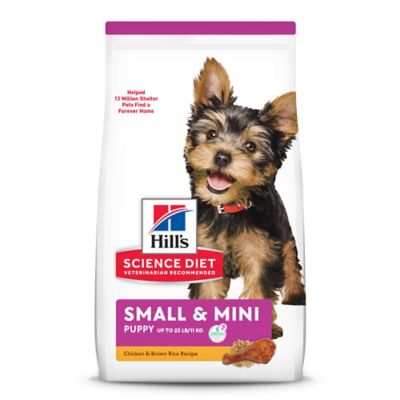
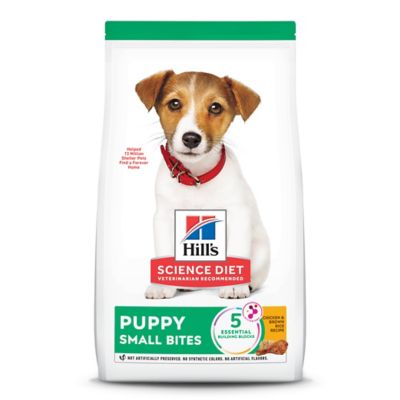
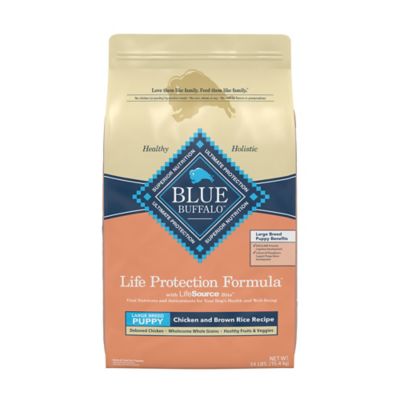
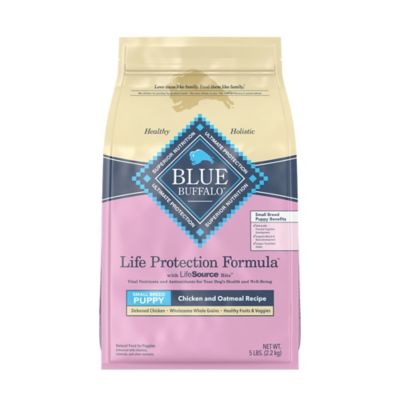
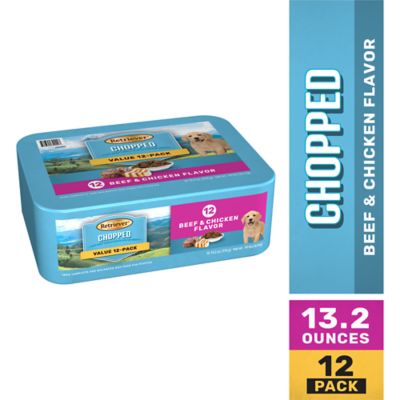
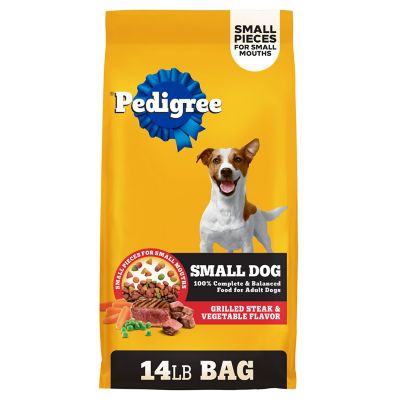
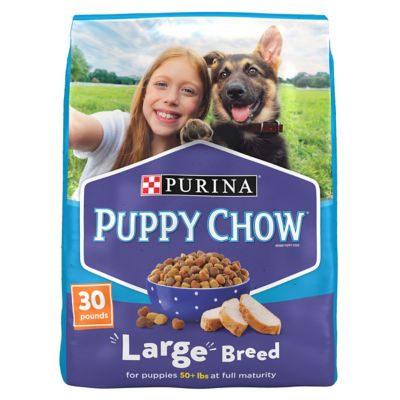
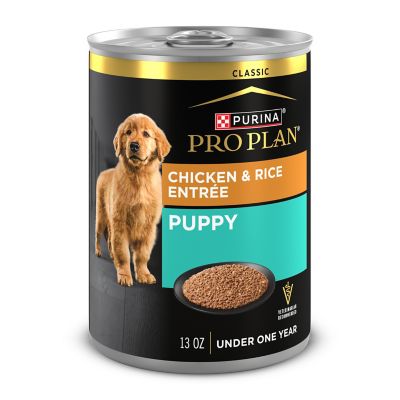
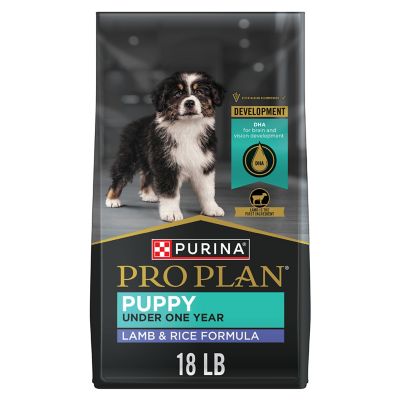
Puppy food comes in dry and wet forms, with different textures and serving needs that fit different households. Dry puppy food is easy to portion for regular meals, and part of the daily allowance can fit into a treat pouch for practicing a name, a recall, or a calm sit at the gate. Kibble dimensions and texture deserve attention with a small mouth; a tiny pup may handle smaller pieces more comfortably than a larger bite. Kibble shape, however, is not a substitute for a nutritionally appropriate formula, and ordinary dry food should not be counted on to clean teeth. Wet puppy food has a softer texture and more moisture, which can suit some puppies’ preferences or make meals easier to manage when chewing is uncomfortable. Persistent discomfort deserves a veterinarian’s attention rather than a food change alone. Dry and wet foods can share a feeding routine when both are suitable for growth and their combined calories fit the puppy’s needs. Foods labeled for intermittent or supplemental feeding are not intended to serve as the entire diet. Small-breed puppy food often pairs smaller kibble with concentrated calories to fit a little stomach, while large-breed puppy food addresses the energy and mineral needs of a dog with substantial growing ahead. For a puppy expected to weigh 70 pounds or more as an adult, the AAFCO statement should specifically include growth of large-size dogs. This distinction matters for the lanky pup whose paws already look too big for the rest of its body. Steady, lean growth is the goal, not reaching adult size as fast as possible. Extra calcium or other mineral supplements can upset a balanced growth diet unless a veterinarian has recommended them for a specific reason. Breed, expected adult weight, age, and body condition all help narrow the fit, and puppies in the same litter may still need different portions. A food that suits one farm companion may not be the best match for another.
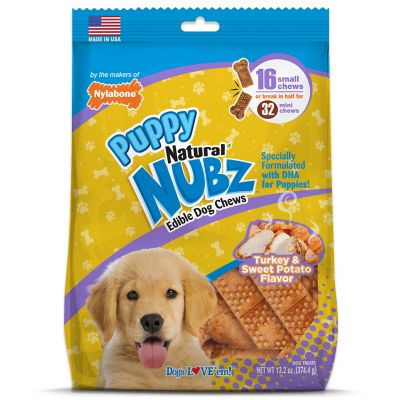
A good everyday fit also shows up in the feeding routine: a puppy eats comfortably, maintains an appropriate body condition, and generally passes well-formed stools. Some puppy foods contain prebiotic fibers that nourish beneficial gut bacteria, while others include probiotics, which are live microorganisms intended to support digestive health. Their effects depend on the ingredients or strains, amounts, and formulation, so those features are best considered alongside the food’s overall nutritional suitability. Sensitive digestion does not always mean a puppy needs grain-free food or a different protein. Recurring diarrhea, vomiting, itching, or poor growth calls for veterinary advice rather than repeated changes at the feed bowl. When a change is appropriate, gradually mixing the new food with the previous diet over about seven to ten days often makes the transition easier; some puppies need longer. Package feeding charts offer a starting point, not a fixed portion for every pup. Calories per cup or can help explain why equal-looking servings of different foods may supply different amounts of energy. Measured meals, adjusted as the puppy grows, make intake easier to track than a bowl kept full all day. Several smaller meals often suit young puppies, with timing tailored to age, size, and veterinary guidance. Training treats and meal toppers count toward the daily total, too; keeping extras to no more than about 10 percent of daily calories helps leave room for balanced puppy nutrition. Fresh drinking water belongs close at hand throughout the day. Food care matters just as much in a farmhouse mudroom as it does in an apartment kitchen. Dry food keeps best in its original bag, closed tightly inside a clean container, with the lot number and best-by date saved for reference. Opened wet food needs refrigeration according to its label, and bowls need regular washing. Packaging that fits the household’s feeding pace helps limit long storage after opening. Together, a suitable growth formula, sensible portions, and careful handling support the everyday work of raising an eager puppy into a well-fed companion.