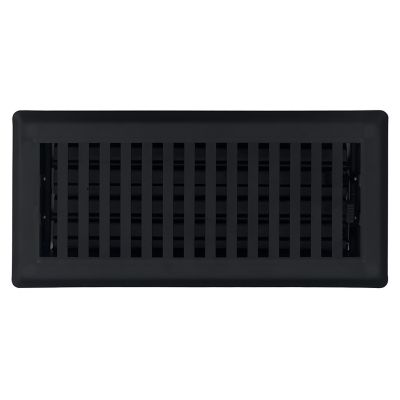
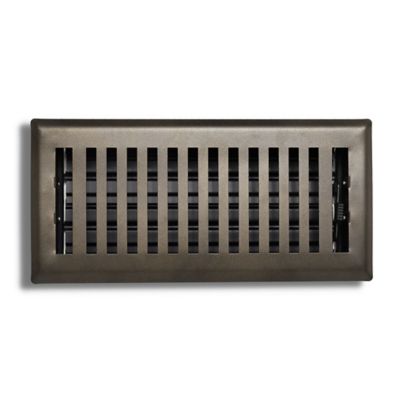
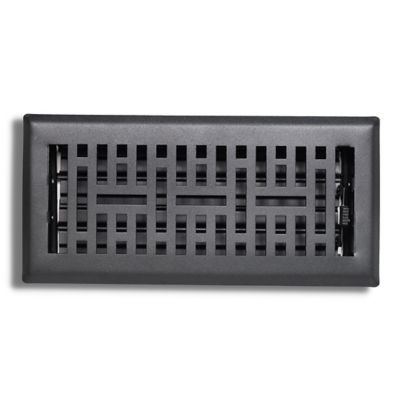
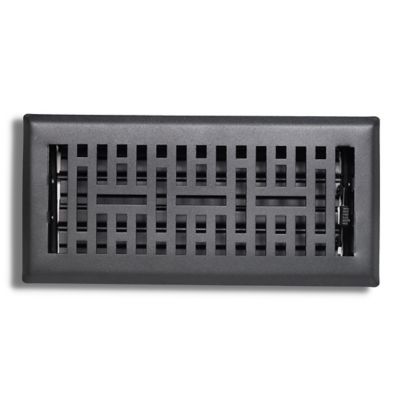
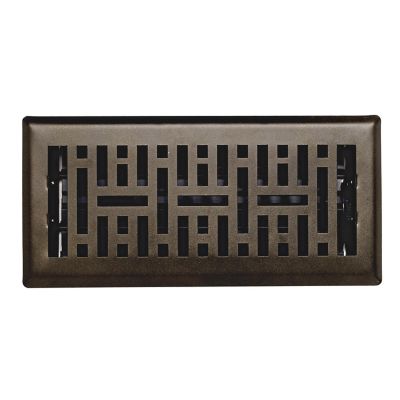
Floor HVAC vents cover duct openings in the floor, allowing air to move between a heating and cooling system and the rooms it serves. A floor register typically has a grille on top and an adjustable damper underneath to control airflow volume; some designs also let you change the direction of the air. A floor grille generally has fixed openings without that adjustable damper and may cover a return-air opening, depending on the system. These differences matter because a supply opening delivers conditioned air, while a return opening carries room air back toward the equipment. The right cover matches the opening’s purpose rather than simply filling a hole in the floor. In a farmhouse living room, a hallway outside the bedrooms or a mudroom near the back door, floor vents need to fit into everyday life without getting in the way. Furniture placement makes a difference: a sofa pushed over a supply register or a rug stretched across a return grille can interfere with airflow. A clear path above the vent helps air circulate instead of collecting beneath a cabinet or behind a curtain. Directional louvers can help steer supply air away from a favorite chair, though their adjustment range varies by design. Damper controls also differ, with some operated by a small lever and others by a sliding tab or wheel. An easy-to-reach control is handy when the opening sits near a wall or under the edge of a bench. For households with children or pets, a cover that sits securely and has a smooth, intact surface deserves attention. Floor HVAC vents are a small part of the room, but their fit, airflow opening and placement all contribute to how comfortably that space functions. Replacing a bent or poorly fitting cover can also tidy up an opening that catches a sock, rattles when the blower runs or shifts whenever someone walks nearby.
Fit starts with the duct opening, not the outside edges of the old register. Floor register sizes generally refer to the nominal opening dimensions, while the visible face extends beyond that opening to rest on the surrounding floor. The neck beneath the face needs enough room to sit inside the duct, and the damper needs clearance to move without hitting an obstruction. Two covers with similar outside measurements may fit different openings, so the listed dimensions and installation requirements matter more than appearance alone. Flooring thickness can affect the result, too. A raised lip on tile, a thick carpet edge or an uneven plank can keep a cover from sitting flat. Flush-mount designs have different installation needs than drop-in styles, especially where a frame becomes part of the surrounding flooring. Material choice brings another set of practical considerations. Steel is common for floor registers and can provide a firm surface when the design is intended for floor placement. Aluminum resists rust and is lighter than many other metals, though construction and support still determine how well a cover handles its intended setting. Cast iron brings more weight and often a substantial profile, while wood covers can blend with nearby flooring or trim. Wood needs appropriate care around moisture, and metal finishes benefit from protection against scratches and standing water. Painted, plated and powder-coated surfaces each have their own care requirements, so the finish deserves as much attention as the base material. Coordinating
Floor Vent Covers with nearby door hardware or woodwork can help a room feel pulled together without making every opening stand out. Appearance should still come after function. A cover near a kitchen walkway needs a design intended for floor traffic, while one tucked beside a bedroom wall may face less direct wear. A floor vent is not automatically rated to support furniture, rolling equipment or concentrated loads, even when it looks substantial.
Day-to-day care is mostly about keeping the openings clear and the cover seated properly. In a busy household, pet hair, lint and grit tracked in on work boots can gather between the louvers. A vacuum brush can lift loose buildup from the surface, while a soft cloth can handle ordinary marks when the material and finish allow it. Water should not be poured into the duct, and harsh cleaners or stiff scraping tools can damage finishes. Wood generally calls for a different cleaning approach than coated metal, making the manufacturer’s care directions a useful reference. When a removable register comes out for cleaning, its underside and damper can collect debris that is easy to miss from above. Moving parts should operate without being forced; a bent blade, loose control or damaged edge can be a reason to replace the cover rather than keep wrestling with it. A register that rocks or rattles may have the wrong fit, an uneven supporting surface or contact between moving parts and the duct. Addressing that cause matters more than simply pushing the cover down harder. Airflow deserves the same attention as appearance and upkeep. Closely spaced patterns, dampers and added accessories can change how freely air passes through an opening, even when two registers share the same nominal size. Closing many supply registers is not a substitute for balancing the system and can create airflow problems. Return openings generally need to remain unobstructed, and persistent room-to-room comfort differences call for a closer look at the HVAC system rather than just a different grille pattern. For homeowners tending an older house, landlords maintaining rental spaces or folks finishing a room addition, well-matched floor HVAC vents help bring the details together. The most practical choice is one suited to the opening, the flooring and the way the room gets lived in, with enough clearance for proper airflow and a surface that stands up to ordinary household wear.