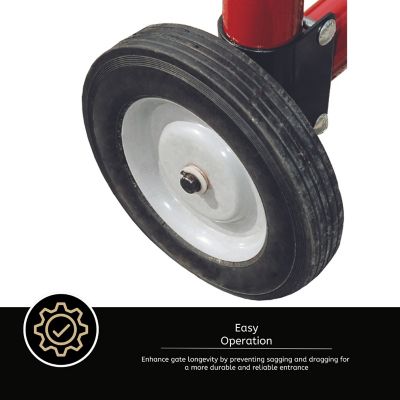
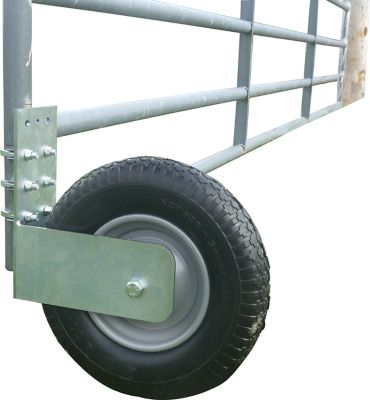
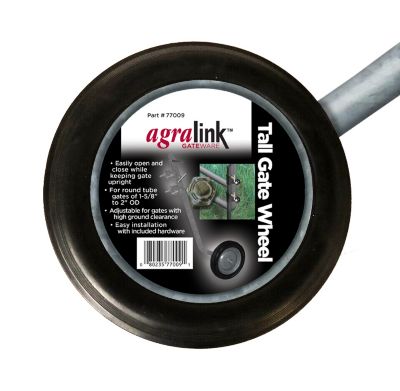
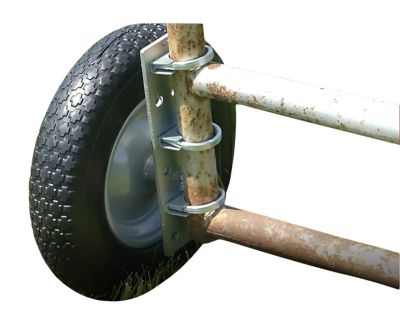
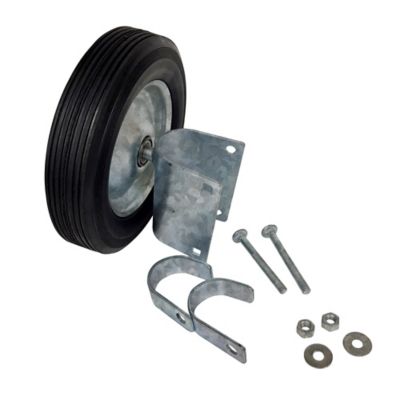
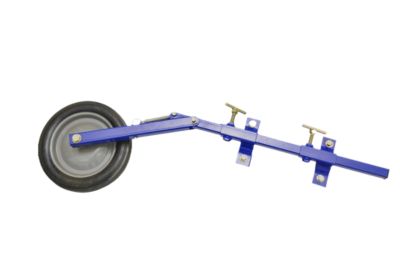
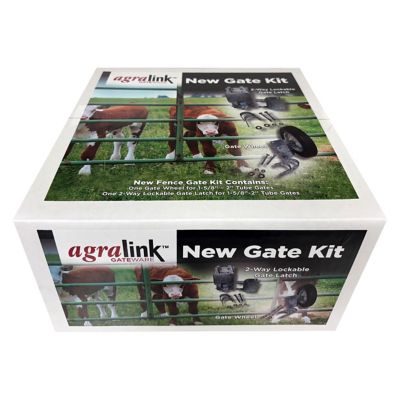
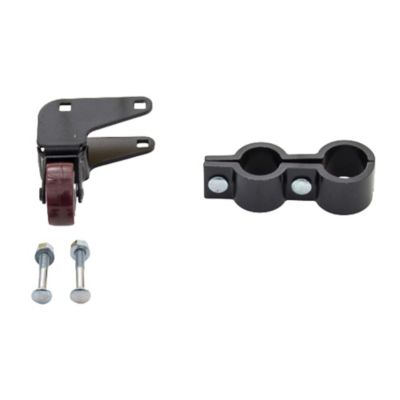
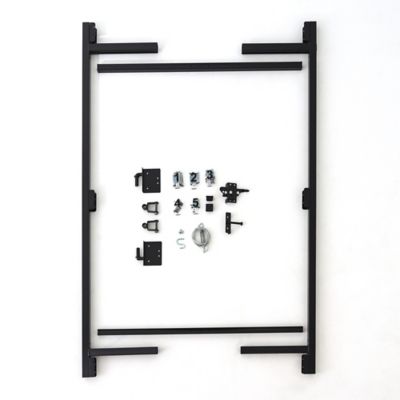
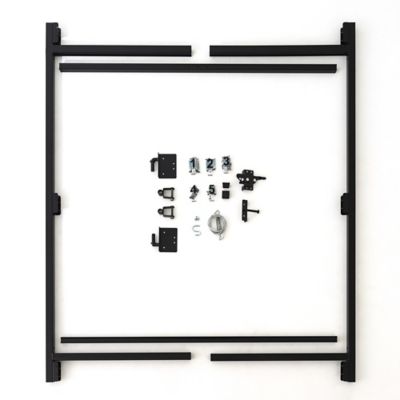
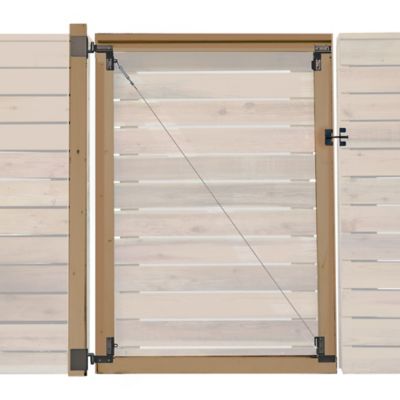
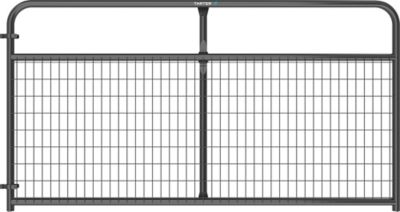
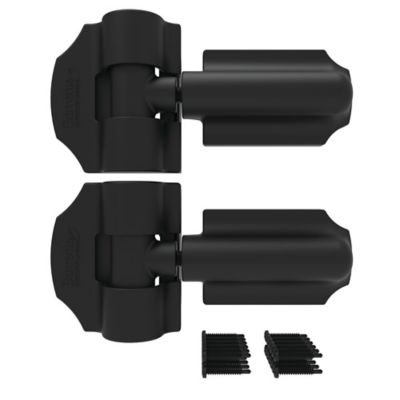
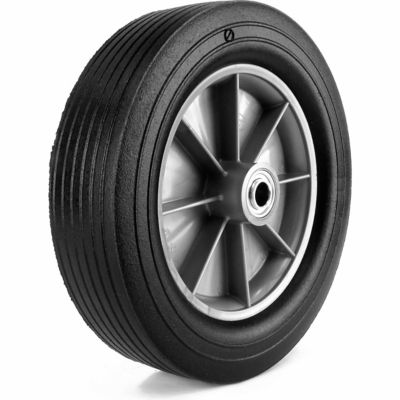
Farm gate support wheels attach near the lower corner of a swing gate, usually at the latch end, to help carry weight, limit sagging, and keep the gate from dragging across the ground. Supporting that free end can reduce strain on hinges and posts while making a long or heavy gate easier to swing. That makes a difference at a pasture entrance when one hand is holding a feed bucket, beside a barn where gates open several times a day, or across a farm lane with regular equipment traffic. For livestock owners, horse keepers, and folks managing acreage, a properly matched wheel can take some of the wrestling out of an everyday chore. The fit depends on more than the gate’s width. Frame material, gate weight, bottom-rail height, and the shape of the mounting surface all affect which wheel assembly belongs there. A round tubular livestock gate needs a different attachment arrangement than a square metal frame or a broad wooden rail. The wheel also needs room to follow the gate’s entire swing without striking a post, catching a fence wire, or interfering with the latch. On a double-gate entrance, each moving leaf has its own clearance and support needs, especially where the two sides meet. A support wheel works best as part of a sound gate setup, not as a substitute for solid hinges, a firm post, and a straight frame. A leaning post or loose hinge can leave a gate out of line even when a wheel holds up the outer end. With those structural pieces in good shape, the wheel helps maintain a more consistent position as the gate travels between open and closed. The result is a more manageable entrance, whether it leads into a horse paddock, a cattle pen, a garden enclosure, or a lane between working areas.
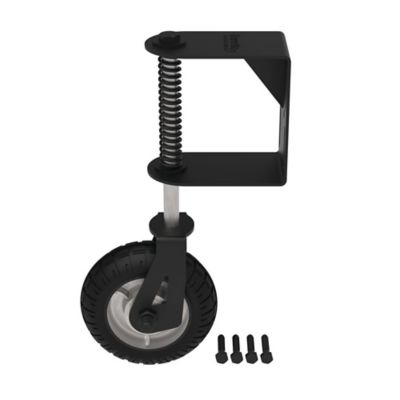
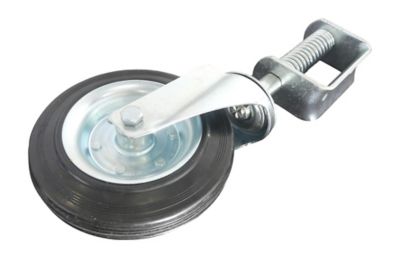
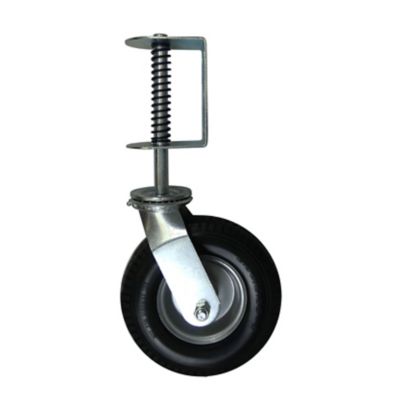
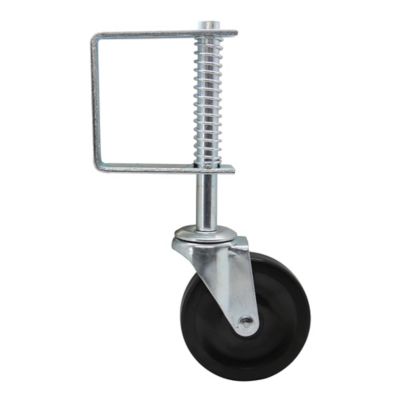
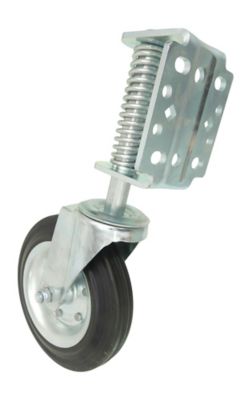
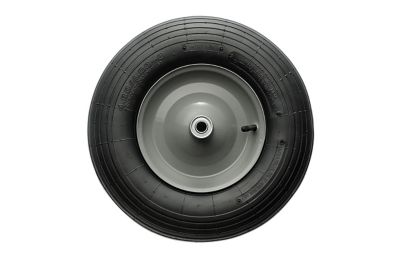
Wheel construction makes a real difference in how that support feels under your hand. Steel brackets provide a firm mounting point, while galvanized or coated finishes help protect exposed metal from corrosion. Finish coverage matters around welds, bolt holes, and bracket edges, where bare metal can become a maintenance concern. Clamp-on arrangements may suit certain tubular frames without drilling, while bolt-on designs need mounting surfaces that can hold the fasteners securely. Tube diameter, rail thickness, bolt spacing, and bracket opening are practical measurements to compare before selecting an assembly. The wheel’s height adjustment should allow it to meet the ground while the gate hangs at the proper latch height, rather than forcing the frame upward. Some assemblies include a spring that lets the wheel move vertically as it crosses small changes in ground level. That movement can help maintain contact, but it cannot make up for deep ruts, large holes, or a sharply changing slope. Wheel diameter and tread width also influence performance. A larger diameter generally rolls over small surface irregularities more easily, while a broader tread can spread the supporting load across more ground. Narrow wheels may work well on firm, smooth surfaces but can settle into loose footing. Pneumatic tires can cushion movement over uneven ground and require attention to air pressure; solid and flat-free designs avoid routine inflation, though their ride and ground contact differ by construction. Fixed and swiveling mounts have different clearance needs, too. The assembly needs to follow the gate’s arc without binding or twisting against its bracket. Listed load limits, gate-size recommendations, axle construction, and bearing design help narrow the choices. Those details matter more than appearance, especially on a wide gate that gets opened repeatedly or carries substantial weight at its outer end. A good match balances support, rolling clearance, and the amount of adjustment the entrance actually needs.
Everyday use brings a few other details into focus. The ground beneath a gate wheel becomes a travel path, and repeated passes can expose soft spots or deepen an existing rut. A firm, reasonably even surface helps the wheel roll instead of plowing a groove, particularly near the latch where it pauses each time the gate closes. Gravel, packed soil, concrete, and barnyard footing each present different rolling conditions, so the surface across the full swing matters more than the small patch directly under the closed gate. Clearance matters around equipment, too. An entrance needs enough room for
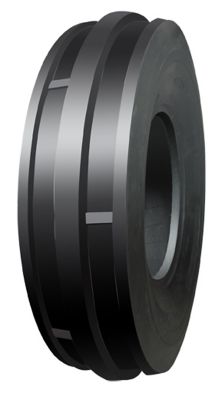
Front Farm Tractor Tires, rear tires, and attached implements to pass without brushing the open gate or its wheel bracket. Around livestock, projecting bolts and pinch points deserve attention, and the wheel should not prevent the latch from seating fully. A support wheel is not a brake or a latch; the gate still needs appropriate hardware to hold it open or closed. Gates connected to powered operators need hardware that is compatible with that system and does not interfere with its movement or safety features. Routine care is straightforward but worth keeping up with. Clearing wrapped grass, twine, and packed dirt from the axle area helps preserve free movement. Loose fasteners, worn bushings, cracked tires, and brackets that have shifted on the frame can all change how the gate hangs. Lubrication belongs only where the assembly’s care directions call for it, since some bearings are sealed. Air-filled tires need pressure checks according to their specifications, and mounting hardware benefits from periodic inspection after repeated opening and closing. A gate that starts needing a hard lift or shove is signaling a change somewhere in the setup, whether at the wheel, hinge, post, or ground beneath it. Matching the wheel to the gate and keeping those parts working together helps make daily trips through the entrance less of a struggle.