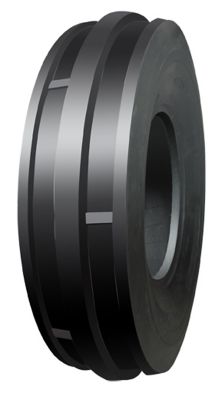
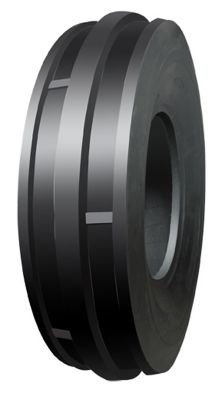
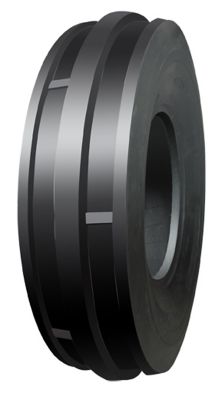
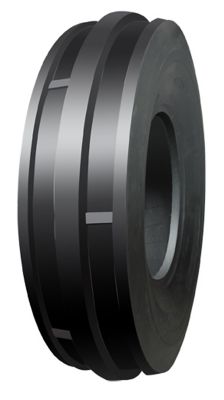
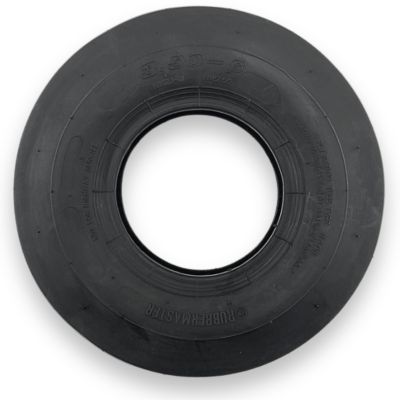
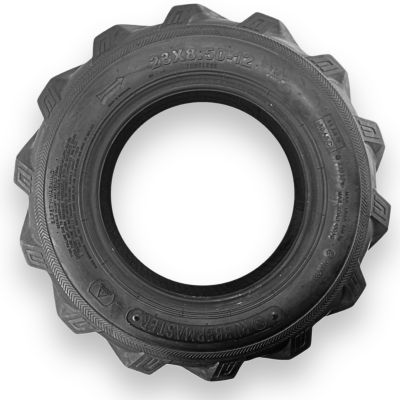
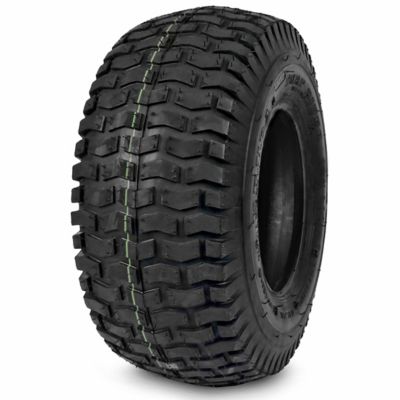
Front farm tractor tires help carry front-end weight and keep steering manageable as a tractor moves between fieldwork, loader chores, and trips around the place. Their tread pattern, size, construction, and load rating all play a part in how the tractor handles. On a two-wheel-drive tractor, front tires generally roll freely and provide steering rather than powered traction. Ribbed designs suit that job, with raised ribs that help the front wheels hold their direction through loose soil. A pronounced center rib can give a tractor a firm steering feel in cultivated ground, while multiple-rib patterns spread contact across more of the tread. The number of ribs alone does not establish load capacity, though; the tire’s size, construction, and published load specifications matter, too. On a tractor with mechanical front-wheel drive or four-wheel drive, the front tires also help pull the machine. Those applications generally call for an approved traction tread rather than a free-rolling steering tire. Agricultural lug patterns can help the front axle contribute pulling force in worked ground, while industrial-style patterns may suit machines that split their time between earthmoving chores and travel over firmer surfaces. The tractor manufacturer’s recommendations determine which designs belong on a particular machine. For someone easing a cultivator along a row, steering response and a suitable tread profile may lead the decision. For someone carrying feed, moving bedding, or loading material into a trailer, front-axle loading deserves just as much attention. A bucket full of gravel changes the demands on the front tires considerably compared with an empty bucket. Front farm tractor tires make the most sense when their intended service matches those everyday chores, rather than when the tread simply looks right. Small-acreage owners, livestock operators, grounds crews, and farmers can all have different needs, even when their tractors appear similar in size. Frequent turns around gates, steady passes through fields, and travel across a gravel yard each put a different kind of demand on the front end.
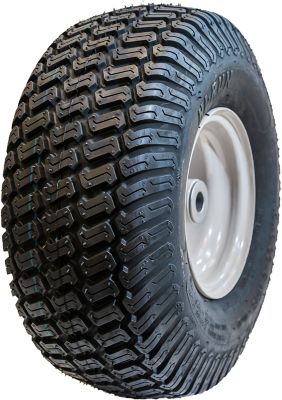
Fit starts with more than matching the largest numbers printed on the sidewall. Tire size, approved rim width, rim diameter, tube requirements, and the tractor’s axle specifications all need to work together. An existing tire’s markings provide a useful starting point, but the tractor manual and the replacement tire’s technical information establish the proper combination. Clearance matters around steering components, fenders, and loader hardware, including when the wheels turn fully or the front axle pivots over uneven ground. A tire that clears a bracket while parked straight ahead may not have enough room throughout the axle’s full movement. On a driven front axle, the relationship between front and rear rolling circumference is especially important. Matching nominal size alone may not preserve the rolling relationship required by the drivetrain, so approved front-and-rear combinations deserve close attention. Construction also affects the fit and feel of the tire. Bias-ply casings typically have a comparatively firm structure, while radial construction allows the tread area and sidewalls to flex differently. Neither construction is automatically the right choice for every tractor, rim, or job. Ply rating describes a tire’s strength classification, not necessarily the actual number of fabric layers inside it, and it should not be treated as a load-capacity figure by itself. Published load-and-inflation information connects carrying capacity with pressure, speed, and service conditions. That distinction matters for loader work, where the tractor’s own front-end weight combines with the load transferred through the loader. A higher-rated tire does not increase the front axle’s allowable capacity. Ground contact matters as well, particularly when a tractor crosses established grass near a barn, pasture entrance, or maintained property. For applications where protecting grass is a main concern,
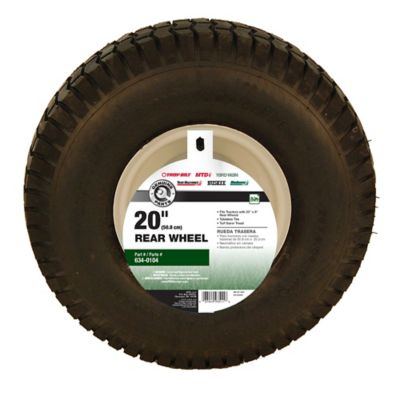
Tractor Turf Tires offer a related category to consider, provided the tread, size, and load specifications suit the machine. Turf-oriented patterns generally emphasize gentler contact with grass rather than the digging action of an agricultural lug, though tight turns and heavy loads can still mark the surface.
Rubber compounds, casing construction, and the way a tire meets the ground all influence tread life and resistance to everyday wear. Ribbed steering tires can wear differently depending on alignment, inflation, turning habits, and the amount of travel across hard surfaces. Repeated tight turns beside a feed shed can scrub the shoulders, while frequent pavement travel adds a different kind of wear than steady work in loose soil. Cuts from sharp stone, damage near the bead, and cracking in the sidewall deserve attention before a tractor heads back to work. Pressure checks are most useful before operation, when driving has not heated the tires, and the correct pressure comes from the tire maker’s load information and the tractor manufacturer’s guidance. The maximum pressure marked on a sidewall is not automatically the proper working pressure for every task. Too little pressure for the load can allow excessive flexing and damage; too much for the application can change the contact patch and steering feel. Front tires should also work as a matched pair where the tractor manufacturer requires it, with compatible size, construction, tread, and wear. A noticeably different tire on one side can affect handling, and differences in rolling circumference warrant particular care on driven axles. Tube-type and tubeless setups have their own wheel and valve requirements, so replacing a tire is also a good time for a service professional to inspect the rim, valve, and any required tube. Agricultural tire mounting involves substantial stored pressure and calls for proper equipment and trained handling. Between jobs, keeping tires away from petroleum spills and checking for lodged debris can help protect the rubber and expose damage early. Good front tires cannot correct worn steering parts, an overloaded loader, or an axle problem, but a properly matched set supports steadier control throughout ordinary chores. Whether the day involves carrying fence supplies, tending livestock, or maneuvering beside equipment, the goal is straightforward: front tires suited to the tractor, the load, and the ground under it.