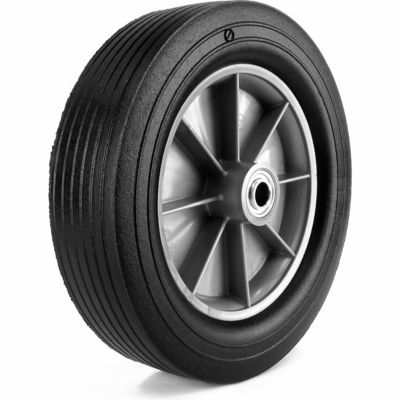
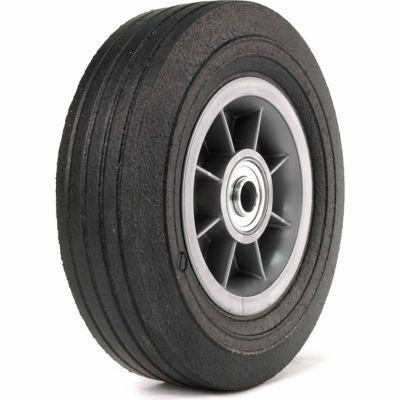
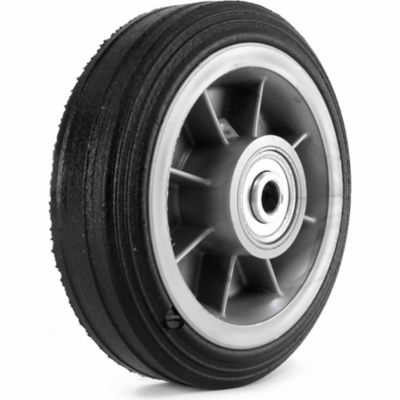
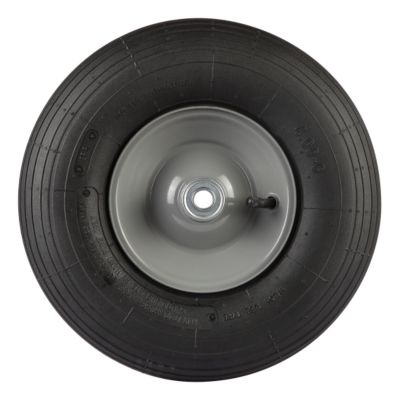
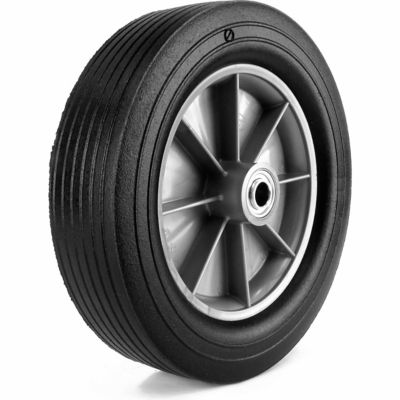
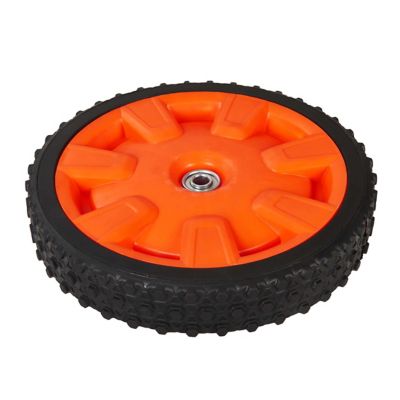
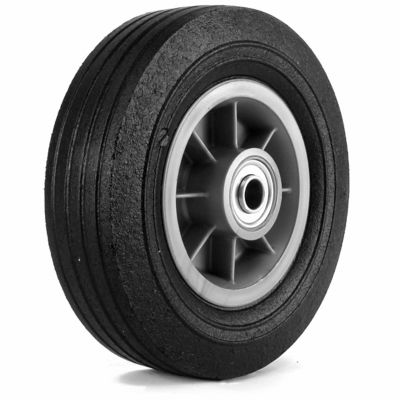
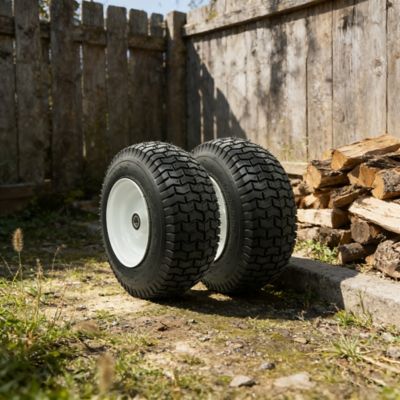
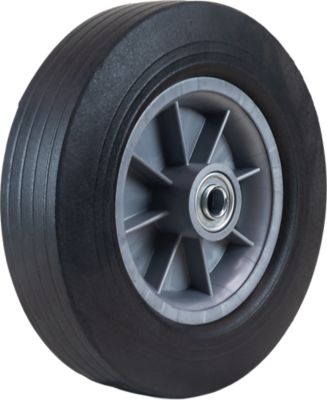
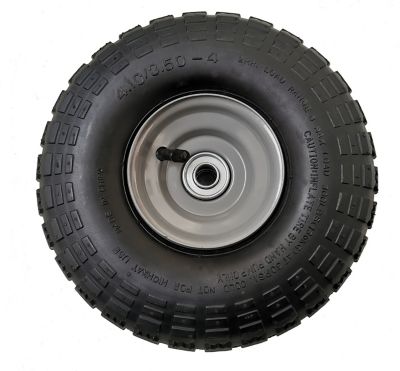
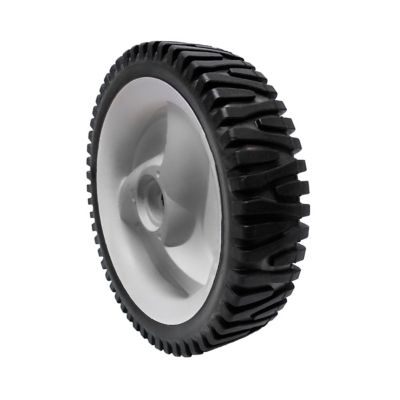
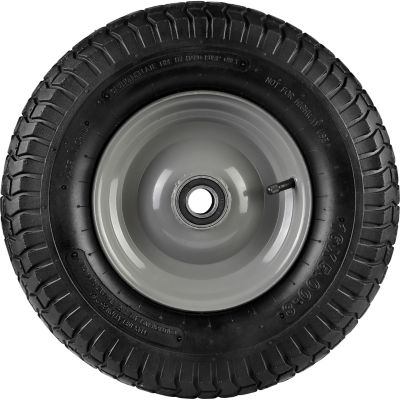
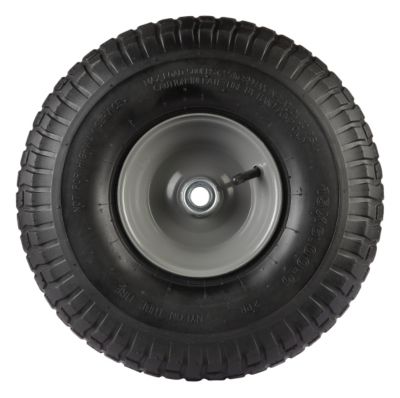
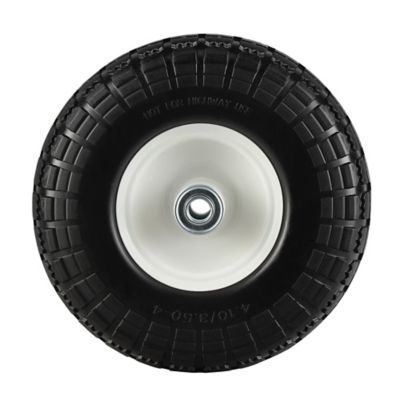
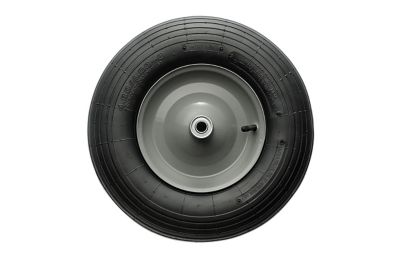
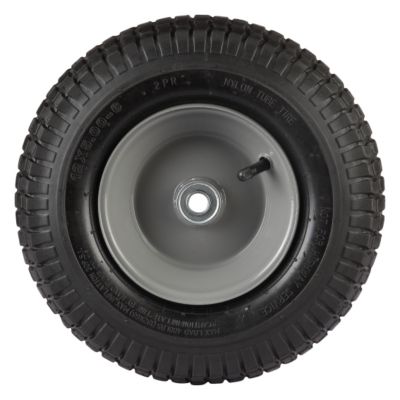
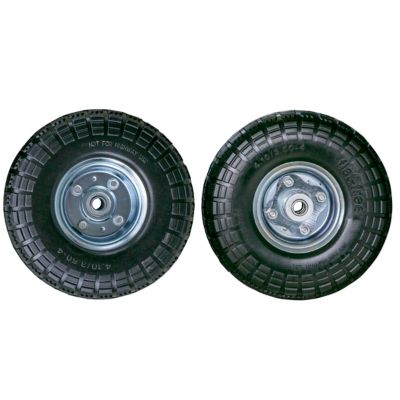
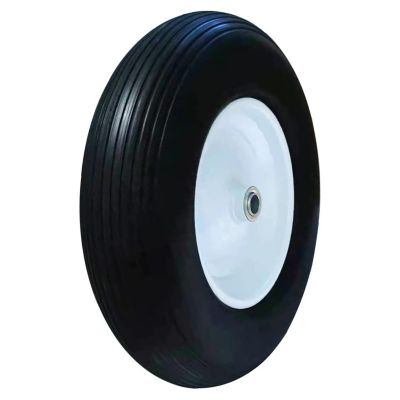
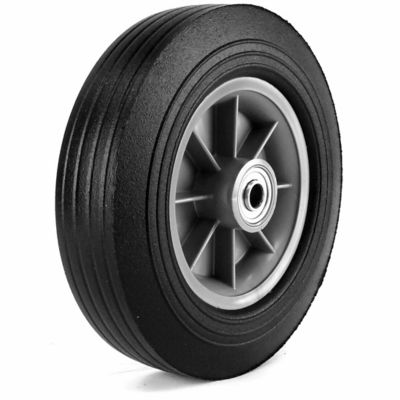
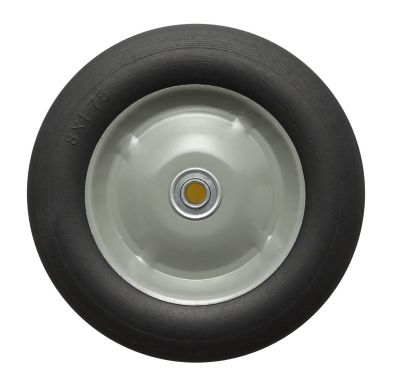
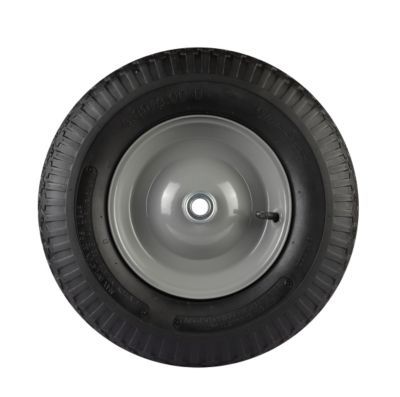
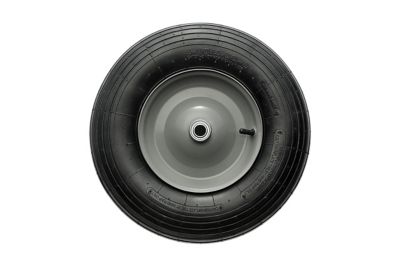
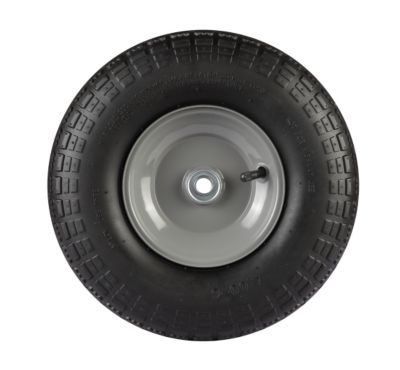
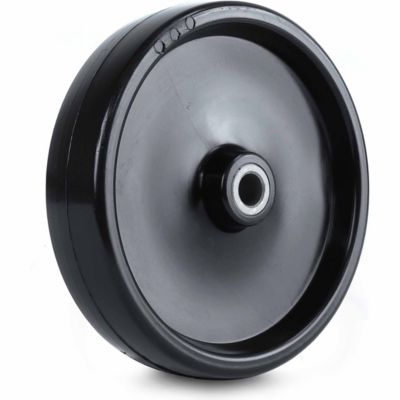
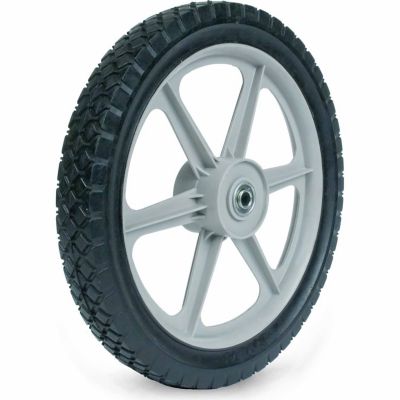
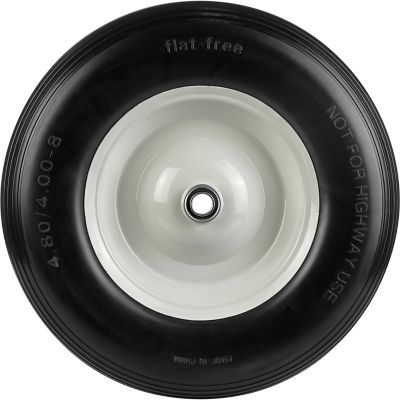
Rubber wheels have a rubber tread or tire that cushions contact with the ground, helps absorb vibration and can reduce rolling noise compared with harder wheel materials. They’re a practical fit for carts, wheelbarrows, rolling workbenches and other equipment that moves supplies around a barn, shop or property. A load of feed sacks crossing a concrete aisle puts different demands on a wheel than a tool cart rolling over a smooth garage floor, so the tread, construction and intended surface all matter. Solid rubber wheels have no air pressure to maintain and no inner tube to puncture, making them a straightforward option where nails, wire scraps or sharp gravel can turn up. Pneumatic rubber wheels have an air-filled tire that provides cushioning over uneven ground, although their performance depends on proper inflation and the condition of the tire. Semi-pneumatic and foam-filled designs offer other ways to balance cushioning with puncture resistance; their construction and load ratings vary. Rubber tread also comes in different firmness levels. Softer tread can soften rattling and help equipment cross small surface irregularities, while firmer tread generally deforms less under a load and may take less effort to keep rolling on smooth floors. Larger wheel diameters usually handle cracks, joints and small obstacles more easily than smaller diameters, provided the equipment has enough clearance. Tread width affects how the load meets the surface, too. A broader footprint can help limit sinking on softer ground, but it doesn’t make every cart suited to loose soil or deep gravel. For finished concrete, tile or other indoor surfaces, nonmarking tread is worth considering. Not all rubber compounds are nonmarking, and even a nonmarking wheel can carry grit that scratches a floor. The right match balances cushioning, rolling effort, floor protection and the ground the equipment crosses most often, whether that’s a packed path beside the shed or a shop aisle with joints in the slab.
Fit matters just as much as tread when replacing rubber wheels. Wheel diameter, tread width, axle bore and hub length each describe a different part of the fit, and a close-looking replacement may still sit incorrectly on the axle. The bore must match the axle and bearing arrangement, while hub length determines how the wheel fits between mounting points or along an axle shaft. A hub that extends farther on one side can change wheel position, so centered and offset hubs aren’t always interchangeable. Extra diameter may improve obstacle clearance, but it can also raise equipment height or interfere with a frame, fender or brake. Equipment that needs a mounting bracket along with the wheel may call for
Rubber Casters, with fixed and swivel arrangements serving different steering needs. A wheel alone doesn’t include that mounting assembly, and compatibility depends on more than matching its outside dimensions. Inside the wheel, a plain bore, sleeve bearing, roller bearing or ball bearing affects movement, maintenance and axle fit. Ball bearings can support smooth rolling, while other bearing styles may suit different loads and working conditions. Hub materials matter as well: steel, cast iron and molded polymer each bring different weight, strength and corrosion considerations. Load capacity needs to account for the equipment itself along with everything riding on it. A cart carrying fence hardware or a bench loaded with tools can weigh considerably more than the cargo alone suggests. On an uneven surface, the weight may not stay evenly divided among every wheel, so simply adding individual wheel ratings doesn’t establish a safe capacity for the complete cart. The axle, frame, bearings, brackets and fasteners all have limits of their own. Ratings for stationary support can also differ from ratings for movement. Wheels intended for hand-pushed equipment shouldn’t be assumed suitable for powered travel, towing or road speeds just because their stated weight capacity looks sufficient.
Day-to-day performance comes down to how rubber wheels handle the work and how well their moving parts stay in shape. A wheel carrying a garden cart over packed ground faces different wear than one beneath a heavy bench that moves only a few feet at a time. Frequent turns can scrub the tread, rough concrete can wear it down, and sharp debris can cut or lodge in the rubber. Oils, fuels and cleaning chemicals may affect certain rubber compounds, so material compatibility matters around machinery, maintenance areas and spills. A tread described for general-purpose service isn’t automatically suited to prolonged contact with every shop fluid. Keeping the tread free of packed dirt, wound-up twine and embedded stones helps preserve smooth movement and reduces the chance of dragging debris across a floor. Axles and bearings deserve attention, too. A wheel that squeaks, wobbles or suddenly takes more effort to push may have loose hardware, contamination, a bearing problem or contact with the surrounding frame. Lubrication requirements depend on the bearing design; sealed bearings and serviceable bearings don’t necessarily need the same care. Manufacturer directions provide the right basis for lubrication, inflation and inspection intervals, and oil or grease belongs away from tread surfaces where it could reduce grip or transfer to the floor. Cracks, deep cuts, uneven wear and rubber pulling away from the hub are signs that a wheel needs closer attention before another load goes aboard. Long periods under a heavy stationary load can also leave some rubber treads with flat spots, making storage position and load limits worth considering. For everyday chores, a well-matched wheel should roll without rubbing the frame, hold the intended load within its rating and suit the route from start to finish. Those details make the difference between a cart that rattles and drags across the yard and equipment that moves feed, tools or supplies with less fuss.