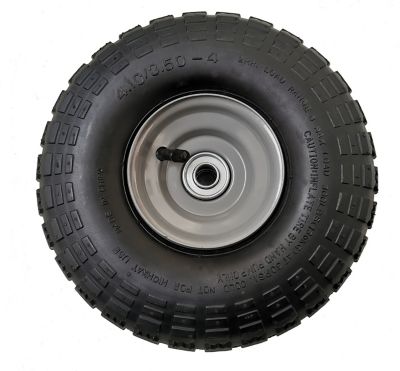
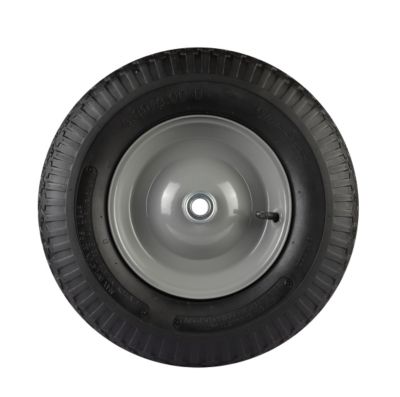
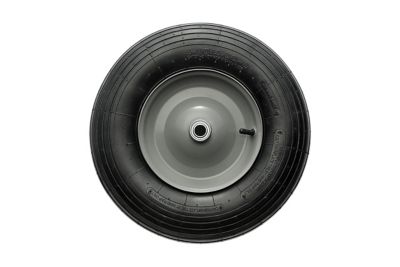
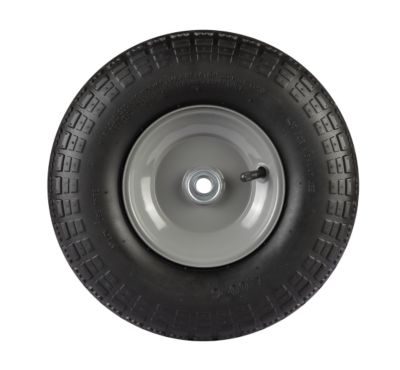
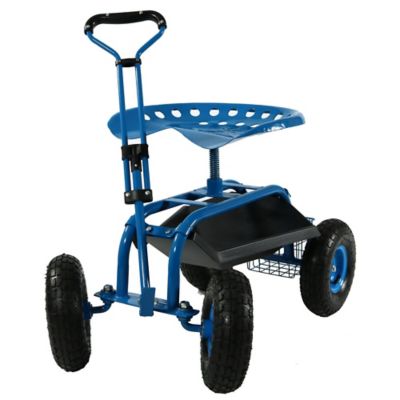
Replacement wheels for garden carts help keep a familiar cart rolling when a tire cracks, a bearing gets rough, or a wheel no longer tracks straight under a load. The right fit depends on more than the size printed on the tire: overall wheel diameter, axle bore, hub length, hub offset, and load rating all matter. A replacement should match the cart manufacturer’s specifications and leave enough clearance for the frame, bed, and steering assembly. That matters whether the cart carries potting soil across a backyard, feed buckets down a gravel lane, or split firewood from the shed to the porch. Wheel diameter affects how the cart rides over uneven ground and how high the bed sits, while tire width influences its footprint on softer surfaces. A larger wheel may roll across small ruts more easily, but it is not automatically a suitable replacement for a smaller one. The axle bore is the opening through the bearing or bushing where the axle passes through; a 5/8-inch bore, for example, needs the corresponding axle size unless the manufacturer specifies an adapter arrangement. Hub length determines how much space the wheel occupies along the axle, including room for any required washers, spacers, and retaining hardware. An offset hub extends farther on one side than the other, so its orientation can affect frame clearance and wheel alignment. Even wheels with the same tire diameter can have different hubs and bearings. Matching those details helps avoid a wheel that rubs the cart body, slides sideways, or will not seat properly. For gardeners, small-acreage owners, and anyone moving supplies around a property, a well-matched wheel can make an otherwise sound cart useful again without replacing the whole rig. Keeping the original bed height and wheel spacing also helps preserve the handling the cart was designed to provide, especially through a gate, beside a raised bed, or along a narrow barn aisle.
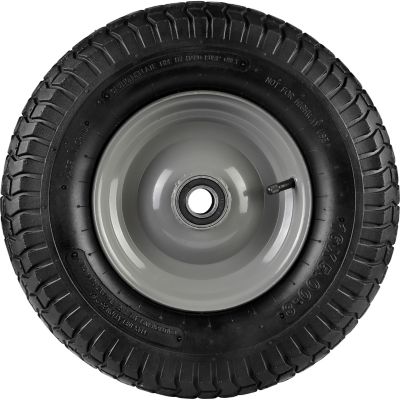
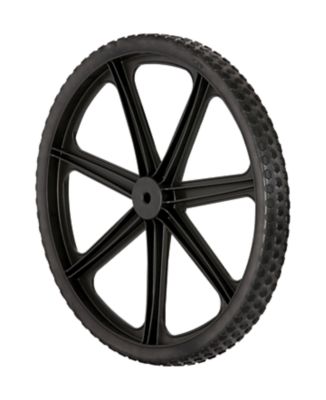
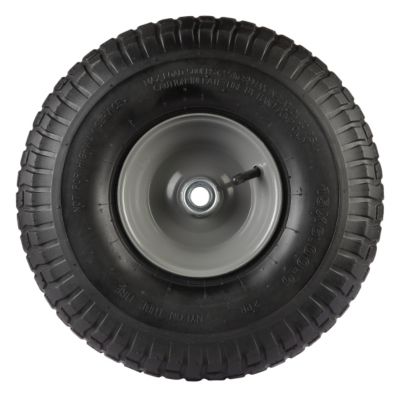
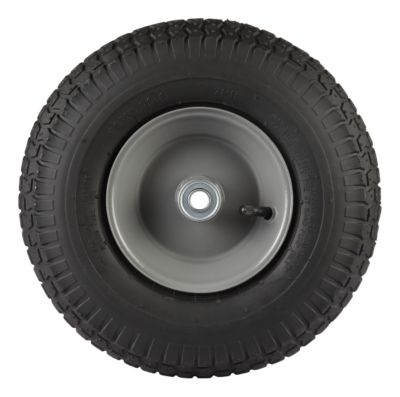
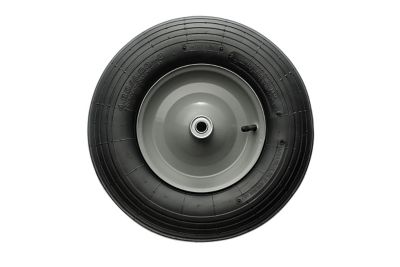
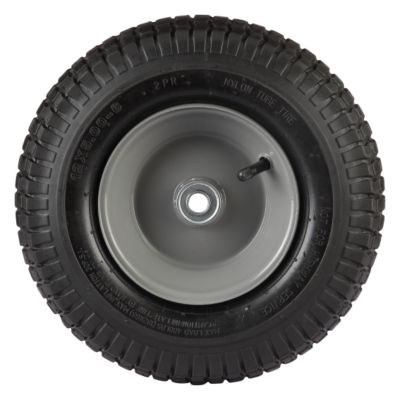
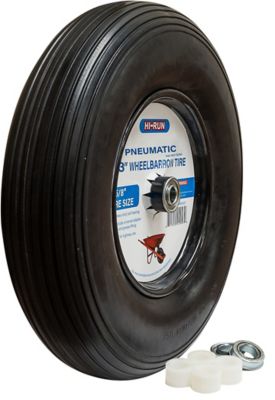
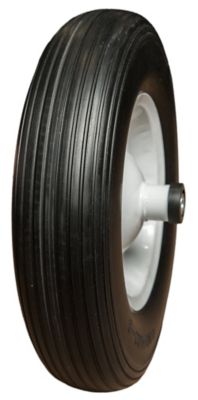
Tire construction makes a noticeable difference in how a garden cart feels along its everyday route. Pneumatic garden cart wheels have air-filled tires that cushion the load over gravel, roots, and lumpy turf. Their sidewalls can flex as the cart rolls, which can help soften the ride for nursery pots, seedlings, and other loads that benefit from less bouncing. They also need attention to air pressure, valves, and possible punctures. Some pneumatic assemblies have inner tubes, while others are tubeless, and that distinction matters when selecting replacement parts. Flat-free garden cart wheels avoid air-related flats, making them worth considering around thorny brush, sharp stems, and areas where scattered debris is hard to spot. Flat-free tires may be made from solid rubber or polyurethane, including foam constructions, and the material affects weight, cushioning, and rolling feel. They do not all ride alike, and some feel firmer than an air-filled tire when crossing washboard gravel or a hard-packed path. For another look at non-pneumatic options for yard-hauling equipment,
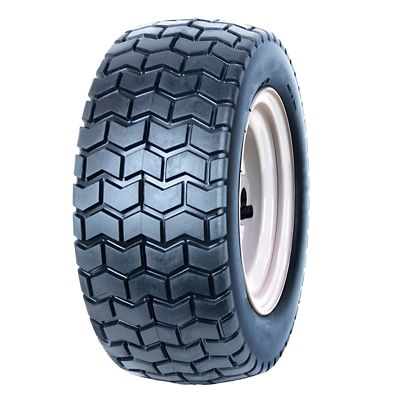
Solid Tires For Wheelbarrows covers a related category, though wheelbarrow and garden cart assemblies are not interchangeable unless their mounting dimensions and ratings match. Tread deserves attention, too. A broad profile can help spread weight across lawn or loose soil, while pronounced tread can offer traction on certain surfaces but may also carry mud back toward the shed. Smooth or shallow tread generally makes more sense on firm paths than on slick slopes. Steel rims provide a sturdy mounting structure but need protection from rust where their finish is damaged; molded polymer rims do not rust, though they still need inspection for cracks and limits on loading. The best match comes down to the ground underfoot, the weight in the bed, and the amount of tire upkeep that suits the work. A cart traveling mostly between a garage and paved patio has different demands than one making repeated trips across a pasture edge or stony garden lane.
Weight capacity and bearing design are just as important as tire style when garden cart replacement wheels have real work ahead of them. A wheel’s stated load rating applies under the conditions set by its manufacturer, and fitting higher-rated wheels does not increase the cart frame’s rated capacity. Four wheel ratings should not simply be added together to declare a safe cart load, either: weight shifts during turns, on slopes, and when a wheel drops into a rut. Wet soil, stones, and firewood can put substantial weight into a small bed, so the cart’s own limits still govern every trip. Bearings and bushings affect how freely the wheel turns and what maintenance it needs. Sealed bearings generally require less routine attention than serviceable designs, while greaseable assemblies need the lubricant and service schedule specified for them. A fresh wheel cannot correct a bent axle or damaged mounting bracket, and looseness at the hub may point to more than worn tread. Complete tire-and-wheel assemblies and tire-only replacements also serve different needs; an assembly includes the rim, but bearings, spacers, and axle hardware should never be assumed to come with every replacement. Once fitted, wheels last longer with sensible care: clearing packed mud from around the hubs, rinsing away fertilizer residue, and allowing components to dry before storage all help limit unnecessary wear. Directing a strong water jet into bearings can force moisture where it does not belong. Air-filled tires need pressure checks according to their specifications, particularly during the cooler months when temperature changes can affect inflation. Shelter from prolonged sunlight and standing moisture helps protect tires and wheel finishes between hauling jobs. For carts carrying fallen branches, compost, or kindling, evenly distributed loads and steady travel over rough patches reduce strain on wheels and axles. Those everyday habits, paired with the right dimensions and construction, help keep a garden cart ready for the next trip from the shed to wherever the work is waiting.