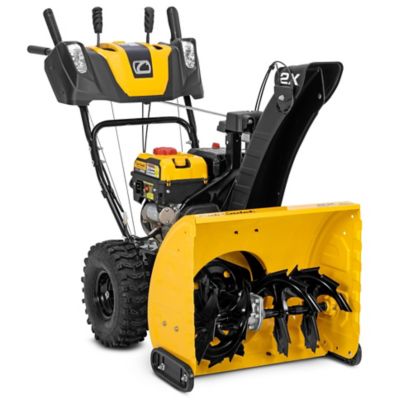
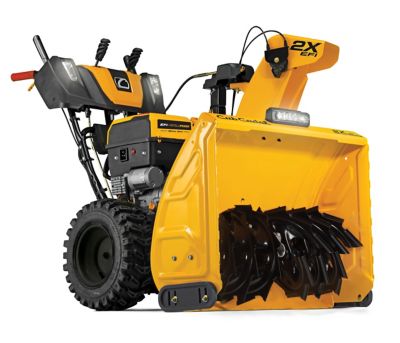
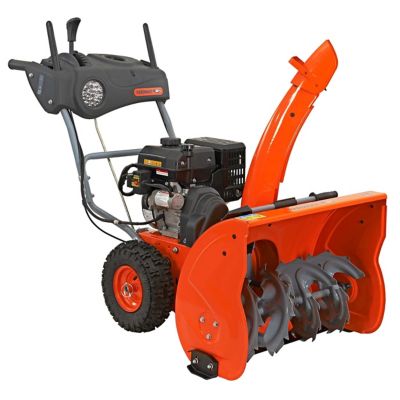
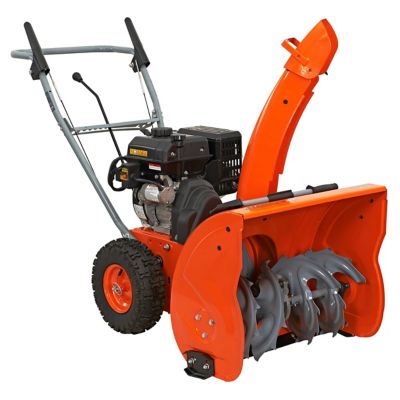
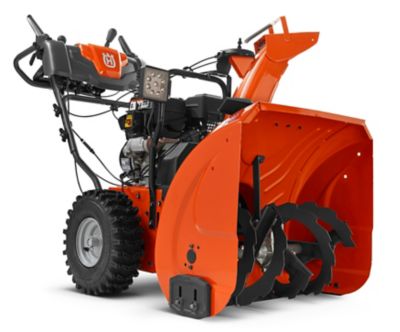
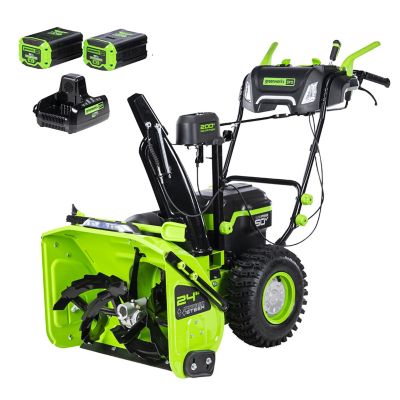
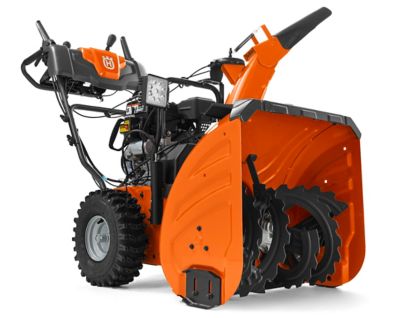
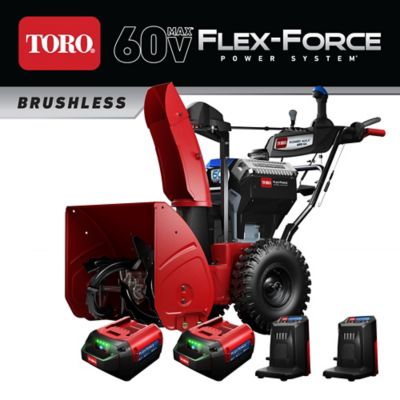
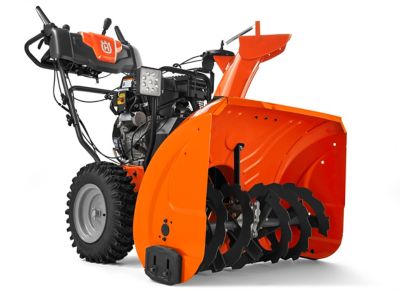
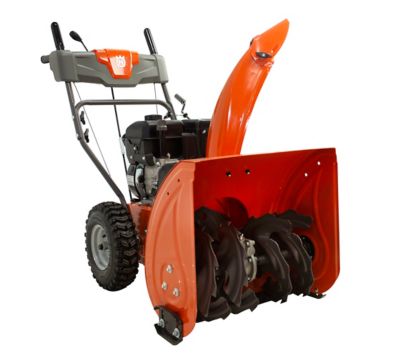
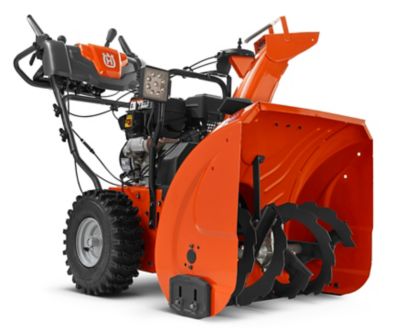
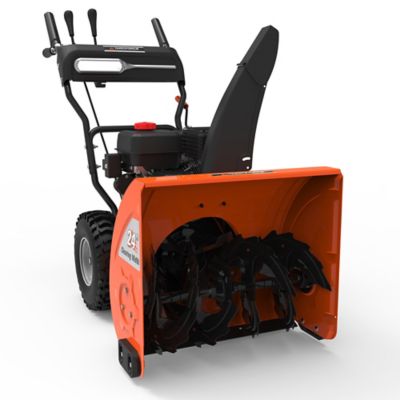
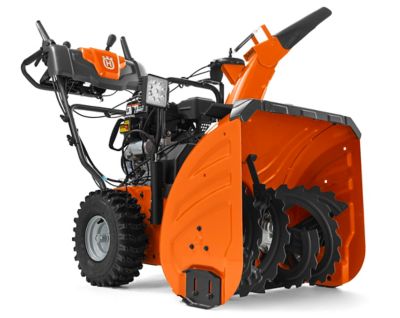
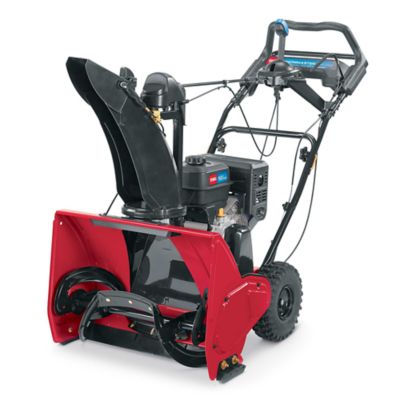
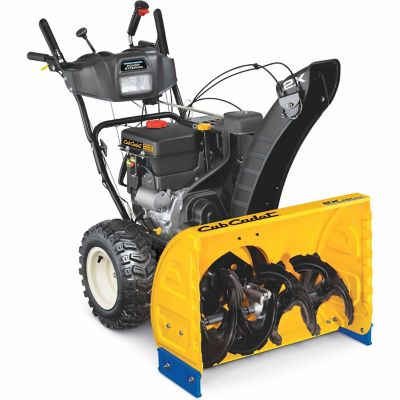
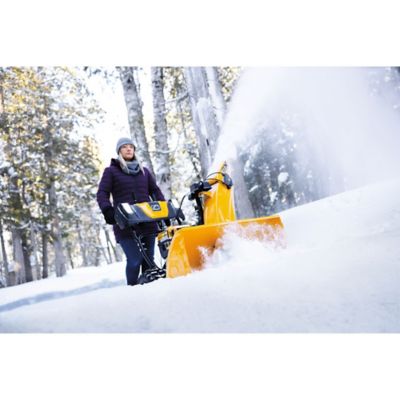
Dual stage snow blowers tackle snow in two steps: a front auger gathers and breaks up the snow, then a fast-spinning impeller pushes it through a discharge chute. Also called two-stage snow blowers, these machines are built for jobs that go beyond a light dusting on a short sidewalk. Long driveways, wide parking areas, and paths between the house and outbuildings are common places where their clearing power comes in handy. Many models handle deep accumulations, including snowfalls around 8 to 12 inches or more, although actual performance depends on snow density, intake height, power, and operating conditions. A foot of dry powder moves differently from six inches of wet, heavy snow, and a compacted ridge left by a road plow can take more effort than either. The auger-and-impeller arrangement helps move those heavier loads without asking one rotating part to do all the work. Serrated steel augers on many models help break apart crusted snow, while the impeller keeps material moving toward the chute. Most two-stage machines also have a powered drive system, which helps carry the machine forward rather than leaving the operator to push its full weight through every pass. That combination makes them a practical fit for rural homeowners, folks maintaining shared driveways, and property caretakers with plenty of ground to cover. They can work on paved surfaces and, when the manufacturer permits it and the housing is set correctly, gravel drives. Adjustable skid shoes support the auger housing above the surface, allowing clearance over uneven spots and loose material. That clearance reduces the chance of scooping up stones, but it does not eliminate it. For properties with only a short, paved driveway and lighter snowfall,
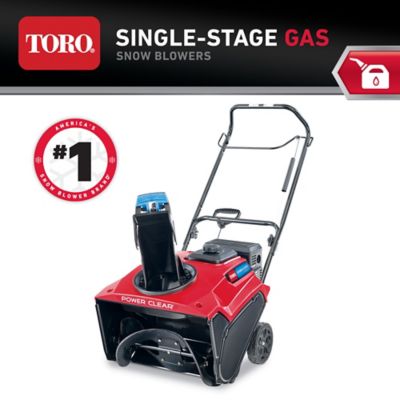
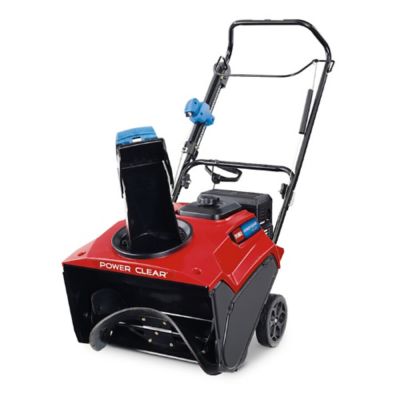
Top Rated Single Stage Snow Blowers offers a look at another type of snow-clearing equipment. The distinction comes down to the workload: two-stage designs generally suit deeper snow, broader spaces, and more demanding clearing conditions.
The right fit involves the property layout as much as the amount of snow. Clearing width determines how much ground a snow blower covers in one pass, while intake height affects how much snow can enter the housing. A wider machine can cut down on trips along an open driveway, but a narrower frame may be easier to maneuver between parked trucks, through a gate, or beside a porch. Storage space matters, too, especially when the machine shares a shed with feed containers, yard tools, and other equipment. Wheel-driven models are common, while tracked designs can provide added grip in challenging conditions; neither replaces following the manufacturer's limits for slopes and terrain. Tire tread, machine weight, steering assistance, and the balance at the handles all influence how manageable a snow blower feels at the end of a long pass. Multiple forward speeds let the operator match travel speed to the load, with a slower pace often helpful in dense snow. Reverse speeds can make backing out of tight spaces less of a chore. Gas-powered two-stage snow blowers suit extended clearing jobs where refueling is practical, and electric-start systems on some gas models reduce the effort of getting the engine running. Battery-powered two-stage snow blowers offer another approach, without gasoline storage or engine oil changes. Their working time varies with battery capacity, temperature, snow conditions, and how hard the machine is working, so clearing-area estimates deserve a close look. Controls also make a difference when hands are inside thick gloves. Chute rotation directs the snow left or right, and the deflector adjusts the discharge angle. Convenient controls help when a driveway bends around a garage or when snow needs to land away from a walkway. Headlights can improve visibility in dim conditions, and heated grips on some models add comfort during lengthy jobs. Advertised throwing distance is best treated as a comparison point, not a promise for every snowfall, since wet snow and wind can change where the discharge lands.
Construction and upkeep play a big part in how a two-stage snow blower holds up over repeated winters. Steel augers and housings are common because the front of the machine takes steady contact with packed snow, while protective finishes help shield exposed metal from moisture. Depending on the design, chutes and other components may be metal or cold-weather-rated polymer; material alone does not tell the whole story about performance. Skid shoes and scraper bars are wear parts, and their condition affects housing clearance and how closely the machine clears a surface. Some skid shoes are designed to be gentler on finished pavement, while others emphasize wear resistance for rougher ground. Shear pins or shear bolts, where fitted, are designed to break under certain overloads to help protect the drive components. Manufacturer-specified replacements matter here rather than substituting ordinary hardware. Routine care commonly includes checking fasteners, inspecting belts and cables where present, and following the lubrication schedule in the owner's manual. Gas engines also need the specified oil checks and changes, along with proper fuel handling. Battery models need compatible chargers and storage within the battery maker's temperature recommendations. After a clearing job, removing lingering snow and allowing the machine to dry before storage helps limit rust and frozen buildup. Road salt carried onto a driveway deserves attention under the manufacturer's cleaning directions. Safe operation matters just as much as upkeep, particularly around gravel, hidden branches, and the odds and ends that can disappear beneath a drift. A clear discharge path keeps thrown snow and debris away from people, animals, vehicles, and windows. A clogged chute calls for shutting the machine down, disconnecting its power source as directed, waiting for all moving parts to stop, and using the designated cleanout tool rather than a hand. Gas engines belong outdoors, never running inside a garage or shed. With a clearing width that suits the driveway, controls that feel manageable, and care matched to its design, a dual stage snow blower can make the work of opening a route to the road, garage, or barn a good deal more manageable.