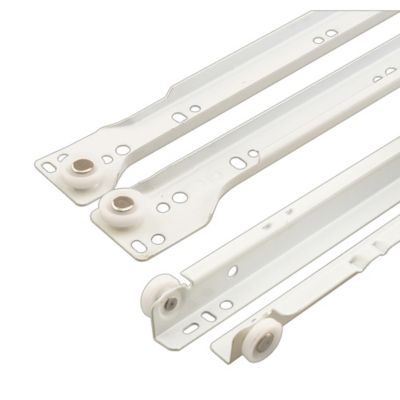
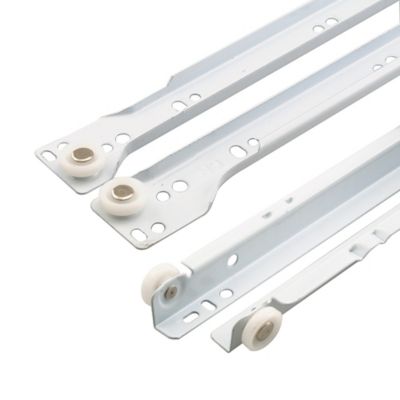
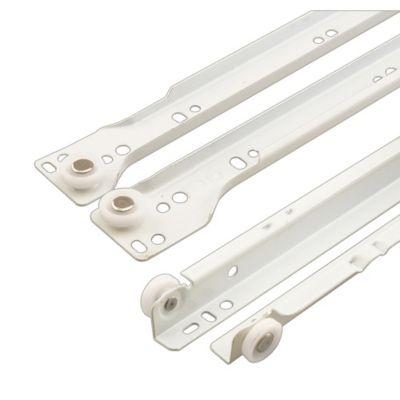
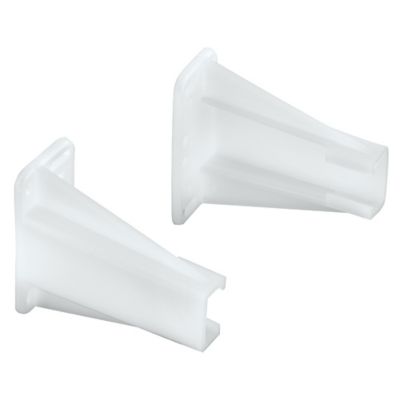
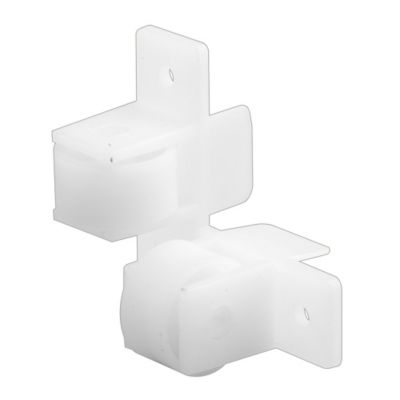
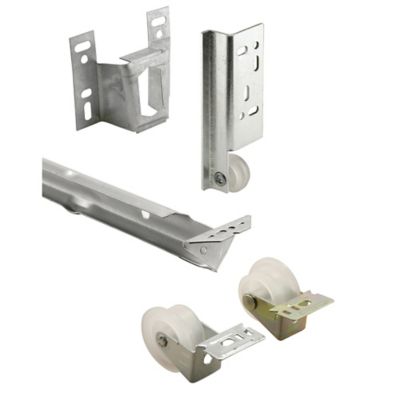
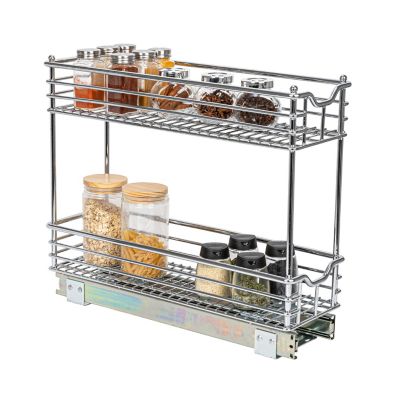
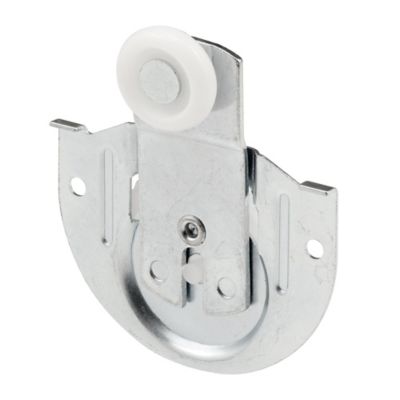
Drawer slide hardware is the behind-the-scenes piece that helps a drawer open straight, carry its load and close with a solid, dependable feel. Whether you are repairing an old kitchen cabinet, building a workbench for the shop or freshening up a dresser that has seen better days, the right drawer slides can make the whole piece feel new again. Common options include side-mount, undermount and center-mount slides. Side-mount slides attach to both sides of the drawer and cabinet opening, making them a practical choice for kitchen cabinets, bathroom vanities, shop storage and general furniture repairs. They typically need about 1/2 inch of clearance on each side, so accurate measuring matters before you order. Undermount slides sit beneath the drawer, keeping the hardware out of sight and leaving more usable space along the drawer sides. They are often chosen for a clean, finished look on newer cabinetry. Center-mount slides use one track beneath the middle of the drawer and are well suited to lighter-duty furniture, traditional dressers and smaller storage drawers. Along with the mounting style, pay attention to the slide length, the drawer box dimensions and the available cabinet depth. A slide that is too long may not fit the cabinet, while one that is too short can leave items tucked away where they are hard to reach. If you are replacing worn hardware, remove the old slide and measure the drawer and opening rather than relying on the size of the original furniture. Older cabinets may have shifted over time, and a quick check with a tape measure can save a good deal of frustration once the project is underway.
The way a drawer is meant to work should guide the rest of your selection. Full-extension drawer slides pull the drawer nearly all the way out, letting you see and reach cans, fasteners, hand tools or baking supplies at the back. That extra reach is especially handy in deep base cabinets and shop drawers where small items have a habit of disappearing into the shadows. Soft-close slides use a built-in dampening mechanism to catch the drawer and guide it shut quietly, which is useful in busy kitchens, bedrooms and mudrooms where a slammed drawer can echo through the house. For a cabinet holding cast-iron cookware, power tools, hardware bins or other hefty supplies, look for heavy-duty drawer slides with a weight rating that matches the finished load. Some heavy-duty designs are built to handle 100 pounds, 150 pounds, 200 pounds or more when properly installed, but the rating depends on the hardware, the drawer construction and how the weight is distributed. A drawer packed with wrenches or jars should be loaded evenly instead of placing everything at the front. Ball-bearing slides are a common choice for demanding storage because they provide smooth movement under heavier loads. Before installation, check whether the slides are rated for a side-mount or undermount application and whether they require a disconnect lever for removing the drawer. Follow the included mounting pattern, use fasteners suited to the cabinet material and avoid screws long enough to poke through the drawer sides. On a first repair, I like to lay the drawer on a workbench, mark both sides with a square and test the slide action before tightening every screw. That small pause helps catch a crooked line before the drawer starts rubbing, binding or sitting higher on one side.
Drawer slide hardware is useful for more than new cabinets. It can bring an old farmhouse dresser back into daily service, make a rolling tool chest easier to organize or turn a plain plywood drawer into a dependable storage spot for fence staples, gloves and measuring tools. Homeowners, woodworkers, renters making approved improvements and anyone who enjoys practical repairs can use drawer slides to improve storage without replacing an entire cabinet or piece of furniture. They also make a thoughtful gift for a handy friend, family member or new homeowner who is setting up a workshop, restoring furniture or tackling a kitchen project during the cooler months. For the best fit, start by measuring the inside width of the cabinet opening, the drawer width, the drawer depth and the distance from the drawer bottom to the cabinet opening. Make sure the drawer is square; even well-made slides will struggle if the drawer box is twisted. Check the clearance needed for the chosen mounting style, the front-to-back travel and the weight of the items you plan to store. A small level, drill, measuring tape and a set of suitable screws can make installation go much smoother, while a second set of hands is helpful when positioning a wide or heavy drawer. If your project includes a sliding door or rustic storage area alongside drawer repairs, browse
Barn Door Hardware for hardware suited to that type of project. With careful measurements and a slide matched to the job, drawers can glide smoothly through everyday chores, from sorting seed packets and shop supplies to putting away linens after a long day around the house.