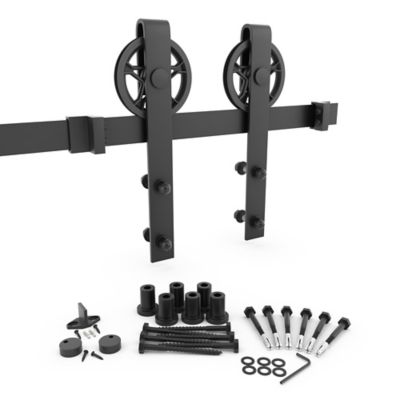
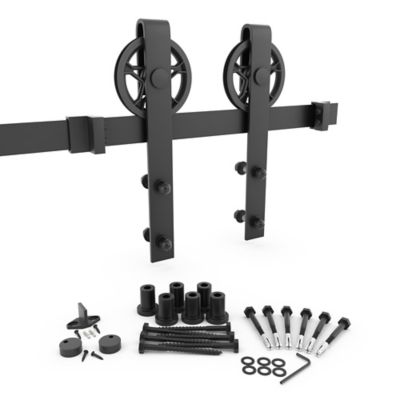
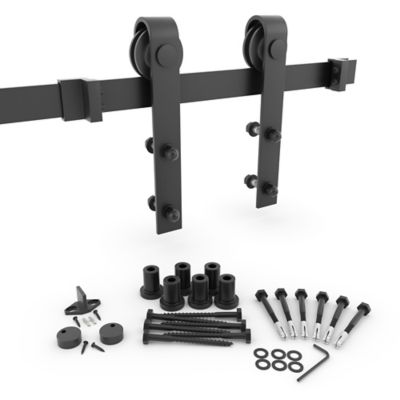
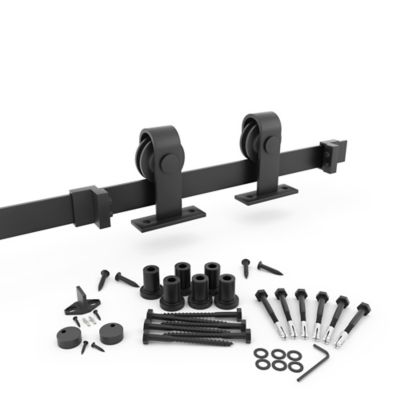
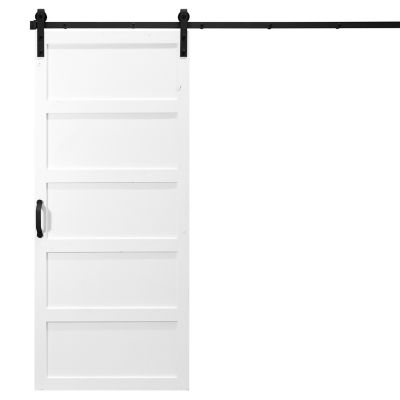
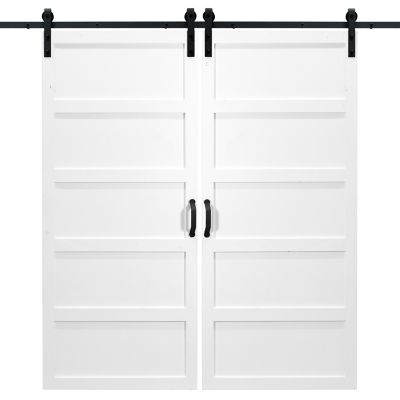
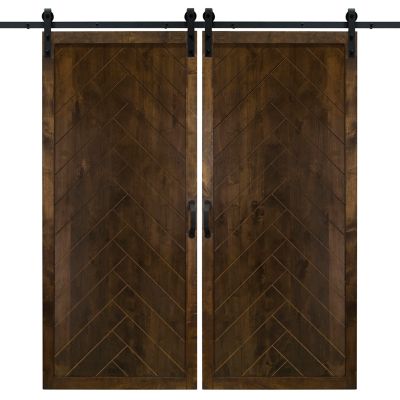
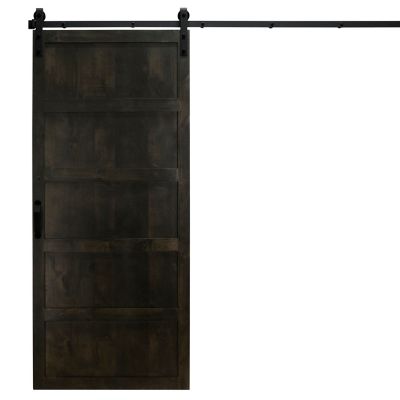
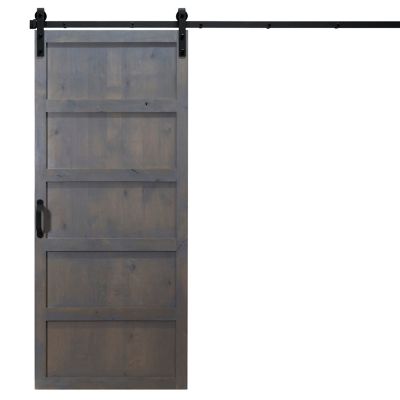
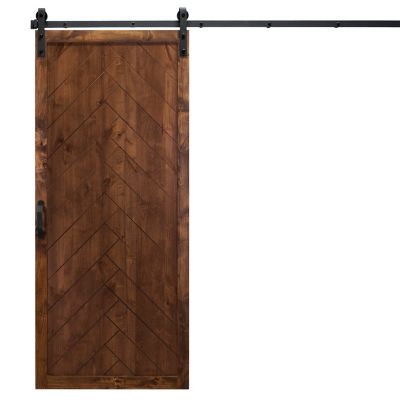
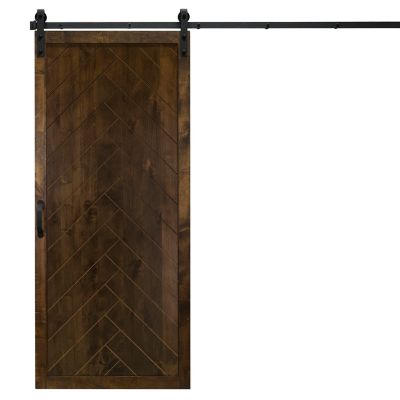
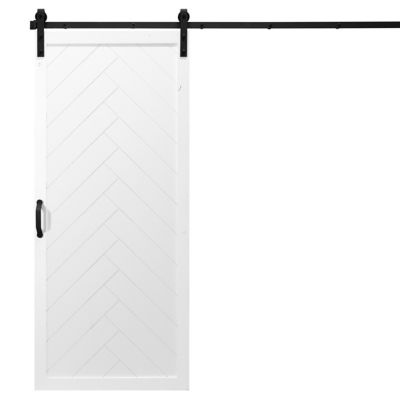
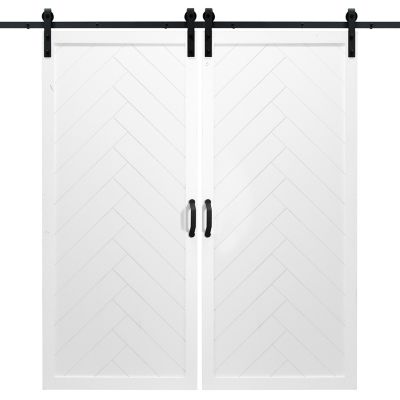
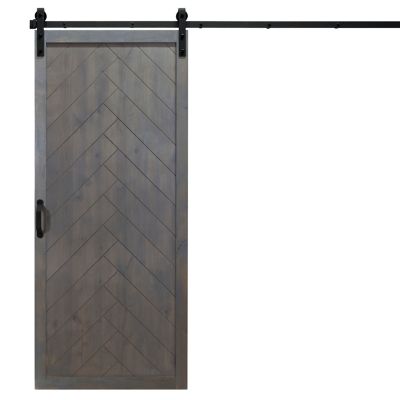
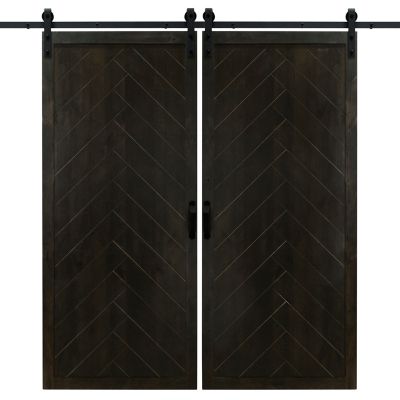
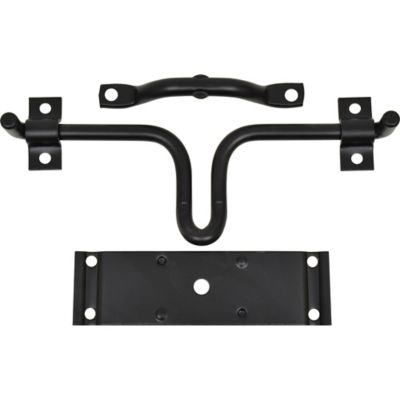
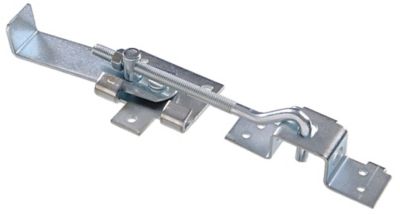
Barn door hardware gives a sliding door the support and movement it needs to open along a wall instead of swinging into a room. That makes it a practical choice for a farmhouse pantry, mudroom, workshop storage area or barn opening where a swinging door would get in the way. A typical sliding barn door hardware set includes a track, roller hangers, door stops, mounting brackets or spacers, and fasteners. Many sets also include a floor guide and anti-jump pieces, though the contents vary. Each part has a job: the track supports the hanging assembly, the rollers carry the door along it, the stops limit travel, and the guide helps keep the bottom from swinging away from its path. Anti-jump pieces help prevent the rollers from lifting off the rail when installed as directed. Together, properly matched components keep a broad door panel moving steadily rather than rattling or dragging across the floor. Exposed flat tracks and long strap hangers suit rough-sawn wood and familiar barn-style construction, while top-mount hangers keep more of the hardware above the door for a less prominent look. Enclosed track systems surround the rolling mechanism and have different mounting and compatibility requirements than exposed flat rails. Single-door hardware serves one panel that slides to either side of an opening. Double-door arrangements let two panels meet in the middle and slide apart, while bypass hardware lets panels pass in front of one another on separate paths. Those differences matter as much as appearance, especially around a wide closet or a work area with limited wall space. A sliding door frees up the floor area a hinged door needs to swing, but it still needs a clear place to travel. For homeowners, property caretakers and folks tending outbuildings, the right arrangement comes down to the opening, the door itself and what happens around it every day.
Fit starts with more than the width of the doorway. Door thickness, panel height, total weight and hanger attachment points all affect which barn door hardware belongs on the job. A solid wood panel can weigh considerably more than a hollow-core door of the same size, and adding handles or other fittings increases the load. The hardware’s stated weight capacity needs to cover the complete door assembly, with the support structure and mounting method meeting the manufacturer’s requirements as well. Drywall alone is not a suitable support for a loaded sliding track; the mounting points generally need structural framing or an appropriately secured header. Many single-door layouts call for a track roughly twice the door’s width so the panel can clear the opening, but the exact length depends on the system and how far the door must move. Space above the opening matters, too, since the rail, rollers and mounting hardware need room beneath the ceiling or nearby trim. Along the wall, baseboards, door casing, outlets and light switches can interfere with the panel’s travel. Correct spacers provide the specified clearance without leaving the door farther from the wall than the system allows. Floor guides also have different fit requirements: some run in a groove beneath the door, while others guide its faces without a bottom groove. That distinction can save trouble when matching hardware to an existing panel. Handles deserve the same attention. A projecting pull may feel good in a working hand on the outside face, but the wall-facing side often needs a recessed pull to pass the trim. Privacy hardware is another separate consideration, and
Barn Door Locks can help narrow the choices for a suitable closure. A sliding barn door usually leaves gaps around its edges, so even with a lock, it will not necessarily provide the sound control or close seal of a fitted hinged door. That is worth keeping in mind for bedrooms, bathrooms and shared living spaces.
Materials and construction help determine how barn door hardware handles its workload over time. Steel tracks and hangers are common choices for supporting substantial panels, while roller materials, bearings and axle construction influence both movement and noise. A steel wheel and a polymer wheel may sound different on the same type of rail, and neither material alone tells the whole story about load capacity or service life. The complete assembly’s rating matters more than a heavy-looking strap or oversized wheel. Finishes such as powder coating, plating and stainless steel construction bring different appearance and corrosion-resistance characteristics, so the stated application should match the setting. Hardware intended for an interior pantry is not automatically suited to an exterior barn door, a wash area or a livestock building. Farm applications may also call for different track profiles, guides and latches than residential sliding doors. Where animals can reach a door, a household privacy latch should not be treated as a livestock containment device. In a shop, clearance from tool racks, lumber storage and rolling equipment matters just as much as keeping the panel level. For a pantry off the kitchen, smooth bearings and a properly adjusted guide can make repeated trips with full hands less of a fuss. Soft-close mechanisms can ease the final part of travel on compatible systems, but they have their own door-weight ranges and space requirements. Routine care is usually straightforward: keep the rail and guide free of grit, wipe accessible surfaces as the manufacturer recommends, and check for loose fasteners, shifting stops or roller wear. Lubrication requirements vary, and adding oil where it is not specified can attract dust rather than improve movement. Scraping, wobbling or a change in rolling resistance deserves attention before the door sees more traffic. Replacement components need to match the track profile, mounting dimensions and load requirements, not just look similar. With hardware matched to the panel and the setting, a sliding barn door can earn its place through everyday usefulness, whether it hides shelves of canning jars or opens the way into a busy workspace.