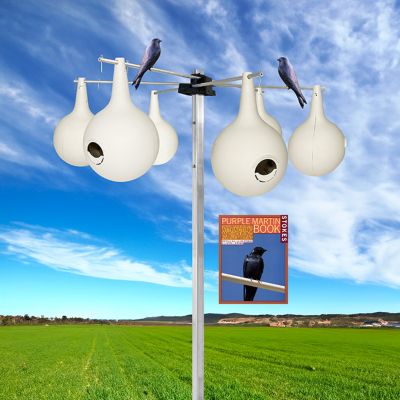
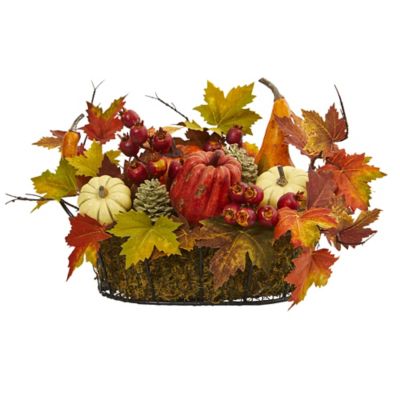
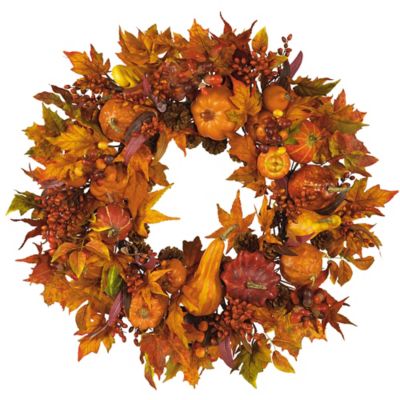
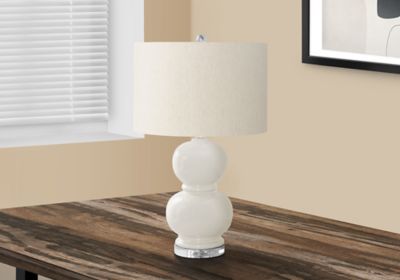
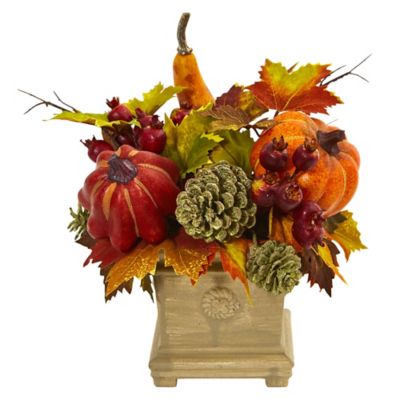
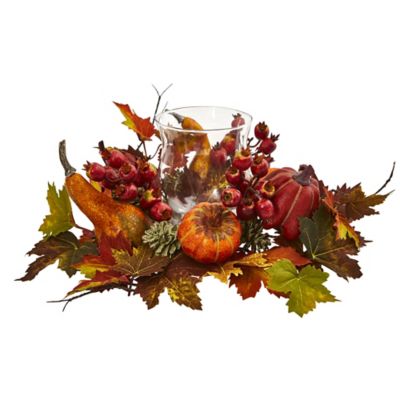
Ornamental gourds are fruits grown for their shapes, colors and textured shells rather than for eating. They belong to the same plant family as pumpkins and squash, with forms ranging from small, round fruits to curved necks, narrow waists and broad, ridged bases. Some have smooth skins, while others have bumps, stripes or patches that give a harvest display plenty of character without much fuss. Gourd-shaped accents capture those same details in materials intended for repeated display, so the category spans natural gourds and manufactured versions with different care needs. Both suit the easygoing feel of a farmhouse kitchen, a covered entry or a Thanksgiving table. Orange and golden yellow bring a familiar fall look, while cream, green and brown blend readily with wood furniture, stoneware and woven baskets. A grouping with several shapes often looks more like a basket brought in from the garden than a matching set, which works well in a home where muddy boots wait by the door and the kitchen table handles everything from supper to homework. Smaller gourds can fill a shallow bowl without taking over the tabletop; larger forms give a hearth or entry bench a stronger focal point. Their appeal is as much about texture as color: a ribbed surface catches the light differently from a smooth shell, and a long stem adds another natural detail. Harvest gatherings, Halloween displays and Thanksgiving meals are all fitting settings, though the overall look can stay simple rather than tied to a single holiday. Gourds sold for display belong with home accents, not food preparation. Ornamental varieties and any applied paints, sealers or finishes make them different from squash selected for cooking. Keeping that distinction clear is especially helpful when a display sits near a fruit bowl or on a serving counter where children and guests might mistake it for something edible. Natural color differences, uneven outlines and irregular stems are part of the look, while manufactured versions may offer a more consistent shape or finish.
Material makes a real difference in how gourd accents feel, where they fit and how they hold up between gatherings. Fresh natural gourds have their own weight and surface markings, but they also need airflow and regular checks for soft spots or mold. A crowded, damp container can trap moisture, and direct contact with a finished tabletop may leave marks as natural material ages. A washable tray or other protective base helps separate the display from the furniture beneath it. Thoroughly dried gourds have a lighter, hollow feel and a firm shell, although thin areas and stems can still crack if dropped or squeezed. Their surfaces may carry painted details or a clear finish, so cleaning should follow any care directions rather than assuming that a natural shell can be soaked or scrubbed. Manufactured gourds may be made from resin, plastic, foam, ceramic or fabric, each bringing a different balance of weight, texture and upkeep. Resin and ceramic can give a display a substantial feel, but edges and stems may chip on a hard floor. Foam is light enough for broad bowls and upper shelves, though pressure from other stored objects can leave dents. Fabric brings a softer finish beside rough wood or a woven runner, but it generally needs protection from spills and damp conditions. Plastic versions can be practical around busy gathering spaces, with cleaning methods depending on their paint and surface finish. An indoor designation matters even when an accent looks suited to a porch: sunlight, rain and freezing conditions can fade colors, damage finishes or affect materials not meant for outdoor exposure. A roof overhead does not always keep out windblown rain. For accents intended to return to the table year after year, gentle handling, a dry storage space and padding around stems matter more than appearance alone. Pieces should be clean and completely dry before being packed away, with heavier objects kept from pressing against hollow shells, soft surfaces or raised details.
Size and placement help a gourd display feel at home instead of getting in the way of everyday life. On a dining table, a low arrangement leaves room for conversation across the meal and keeps serving dishes within reach. A shallow basket containing several small forms can sit comfortably beside a pitcher, while one larger gourd may be enough for a narrow console or the end of a mantel. The full footprint includes curved necks and projecting stems, not just the widest part of the body, so shelf depth and clearance deserve a look before choosing a shape. Flat or broad bases tend to sit more steadily than narrow, rounded ones; lightweight accents may need a sheltered spot where a swinging door or passing coat will not knock them loose. In a household with pets or young children, small pieces and breakable stems are better kept out of reach, and display gourds should not become chew toys. Flameless candles are a sensible companion for dried shells, fabric, foam and other materials that need distance from an open flame. A few gourds alongside
Gnome Decorations can give an entry table a playful harvest feel, especially when the colors share a common thread. A quieter arrangement might pair cream-colored shapes with a wooden bowl, while orange and green stand out against a dark hearth. Leaving some open space around the grouping makes the shapes easier to see and keeps the surface useful for keys, mail or a serving platter. Gourd accents can also make a thoughtful host gift for someone who enjoys setting a harvest table or welcoming family for Thanksgiving. Compact shapes are easier to place in a smaller home, and easy-care materials suit a recipient who prefers a display that needs little attention. Whether the setting is a farmhouse dining room or a small-town front entry, the right balance of scale, material and color brings that gathered-from-the-field feeling without crowding the space.