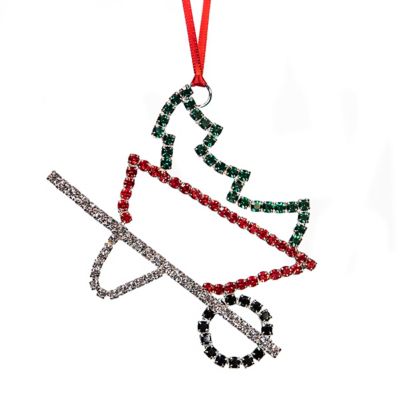
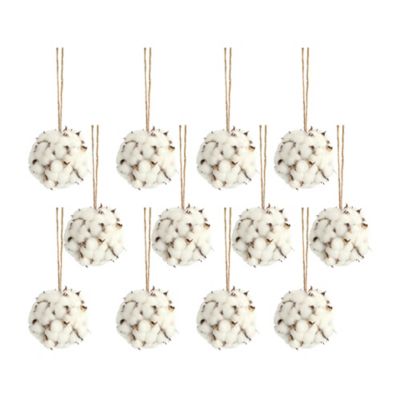
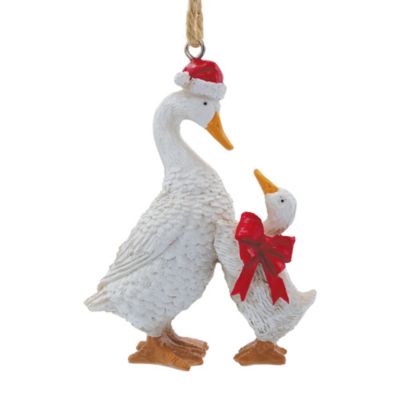
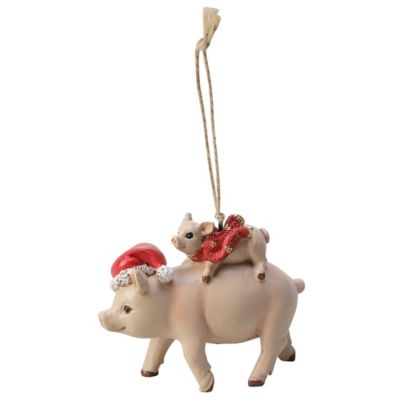
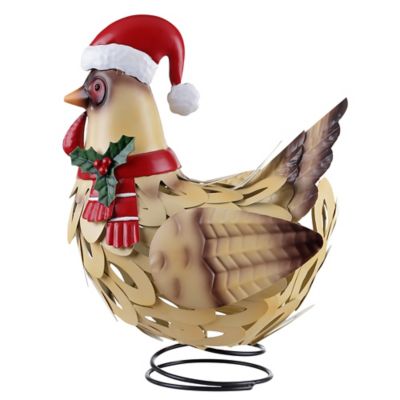
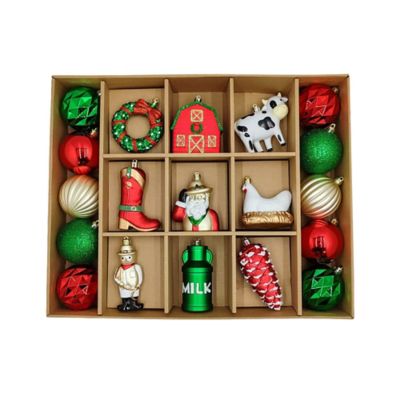
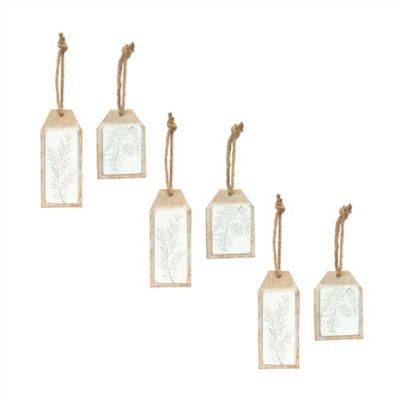
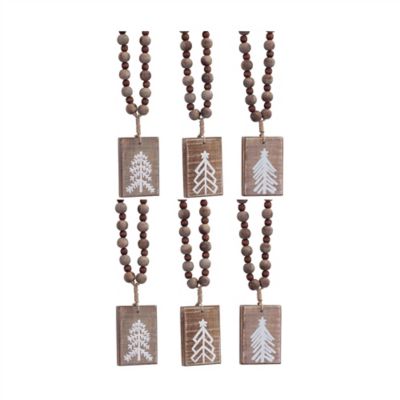
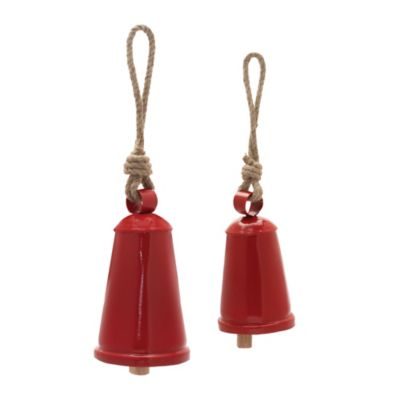
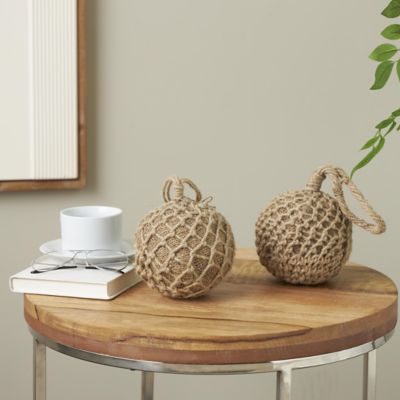
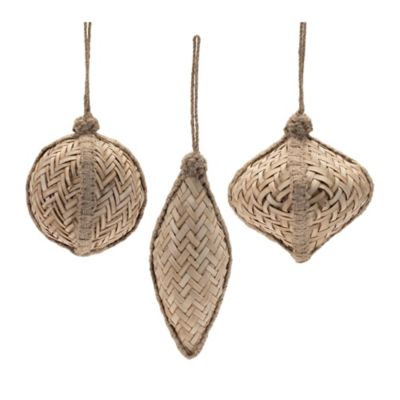
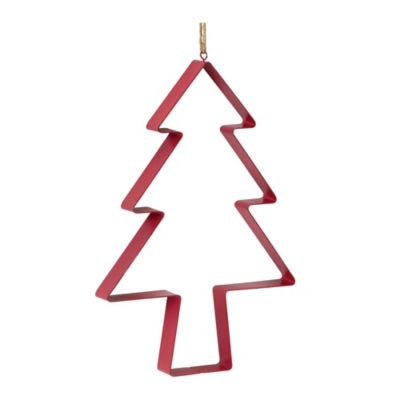
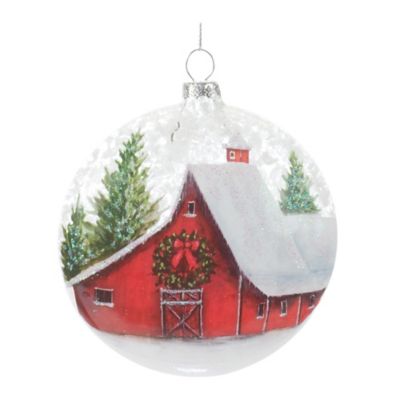
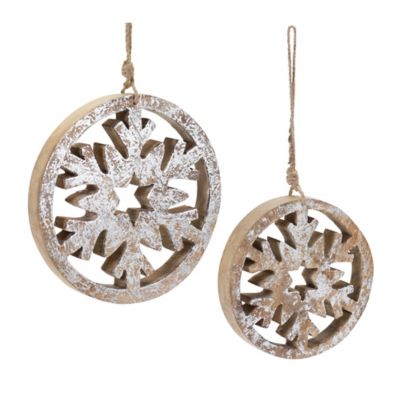
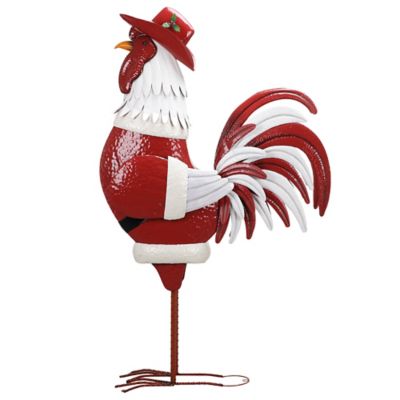
Farmhouse ornaments are hanging accents that bring country character to Christmas trees, wreaths, garlands, and other holiday displays. Their look draws from everyday farm life, with barn shapes, farm animals, work boots, bells, and simple stars alongside wood grain, checked fabric, and weathered-looking finishes. A red barn tucked among green branches can feel right at home in a farmhouse living room, while cream-colored animals and natural wood tones suit a quieter arrangement. These country Christmas ornaments can lean playful, traditional, or understated without losing that connection to life out here. Materials make a big difference in their appearance and how they handle regular hanging and storage. Wood offers visible grain and a warm, natural look, with details that may be painted, carved, or cut into the surface. Metal brings a different feel: thin stamped shapes can have a crisp outline, while bells and dimensional pieces add depth. Galvanized-style finishes pair easily with twine and checked ribbon, though a silver finish alone does not establish what metal sits underneath or whether it resists rust. Glass catches the glow of tree lights and works well for detailed shapes, but it needs careful handling. Plastic ornaments can offer a lighter alternative, and pieces labeled shatter-resistant may be a practical choice where occasional bumps are likely. Shatter-resistant does not mean unbreakable, so material descriptions and care directions still matter. Burlap, jute, felt, and woven fabric bring softer textures that balance smooth painted surfaces. A mix of finishes often gives a tree more depth than a collection of pieces with the same surface and shape. Color helps tie that mix together: barn red, cream, black, natural brown, and muted silver all fit comfortably within a farmhouse palette. Repeating a few of those colors lets animal shapes, simple balls, and rustic stars sit together without making the display feel crowded. The result can be cheerful and familiar, with enough variation for individual ornaments to stand out.
Size, weight, and hanging hardware affect where farmhouse ornaments fit best. A broad barn silhouette needs more open space than a narrow star, even when both measure the same height. The listed dimensions may include a hanging loop or describe only the ornament itself, so that distinction matters on smaller trees and tabletop arrangements. Weight matters just as much. Sturdy inner branches generally offer better support for heavier pieces, while lighter accents are easier to place near branch tips. On artificial trees, the branch construction and the tree maker’s directions help determine suitable placement. A loop made from twine gives a relaxed country look, but its length can leave an ornament hanging lower than expected. Hooks, ribbons, and attached cords also need secure connections, especially on dimensional shapes that might turn as people pass. Flat ornaments work well where space is limited, including narrow trees, wall-hung greenery, and displays near a doorway. Fuller shapes need room on all sides so their details remain visible and neighboring pieces do not knock together. Farmhouse Christmas ornaments also suit homes where children help trim the tree, though fragile pieces and small removable parts belong beyond their reach. Ornaments are display pieces rather than toys, and anything with loose fibers, wire, beads, or dangling cords should stay away from pets that chew or climb. A curious cat can make a low-hanging ribbon far more interesting than intended. Placement away from busy walkways helps limit accidental bumps, too. For a porch wreath or another exposed spot, an ornament needs an explicit rating for outdoor use; a rustic appearance does not mean it can handle moisture or sunlight. Indoors, coordinating ornaments with
farmhouse holiday accents can carry the same colors and textures from the tree to the mantel without repeating every shape in every spot.
Farmhouse ornaments also make thoughtful gifts for people with a connection to country living. A barn motif can bring a familiar scene to a farm family’s tree, while animal shapes may appeal to livestock owners, backyard flock keepers, and young people involved in agricultural clubs. For someone settling into a first home, a small group of coordinating ornaments can become part of a Christmas tradition that grows over time. A single ornament can also accompany a wrapped gift, with the hanging loop secured to the package ribbon so it becomes part of the presentation. The best match depends on the recipient’s space and habits as much as the design: a compact tree calls for smaller, lighter pieces, while a household with an active tree-trimming tradition may appreciate materials that tolerate frequent handling. Care between holidays helps preserve painted details, fabric trim, and hanging attachments. Manufacturer directions take priority, since wood, metal, glass, and fabric do not all respond well to the same cleaning method. A soft, dry cloth is often suitable for loose dust on a smooth surface, but rough glitter, raised paint, and attached trim can catch or rub away. Soaking can swell wood, loosen adhesives, or affect finishes, and moisture left on metal may lead to corrosion. Fabric accents need time to dry fully if their care instructions permit spot cleaning. Before packing ornaments away, checking loops, hooks, and attachment points can reveal wear that might otherwise lead to a fall the following Christmas. Divided storage helps keep pieces from knocking together, and cushioning around delicate shapes protects projecting details such as horns, handles, and roof edges. Heavy pieces belong where they cannot press down on glass or bend thinner metal shapes. A clean, dry storage space away from extreme heat helps protect finishes and glued components. With sensible placement, gentle handling, and storage suited to each material, farmhouse ornaments can return to the tree year after year, carrying familiar farm scenes into family holiday traditions.