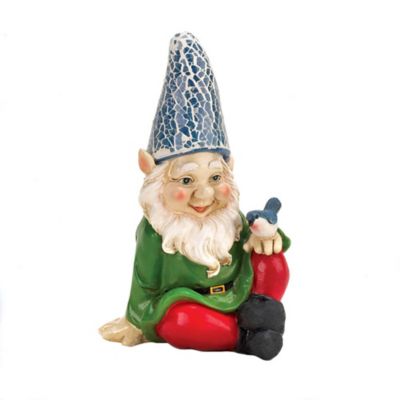
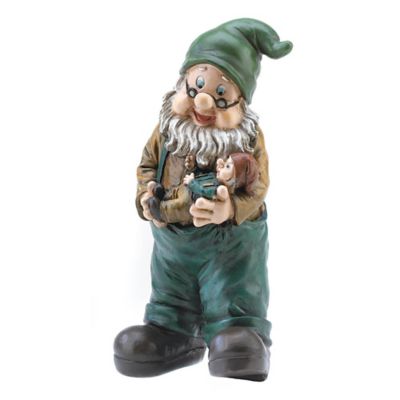
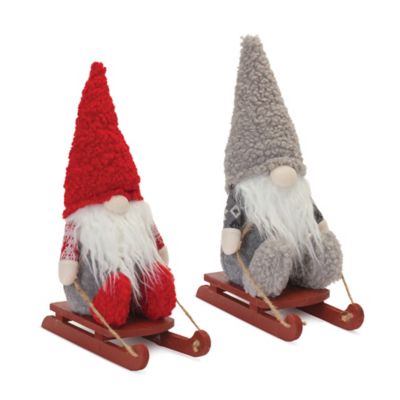
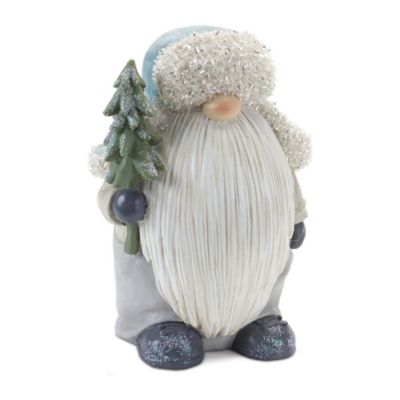
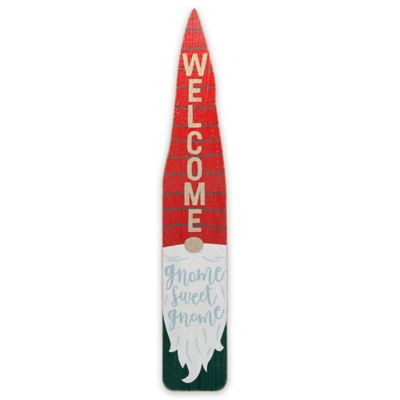
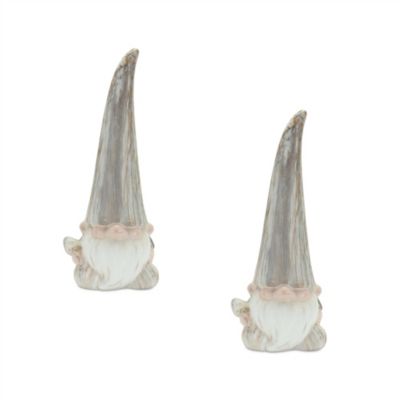
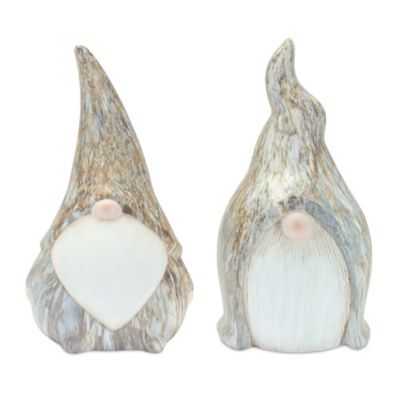
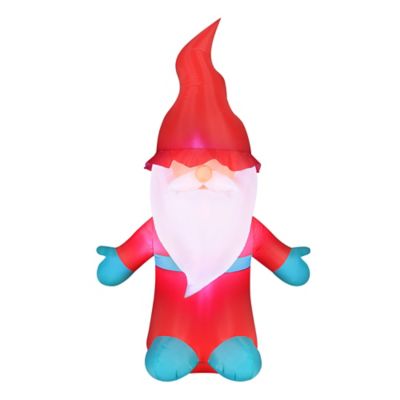
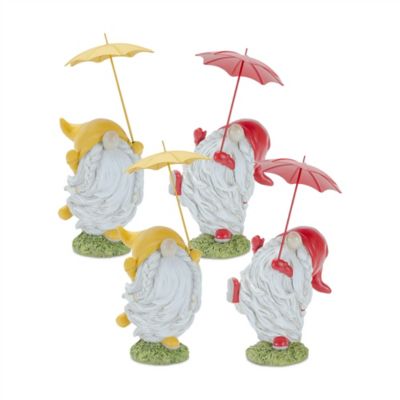
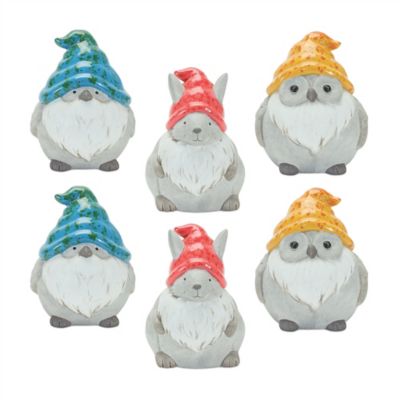
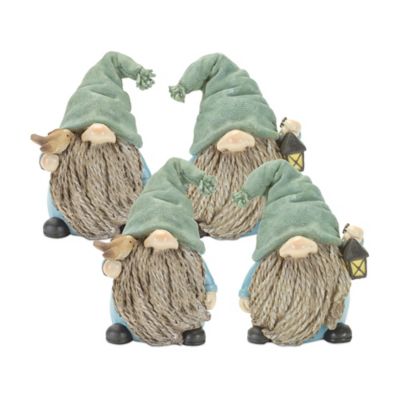
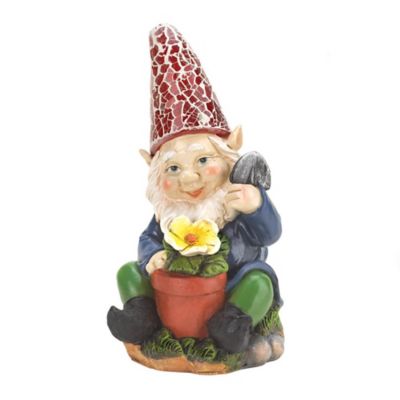
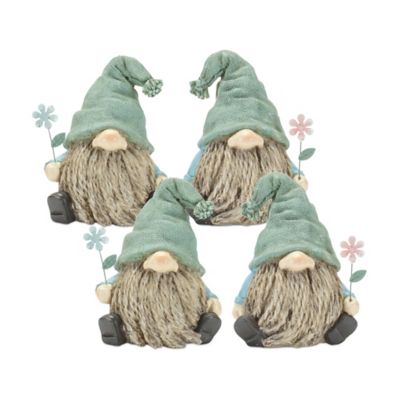
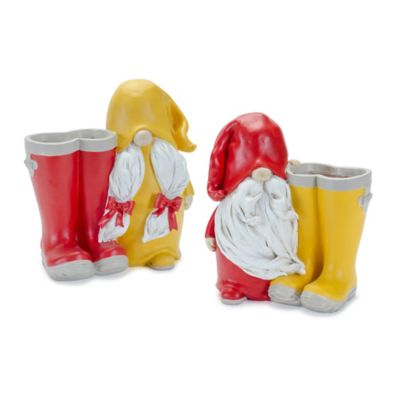
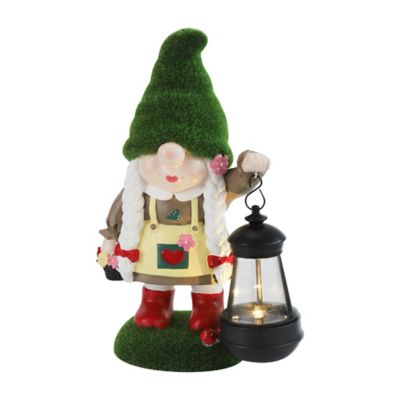
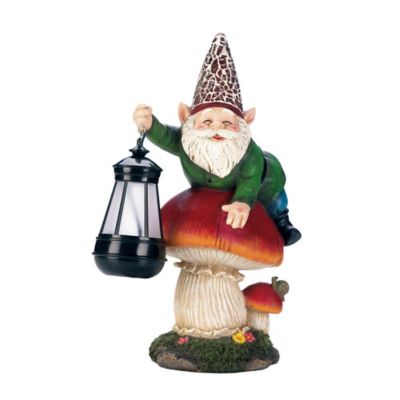
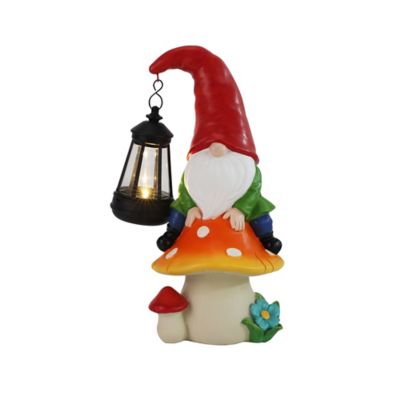
Gnome decorations are playful home and garden accents, often recognized by pointed hats, round noses and beards that peek out beneath the brim. Common forms include soft fabric shelf sitters for indoor spaces and sculpted figures made from resin, ceramic, metal or other materials for indoor or outdoor placement, depending on their construction. Their appeal comes from a little personality: a sleepy expression beside a flowerpot, a tall hat rising above a bookshelf or a small figure keeping company with the plants on a potting bench. Long associated with gardens and folklore, gnomes fit comfortably around a country home without needing an elaborate display. A single figure can give an entry table a friendly touch, while a small grouping can make an overlooked corner feel more inviting. The best fit depends as much on the space as on the character. For a mantel or narrow shelf, check the full height, base width and depth, including any dangling legs or projecting details. A figure that fits between two shelves may still look crowded if its hat nearly touches the shelf above it. On an entry table, leave room for keys, mail and the everyday things that land there. Larger figures need enough breathing room to show their shape without taking over a walkway or hiding the plants behind them. Color makes a difference, too. Earthy greens, browns and stone-like finishes can settle into a planted setting, while brighter hats stand out against wood, brick or plain walls. Fabric textures tend to feel right at home beside baskets and upholstered furniture; smooth sculpted surfaces create a different look against greenery or rough boards. Think about the view from the doorway or the garden path rather than only how a figure looks close up. A face, hat or pose that reads clearly from that distance usually makes a stronger display than several small details that disappear into the background.
Materials help determine where a gnome belongs and how much attention it will need. Resin can capture detailed faces, folds and textures, though its weight and resistance to damage vary with the formulation and construction. A hollow figure may be easier to move than a solid one, but it still needs a stable base. Ceramic offers a firm, smooth surface, yet narrow hats, small hands and other projecting parts can chip if bumped. Metal figures may have slender profiles that suit tight spaces, with finish care depending on the metal and coating. Wood adds visible grain and a natural feel, but indoor and exterior applications call for different finishes. For any garden placement, follow the stated placement and care directions rather than assuming that a garden-style appearance means a figure can stay outside indefinitely. Set freestanding pieces on level footing, away from mower paths, string trimmers, gates and busy routes between the house and barn. A flat paver can provide a steadier resting place than loose mulch, provided the base sits fully on it. Avoid spots where standing water collects, and keep drainage openings clear when the construction includes them. Indoors, fabric gnomes need their own checks. Some have weighted bottoms that help them sit upright; others depend on a flat shelf or support behind them. Dangling legs should hang clear of cabinet doors, drawers and places where they might catch. Plush surfaces can gather dust and pet hair, so check whether the care label calls for spot cleaning, gentle surface brushing or another method. Do not assume a fabric figure can go in the washing machine. For hard surfaces, a soft cloth and the cleaning method recommended for the finish are better starting points than stiff brushes or strong cleaners. Let cleaned pieces dry fully before putting them away. Pack breakable figures separately, cushion narrow parts and avoid stacking weight on soft hats or beards. These small habits help preserve the features that give each figure its character.
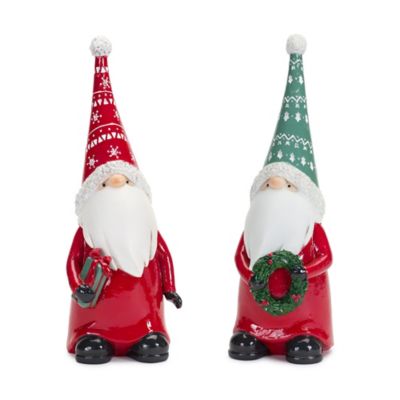
Choosing gnome decorations is also about deciding how much personality a space needs. A lone figure beside a houseplant can be enough for a small room, while a garden bed may have room for a loose grouping with different heights. Keep sightlines open and let the surroundings remain part of the scene. Along a path, set figures back from the edge so boots, hoses and wheelbarrows can pass without a squeeze. On a porch, keep door swings, steps and handrails clear. Inside, a shelf sitter looks more settled when its base rests completely on the surface rather than balancing at the edge. Grouping by one shared feature, such as hat color, finish or a simple gardening theme, helps several figures look like they belong together without making everything match. A rustic wood shelf might suit muted fabric textures, while a painted cabinet can carry a brighter accent. For a Christmas display,
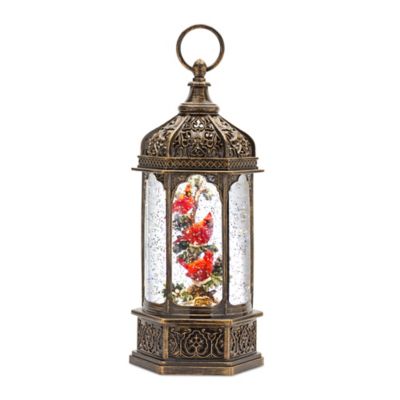
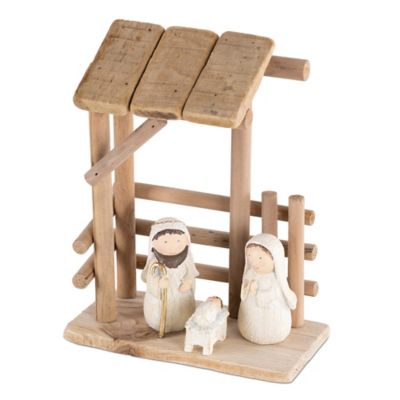
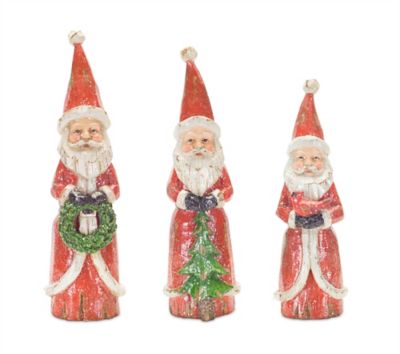
Christmas gnome decorations can bring the same familiar shapes into a holiday arrangement alongside greenery and other household favorites. Leave enough room to dust around the display and reach any nearby switches or outlets. Gnomes can also make thoughtful birthday, housewarming or thank-you gifts for gardeners, collectors and people who enjoy a cheerful touch around the house. Match the gift to the recipient’s space and habits: a compact indoor figure asks for less room than a large garden accent, and a washable surface may suit a busy household better than delicate fabric details. Check cleaning directions and placement requirements before choosing, especially when the recipient has pets or young children. Unless labeled as a toy, a gnome should remain a display piece, with small attachments, weighted filling and breakable parts kept out of reach. A well-chosen figure should feel easy to live with, whether it greets visitors by the front door or adds a bit of character beside a favorite planter.