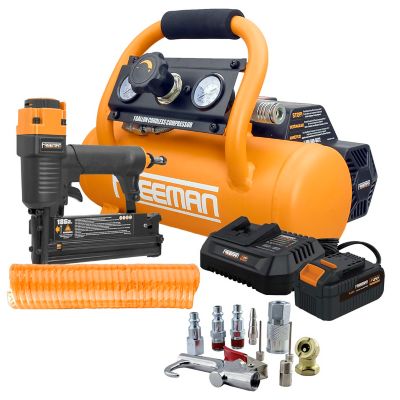
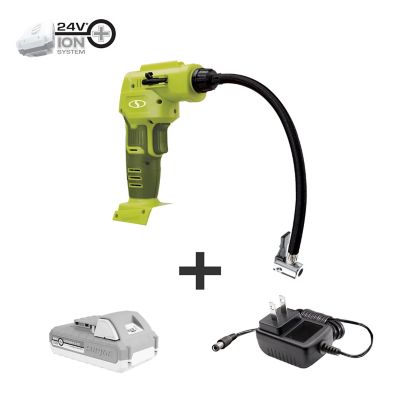
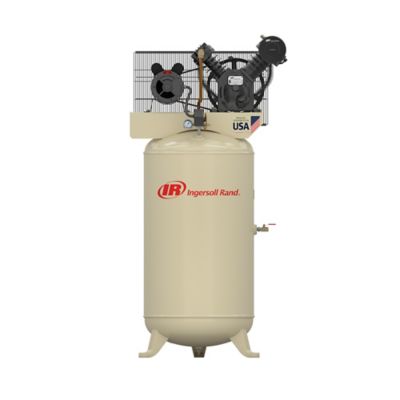
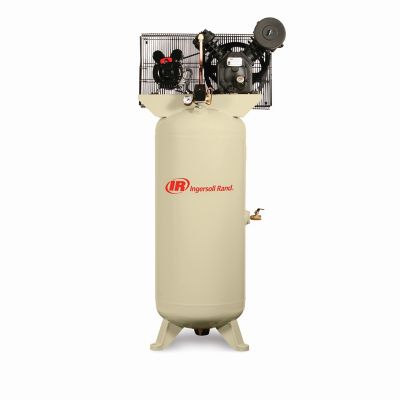
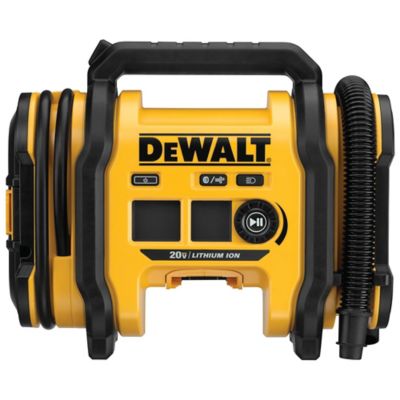
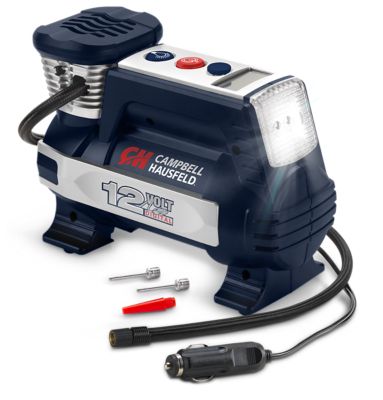
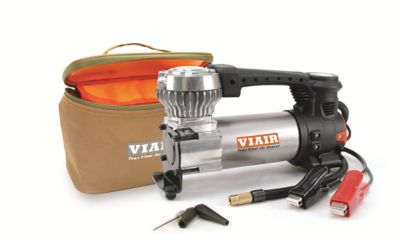
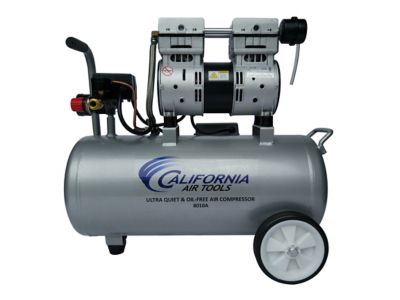
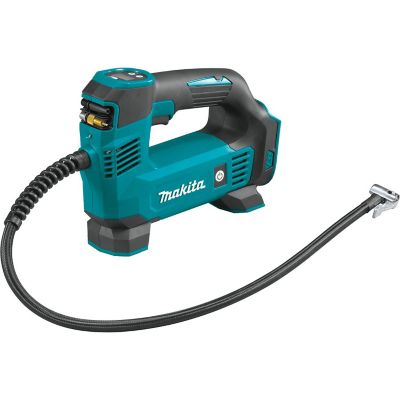
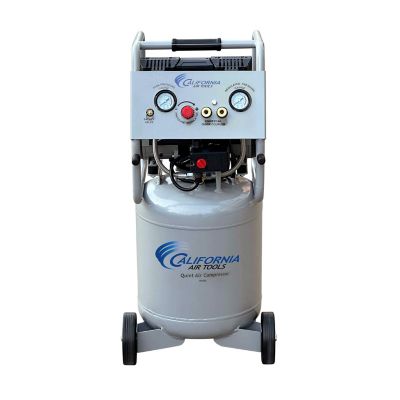
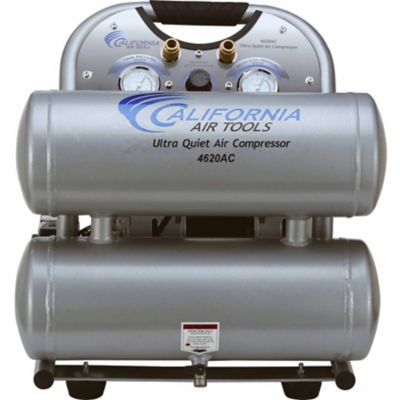
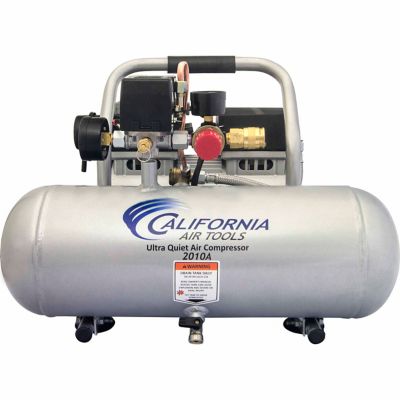
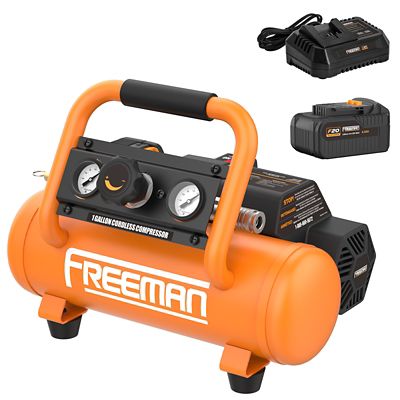
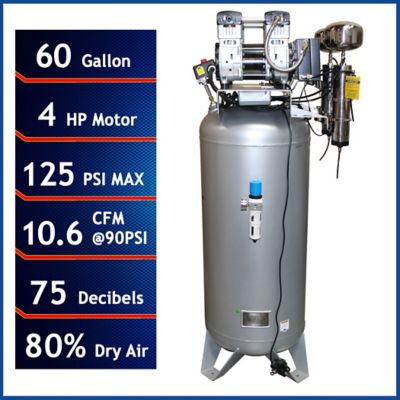
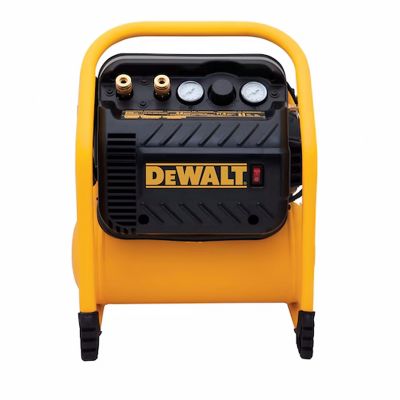
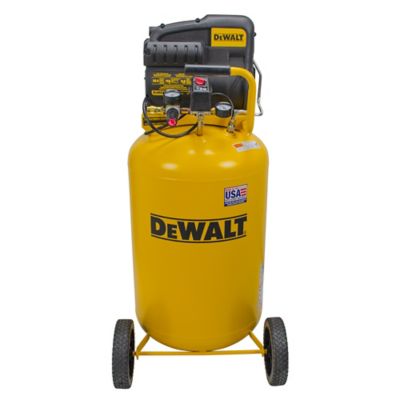
Cordless air compressors are battery-powered machines that supply compressed air without needing a nearby electrical outlet, making them handy for tire maintenance and smaller jobs around the driveway, barn, or workshop. The category includes compact tire inflators as well as portable compressors with air tanks, and the difference matters. A cordless tire inflator sends air straight through a hose and is generally built for filling tires, balls, and other inflatables. A tank-style cordless compressor stores compressed air and, with enough airflow, can run certain pneumatic tools. Both bring air closer to the job, whether that means topping off a wheelbarrow tire behind the shed or tackling a small trim project away from the shop. Battery power cuts out the extension cord, but the machine still needs a charged battery, the right hose connection, and enough capacity for the task. Maximum pressure, measured in pounds per square inch, or PSI, tells only part of the story. A high pressure rating does not necessarily mean fast inflation, especially with larger tires that take a substantial volume of air. Airflow, often expressed in cubic feet per minute, or CFM, helps show how much air a compressor can deliver; for pneumatic tools, compare airflow ratings at the tool’s required operating pressure. For inflators, published inflation times can be helpful when the starting pressure and tire size are comparable. A small inflator that handles bicycle tires and occasional passenger-car tire top-offs may not be suited to filling large truck or agricultural tires from empty. Around a rural property, that distinction can mean the difference between a quick pressure adjustment before a feed run and a long wait beside a trailer. Intended use should lead the choice: everyday inflation calls for manageable size and straightforward controls, while tool operation calls for closer attention to pressure, airflow, tank capacity, and recovery time. Tank capacity provides a short reserve of air, not a substitute for sufficient pump output during ongoing work.
The details of a cordless air compressor make themselves known once it leaves the shelf and heads out to work. A comfortable handle, balanced weight, and a stable base help when carrying it across a gravel drive or setting it down beside a mower. Housing materials, frame construction, and protected controls all affect how well a machine stands up to regular handling. Metal tanks and frames can add weight, while molded housings can help keep compact inflators easier to carry; neither material alone tells the whole story about service life. Look at how the hose stores, whether the gauge sits behind a protective edge, and whether the battery is shielded from bumps. Hose length and chuck design matter, too. Reaching a valve stem on a small cart wheel can be awkward, and a connection that is easy to attach in an open driveway may be harder to manage between closely spaced spokes. Threaded and lever-style chucks attach differently, so valve compatibility and working room deserve a look. The included adapters determine which inflation jobs a machine can handle without additional fittings, although an adapter does not make every pump suitable for every inflatable. Large, low-pressure inflatables need a different balance of pressure and volume than vehicle tires. Digital displays, work lights, and preset pressure settings can make early-morning checks easier, and automatic shutoff can reduce the need to watch the reading continuously. Those features still call for attention during operation and a final pressure check with a suitable tire gauge. Battery fit is another practical consideration: cordless equipment must match the battery platform and voltage specified by its manufacturer, and similar-looking packs are not necessarily interchangeable. Battery capacity affects runtime, while charging time influences how soon the machine is ready for another round of chores. Total weight with the battery attached is worth considering, particularly when the compressor will travel between the house, truck, and outbuildings rather than stay near a workbench.
A little routine care helps keep a cordless air compressor ready when the weather turns cooler and tire checks become part of getting down the road. Falling temperatures can lower tire pressure, so check tires cold and follow the vehicle placard or equipment manufacturer’s recommendation rather than treating the maximum pressure on a tire sidewall as the everyday target. Trailer, mower, bicycle, and vehicle tires can have very different requirements, even when their valve stems look alike. Set the machine on firm ground with its ventilation openings clear, and follow its duty-cycle limits—the stated running and resting periods that help prevent overheating. A compact inflator may need a cooling break during a longer job, and its hose or fittings can become hot. Keep the compressor sheltered from rain and standing water unless its manufacturer expressly permits those conditions. Before storage, inspect the hose for cracks, check connections for damage, and wipe away dust without pushing debris into vents. On tank-style compressors, release pressure and drain condensation according to the manual; moisture left inside a steel tank can encourage corrosion. Oil-free pumps do not need pump-oil changes, but filters, fittings, and other components may still need attention. Batteries have their own charging and storage temperature limits, which matter in an unheated shed or a truck parked outside overnight. Keeping the charger in a suitable dry location and storing the battery as directed can help prevent an unexpected delay before chores. Cordless models make sense for drivers, livestock owners, property caretakers, and anyone whose inflation jobs happen beyond easy reach of an outlet. For work that stays near electrical power,
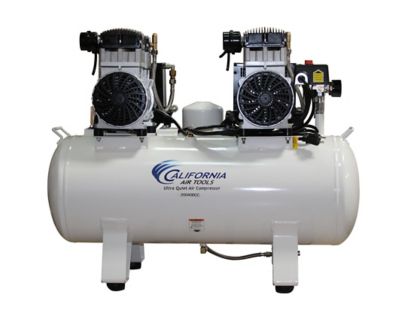
Small Electric Air Compressors offer another setup to consider, with the same need to match output to the task. The best fit is a machine with enough pressure and airflow for its intended work, connections that suit the equipment, and a size that is easy to carry where the air is needed.